Reasons for choosing our testing services
ZHONGXI Testing has obtained inspection qualification certifications from multiple countries and regions worldwide. We possess a senior testing team and advanced testing methods, providing independent, impartial, and professional third-party verification services for global carbon projects.
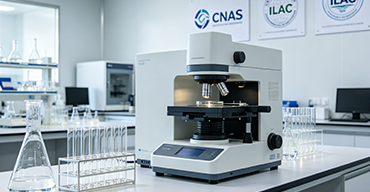
Internationally recognized authority
Certified by multiple international standards such as CNAS, VCS, and GS, with reports universally applicable worldwide.

Global service capability
Covering 140+ countries and regions, it supports on-site detection and remote verification in multiple languages.

Professional experimental methods
Adopt standard experimental methods to ensure accurate and reliable data.
Professional Bacillus licheniformis Sporulation Rate Analysis Service
We understand that you are searching for sporulation rate analysis of Bacillus licheniformis because you need to optimise spore-based probiotic production, validate biopesticide formulations, ensure heat‑resistant enzyme preparations, or meet regulatory specifications for spore count in commercial products. Our high‑resolution sporulation assessment platform goes far beyond a simple endospore stain or plate count. We deliver a quantitative, multiparametric profile of the sporulation process – from vegetative cell decline to mature spore release – with strain‑specific precision.

What We Measure – From Spore Counts to Sporulation Kinetics
Our standard analysis includes total viable count (vegetative cells + spores) versus heat‑resistant spore count (80°C for 10 minutes) using plate counting on selective media. But we go much deeper. Using flow cytometry with dual staining (SYTO 9 / PI combined with dipicolinic acid (DPA)‑specific fluorescence), we differentiate between vegetative cells, forespores, immature spores, and fully mature heat‑resistant spores in a single run, analysing up to 50,000 events per sample. We also measure sporulation efficiency (% spores relative to total cells), sporulation yield (spores per mL), and the kinetics of spore release via time‑course sampling. For process optimisation, we determine the critical sporulation triggers – nutrient exhaustion threshold, dissolved oxygen level, and temperature shift – by coupling our sporulation data with online bioreactor parameters.
Advanced Capabilities for Demanding Applications
We accept liquid fermentation broths, concentrated pellets, spray‑dried powders, and formulated products (granules, wettable powders). Our automated spore detection system uses machine‑learning image analysis on phase‑contrast micrographs to count >10,000 spores per slide, eliminating human bias. For stubborn strains that produce sticky or aggregated spores, we apply sonication and detergent pre‑treatment validated to disaggregate without killing spores. We also offer scanning electron microscopy (SEM) to visualise spore coat integrity and spore‑specific dipicolinic acid quantification via HPLC as an independent measure of sporulation completeness. In side‑by‑side comparisons (mutant screening or media optimisation), we provide statistical error bars (95% CI) from triplicate biological replicates and a sporulation synchrony index (based on the coefficient of variation of spore maturation time).
What You Receive – Actionable Sporulation Metrics
Your final report includes: sporulation rate (%), total spore count (CFU/mL or CFU/g), vegetative cell count, ratio of free to cell‑attached spores, heat resistance confirmation (log reduction after 80°C/10 min), and a sporulation phase diagram (time to first spore, time to 50% sporulation, maximum sporulation rate). For commercial products, we calculate the spore purity index (spores as a percentage of total solids) and the germination efficiency (spore outgrowth rate in rich medium). If required, we also perform accelerated stability testing at 40°C/75% RH to predict spore viability loss over shelf life – directly linked to initial sporulation quality.
Our Distinct Advantages in Bacillus licheniformis Sporulation Testing
1. High throughput sporulation screening: We use 96‑deep‑well microfermentation systems with online turbidity and dissolved oxygen monitoring to test up to 24 different media or induction conditions per week – ideal for strain engineering or formulation development. 2. Low sample requirement: Our flow cytometry method needs only 100 µL of culture, preserving precious material from early‑stage processes. 3. Differentiation of true spores from non‑spore heat‑resistant cells: We include a dipicolinic acid fluorescence check to confirm that heat‑resistant CFUs are genuine spores, not stressed vegetative cells – a critical quality attribute often overlooked. 4. Industrial‑scale correlation: We offer sporulation rate validation at pilot scale (10–100 L) using our sensor‑equipped fermenters, ensuring lab‑scale results translate to production. 5. Regulatory support: Our data comply with USP <62>, EP 2.6.12, and CFIA guidelines for spore‑based microbial products. We provide a full certificate of analysis for batch release.
Why Choose Our Service Over Standard Microbiological Labs
Most routine labs only report a total spore count after heat shock – missing the dynamics of sporulation, the presence of forespores or immature spores, and the true sporulation efficiency. We give you the complete picture of your culture's differentiation pathway. Our team includes bacterial physiologists who have published on Bacillus sporulation control (Spo0A phosphorylation, sigma factor cascades). We help you interpret results to adjust carbon/nitrogen ratios, harvest timing, or aeration strategies. No more guesswork: we tell you exactly when to harvest for maximum spore yield and heat resistance.
Ready to Quantify Your Sporulation Rate with Precision?
Whether you are developing a probiotic animal feed, a biocontrol agent, or a thermostable enzyme production strain, accurate sporulation analysis is non‑negotiable. Contact us today to discuss your Bacillus licheniformis strain, fermentation conditions, and quality targets. We offer a free preliminary consultation, sample submission guidelines, and a discounted trial analysis for first‑time clients. Let us help you achieve consistent, high‑quality spore preparations.