Reasons for choosing our testing services
ZHONGXI Testing has obtained inspection qualification certifications from multiple countries and regions worldwide. We possess a senior testing team and advanced testing methods, providing independent, impartial, and professional third-party verification services for global carbon projects.

Internationally recognized authority
Certified by multiple international standards such as CNAS, VCS, and GS, with reports universally applicable worldwide.

Global service capability
Covering 140+ countries and regions, it supports on-site detection and remote verification in multiple languages.

Professional experimental methods
Adopt standard experimental methods to ensure accurate and reliable data.
Professional Pediococcus pentosaceus Viable Cell Count Testing Service
We understand that you are searching for viable cell count testing for Pediococcus pentosaceus because you need to verify probiotic potency, meet label claims, optimise fermentation harvest points, or ensure stability in finished products (dietary supplements, animal feed, silage inoculants, or food cultures). Our comprehensive viable enumeration and viability profiling service goes far beyond a simple plate count. We deliver a high‑resolution, multi‑parameter assessment that distinguishes truly viable, metabolically active cells from injured, dormant, or dead bacteria – even in complex matrices.
What We Measure – From Colony Counts to Full Viability Resolution
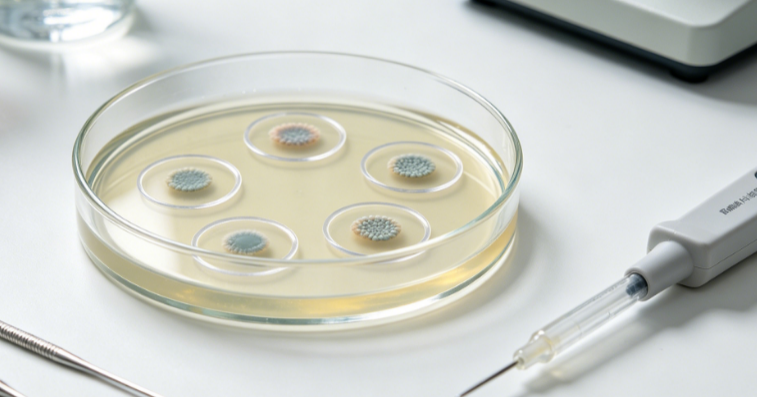
Our standard analysis begins with quantitative plate counting on selective MRS or de Man‑Rogosa‑Sharpe agar (with or without Tween, pH adjusted) using strict anaerobic incubation. But we go much deeper. Using flow cytometry with dual fluorescence staining (SYTO 9 / propidium iodide plus carboxyfluorescein diacetate (CFDA), we simultaneously measure membrane integrity and intracellular esterase activity – differentiating live, metabolically active cells from live but starved/dormant cells and from dead or membrane‑compromised cells. We also offer direct viable counting (DVC) using nalidixic acid to enumerate culturable cells even when they fail to form colonies due to stress. For highly clumped or chain‑forming P. pentosaceus, we apply validated dispersion protocols (vortexing with glass beads, mild sonication) followed by microscopic verification of single‑cell distribution.
Advanced Capabilities for Demanding Applications
We accept fresh broth cultures, freeze‑dried powders, capsules, sachets, fermented plant material, silage, and animal feed pellets. Our sample preparation includes matrix‑specific extraction buffers (e.g., phosphate‑Tween for powders, peptone‑saline for food matrices) with redox stabilisers (L‑cysteine) to preserve viability during processing. For product stability studies, we perform accelerated and real‑time viability testing at 25°C, 30°C, 37°C, and 40°C at controlled relative humidity, generating predictive shelf‑life models using Arrhenius kinetics. We also offer single‑cell viability assessment using microfluidic chips and fluorescence imaging to detect viable but non‑culturable (VBNC) cells – a critical quality parameter for probiotics that may lose culturability but retain metabolic activity. In side‑by‑side comparisons (strain screening or process optimisation), we provide statistical error bars (95% CI) from triplicate biological replicates and a viability index (ratio of flow cytometry live count to plate count) to quantify culturability bias.
What You Receive – Actionable Enumeration Data
Your final report includes: colony‑forming units per gram or per mL (CFU/g or CFU/mL) on dry or wet basis, viable count by flow cytometry (membrane‑intact + esterase‑active), VBNC percentage, clumping index (if applicable), and a direct comparison of plate count vs. cytometry results. For stability studies, we provide viability decay curves, predicted shelf life to a specified CFU minimum, and a temperature dependence (Q₁₀) value. For product lot release, we issue a Certificate of Analysis compliant with ISO 19344:2015 (probiotics enumeration by flow cytometry) and USP <2021> (microbial enumeration tests).
Our Distinct Advantages in Pediococcus pentosaceus Viable Counting
1. Matrix‑specific expertise: P. pentosaceus can be difficult to extract from pellets, silage, or coated capsules. Our proprietary extraction buffers achieve >95% recovery of spike‑in viable cells from challenging matrices, validated by spike‑and‑recovery experiments. 2. High throughput and speed: Using automated colony counters and 96‑well flow cytometry plates, we process up to 60 samples per day with results in 24–48 hours for plate counts (due to slower growth of pediococci) or 4 hours for cytometry. 3. Differentiation of chain‑induced undercounting: We include microscopic examination and dispersion optimisation to ensure that chains are broken into single cells before counting – avoiding the common pitfall of underestimating CFU counts in pediococci. 4. Anaerobic handling from start to finish: Our entire workflow (sampling, dilution, staining, incubation) occurs in an anaerobic chamber (O₂ < 2 ppm) to prevent oxygen toxicity to this facultative but oxygen‑sensitive species. 5. Regulatory alignment: Our methods follow AOAC 2017.06, ISO 19344, and the Chinese Pharmacopoeia. We provide full raw data and audit‑ready documentation.
Why Choose Our Service Over Routine Microbiology Labs
Most standard labs only report CFU using conventional plating, which can miss injured or VBNC cells, and they rarely optimise dispersion for chain‑forming pediococci. We give you the true viable population – including cells that are metabolically active but non‑culturable – because these can still confer probiotic benefits. Our team includes experienced food microbiologists and probiotic specialists who understand the behaviour of Pediococcus pentosaceus in different product matrices and stress conditions. We provide one‑on‑one consultation to help you interpret discrepancies between methods and improve your production or formulation processes. No hidden fees for advanced cytometry or stability modelling – we deliver a transparent, decision‑ready report.
Ready to Quantify Your Pediococcus pentosaceus Viable Cell Count with Confidence?
Whether you need batch release testing, stability monitoring, process optimisation, or research‑grade enumeration, our viable cell count service provides the accuracy and depth you need. Contact us today to discuss your sample type, product format, and specific requirements. We offer a free initial consultation, sample submission kits with stabilisation instructions, and a discounted pilot analysis for first‑time clients. Let us help you ensure that your Pediococcus pentosaceus product consistently delivers the labelled viable cell count.