Reasons for choosing our testing services
ZHONGXI Testing has obtained inspection qualification certifications from multiple countries and regions worldwide. We possess a senior testing team and advanced testing methods, providing independent, impartial, and professional third-party verification services for global carbon projects.

Internationally recognized authority
Certified by multiple international standards such as CNAS, VCS, and GS, with reports universally applicable worldwide.

Global service capability
Covering 140+ countries and regions, it supports on-site detection and remote verification in multiple languages.

Professional experimental methods
Adopt standard experimental methods to ensure accurate and reliable data.
Professional Heterotrophic Ammonia-Oxidizing Bacteria (HAOB) Activity Test Service
We understand that you are searching for a heterotrophic ammonia-oxidizing bacteria activity test because you need to evaluate their performance in wastewater treatment, recirculating aquaculture systems, soil nitrogen cycling, or bioprocess optimisation. Unlike conventional autotrophic nitrifiers, HAOB oxidise ammonia under heterotrophic conditions – and their activity cannot be assessed by standard nitrification assays. Our specialised HAOB activity testing platform quantifies ammonia oxidation rates, key enzyme activities, and metabolic pathways under your exact process conditions, distinguishing heterotrophic from autotrophic contributions with high precision.
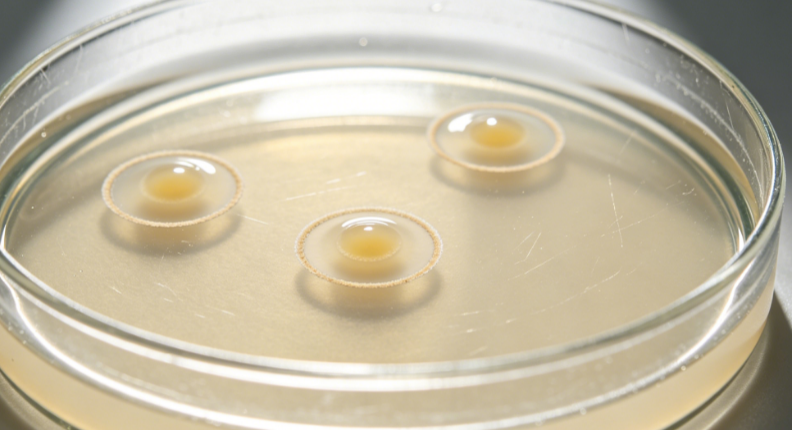
What We Measure – From Ammonia Depletion to Full Metabolic Flux
Our standard HAOB activity assay quantifies ammonia consumption rate (mg N/L/h) and organic carbon utilisation (DOC or TOC) using automated discrete analysers. But we go far deeper. We measure key enzyme activities: ammonia monooxygenase (AMO) via allylthiourea inhibition and hydroxylamine oxidoreductase (HAO) using ferricyanide as electron acceptor in cell-free extracts. Using ¹⁵N‑ammonium stable isotope tracing coupled with gas chromatography‑mass spectrometry (GC‑MS), we directly determine the fate of ammonia‑N: oxidation to nitrite, assimilation into biomass, or co‑metabolic conversion to organic nitrogen compounds. This isotopic approach also reveals whether ammonia oxidation is coupled to oxygen consumption (by microrespirometry) or alternative electron acceptors (nitrate, nitrite, iron). For complex communities, we perform quantitative PCR (qPCR) of HAOB‑specific functional genes (e.g., amoA, hao, hzs) and normalise activity rates to gene copy numbers, giving you a per‑cell activity index.
Advanced Capabilities for Challenging Applications
We accept activated sludge, biofilm samples, aquaculture water, soil slurries, enrichment cultures, and pure isolates. Our modular bioreactors simulate high‑C/N ratio (typically 5–20), variable dissolved oxygen (microaerophilic conditions), and different organic carbon sources (acetate, glucose, peptone) to match your process. We offer real‑time monitoring of NH₄⁺, NO₂⁻, NO₃⁻, and dissolved O₂ using ion‑selective electrodes and optical sensors in sealed batch or continuous flow systems. For kinetic characterisation, we determine half‑saturation constants (Kₘ for NH₄⁺ and organic carbon), maximum specific ammonia oxidation rate (qₘₐₓ), and inhibition thresholds (e.g., by high free ammonia, nitrite, or heavy metals). Using transcriptomic analysis (RNA‑seq) of HAOB cultures, we identify up‑regulation of stress or pathway genes under your target conditions.
What You Receive – Actionable Activity Metrics
Your final report includes: specific ammonia oxidation rate (μmol NH₄⁺/g biomass/h or per cell), coupling efficiency (ratio of nitrite produced to ammonia consumed), carbon source preference, and the proportion of ammonia removed via assimilation vs. oxidation. For mixed communities, we provide relative contribution of HAOB vs. autotrophic AOB/AOA using selective inhibitors (allylthiourea for AMO, acetylene for autotrophic AOB). We also calculate yield coefficients (YN/orgC) and, if required, perform modelling of HAOB activity in your specific bioreactor configuration to predict performance at different hydraulic retention times or loading rates.
Our Distinct Advantages in HAOB Activity Testing
1. True heterotrophic condition simulation: Many labs test HAOB in mineral media with no organic carbon – which starves them. We provide customised organic carbon compositions (single or multiple substrates, real wastewater matrices) to reflect your actual process. 2. Isotope‑level precision: Our ¹⁵N tracer methods detect activity from as few as 10³ HAOB cells/mL and distinguish simultaneous oxidation and assimilation, avoiding overestimation of nitrification. 3. High throughput screening: Using 24‑well micro‑respirometry plates, we can test up to 8 different carbon sources or 6 inhibitor concentrations per week – ideal for process optimisation or strain selection. 4. Distinguishing HAOB from other ammonia transformers: We use a combination of inhibitors (ATU, 2‑ethyl‑1‑hexanol for heterotrophic AMO, chlorate for nitrite oxidisers) and fluorescence in situ hybridisation (FISH) coupled with microautoradiography to visually confirm which cells are actively oxidising ammonia. 5. Regulatory and applied support: Our data help optimise nitrogen removal in BREF guidelines for wastewater treatment, aquaculture discharge compliance, and bioremediation project validation.
Why Choose Our Service Over Standard Environmental Labs
Routine labs typically measure total ammonia disappearance and assign it to "nitrification" without differentiating heterotrophic vs. autotrophic pathways, and they rarely provide per‑cell activity. We give you the mechanistic clarity – whether your HAOB are truly active, under which carbon/nitrogen ratio they perform best, and how to avoid inhibition. Our team includes environmental microbiologists with expertise in unconventional nitrifiers. We provide one‑on‑one consultation to interpret results and recommend operational adjustments (e.g., carbon source type, DO control, sludge retention time). No hidden fees for isotopic analysis or transcriptomics – we deliver a comprehensive, decision‑ready report.
Ready to Assess Your Heterotrophic Ammonia‑Oxidising Activity with Confidence?
Whether you are troubleshooting a high‑C/N wastewater plant, selecting a HAOB inoculum for bioaugmentation, or studying nitrogen cycling in soil, our activity test provides the depth and accuracy you need. Contact us today to discuss your sample matrix, process conditions, and analytical goals. We offer a free initial consultation, sample submission kits with preservation instructions, and a discounted pilot analysis for first‑time clients. Let us help you harness the full potential of heterotrophic ammonia‑oxidising bacteria.