Reasons for choosing our testing services
ZHONGXI Testing has obtained inspection qualification certifications from multiple countries and regions worldwide. We possess a senior testing team and advanced testing methods, providing independent, impartial, and professional third-party verification services for global carbon projects.

Internationally recognized authority
Certified by multiple international standards such as CNAS, VCS, and GS, with reports universally applicable worldwide.

Global service capability
Covering 140+ countries and regions, it supports on-site detection and remote verification in multiple languages.

Professional experimental methods
Adopt standard experimental methods to ensure accurate and reliable data.
Professional Trichoderma viride Biomass Determination Service
We understand that you are searching for Trichoderma viride biomass determination because you need to optimise fermentation yields, quantify fungal growth in biocontrol formulations, monitor colonisation in soil or plant tissues, or validate product consistency for commercial mycopesticides. Our advanced, multi‑parameter biomass analysis platform goes far beyond simple dry weight measurement. We deliver accurate, matrix‑resolved quantification of living and total fungal biomass – distinguishing active hyphae from spores, dead mycelium, or plant debris – even in complex environmental or industrial samples.
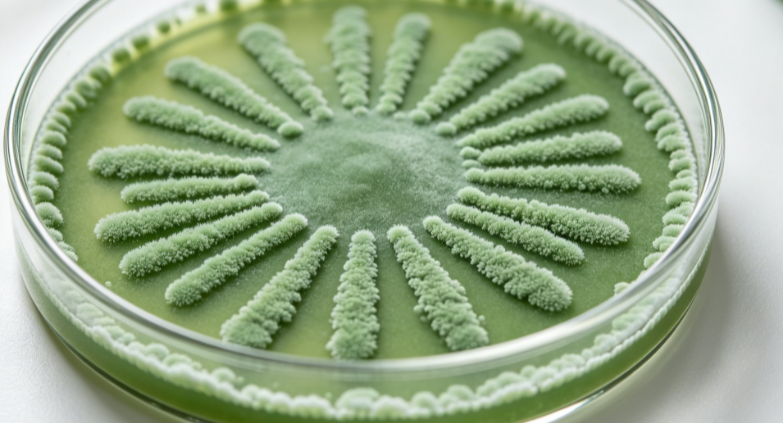
What We Measure – From Dry Weight to Species‑Specific Biomass Markers
Our standard service includes gravimetric dry weight determination (105°C to constant mass) and ash‑free dry weight (organic matter). But we go much deeper. We quantify species‑specific ergosterol content by HPLC‑UV as a direct indicator of viable Trichoderma viride membrane integrity – ergosterol is stable, linear with live hyphal mass, and unaffected by non‑fungal organic matter. For greater sensitivity and species specificity, we use real‑time quantitative PCR (qPCR) targeting the internal transcribed spacer (ITS) region or a strain‑specific SCAR marker to measure fungal DNA copy number, which we calibrate against a pure culture standard curve to report as mg biomass (dry weight equivalent) per gram of sample. We also measure chitin content via glucosamine quantification after acid hydrolysis using high‑performance anion‑exchange chromatography with pulsed amperometric detection (HPAEC‑PAD) – a robust proxy for total (live + dead) fungal biomass.
Advanced Capabilities for Demanding Applications
We accept pure fermentation broths, mycelial pellets, solid‑state fermentation substrates (rice, wheat bran, peat), soil, rhizosphere samples, plant root or leaf tissues, and formulated powders. Our multiplexed approach distinguishes living vs. dead biomass using a combination of propidium monoazide (PMA)‑qPCR (PMA penetrates only dead cells with compromised membranes) and ergosterol stability (ergosterol degrades rapidly after cell death). We also offer fluorescent staining (calcofluor white for chitin, CFW‑FDA for live hyphae) coupled with automated confocal microscopy and image analysis to spatially resolve biomass distribution in biofilms or root colonisation studies. For kinetic studies, we provide specific growth rate (μ), biomass yield coefficient (YX/S), and total biomass productivity (g/L/h) from time‑course samples. In mixed microbial communities (bacteria + fungi), we use selective lysis and DNA/RNA extraction protocols followed by Trichoderma‑targeted metabarcoding (ITS2) to estimate relative biomass abundance.
What You Receive – Actionable Biomass Metrics
Your final report includes: total dry biomass (g/L or mg/g sample), live biomass (ergosterol‑derived and/or PMA‑qPCR derived), dead biomass percentage, DNA copy number (per g or per mL), chitin‑derived glucosamine content (mg/g), and a calibrated biomass conversion factor specific to your strain. For solid substrates or soil, we provide biomass per gram of dry substrate or per root length. In time‑course experiments, we include growth curves with lag, exponential, and stationary phases marked. For product quality control, we issue a Certificate of Analysis with acceptance criteria for minimum viable biomass.
Our Distinct Advantages in Trichoderma viride Biomass Determination
1. Matrix‑optimised extraction: Soil and plant tissue contain interfering compounds. Our validated protocols use pressurised liquid extraction (PLE) for ergosterol and CTAB‑based DNA extraction with inhibitor removal columns, achieving >90% recovery from spiked samples. 2. High sensitivity and specificity: We detect as little as 0.5 µg of fungal dry biomass per gram of soil (by qPCR) or 1 ng of ergosterol (by HPLC), orders of magnitude lower than conventional methods. 3. Differentiation of live mycelium vs. spores: Using RNA‑based qPCR (targeting elongation factor tef1 or actin transcripts), we measure metabolically active biomass – crucial for assessing colonisation after application of spore‑based products. 4. High throughput: With 96‑well DNA extraction and automated qPCR, we process up to 200 samples per week with results in 5–7 business days. 5. Regulatory and research ready: Our methods align with OECD Guideline 303 for biomass assessment in soil, ISO 17601 for quantitative microbial DNA, and EFSA requirements for Trichoderma biocontrol agent characterisation.
Why Choose Our Service Over Standard Weight‑Based Methods
Most routine labs only report dry weight, which fails to distinguish live vs. dead biomass, cannot separate fungal biomass from substrate particles, and is insensitive at low colonisation levels. We give you the true biological picture – how much living Trichoderma viride is present, whether it is actively growing or dormant, and how it distributes across your system. Our team includes fungal physiologists and molecular ecologists who understand the nuances of biomass estimation in different matrices. We provide one‑on‑one interpretation and recommend the best biomarker (ergosterol, qDNA, chitin, or a combination) for your specific question. No hidden fees for advanced biochemical or molecular assays – we deliver a transparent, decision‑ready report.
Ready to Quantify Your Trichoderma viride Biomass with Precision?
Whether you are scaling up fermentation, testing biocontrol persistence in soil, or validating a product formulation, our biomass determination service provides the accuracy and depth you need. Contact us today to discuss your sample type, growth conditions, and analytical goals. We offer a free initial consultation, sample submission kits with preservation instructions, and a discounted pilot analysis for first‑time clients. Let us help you obtain reliable, species‑specific biomass data that truly reflects your fungal culture performance.