Reasons for choosing our testing services
ZHONGXI Testing has obtained inspection qualification certifications from multiple countries and regions worldwide. We possess a senior testing team and advanced testing methods, providing independent, impartial, and professional third-party verification services for global carbon projects.

Internationally recognized authority
Certified by multiple international standards such as CNAS, VCS, and GS, with reports universally applicable worldwide.

Global service capability
Covering 140+ countries and regions, it supports on-site detection and remote verification in multiple languages.

Professional experimental methods
Adopt standard experimental methods to ensure accurate and reliable data.
Professional Yeast Detection Service for Pennisetum giganteum (Giant Juncao Grass)
We understand that you are searching for yeast detection in Pennisetum giganteum (giant Juncao grass) because you need to assess microbial quality for animal feed, monitor fermentation processes in silage or biofuel production, evaluate spoilage risks during storage, or ensure product safety and stability. Our comprehensive yeast detection and characterisation platform goes far beyond simple colony counts. We deliver species‑level identification, viable yeast quantification, and functional profiling – even in the presence of plant debris, lactic acid bacteria, or other interfering microflora.
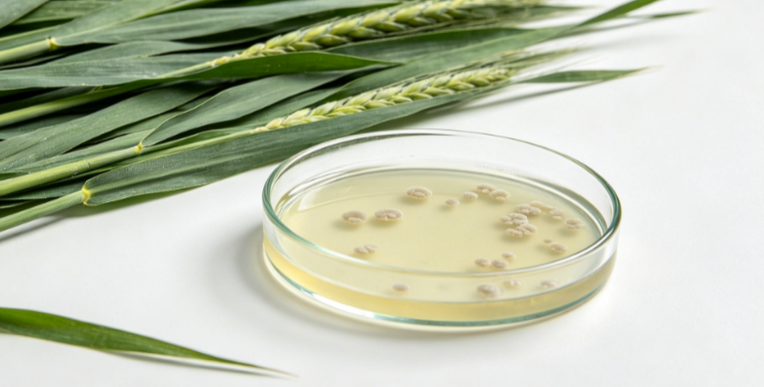
What We Detect and Quantify – From Total Yeast Load to Species Diversity
Our standard service includes total yeast enumeration using selective media (e.g., DRBC, OGY, YM agar) with acidification or antibiotic suppression of bacteria, reported as CFU per gram of fresh or dry grass. But we go much deeper. Using flow cytometry with viability staining (SYBR Green I / propidium iodide), we obtain a total yeast viable count in less than one hour, distinguishing live from dead cells regardless of culturability. For species identification, we perform ITS region sequencing on isolated colonies or directly from grass extracts using yeast‑specific primers (NL1/NL4 or ITS1/ITS4). For high‑throughput community profiling, we offer metabarcoding (ITS2 or 26S D1/D2 domain) on Illumina platform to detect all yeast species present, including non‑culturable or subdominant populations, down to 0.01% relative abundance.
Advanced Capabilities for Challenging Plant Matrices
Processing giant Juncao grass is demanding due to high fibre content, chlorophyll, and polysaccharides that inhibit DNA amplification or colony growth. Our optimised sample preparation includes mechanical homogenisation (stomacher or bead beating) in phosphate‑Tween buffer with pectinase and cellulase pre‑treatment to release epiphytic and endophytic yeasts from plant tissues. We also use density gradient centrifugation (OptiPrep™) to separate yeast cells from plant debris before flow cytometry or DNA extraction – reducing false negatives. For specific pathogens or spoilage yeasts (e.g., Pichia, Candida, Rhodotorula, Saccharomyces cerevisiae), we provide qPCR assays with strain‑specific primers down to 10² CFU/g detection limit, with internal controls for inhibition.
What You Receive – Actionable Yeast Data
Your final report includes: total yeast CFU/g, viable yeast count by flow cytometry, species identification (genus and species level) for dominant isolates, relative abundance of each yeast species via metabarcoding, and a detection of any undesirable yeast (e.g., potential mycotoxin producers or fermentative spoilers). For silage or fermented Juncao samples, we also report ethanol concentration (via HPLC‑RI) as an indirect indicator of yeast fermentative activity, and we can measure yeast metabolic activity using ATP bioluminescence. In comparative studies (storage conditions, treatments, or additives), we provide statistical analysis (ANOVA, Tukey HSD) and a yeast contamination risk index.
Our Distinct Advantages in Giant Juncao Grass Yeast Testing
1. Plant‑matrix expertise: We have developed a proprietary debris‑removal and yeast recovery protocol that achieves >85% recovery of spiked yeast from grass samples, validated by spike‑and‑recovery experiments. 2. High throughput: Using 96‑well plate DNA extraction and automated qPCR, we can process up to 200 samples per week with results in 3‑5 business days for enumeration and 7‑10 days for metabarcoding. 3. Distinguishing viable from non‑viable yeast: Our dual approach (plate count + viability staining) detects viable but non‑culturable (VBNC) yeasts that may resuscitate during storage or feeding – a critical food/feed safety parameter. 4. Bioprocess correlation: For clients using Juncao for bioethanol or single‑cell protein, we measure yeast fermentation efficiency directly from grass hydrolysates using micro‑bioreactors with online CO₂ monitoring. 5. Regulatory alignment: Our methods follow ISO 21527-1 (yeast enumeration), AOAC 2014.02, and feed hygiene regulations (e.g., EU 183/2005). We provide full traceability and audit‑ready documentation.
Why Choose Our Service Over Routine Feed Testing Labs
Most agricultural labs only report total yeast CFU from a single medium, without species identification or viability resolution. This misses dangerous spoilage yeasts (e.g., Pichia anomala producing ethyl acetate) or distinguishes not between contaminant and added beneficial yeasts. We give you the complete yeast ecology – which species, how many are alive, and what metabolic risk they pose. Our team includes feed microbiologists and fermentation technologists who understand Juncao grass specifically. We provide one‑on‑one consultation to interpret results and recommend storage or treatment strategies (e.g., propionic acid, ensiling, drying). No hidden fees for advanced molecular work – we deliver a clear, actionable report.
Ready to Assess Yeast Load in Your Giant Juncao Grass?
Whether you are a farmer, feed manufacturer, bioenergy producer, or research institute, our yeast detection service gives you the precision and depth you need. Contact us today to discuss your sample (fresh, dried, ensiled, or pelleted) and your specific concerns (spoilage, fermentation, or pathogen screening). We offer a free initial consultation, sample submission kits with stabilisation instructions, and a discounted pilot analysis for first‑time clients. Let us help you ensure the microbial safety and optimal performance of your giant Juncao grass products.