Reasons for choosing our testing services
ZHONGXI Testing has obtained inspection qualification certifications from multiple countries and regions worldwide. We possess a senior testing team and advanced testing methods, providing independent, impartial, and professional third-party verification services for global carbon projects.

Internationally recognized authority
Certified by multiple international standards such as CNAS, VCS, and GS, with reports universally applicable worldwide.

Global service capability
Covering 140+ countries and regions, it supports on-site detection and remote verification in multiple languages.

Professional experimental methods
Adopt standard experimental methods to ensure accurate and reliable data.
Professional Yeast Detection Service for Non‑Alcoholic Beer
We understand that you are searching for yeast detection in non‑alcoholic beer because you need to ensure product stability, prevent refermentation in the bottle or keg, meet regulatory alcohol limits, or investigate spoilage incidents. Unlike conventional beer, non‑alcoholic (NA) beer is highly sensitive to any residual or contaminating yeast – even low levels of viable yeast can metabolise residual sugars and produce alcohol, off‑flavours, or gas over‑pressure. Our specialised, high‑sensitivity yeast detection platform goes far beyond standard culture methods. We offer viable yeast quantification, species identification, and metabolic activity assessment – down to single‑cell detection, even in the presence of pasteurised or filtered background matrices.
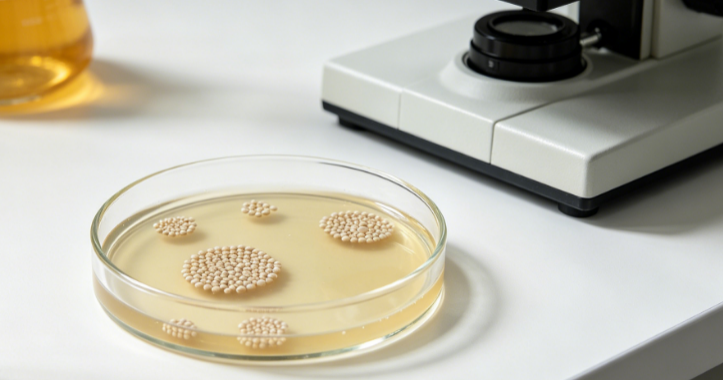
What We Detect and Quantify – From Low CFU to Single Viable Yeast Cells
Our standard service uses membrane filtration combined with selective non‑alcoholic beer agar (e.g., Lysine Agar, WLN Agar, or Raka‑Ray) to enumerate viable yeast from up to 500 mL of sample, achieving a detection limit of 1 CFU per 100 mL. But we go much deeper. Using flow cytometry with fluorescent viability probes (SYTO 9 / propidium iodide plus carboxyfluorescein diacetate), we can detect and count as few as 10 viable yeast cells per litre in less than 3 hours – no incubation needed. For absolute sensitivity, we offer quantitative PCR (qPCR) targeting the 18S rDNA or a specific beer‑spoilage gene (e.g., PAD1, FDC1 for phenolic off‑flavour), achieving a detection limit of 1 yeast genome copy per 50 mL after DNA extraction and concentration. We also provide propidium monoazide (PMA)‑qPCR to differentiate viable vs. dead yeast cells, critical for distinguishing true contamination from thermally inactivated cells.
Advanced Capabilities for Challenging NA Beer Matrices
Non‑alcoholic beer often contains hop acids, low pH, residual carbonation, and sometimes preservatives (e.g., dimethyl dicarbonate or sorbate) that interfere with culture‑based detection. Our protocols include sample neutralisation (using β‑cyclodextrin or polyvinylpolypyrrolidone) and pre‑filtration to remove CO₂ and particles before membrane filtration. For difficult strains (e.g., Saccharomyces cerevisiae var. boulardii, non‑Saccharomyces like Brettanomyces or Pichia), we use enriched recovery broth (EPY or YPD with 5% ethanol) before plating to resuscitate injured cells. We also perform ATP bioluminescence as a rapid (30‑minute) screening tool for total yeast metabolic activity, correlating to >10² CFU/mL.
What You Receive – Actionable Contamination Data
Your final report includes: presence/absence of viable yeast per defined volume (e.g., per 100 mL or per 500 mL), quantitative CFU count (when positive), species identification by ITS sequencing or MALDI‑TOF mass spectrometry, and assessment of viability by PMA‑qPCR or flow cytometry. For positive samples, we also determine potential alcohol‑producing capacity by incubating the isolated yeast in NA beer at 25°C for 7 days and measuring ethanol increase via GC‑FID. We provide a risk rating (low, medium, high) based on species spoilage potential and viable count. All results include positive and negative controls, method validation data, and a Certificate of Analysis compliant with your internal or regulatory specifications.
Our Distinct Advantages in Non‑Alcoholic Beer Yeast Testing
1. Ultra‑sensitivity: Our combined membrane filtration + qPCR achieves detection down to 1 viable yeast cell per 500 mL, which is one order of magnitude more sensitive than industry standard (typically 1 CFU/100 mL by plating alone). 2. Rapid turnaround: For emergency batch release or spoilage investigation, we deliver PMA‑qPCR results within 6 hours of sample receipt. 3. Species‑specific probes: We maintain validated qPCR assays for the main NA beer spoilage yeasts: Saccharomyces cerevisiae, S. pastorianus, Brettanomyces bruxellensis, Pichia anomala, Zygosaccharomyces bailii, and Candida parapsilosis. 4. Metabolic viability confirmation: We don’t just detect DNA – we confirm that detected yeast are truly able to grow and ferment in your specific NA beer matrix using a resazurin‑based micro‑well resazurin assay (Alamar Blue) with >95% correlation to CFU. 5. Regulatory alignment: Our methods meet MEBAK, ASBC, EBC, and IOB guidelines for beer microbial analysis, and we can tailor reporting to your internal acceptance criteria (e.g., “no detectable viable yeast in 500 mL”).
Why Choose Our Service Over Routine Brewery QC Labs
Many breweries perform only a simple plate count after 5‑7 days of incubation, which can miss slow‑growing, injured, or hop‑resistant yeast, and cannot distinguish dead from viable cells. We give you the full contamination picture – quantity, viability, species, and real spoilage risk – in a fraction of the time. Our team includes brewing microbiologists with specific expertise in non‑alcoholic and low‑alcohol beverage stability. We provide one‑on‑one consultation to help you trace contamination sources (packaging line, yeast filtration, blending) and implement corrective actions. No hidden fees for advanced molecular assays – we deliver a clear, actionable report.
Ready to Ensure Your Non‑Alcoholic Beer is Yeast‑Free and Stable?
Don’t let a single viable yeast cell ruin your product’s reputation or shelf life. Contact us today to discuss your sample type (pasteurised, cold‑filtered, or barrel‑aged NA beer) and your detection limit requirements. We offer a free initial consultation, sample submission kits with preservatives (if needed), and a discounted pilot analysis for first‑time clients. Let us help you achieve absolute confidence in the microbial stability of your non‑alcoholic beer.