Reasons for choosing our testing services
ZHONGXI Testing has obtained inspection qualification certifications from multiple countries and regions worldwide. We possess a senior testing team and advanced testing methods, providing independent, impartial, and professional third-party verification services for global carbon projects.

Internationally recognized authority
Certified by multiple international standards such as CNAS, VCS, and GS, with reports universally applicable worldwide.

Global service capability
Covering 140+ countries and regions, it supports on-site detection and remote verification in multiple languages.

Professional experimental methods
Adopt standard experimental methods to ensure accurate and reliable data.
Professional Transcriptome Analysis Service for Camellia japonica (Camellia)
We understand that you are searching for transcriptome analysis of camellia because you need to uncover gene expression patterns related to flower colour, stress tolerance, fragrance biosynthesis, or developmental timing. Whether you are breeding new cultivars, studying secondary metabolite pathways, or investigating environmental responses, our high‑depth, strand‑specific RNA‑sequencing and custom bioinformatics service provides a complete transcriptional landscape – from low‑abundance regulatory RNAs to full‑length isoform resolution, even for this large and complex genome.
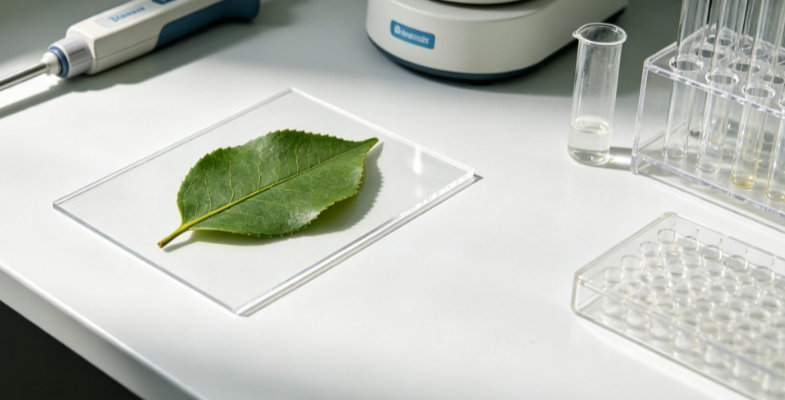
What We Deliver – From Total RNA to Actionable Biological Insights
Our standard camellia transcriptome package includes total RNA extraction from any tissue (petals, leaves, roots, buds, seeds), ribosomal RNA depletion (optimised for plants), strand‑specific library preparation, and 150 bp paired‑end sequencing on NovaSeq X Plus to generate ≥120 million reads per sample. We go far beyond basic differential expression. Our pipeline includes: de novo transcriptome assembly (using Trinity or rnaSPAdes) when no reference genome is available, or reference‑based alignment to a published camellia genome; quantification of gene and transcript‑level expression; detection of alternative splicing events; fusion transcript identification; and allele‑specific expression analysis for hybrid cultivars. We also perform long‑read isoform sequencing (Iso‑Seq on PacBio) to resolve full‑length splice variants of key genes (e.g., flavonoid biosynthetic enzymes, terpene synthases).
Advanced Capabilities for Camellia’s Unique Challenges
Camellia tissues are rich in polyphenols, tannins, and polysaccharides that inhibit RNA extraction and downstream library preparation. Our optimised CTAB‑PVP‑LiCl protocol with DNase I treatment yields high‑quality RNA (RIN >8.0, A260/280 >2.0, A260/230 >1.8) from pigmented petals, woody stems, and even recalcitrant seeds. For very small samples (e.g., floral buds or single flowers), we can work with as little as 50 ng of total RNA using our low‑input SMART‑based method. We also offer small RNA sequencing (miRNA, siRNA, phasiRNA) on the same tissues to build regulatory networks. For time‑course or treatment experiments, we provide clustering analysis (k‑means, WGCNA) to identify co‑expression modules linked to your phenotype (e.g., colour change, cold acclimation).
What You Receive – A Comprehensive Transcriptome Report
Your final report includes: raw FASTQ files, cleaned reads (adapter‑ and quality‑trimmed), expression matrix (FPKM, TPM, or raw counts), differential expression analysis (DESeq2/edgeR) with FDR correction, enriched GO terms and KEGG pathways (plant‑specific), and a full interactive HTML report with PCA plots, heatmaps, and volcano plots. For non‑model species, we provide a de novo assembled transcriptome (FASTA), annotation against NR, SwissProt, KEGG, and Pfam databases, and a completeness assessment using BUSCO. We can also compare expression profiles across multiple cultivars, developmental stages, or stress conditions. All visualisations are publication‑ready.
Our Distinct Advantages in Camellia Transcriptomics
1. Plant‑specific bioinformatic expertise: Our team has extensive experience with polyploid and repetitive plant genomes. We use RSEM for accurate isoform quantitation and DEXSeq for differential exon usage – crucial for camellia’s duplicated gene families. 2. High throughput and custom designs: We can process up to 200 samples per run and design custom reference panels for targeted gene expression (Nanostring or Fluidigm) after discovery. 3. Metabolite‑transcriptome integration: On the same biological samples, we can perform untargeted metabolomics (LC‑MS/MS) and correlate metabolite abundance with transcript levels to identify candidate genes for colour or fragrance. 4. Low turnaround time: From tissue to finished analysis report: 12‑15 working days for standard RNA‑seq (including assembly). 5. Data security and scalability: We comply with GDPR and provide secure cloud access. We also offer long‑term storage of raw data and assemblies with version control.
Why Choose Our Service Over Standard Transcriptomics Providers
Many sequencing facilities only deliver raw FASTQ and a simple count matrix, leaving you to struggle with assembly, annotation, and biological interpretation – especially for a non‑model ornamental like camellia. We give you the complete analytical package, including de novo assembly and functional annotation, saving you months of bioinformatics work. Our camellia‑specific protocols ensure high RNA quality even from polyphenol‑rich petals. We provide one‑on‑one consultation to design your experiment, choose optimal tissues and time points, and interpret expression patterns in a horticultural context. No hidden fees for advanced analyses (alternative splicing, WGCNA, or small RNA integration) – we deliver a transparent, decision‑ready report.
Ready to Explore the Camellia Transcriptome at Unprecedented Depth?
Whether you aim to discover genes controlling novel flower pigmentation, improve cold hardiness, or understand scent biosynthesis, our transcriptome service provides the precision and depth you need. Contact us today to discuss your camellia species or cultivar, tissue types, and experimental design. We offer a free initial consultation, sample submission kits with RNA preservation buffer, and a discounted pilot analysis (3 samples) for first‑time clients. Let us help you unlock the genetic and regulatory secrets of Camellia japonica and related species.