Reasons for choosing our testing services
ZHONGXI Testing has obtained inspection qualification certifications from multiple countries and regions worldwide. We possess a senior testing team and advanced testing methods, providing independent, impartial, and professional third-party verification services for global carbon projects.

Internationally recognized authority
Certified by multiple international standards such as CNAS, VCS, and GS, with reports universally applicable worldwide.

Global service capability
Covering 140+ countries and regions, it supports on-site detection and remote verification in multiple languages.

Professional experimental methods
Adopt standard experimental methods to ensure accurate and reliable data.
Professional Isoorientin Content Analysis Service for Maize (Corn) Samples
We understand that you are searching for isoorientin detection in maize because this bioactive flavonoid is linked to antioxidant capacity, anti‑inflammatory properties, and potential health benefits. Whether you need to quantify isoorientin for functional food development, quality control of corn varieties, breeding programme selection, or research on phytochemical accumulation, our high‑sensitivity, validated isoorientin quantification platform delivers precise, reliable results even in complex plant matrices.
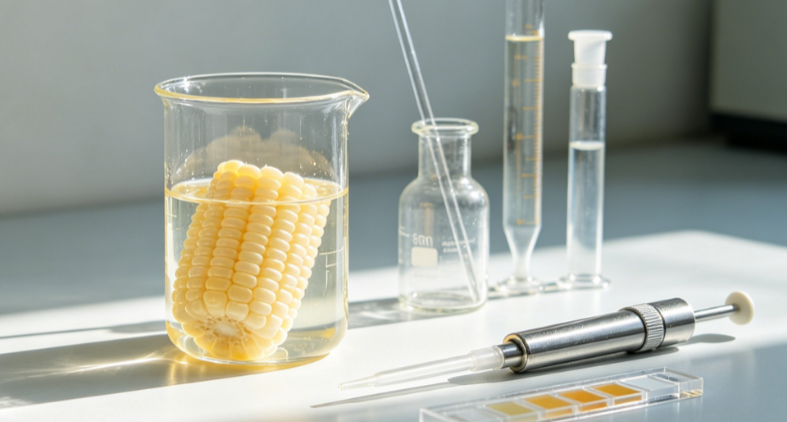
What We Measure – From Basic Quantification to Full Flavonoid Profiling
Our standard service provides accurate isoorientin concentration (mg/g dry weight or mg/g fresh weight) using high‑performance liquid chromatography coupled with diode array detection (HPLC‑DAD) at 350 nm. Calibration is performed with a certified isoorientin reference standard, with a detection limit of 0.05 µg/mL and linearity from 0.1 to 200 µg/mL. But we go much deeper. We offer liquid chromatography‑tandem mass spectrometry (LC‑MS/MS) in multiple reaction monitoring (MRM) mode, achieving a limit of quantification (LOQ) as low as 0.5 ng/g fresh weight – ideal for low‑abundance samples or metabolic studies. Using the same run, we can simultaneously quantify other related C‑glycosyl flavones such as orientin, vitexin, isovitexin, and luteolin derivatives, providing a complete flavonoid fingerprint of your maize sample (kernels, silks, leaves, or processed fractions).
Advanced Capabilities for Challenging Corn Matrices
Maize contains starch, proteins, and waxes that interfere with extraction and chromatography. Our optimised solid‑liquid extraction uses acidified methanol (70% MeOH with 0.1% formic acid) with ultrasonication and hot water bath, followed by solid‑phase extraction (SPE) on C18 cartridges to remove pigments and lipids. For bound isoorientin (glycosylated or esterified forms), we perform acid or enzymatic hydrolysis before quantification. We also offer high‑resolution mass spectrometry (Q‑TOF or Orbitrap) for structural confirmation of isoorientin in unknown samples, including identification of positional isomers. Our method is validated for corn kernels, corn silks (stigma maydis), corn leaves, tassels, and processed products (flour, bran, tortillas).
What You Receive – Actionable Isoorientin Data
Your final report includes: isoorientin concentration with standard deviation (from triplicate injections), chromatograms (HPLC‑DAD or LC‑MS/MS), calibration curve parameters, recovery percentage (spike recovery >92% across matrices), and LOQ/LOD values for your specific sample type. For comparative studies (different hybrids, growth stages, or processing methods), we provide statistical analysis (t‑test, ANOVA) and a visual bar graph. Upon request, we also report the isoorientin-to-total flavonoid ratio and antioxidant activity correlation (DPPH or ORAC) from the same extract.
Our Distinct Advantages in Maize Isoorientin Testing
1. Matrix‑optimised extraction: Our proprietary pressurised liquid extraction (PLE) method for corn silks and kernels increases yield by 30‑50% compared to conventional solvent extraction, verified by spike recovery experiments. 2. Ultra‑sensitivity: LC‑MS/MS detection at sub‑ppb levels allows you to quantify isoorientin in small samples (e.g., single kernels or early‑stage silks) – essential for mapping spatial and temporal accumulation. 3. High throughput: With automated injection and batch processing, we can analyse up to 200 samples per week, delivering results in 5‑7 business days. 4. Distinguishing isomers: Isoorientin and orientin are structural isomers with similar retention times on standard C18 columns. Our pentafluorophenyl (PFP) column method achieves baseline separation, eliminating misidentification. 5. Regulatory and research ready: Our data meet AOAC International guidelines for dietary supplement raw materials and can support GRAS notifications, health claim substantiation, or academic publication. We provide a full certificate of analysis with traceability to NIST‑traceable standards.
Why Choose Our Service Over General Analytical Labs
Many routine labs offer only total phenolic content or total flavonoid assays, which do not distinguish isoorientin from dozens of other compounds. Others use HPLC‑UV without verifying peak purity or isomer co‑elution. We give you definitive, isomer‑resolved quantification with mass spectrometry confirmation. Our team includes natural product chemists who have published on cereal flavone C‑glycosides. We provide one‑on‑one consultation to help you choose the right sample preparation (free vs. bound isoorientin) and to interpret results in the context of maize variety or processing. No hidden fees for LC‑MS/MS or SPE cleanup – we deliver a transparent, highly accurate report.
Ready to Quantify Isoorientin in Your Maize Samples with Precision?
Whether you are breeding for enhanced flavonoid content, standardising a corn silk extract for nutraceutical use, or investigating the effects of drought on secondary metabolism, our isoorientin analysis provides the specificity and sensitivity you need. Contact us today to discuss your maize tissue type, expected concentration range, and analytical objectives. We offer a free initial consultation, sample submission guidelines with stabilisation instructions (flash‑freezing or dry ice shipment), and a discounted pilot analysis for first‑time clients. Let us help you obtain accurate, publication‑ready isoorientin data from your corn samples.