Reasons for choosing our testing services
ZHONGXI Testing has obtained inspection qualification certifications from multiple countries and regions worldwide. We possess a senior testing team and advanced testing methods, providing independent, impartial, and professional third-party verification services for global carbon projects.

Internationally recognized authority
Certified by multiple international standards such as CNAS, VCS, and GS, with reports universally applicable worldwide.

Global service capability
Covering 140+ countries and regions, it supports on-site detection and remote verification in multiple languages.

Professional experimental methods
Adopt standard experimental methods to ensure accurate and reliable data.
Professional Glutamate Content Analysis Service for Soybean (Glycine max)
We understand that you are searching for glutamate detection in soybean because you need to evaluate flavour intensity (umami), optimise fermentation processes for soy sauce or miso, monitor protein quality for feed formulations, or meet food labelling requirements for free amino acids. Our high‑sensitivity, matrix‑optimised glutamate quantification platform goes far beyond simple total protein or crude amino acid measurements. We deliver precise determination of free glutamate (the flavour‑active form) and total glutamate (free + protein‑bound), with full differentiation from other acidic amino acids and interference‑free results in complex soy matrices.
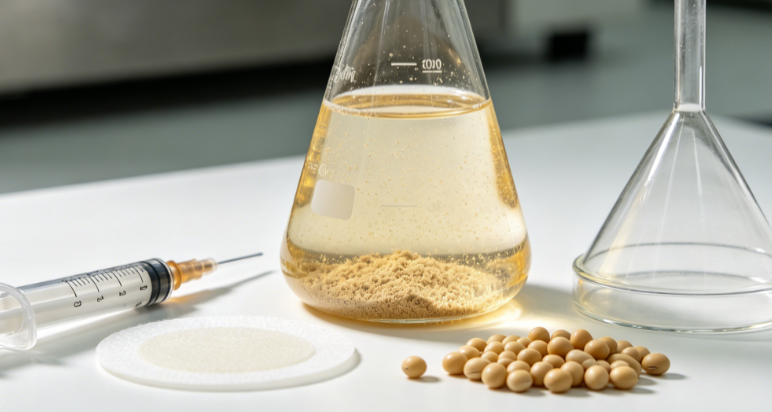
What We Measure – From Free Glutamate to Total and Protein‑Bound Pools
Our standard service quantifies free glutamate (mg/100g or mg/g dry weight) using high‑performance liquid chromatography (HPLC) with pre‑column derivatisation (OPA or AQC) and fluorescence detection. Detection limit is 0.5 µg/mL, with linearity from 1 to 500 µg/mL. But we go much deeper. We also determine total glutamate after acid hydrolysis (6N HCl, 110°C, 24h) under nitrogen to release all protein‑bound glutamate, then report the protein‑bound glutamate fraction (total minus free). Using LC‑MS/MS in multiple reaction monitoring (MRM) mode, we differentiate glutamate from its isomer glutamine and from aspartate, achieving a limit of quantification of 10 ng/g. For advanced characterisation, we perform chiral analysis to quantify L‑glutamate (natural, bioactive) versus D‑glutamate (which can arise during fermentation or thermal processing). We also offer enzymatic assay (glutamate dehydrogenase‑based) as a rapid, cost‑effective screening tool for high‑throughput projects.
Advanced Capabilities for Challenging Soybean Matrices
Soybeans contain high levels of protein (35‑40%), lipids, phytates, and pigments that interfere with amino acid extraction and derivatisation. Our optimised sample preparation uses defatting with hexane, deproteinisation with sulfosalicylic acid or methanol, and solid‑phase extraction (SPE) on C18 or cation exchange cartridges to remove interfering compounds. For hydrolysed samples, we include a neutralisation and dilution step with sodium hydroxide and citrate buffer to adjust pH for derivatisation. We also provide microwave‑assisted acid hydrolysis for faster turnaround (2 hours vs. 24 hours) without loss of glutamate. All extractions are performed under inert atmosphere (argon) to prevent oxidation of labile amino acids. Our method is validated for whole soybean seeds, defatted meal, soy protein isolate, textured vegetable protein, fermented products (tempeh, natto), and soy milk.
What You Receive – Actionable Glutamate Data
Your final report includes: free glutamate concentration (mg/100g), total glutamate concentration, calculated protein‑bound glutamate, and (if requested) D‑ vs. L‑glutamate ratio. We provide chromatograms (HPLC or LC‑MS/MS), calibration curves with correlation coefficient >0.999, spike recovery percentages (typically 92‑105%), and measurement uncertainty. For comparative studies (different soybean varieties, germination stages, or processing conditions), we include statistical analysis (t‑test, ANOVA) and visual plots. For clients in fermentation industries, we also report glutamate as a percentage of total free amino acids (an indicator of umami intensity).
Our Distinct Advantages in Soybean Glutamate Testing
1. Dual detection platform for cross‑validation: We use both HPLC‑FLD and LC‑MS/MS on the same samples to confirm results – especially important when glutamine conversion to glutamate during hydrolysis could cause overestimation. 2. Preserved sample integrity during transport: We provide stabilisation kits (metaphosphoric acid or dry ice packs) for fresh soybean samples to prevent enzymatic conversion of glutamine to glutamate. 3. High throughput: With automated amino acid analysers and 96‑well plate extraction, we process up to 300 samples per week, delivering results in 3‑5 business days for free glutamate and 7 days for total glutamate (including hydrolysis). 4. Distinguishing artefactual glutamate: We include a blank hydrolysis control to correct for any glutamate generated from breakdown of other compounds during acid hydrolysis – a step most labs skip. 5. Regulatory alignment: Our methods follow AOAC 988.15 (amino acid analysis), ISO 13903:2005 (feedstuffs), and the Chinese National Standard GB 5009.124-2016. We issue a Certificate of Analysis suitable for nutritional labelling, patent submissions, and regulatory approval.
Why Choose Our Service Over Routine Amino Acid Labs
Many standard labs report only total amino acids after hydrolysis, failing to distinguish free glutamate from protein‑bound forms – and they often cannot separate glutamate from glutamine, leading to inaccurate flavour or quality predictions. We give you the full pool‑specific picture of where glutamate resides and in which chemical form. Our team includes food chemists and soybean specialists who understand the impact of processing (heat, pH, fermentation) on glutamate liberation. We provide one‑on‑one consultation to interpret your data – for example, whether a high total glutamate but low free glutamate indicates poor protein digestibility or inadequate fermentation. No hidden fees for LC‑MS/MS or chiral analysis; we deliver a transparent, decision‑ready report.
Ready to Quantify Glutamate in Your Soybean Samples with Precision?
Whether you are developing a high‑umami soy variety, optimising soy sauce fermentation, validating a protein hydrolysate, or meeting feed label claims, our glutamate analysis service provides the specificity and accuracy you need. Contact us today to discuss your sample type (whole beans, meal, isolate, or fermented product) and your analytical goals (free vs. total, chiral form, or process validation). We offer a free initial consultation, sample submission kits with stabilisation instructions, and a discounted pilot analysis for first‑time clients. Let us help you unlock the precise glutamate profile of your soybean products.