Reasons for choosing our testing services
ZHONGXI Testing has obtained inspection qualification certifications from multiple countries and regions worldwide. We possess a senior testing team and advanced testing methods, providing independent, impartial, and professional third-party verification services for global carbon projects.

Internationally recognized authority
Certified by multiple international standards such as CNAS, VCS, and GS, with reports universally applicable worldwide.

Global service capability
Covering 140+ countries and regions, it supports on-site detection and remote verification in multiple languages.

Professional experimental methods
Adopt standard experimental methods to ensure accurate and reliable data.
Professional Sporothrix globosa Detection and Identification Service
We understand that you are searching for Sporothrix globosa detection because accurate identification of this emerging dimorphic fungal pathogen is essential for the proper diagnosis and treatment of sporotrichosis. As the predominant etiological agent of sporotrichosis in China, S. globosa requires precise laboratory confirmation, yet traditional diagnostic methods often suffer from low sensitivity, lengthy turnaround times, and an inability to differentiate at the species level[reference:0][reference:1]. Our comprehensive, multi‑platform detection service is specifically designed to overcome these challenges, providing rapid, species‑specific identification directly from a wide range of clinical specimens with exceptional sensitivity and reliability.
What We Detect and How Deep We Go
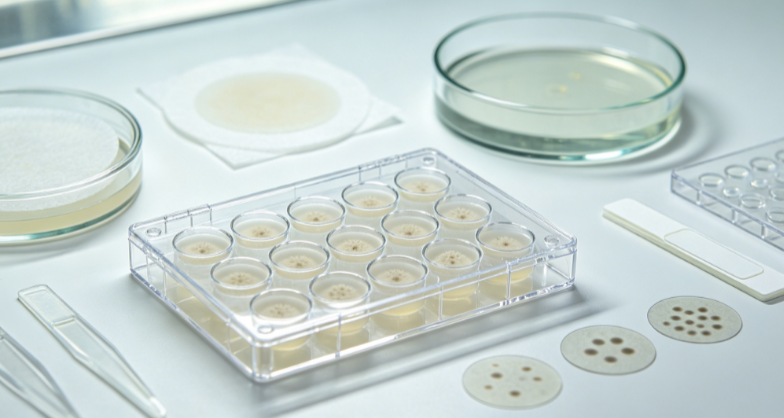
Our standard detection service begins with conventional mycological culture on Sabouraud dextrose agar, Mycosel agar, and brain heart infusion agar, incubated at both 28 °C (to observe the characteristic filamentous form with septate hyphae and oval conidia) and 37 °C (to induce the yeast phase). However, we fully recognise the inherent limitations of culture: it is time‑consuming (5–8 days to visible growth), susceptible to contamination, and often fails to detect the fungus in samples with low fungal burden[reference:2]. Consequently, our service goes far deeper. We offer a comprehensive panel of downstream confirmatory methods that provide both rapid results and definitive species‑level identification.
Advanced Capabilities for Definitive Species Identification
To overcome the insufficiency of culture alone, we employ a combination of cutting‑edge molecular and proteomic techniques. Our quantitative real‑time PCR (qPCR) assay targets polymorphisms within the calmodulin (CAL) gene and the internal transcribed spacer (ITS) region, achieving 100% sensitivity and 100% specificity for S. globosa with an exceptionally low limit of detection of just 6 fg/µL of DNA[reference:3][reference:4]. This method allows for a prompt, objective, and targeted diagnosis directly from clinical specimens. For cases requiring additional confirmatory power, we provide nested PCR that can identify Sporothrix spp. directly from clinical samples – including skin biopsies, exudates, and other biological fluids – without the need for prior fungal isolation[reference:5]. For complete certainty, we perform Sanger sequencing of multiple genetic loci, including the CAL gene, β‑tubulin (BT2), and translation elongation factor 1‑alpha (TEF‑1α). This multilocus approach offers high phylogenetic resolution, enabling accurate species delimitation within the Sporothrix complex[reference:6].
What You Receive – A Complete Diagnostic Report
Your final report includes: culture results (if performed), direct microscopy findings (KOH preparation, PAS, GMS, and Gram stains), qPCR detection results with cycle threshold values and species identification, DNA sequencing chromatograms and BLAST analysis, and a clear diagnostic conclusion indicating the presence or absence of S. globosa and any other co‑infecting pathogens. For histopathological confirmation, we perform specialised staining, including Grocott methenamine silver and periodic acid–Schiff, on formalin‑fixed paraffin‑embedded tissue samples with comprehensive slide review by our expert pathologists[reference:7]. Upon request, we also provide antifungal susceptibility testing (AST) against a panel of seven agents, including terbinafine, itraconazole, voriconazole, posaconazole, amphotericin B, fluconazole, and ketoconazole, following Clinical and Laboratory Standards Institute broth microdilution guidelines for both the mycelial and yeast phases of the isolate[reference:8][reference:9]. We will report the minimum inhibitory concentrations and provide an interpretive susceptibility profile to guide optimal clinical treatment.
Our Distinct Advantages in Sporothrix globosa Detection
1. Gold‑standard molecular confirmation: Our qPCR assay, validated in a recent clinical study, achieves 100% sensitivity and specificity for S. globosa, with a detection limit as low as 6 fg/µL of DNA[reference:10]. 2. Direct detection from clinical specimens: Unlike methods that require fungal isolation, our nested PCR and qPCR protocols work directly on primary samples, drastically reducing the time to diagnosis and eliminating culture‑related biases[reference:11]. 3. High‑throughput and rapid turnaround: With our automated extraction and PCR systems, we can process up to 96 samples per week and deliver molecular results in 24–48 hours (for PCR) or 5–7 days for combined culture, sequencing, and susceptibility testing. 4. Specimen‑type versatility: We accept a broad range of clinical specimens, including fresh or formalin‑fixed paraffin‑embedded tissue, skin exudates, pus, conjunctival secretions, blood, and body fluids. Our protocols are optimised for the specific challenges of each matrix. 5. Regulatory and clinical alignment: Our diagnostic approach follows the latest WHO and national guidelines for sporotrichosis diagnosis, and our reporting is compliant with Clinical Laboratory Improvement Amendments and International Organization for Standardisation 15189 standards where applicable. We provide a Certificate of Analysis suitable for clinical management, epidemiological surveillance, and research publication.
Why Choose Our Service Over Routine Clinical Laboratories
Many routine laboratories rely solely on culture and direct microscopy, methods that are time‑consuming, insensitive, and incapable of distinguishing S. globosa from related species such as S. schenckii or S. brasiliensis[reference:12]. This lack of species‑level information can lead to diagnostic delays and suboptimal therapeutic choices. We give you the complete picture – culture, microscopy, serology (if indicated), targeted qPCR, multilocus DNA sequencing, and comprehensive antifungal susceptibility testing – all under one roof. Our integrated service is designed to answer the critical clinical questions: Is the infection caused by Sporothrix? Which species is involved? What is the most effective antifungal agent? Our team includes clinical mycologists and molecular diagnostic specialists with extensive experience in fungal pathogen identification, and we are committed to providing a rapid, accurate, and clinically actionable report.
Ready to Diagnose Sporothrix globosa with Confidence and Speed?
Whether you are managing a suspected case of cutaneous or disseminated sporotrichosis, conducting epidemiological surveillance, or validating a research isolate, our detection service provides the precision, depth, and speed you require. Contact us today to discuss your sample type, clinical presentation, and diagnostic objectives. We offer a free initial consultation, sample submission guidelines with appropriate transport media, and a discounted pilot analysis for first‑time clients. Let us help you achieve an accurate and timely diagnosis of Sporothrix globosa – the essential first step toward effective antifungal therapy.