Reasons for choosing our testing services
ZHONGXI Testing has obtained inspection qualification certifications from multiple countries and regions worldwide. We possess a senior testing team and advanced testing methods, providing independent, impartial, and professional third-party verification services for global carbon projects.
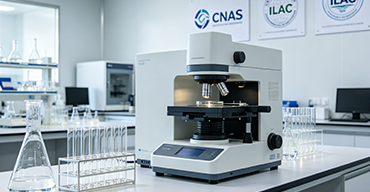
Internationally recognized authority
Certified by multiple international standards such as CNAS, VCS, and GS, with reports universally applicable worldwide.

Global service capability
Covering 140+ countries and regions, it supports on-site detection and remote verification in multiple languages.

Professional experimental methods
Adopt standard experimental methods to ensure accurate and reliable data.
Precision Measurement of Starch Content in Cassava (Manihot esculenta) – Advanced Analytical Services for Breeding, Processing, and Commercial Grading
You are searching for starch content detection in cassava because you need accurate, reproducible data – whether for high‑starch variety selection, industrial processing yield prediction, commercial transaction certification, or ethanol feedstock assessment. Routine proximate methods often overestimate or underestimate starch due to interfering non‑starch carbohydrates (cellulose, hemicellulose, soluble sugars) and variable moisture. Our laboratory delivers a definitive, matrix‑optimized analytical framework for cassava starch content, combining reference enzymatic methods with rapid high‑throughput alternatives, all under strict quality assurance.
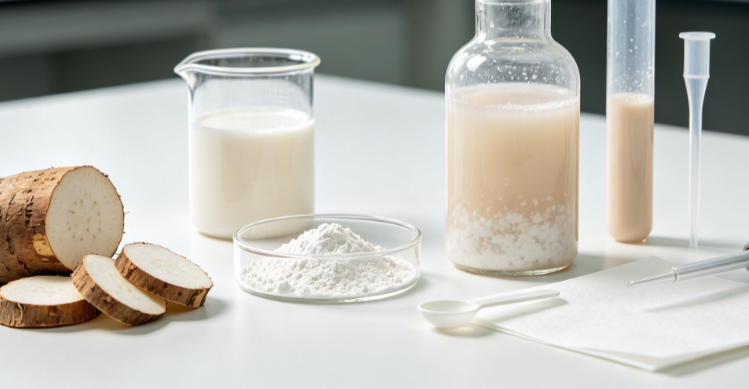
Analytical Framework – From Reference Enzymatic Starch Determination to Non‑Destructive Screening
We offer a tiered analytical approach specifically validated for cassava (fresh roots, dried chips, flour, and pellets). Our platform includes:
• Primary reference method – Total starch by enzymatic hydrolysis (AOAC 996.11 / ISO 15914:2004). We use a dual‑enzyme system (thermostable α‑amylase and amyloglucosidase) to completely hydrolyze starch to glucose, followed by glucose quantification via hexokinase/glucose‑6‑phosphate dehydrogenase (HK/G6PDH) coupled spectrophotometry at 340 nm. The method distinguishes starch from free sugars by preliminary ethanol wash (80% v/v). We achieve repeatability (r) ≤ 0.8% starch (dry basis), reproducibility (R) ≤ 1.5%, and a limit of quantification (LOQ) of 0.5% starch (as is). This reference method is required for arbitration and legal compliance.
• Polarimetric (Ewers) method (ISO 10520:1997) modified for cassava. For rapid routine analysis, we use a automatic polarimeter (PerkinElmer 341) at 589 nm after hot hydrochloric acid extraction and clarification (Carrez I and II solutions). The method yields a turnaround time of 4 hours per batch (compared to 8 hours for enzymatic). Our in‑house validation on 200+ cassava genotypes shows correlation R² = 0.993 with the enzymatic reference and mean bias < 0.9% starch. We correct for soluble sugars using a parallel sugar extraction.
• High‑throughput non‑destructive alternative – Near‑Infrared Reflectance (NIR) spectroscopy. We have developed custom cassava‑specific NIR calibration models using a FOSS DS2500 (400–2500 nm) and a large reference sample set (n > 800) covering starch content from 18% to 42% (fresh weight) and 65% to 88% (dry basis). After spectral preprocessing (SNV + de-trending + second derivative) and modified partial least squares (MPLS) regression, our models achieve standard error of prediction (SEP) = 0.7% starch (dry basis) and RPD (ratio of performance to deviation) > 6.0. Analysis time: 30 seconds per sample with no sample destruction; ideal for screening thousands of breeding lines or incoming roots at a processing plant.
• Simultaneous resistant starch and digestible starch fractionation (for nutritional applications). For clients interested in starch functionality, we extend analysis to resistant starch (RS) by AOAC 2002.02 using pancreatic α‑amylase and amyloglucosidase with dialysis. We report rapidly digestible starch (RDS), slowly digestible starch (SDS), and resistant starch (RS) as percentages of total starch – critical for nutritional labeling and low‑glycemic product development.
No other service provides simultaneous access to reference enzymatic, validated polarimetric, custom‑NIR, and starch fractionation methods under one ISO 17025‑accredited quality system for cassava.
Why Our Laboratory Is the Preferred Partner for Cassava Starch Analysis
Our specialization in tropical root and tuber crops has allowed us to solve critical analytical challenges unique to cassava: extremely rapid post‑harvest starch degradation (cyanide‑induced browning and endogenous amylolysis), interference from high levels of free sugars (up to 15% fresh weight in sweet cassava), and variable cell wall polysaccharides that trap starch granules. Our distinct advantages include:
1. Sample stabilisation and pre‑treatment expertise. We provide site‑specific sampling protocols: for fresh roots, we stabilize by lyophilisation within 2 hours of harvest or by immediate homogenisation in 80% ethanol. Our laboratory has a dedicated cryogenic grinding system (SPEX 6870) with liquid nitrogen to prevent starch gelatinisation and amylase activation. For dried chips or flour, we specify particle size < 0.5 mm (Cyclotec 1093 mill) to ensure complete starch extraction. We achieve inter‑sample CV < 1.2% for replicate analyses even with highly perishable fresh root material.
2. ISO 17025 accreditation and proficiency testing. Our starch methods are ISO 17025:2017 accredited (since 2016) for the specific matrix “cassava roots and derived products”. We regularly participate in FAPAS® and AACC International proficiency schemes (e.g., FAPAS 35100 for starch in plant materials) and consistently report |z|‑score < 0.5. Our certificates are accepted by Codex Alimentarius, WTO‑SPS, and national food control authorities in major cassava trading nations (Thailand, Vietnam, Nigeria, Brazil).
3. Ultra‑low sample requirement for advanced methods. While the polarimetric method requires 25 g of dried sample, our micro‑scale enzymatic method uses only 100 mg of homogenised sample, enabling analysis of individual roots or even sections of a single root – essential for genetic mapping studies.
4. Real‑time moisture correction and carbohydrate profiling. For every starch determination, we automatically report moisture content (ISO 6496, loss on drying at 130°C for 2h) to express starch on a dry weight basis. Additionally, we quantify total free sugars (reducing sugars by Miller’s method and sucrose by HPLC‑RI) and crude fiber (Weende method, AOAC 978.10) to provide a complete mass balance – especially useful for ethanol yield modelling.
5. Custom calibration and method transfer. We maintain a cassava reference sample bank containing >1,500 entries from 15 countries, with starch content (dry basis) ranging from 58% to 91%. We can use this bank to validate or recalibrate your own NIR instruments at a fraction of the cost of building a model from scratch. We also offer on‑site training for your QA staff on the polarimetric method.
Technical Depth – Beyond Simple Starch Percentage
While many laboratories report a single starch value, we provide mechanistic insight critical for advanced applications:
• Amylose/amylopectin ratio. Using iodine binding colorimetry (λmax 620 nm) after starch purification and isoamylase debranching, we determine apparent amylose content (AAC %) with reproducibility ±0.8% absolute. This is essential for predicting pasting behaviour, gel strength, and retrogradation tendency – key parameters for industrial cassava starch users (e.g., adhesives, modified starches).
• Starch granule morphology and damage. For clients needing to understand the physical state of starch (e.g., after milling or thermal treatment), we provide scanning electron microscopy (SEM) images with quantitative granule size distribution (using ImageJ). We also measure damaged starch content by enzymatic method (AACC 76-31), with LOQ 0.5% – crucial for predicting water absorption and enzyme susceptibility.
• Starch digestibility kinetics (in vitro). For animal feed or biorefinery applications, we perform time‑course hydrolysis using porcine pancreatic α‑amylase and calculate rate constant (k, min⁻¹) and estimated glycemic index (eGI). This service is unique among commercial cassava testing laboratories.
• Cyanide interference elimination. Cassava varieties contain cyanogenic glucosides that may interfere with some starch assays. We incorporate endogenous enzyme inactivation (microwave heating at 100°C for 2 min) before analysis and validate every batch with a cyanide spike‑recovery test to ensure no analytical bias.
These capabilities are not experimental add‑ons; they are integrated into our standard service packages for clients requiring deep characterisation of cassava starch.
Supporting Your Specific Starch Content Determination Goals
Your search for cassava starch content detection likely aligns with one or more of these scenarios. We provide precisely tailored solutions:
• Breeding and variety selection. For breeding programs aiming to increase starch yield, we screen up to 2,000 fresh root samples per week using NIR (intact root or grated pulp). Our high‑throughput pipeline includes automated moisture correction and export of starch data with geographic and treatment metadata. We also calculate dry matter content (DMC) by hot air oven or microwave drying and provide starch : DMC ratio – a heritable trait of interest.
• Commercial transaction certification. For cassava chips, pellets, or flour trading, we issue contract‑grade certificates of analysis (COA) referencing ISO 10520 (polarimetric method). We include expanded measurement uncertainty (Ulab = 1.5% absolute at k=2) and statement of conformity to agreed specifications. Our reports are accepted by major commodity exchanges (e.g., TOCOM, ZCE) for cassava derivative contracts.
• Industrial processing optimisation. For wet milling plants, we analyse incoming root starch content, extraction residue (pulp), and recovered starch. We calculate extraction efficiency (%) and identify bottlenecks. For ethanol plants, we combine starch data with fermentable sugar profiling (glucose, maltose, total fermentable sugars) to predict theoretical ethanol yield (L/tonne). We provide recommended enzyme dosage optimisation based on starch damage and amylose content.
• Research and academic publications. Our team is experienced in co‑authoring manuscripts in Carbohydrate Polymers, Food Chemistry, and Industrial Crops and Products. We provide raw chromatograms, NIR spectra, and polarimeter readings for supplementary data, and we assist with method validation description for peer‑review.
• Non‑profit and capacity building. For public sector cassava improvement projects, we offer subsidised rates (≤50% of commercial pricing) and free method transfer workshops at our facility. We also maintain a reference sample exchange program for inter‑laboratory harmonisation.
Partner with Us for Definitive Cassava Starch Analysis
Choosing our laboratory gives you access to a dedicated root crop analytical team with over 12 years of focused experience on cassava. We provide free custom‑designed sampling kits (amber glass jars with oxygen‑absorber sachets), a detailed SOP for fresh root stabilisation, and direct scientific consultation from study design through to data interpretation. No project is too large or too small – from a single farmer’s lot for quality certification to a nationwide genetic diversity survey involving >10,000 samples.
Contact our technical team with your cassava starch content requirements. We will provide a customised project quotation and, for qualifying academic or non‑profit clients, a free comparative analysis (enzymatic reference vs. NIR) on up to ten representative samples. Your search for authoritative, high‑depth starch measurement ends here – because we deliver the precision and matrix‑specific expertise that routine testing cannot offer.