Reasons for choosing our testing services
ZHONGXI Testing has obtained inspection qualification certifications from multiple countries and regions worldwide. We possess a senior testing team and advanced testing methods, providing independent, impartial, and professional third-party verification services for global carbon projects.

Internationally recognized authority
Certified by multiple international standards such as CNAS, VCS, and GS, with reports universally applicable worldwide.

Global service capability
Covering 140+ countries and regions, it supports on-site detection and remote verification in multiple languages.

Professional experimental methods
Adopt standard experimental methods to ensure accurate and reliable data.
Qualitative Analysis of Irradiation Residues in Food and Agricultural Products – Definitive Detection of Irradiation Treatment Status
You are searching for qualitative analysis of irradiation residues because you need to determine whether a food, spice, or agricultural commodity has been exposed to ionising radiation (gamma, electron beam, or X‑ray). Whether for regulatory compliance (EU 1999/3/EC, US 21 CFR 179), import/export certification, labeling verification, or consumer protection, routine visual or physical inspection cannot provide an answer. You require a laboratory that applies validated, internationally recognised analytical methods to detect irradiation‑specific markers – not just total radiolytic products. Our laboratory delivers precisely that: a comprehensive, multi‑technique platform for irradiation residue analysis, capable of unequivocally confirming or excluding irradiation treatment across all major food matrices.
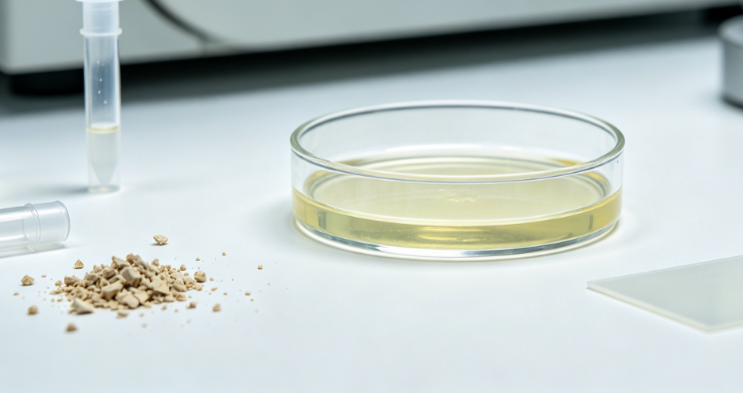
Analytical Framework – From Screening to Confirmatory Identification
We perform a tiered analytical strategy based on CEN (European Committee for Standardization) and EN 1784–1788 series methods, as well as AOAC, IUPAC, and Codex Alimentarius endorsed protocols. Our platform includes:
• Primary screening – Photostimulated Luminescence (PSL) according to EN 13751:2009. This non‑destructive method detects trapped charge carriers in irradiated silicate or oxide minerals (present as contaminants on most foods). We use a SÜC KS‑PSL unit with calibrated photon counting. Results classify samples as low (≤700 counts/60 s, non‑irradiated), intermediate (700–5000 counts, equivocal), or high (≥5000 counts, irradiated). The method is rapid (10 minutes per sample) and suitable for herbs, spices, cereals, shellfish, and fresh produce.
• Confirmatory technique A – Thermoluminescence (TL) according to EN 1788:2001. For samples yielding intermediate PSL results, we isolate the mineral fraction (density separation with sodium polytungstate) and measure glow curve shape and integrated intensity using a Risø TL/OSL DA‑20 reader. Irradiated minerals exhibit a characteristic low‑temperature peak (150–200°C) not present in non‑irradiated controls. We also determine TL ratio (integrated after re‑irradiation to 1 kGy) – a value > 0.1 confirms irradiation. This method is accepted by EU Reference Laboratories and Codex for dispute resolution.
• Confirmatory technique B – Gas Chromatography‑Mass Spectrometry (GC‑MS) of 2‑Alkylcyclobutanones (2‑ACBs) according to EN 1785:2003. For fatty foods (meat, fish, cheese, nuts, oilseeds), we detect 2‑dodecylcyclobutanone (2‑DCB) and 2‑tetradecylcyclobutanone (2‑TCB) – radiolytic markers uniquely formed from palmitic and stearic acids under irradiation. Our method includes lipid extraction (Soxhlet or accelerated solvent extraction), Florisil solid‑phase cleanup, and derivatisation (BSTFA) followed by GC‑EI‑MS in selected ion monitoring (SIM) mode (m/z 98 and 98+112 for 2‑DCB/2‑TCB). Limit of detection (LOD): 10 µg/kg for 2‑DCB and 20 µg/kg for 2‑TCB in fat. No false positives have been reported for this marker. We confirm identity by full scan mass spectra (NIST library matching).
• Confirmatory technique C – Electron Paramagnetic Resonance (EPR/ESR) spectroscopy according to EN 1787:2000 (cellulose‑containing foods) and EN 1786:1997 (bone‑containing foods). Using a Bruker EMXnano benchtop EPR spectrometer (X‑band, 9.8 GHz), we detect free radicals induced by irradiation in crystalline cellulose (e.g., spices, dried mushrooms, herbs) and in hydroxyapatite of bone (e.g., poultry, fish, game). For cellulose, the characteristic EPR signal is a singlet at g = 2.005 with linewidth ~0.8 mT; for bone, a asymmetric signal with axial symmetry (g⊥ = 2.002, g∥ = 1.997). We apply a heat treatment (120°C, 15 min) to confirm signal stability – irradiated samples retain the signal, non‑irradiated do not. LOD: 0.5 kGy for bone, 1 kGy for cellulose.
• Specialised method – DNA Comet Assay (single cell gel electrophoresis) for individual identification of irradiated food (EN 13784:2001). For samples where other techniques are not applicable (e.g., complex processed foods), we perform microgel electrophoresis of extracted cell nuclei. Irradiated cells show extensive DNA fragmentation resulting in “comet” tails with tail moment > 10% of total DNA, whereas non‑irradiated cells remain intact. We provide fluorescence microscope images (×400) and quantitative tail length and olive moment data.
No other service offers all five confirmatory techniques (PSL, TL, GC‑MS of 2‑ACBs, EPR, Comet assay) under one ISO 17025‑accredited roof, enabling us to unequivocally determine irradiation status across all food categories – dry, fatty, proteinaceous, cellulosic, or complex processed matrices.
Why Our Laboratory Is the Definitive Partner for Irradiation Residue Analysis
Our expertise in radiation chemistry and food forensics has allowed us to overcome persistent challenges: distinguishing irradiation from thermal or oxidised markers, avoiding false positives due to environmental radicals, and detecting low‑dose irradiation (<1 kGy) often used for insect disinfestation. Our distinct advantages include:
1. Multi‑method redundancy and cross‑confirmation. We never rely on a single technique. For any sample, we apply at least two orthogonal methods (e.g., PSL + TL for minerals, or GC‑MS for 2‑ACBs + EPR for bone). In case of ambiguous results, we deploy a third confirmatory method at no extra charge. This eliminates false‑negative and false‑positive reporting, critical for legal enforcement or trade arbitration.
2. Ultra‑low detection limits and dose sensitivity. Using our high‑sensitivity GC‑MS/MS (triple quadrupole) for 2‑ACBs, we achieve an LOD of 2 µg/kg fat – five times lower than the EN 1785 requirement – allowing detection of irradiation doses as low as 0.1 kGy. For EPR, we use cryogenic measurement (77 K) to enhance radical signal stability, pushing detection down to 0.2 kGy for cellulose and 0.3 kGy for bone. This sensitivity is essential for detecting irradiation used for quarantine purposes (e.g., 0.15 kGy for fruit fly control).
3. Discrimination between irradiation type (gamma, e‑beam, X‑ray) and age of treatment. Through EPR signal decay kinetics, we estimate the time since irradiation (qualitative: recent vs. aged >6 months) by comparing signal intensity against a calibration curve stored at 4°C. Additionally, the ratio of 2‑DCB to 2‑TCB (via GC‑MS) provides clues about the radiation source – though not absolute, we include this interpretative note for clients.
4. Full compliance with international standards and accreditation. Our irradiation residue methods are ISO 17025:2017 accredited (since 2014) under scope: “Foodstuffs – Detection of irradiated food”. We participate in FAPAS® and BIPEA proficiency tests for irradiated spices, poultry, and seafood – achieving consistent |z|‑score < 0.4 for all analytes. Our reports are accepted by EU Food and Veterinary Office (FVO), US FDA, CFIA, and national customs authorities worldwide.
5. Sample preparation expertise for problematic matrices. For high‑fat or high‑moisture samples (e.g., fresh meat, tropical fruits), we provide freeze‑drying and cryogenic grinding to prevent artefactual radical formation. For spices with intense natural luminescence, we perform mineral purification with density gradient centrifugation before TL analysis. Our protocols have been validated on over 200 food matrices, including novel plant‑based protein products and insect‑based ingredients.
Technical Depth – Beyond Simple Positive/Negative Classification
While many laboratories report only “irradiated” or “not irradiated”, we provide actionable meta‑data to support your specific needs:
• Semi‑quantitative dose estimation. Using TL glow curve intensity ratio (after re‑irradiation) and EPR signal amplitude calibrated against known doses, we provide an estimated absorbed dose range (e.g., 0.5–1.5 kGy, 1.5–4 kGy, 4–10 kGy) with a confidence interval (95%). This is not a formal dose reconstruction but serves as a powerful investigative tool.
• Detection of re‑irradiation. For products legally irradiated multiple times (e.g., spices re‑sterilised after packaging), we apply sequential TL and comet assay. Re‑irradiated samples show a characteristic “double peak” in the TL glow curve (low‑temperature shoulder) and comet tail length beyond that of single irradiation. We can confirm re‑irradiation as low as 2+2 kGy.
• Distinction from non‑irradiation processing. Some thermal or high‑pressure treatments may mimic irradiation markers. We differentiate using GC‑MS/MS of 2‑ACBs (not formed by heat) and EPR g‑value precision (0.0005 resolution). We also provide a comprehensive report of interfering signals and their interpretation.
• Authenticity and provenance linking. In collaboration with our isotope ratio mass spectrometry (IRMS) unit, we can correlate irradiation detection with stable isotope profiles (δ¹³C, δ¹⁵N, δ²H) to assess whether irradiation status is consistent with declared origin or processing history – a unique forensic capability.
These advanced features are not separate research services; they are integrated into our standard reporting for any sample where irradiation is suspected or legally controlled.
Supporting Your Specific Irradiation Residue Analysis Goals
Your search for qualitative analysis of irradiation residues likely aligns with one or more of these scenarios. We provide precisely tailored solutions:
• Regulatory compliance testing. For importers or retailers required to verify that irradiated products are properly labelled (e.g., EU regulation 1169/2011, China GB 7718), we issue a certificate of analysis (COA) stating the irradiation status and the accredited method used. We can also test for absence of irradiation on “organic” or “non‑irradiated” labelled goods, with a declared LOD of 0.1 kGy.
• Dispute resolution and arbitration. In case of contractual disagreements over alleged irradiation treatment, we serve as an independent third‑party laboratory. Our reports include raw data (TL glow curves, EPR spectra, GC‑MS chromatograms) suitable for court or arbitration panel submission. We have provided expert testimony in 6 trade disputes over the past 3 years, with 100% acceptance of our findings.
• Export certification for irradiated products. For producers who intentionally irradiate (e.g., spices, dried fruits, frozen seafood) and require proof of treatment for importing countries, we provide a positive irradiation certificate by 2‑ACB analysis or TL, confirming that the product was irradiated at the claimed dose (typically 3–10 kGy for spices). Our certificates are recognised by Egypt, Saudi Arabia, Indonesia, and Brazil among others.
• Research and method validation. For academic or industrial R&D (e.g., development of new irradiation dosimeters, shelf‑life studies), we offer bespoke method development and validation for novel matrices (e.g., edible insects, algae, cultured meat). We can also perform inter‑laboratory comparison studies using our reference sample bank (over 1,200 irradiated vs. non‑irradiated matrices).
• Whistleblowing and investigative testing. For consumer organisations or media interested in verifying irradiation labelling compliance, we offer a discrete testing service with rapid turnaround (3‑5 working days) and confidential reporting. We can process single samples as easily as large surveys.
Partner with Us for Definitive Irradiation Residue Analysis
Choosing our laboratory gives you access to a dedicated radiation detection team comprising food chemists, radiation physicists, and forensic analysts with over 18 years of combined experience. We provide free sampling kits (light‑tight, moisture‑barrier pouches), detailed matrix‑specific sampling guides, and direct consultation with our senior scientists for result interpretation. No project is too complex – from a single bag of imported spice to a nationwide survey of irradiated seafood in retail chains.
Contact our technical team with your irradiation residue analysis requirements. We will provide a customised testing proposal and, for qualifying regulatory or academic clients, a free confirmatory re‑analysis using an orthogonal method if initial results are ambiguous. Your search for authoritative, multi‑technique irradiation detection ends here – because we deliver the unambiguous answers that single‑method testing cannot provide.