Reasons for choosing our testing services
ZHONGXI Testing has obtained inspection qualification certifications from multiple countries and regions worldwide. We possess a senior testing team and advanced testing methods, providing independent, impartial, and professional third-party verification services for global carbon projects.
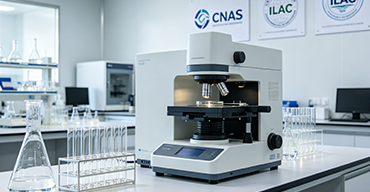
Internationally recognized authority
Certified by multiple international standards such as CNAS, VCS, and GS, with reports universally applicable worldwide.

Global service capability
Covering 140+ countries and regions, it supports on-site detection and remote verification in multiple languages.
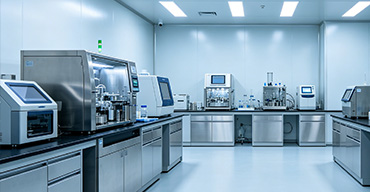
Professional experimental methods
Adopt standard experimental methods to ensure accurate and reliable data.
High‑Resolution Quantification of Anthocyanins in Plant Matrices and Food Products – Advanced Analytical Platform for Total and Individual Anthocyanin Profiling
You are searching for anthocyanin content detection because you require accurate, chemically specific data – whether for functional food labeling, breeding of pigmented crop varieties, quality control of natural colorants, antioxidant capacity assessment, or regulatory compliance (e.g., EU 1333/2008, FDA color additive regulations). Anthocyanins are highly unstable, pH‑sensitive, and prone to degradation during extraction and storage. Routine total phenolic assays (Folin‑Ciocalteu) are non‑specific and cannot distinguish anthocyanins from other flavonoids or interfering phenolics. You need a laboratory that delivers absolute, species‑resolved anthocyanin quantification using matrix‑optimized extraction, validated reference standards, and state‑of‑the‑art chromatographic separation. Our facility provides precisely that: a comprehensive anthocyanin analysis platform integrating pH differential spectrophotometry for total monomeric anthocyanins and ultra‑high performance liquid chromatography – tandem mass spectrometry (UHPLC‑MS/MS) for individual anthocyanin profiling, all ISO 17025‑accredited and validated for diverse matrices including fruits, vegetables, grains, flowers, extracts, beverages, and nutraceuticals.
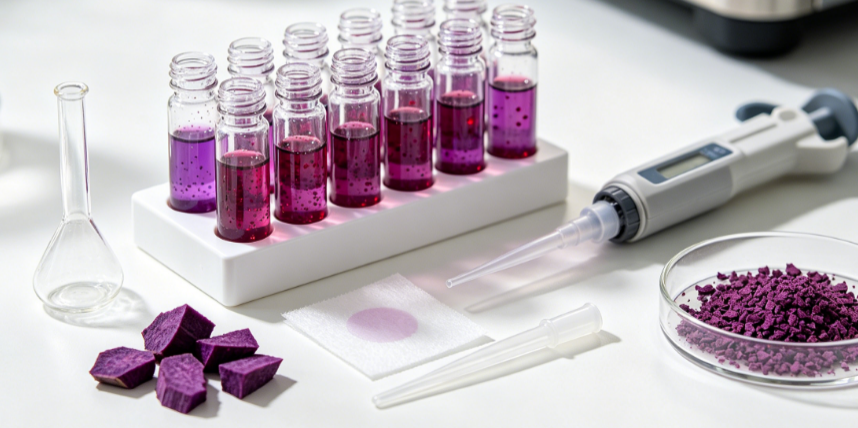
Analytical Framework – From Total Monomeric Anthocyanins to Individual Molecular Fingerprints
We offer a tiered analytical strategy tailored to your objectives, sample type, and required depth of information. Our platform includes:
• Primary screening – pH differential spectrophotometric method (AOAC 2005.02, based on the work of Giusti & Wrolstad). This reference method quantifies total monomeric anthocyanin content (TMAC) by measuring absorbance at 520 nm and 700 nm in two buffer systems (pH 1.0 and pH 4.5). We use a double‑beam UV‑Vis spectrophotometer (Shimadzu UV‑2600) with matched cuvettes and temperature control (20°C ± 0.5°C). Results are expressed as cyanidin‑3‑glucoside equivalents (mg/100 g fresh weight or mg/L) using an extinction coefficient of 26,900 L·cm⁻¹·mol⁻¹ and molecular weight of 449.2 g/mol. Our validation on 30 different anthocyanin‑rich matrices shows repeatability (r) ≤ 3.5% RSD, reproducibility (R) ≤ 5% RSD, and a limit of quantitation (LOQ) of 1 mg/kg. This method is accepted by AOAC International, EU Reference Laboratories, and the US Pharmacopeia (USP <2070>) for total anthocyanin declaration.
• Individual anthocyanin profiling – UHPLC‑DAD‑ESI‑MS/MS. For identification and quantification of specific anthocyanin structures, we employ a Waters ACQUITY UPLC I‑Class coupled to a Thermo Q‑Exactive Orbitrap mass spectrometer with a photodiode array detector (200–600 nm). Separation is achieved on a Waters BEH C18 column (2.1 × 100 mm, 1.7 µm) with gradient elution using water:formic acid (95:5, v/v) and acetonitrile:formic acid (95:5, v/v) at 0.4 mL/min, 40°C. The MS operates in positive ion mode (ESI⁺) with data‑dependent MS/MS (ddMS²). We quantify up to 25 individual anthocyanins against certified reference standards (cyanidin‑3‑glucoside, delphinidin‑3‑glucoside, pelargonidin‑3‑glucoside, peonidin‑3‑glucoside, petunidin‑3‑glucoside, malvidin‑3‑glucoside and their respective acylated derivatives when available). For non‑commercial anthocyanins, we use relative quantitation based on the closest structural analog with corrected molecular weight. LOQs range from 0.01 to 0.1 mg/kg depending on the matrix. This method provides unambiguous structural confirmation via retention time, exact mass (< 3 ppm mass error), and characteristic fragmentation (neutral loss of glucose, rutinose, etc.).
• High‑throughput targeted LC‑MS/MS for routine screening. For large sample sets (e.g., breeding populations, quality control batches), we offer a fast targeted method using a Sciex QTRAP 6500+ in multiple reaction monitoring (MRM) mode. We monitor two transitions per anthocyanin (parent → aglycone + parent → specific fragment). Runtime is 8 minutes per sample including column re‑equilibration. This method maintains LOQs below 0.05 mg/kg and inter‑day CV < 6%. It is ideal for screening hundreds of samples for specific anthocyanin markers.
• Total anthocyanin degradation assessment (accelerated stability). For shelf‑life prediction and formulation development, we subject samples to controlled thermal (40–80°C), light (ICh Q1B), and oxidative (2,2′‑azobisisobutyronitrile, AAPH) stress and monitor anthocyanin loss over time using both total and individual methods. We then calculate degradation rate constants (k, day⁻¹) and half‑life (t₁/₂) using first‑order kinetics. Arrhenius modelling (activation energy Ea, kJ/mol) is available for temperature‑dependent stability.
No other service provides simultaneous access to AOAC‑compliant total anthocyanin determination, comprehensive UHPLC‑MS/MS individual profiling, high‑throughput targeted MRM screening, and degradation kinetics under one ISO 17025‑accredited quality system.
Why Our Laboratory Is the Preferred Partner for Anthocyanin Analysis
Our specialization in phytochemical analysis and natural pigment chemistry has enabled us to overcome the unique challenges of anthocyanin quantification: extreme pH and thermal sensitivity leading to analytical losses, interference from polymeric pigments and co‑eluting flavonoids, lack of authentic standards for many acylated anthocyanins, and matrix effects in complex foods (e.g., dairy, high‑fat, or highly coloured products). Our distinct advantages include:
1. Optimized, matrix‑specific extraction protocols. We have validated extraction conditions for over 50 matrix types, using acidified methanol (0.1% HCl, v/v) or acidified water‑acetonitrile (85:15, 0.1% TFA) with ultrasonication (40 kHz, 15°C, 30 min) and solid‑phase extraction (SPE) cleanup for heavily pigmented or fatty samples. We monitor extraction efficiency by spike‑recovery of 5 representative anthocyanins for every batch – typical recoveries are 92–105%. For samples containing polymeric tannins (e.g., wines, juices), we perform bisulfite bleaching or PAD (post‑column derivatization) to confirm monomeric anthocyanin specificity.
2. Extensive certified reference standard library. We maintain a library of > 35 authentic anthocyanin reference standards (including cyanidin‑3‑arabinoside, delphinidin‑3‑rutinoside, pelargonidin‑3‑sophoroside, and 12 acylated derivatives – e.g., cyanidin‑3‑(6″‑coumaroyl)‑glucoside). All standards are traceable to NIST or PhytoLab with certificates of analysis. For rare anthocyanins, we use in‑house isolated and NMR‑characterized compounds from our collaborative network. This ensures accurate quantitation without over‑ or under‑estimation due to cross‑response factors.
3. Matrix‑matched calibration and internal standardization. To correct for ion suppression/enhancement in LC‑MS, we use stable isotope labelled internal standard (cyanidin‑3‑glucoside‑¹³C₆) or structural analog (cyanidin‑3‑galactoside for non‑commercial standards). We also perform post‑extraction addition to assess recovery. This approach yields accuracy within ±8% of true value in validation studies using certified reference materials (e.g., NIST SRM 3285 – anthocyanins in blueberry extract).
4. High sensitivity and wide dynamic range. Our Orbitrap‑based method detects anthocyanins down to 0.005 mg/kg in solid matrices and 0.001 mg/L in liquids. The linear dynamic range spans 5 orders of magnitude (0.005–500 mg/L), eliminating the need for multiple dilutions and reducing analysis time. This sensitivity is critical for detecting trace anthocyanins in non‑pigmented varieties or processed products where degradation has occurred.
5. ISO 17025 accreditation and proficiency testing. Our anthocyanin methods are ISO 17025:2017 accredited (scope: “Anthocyanins in food, plant materials, and dietary supplements”). We participate in FAPAS® and AOCS proficiency tests (e.g., FAPAS 28220 for anthocyanins in fruit juice) and consistently achieve |z|‑score < 0.6. Our reports are accepted by FDA, EFSA, national food safety authorities, and Codex Alimentarius for labeling and regulatory compliance.
Technical Depth – Beyond Total Anthocyanin Content
While many laboratories report only total monomeric anthocyanins, we provide structural and functional insight essential for advanced applications:
• Identification and quantitation of individual anthocyanin species. For a black rice sample, we routinely identify and quantify cyanidin‑3‑glucoside, peonidin‑3‑glucoside, and their malonylated derivatives. For purple sweet potato, we resolve up to 18 different anthocyanins including the di‑acylated cyanidin derivatives that confer superior stability. Our full report provides peak area chromatograms, MS/MS spectra, retention times, exact masses, and concentrations for each detected anthocyanin.
• Acylation pattern characterization and stability prediction. Acylated anthocyanins (with coumaric, ferulic, caffeic, malonic acids) are known to be more stable to heat, light, and pH changes. Using our MS/MS fragmentation data, we can determine the site and number of acylations for each detected peak. We then provide a stability score (0–10) based on the acylation pattern and published literature – a unique feature for natural colorant formulators.
• Anthocyanin‑derived pigments and degradation products. For aged or heat‑processed samples, we also identify pyranoanthocyanins, chalcones, and other degradation products using high‑resolution MS. This allows us to distinguish between fresh anthocyanin content and total “apparent anthocyanins” that may include non‑bioactive degradation products – critical for shelf‑life validation and authenticity testing.
• Correlation with antioxidant activity (in vitro). For each sample, we can optionally measure oxygen radical absorbance capacity (ORAC), DPPH radical scavenging, and ferric reducing antioxidant power (FRAP). Using our individual anthocyanin data, we perform multivariate correlation analysis (PLS regression) to identify which specific anthocyanins contribute most to antioxidant activity – a valuable metric for functional food claims.
These advanced capabilities are integrated into our standard service packages for clients requiring deep chemical and functional characterisation.
Supporting Your Specific Anthocyanin Analysis Objectives
Your search for anthocyanin content detection likely aligns with one or more of these scenarios. We provide precisely tailored solutions:
• Nutritional labeling and claim substantiation. For products carrying “rich in anthocyanins” or “contains naturally occurring antioxidants” claims, we issue a certificate of analysis (COA) listing total monomeric anthocyanins (pH differential) and, if requested, the top 5 individual anthocyanins. We also compute the daily intake contribution per serving against EFSA’s recommended intake thresholds (no established RDI, but we provide benchmarking against common anthocyanin‑rich foods).
• Breeding and germplasm screening. For crop improvement programs (purple corn, blueberry, black carrot, coloured potato, red cabbage, black rice), we can screen up to 2,000 samples per week using our high‑throughput targeted MRM method (8 minutes runtime). We report total anthocyanin, individual profiles, and anthocyanin‑specific yield (g/plant or g/m²). We also calculate broad‑sense heritability and perform cluster analysis to group genotypes by anthocyanin profile.
• Natural colorant quality control (carmine alternative, blue colour from anthocyanins). For manufacturers of anthocyanin‑based colouring foods (e.g., from grape skin, red radish, purple sweet potato), we monitor batch‑to‑batch consistency, degradation during storage, and colour value (E1%1cm at 520 nm). We also test for co‑pigment effects (addition of polyphenols) that alter hue. Our reports are used for ingredient specification compliance and export certificates for EU and US markets.
• Process optimisation and shelf‑life prediction. For food processors incorporating anthocyanin‑rich ingredients (e.g., fruit fillings, yoghurts, beverages), we perform accelerated stability testing and provide a predictive model for anthocyanin retention under your storage conditions (temperature, light exposure, pH, oxygen). For one client, we extended the declared half‑life of a purple potato snack from 3 to 9 months by adjusting the packaging atmosphere and avoiding light.
• Research and academic publications. Our team has co‑authored studies on anthocyanins in journals such as Journal of Agricultural and Food Chemistry, Food Chemistry, and Molecules. We provide raw LC‑MS data files (.raw, .mzML), full MS/MS libraries, and method validation reports for supplementary materials. We also assist with statistical analysis (PCA, HCA, OPLS‑DA) for metabolomic studies.
Partner with Us for Definitive Anthocyanin Analysis
Choosing our laboratory gives you access to a dedicated phytochemical analysis team with over 18 years of combined experience in natural pigment chemistry, especially anthocyanins. We provide free sampling kits (amber glass vials with argon headspace, pre‑acidified collection vials for fresh samples), a detailed sampling and stabilisation protocol (including freeze‑drying or snap‑freezing in liquid nitrogen), and direct consultation with our senior mass spectrometrist for result interpretation. No project is too small or too large – from a single red cabbage leaf extract to a national survey of anthocyanin content in commercial fruit juices.
Contact our technical team with your anthocyanin analysis requirements. We will provide a customised project quotation and, for qualifying academic or non‑profit clients, a free preliminary screening (total anthocyanins by pH differential) on up to five representative samples. Your search for authoritative, high‑depth anthocyanin quantification ends here – because we deliver the species‑level resolution, stability insight, and matrix‑specific expertise that routine total phenolic or simple colourimetric methods cannot provide.