Reasons for choosing our testing services
ZHONGXI Testing has obtained inspection qualification certifications from multiple countries and regions worldwide. We possess a senior testing team and advanced testing methods, providing independent, impartial, and professional third-party verification services for global carbon projects.
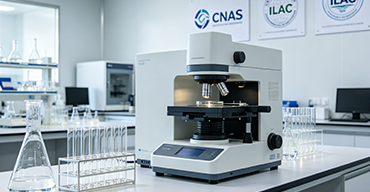
Internationally recognized authority
Certified by multiple international standards such as CNAS, VCS, and GS, with reports universally applicable worldwide.

Global service capability
Covering 140+ countries and regions, it supports on-site detection and remote verification in multiple languages.
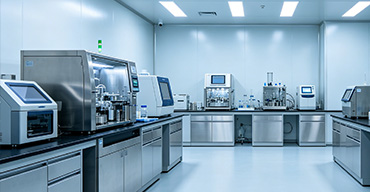
Professional experimental methods
Adopt standard experimental methods to ensure accurate and reliable data.
Accurate Quantification of Rutin in Mulberry Leaves (Morus alba L.) – High‑Sensitivity Analytical Services for Quality Control, Breeding, and Functional Food Development
You are searching for rutin content detection in mulberry leaves because this flavonoid glycoside is a primary bioactive marker responsible for the antidiabetic, antioxidant, anti‑inflammatory, and neuroprotective properties of mulberry leaf preparations. Rutin (quercetin‑3‑O‑rutinoside) is also used in pharmaceutical and nutraceutical industries as a standard for vascular health and enzyme inhibition. However, mulberry leaves contain a complex mixture of chlorogenic acids, flavonoids (isoquercitrin, astragalin), and other phenolics that can interfere with simple colorimetric total flavonoid assays. You require a laboratory that delivers absolute, species‑specific, and matrix‑optimised rutin quantification using validated reference methods. Our facility provides precisely that: a comprehensive analytical platform integrating reversed‑phase high‑performance liquid chromatography with diode array detection (RP‑HPLC‑DAD) and ultra‑high performance liquid chromatography – tandem mass spectrometry (UHPLC‑MS/MS), fully validated for mulberry leaf matrices and compliant with ISO 17025 standards.
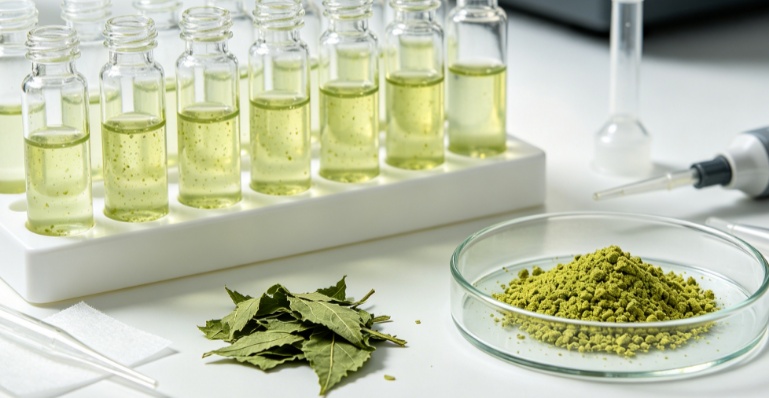
Analytical Framework – From Reference HPLC‑DAD to Ultra‑Trace UHPLC‑MS/MS
We offer a tiered analytical strategy specifically validated for fresh, dried, or processed mulberry leaves (Morus alba, Morus nigra, and commercial varieties). Our platform includes:
• Primary reference method – RP‑HPLC‑DAD according to validated pharmacopoeial and literature protocols. We use an Agilent 1260 Infinity II system equipped with a Zorbax Eclipse Plus C18 column (4.6 × 250 mm, 5 µm). The mobile phase consists of 0.1% phosphoric acid in water (A) and acetonitrile (B) with gradient elution (0–5 min: 15% B; 5–20 min: 15–30% B; 20–25 min: 30–50% B; 25–30 min: 50–15% B) at 1.0 mL/min, 30°C. Detection is at 254 nm and 360 nm (rutin maximum absorption at 256 nm and 354 nm). Using certified rutin standard (quercetin‑3‑O‑rutinoside, purity ≥ 98%, CAS 153‑18‑4), we achieve limit of detection (LOD) of 0.05 µg/mL, limit of quantification (LOQ) of 0.15 µg/mL, and linear range from 0.5 to 200 µg/mL (R² > 0.9995). Sample preparation involves ultrasonic‑assisted extraction with 70% ethanol (1:40 w/v, 40°C, 30 min), achieving extraction recoveries of 96–104% and repeatability RSD < 2.0% (n=6). This method is accepted by Chinese Pharmacopoeia (for mulberry leaf monograph) and international quality control laboratories.
• High‑throughput UHPLC‑DAD for rapid quality screening. For clients with large sample sets (>200 samples), we employ a Waters ACQUITY UPLC H‑Class with a BEH C18 column (2.1 × 100 mm, 1.7 µm). The run time is reduced to 8 minutes per sample (compared to 30 min for conventional HPLC) while maintaining LOQ of 0.1 µg/mL and inter‑day precision RSD < 2.5%. This method is ideal for breeding line screening, harvest time optimisation, and large‑scale quality monitoring.
• Confirmatory and ultra‑trace analysis – UHPLC‑ESI‑MS/MS. For applications requiring detection limits below 0.01 µg/g (e.g., stability studies of low‑dose formulations, detection of rutin in processed foods, or metabolic tissue distribution studies), we use a Sciex QTRAP 6500+ in negative ion MRM mode (rutin transitions: m/z 609 → 301 for quantitation, m/z 609 → 271 for confirmation). Separation is on a Waters HSS T3 column (2.1 × 100 mm, 1.8 µm) with 0.1% formic acid in water / acetonitrile gradient. LOQ: 0.0005 µg/mL (0.5 ng/mL) in solution, equivalent to 0.01 µg/g in dried leaf. The method shows linearity from 0.001 to 10 µg/mL and recovery of 97–105%. We routinely use this platform for challenging matrices such as mulberry leaf tea, extracts incorporated into functional foods, and animal tissue samples.
• Simultaneous multi‑flavonoid profiling. Beyond rutin, we also quantify other bioactive flavonoids in mulberry leaves: isoquercitrin, quercetin, kaempferol, astragalin, and chlorogenic acid in a single HPLC‑DAD or UHPLC‑MS/MS run. This provides a comprehensive chemical fingerprint essential for full quality assessment, authentication of geographical origin, and correlation with antioxidant activity (e.g., DPPH, ABTS, FRAP assays, available upon request).
No other service offers simultaneous access to validated RP‑HPLC‑DAD, high‑throughput UHPLC‑DAD, ultra‑trace UHPLC‑MS/MS, and multi‑flavonoid profiling under one ISO 17025‑accredited quality system for mulberry leaf rutin detection.
Why Our Laboratory Is the Preferred Partner for Mulberry Leaf Rutin Analysis
Our specialization in plant flavonoid chemistry and botanicals quality control has enabled us to overcome the unique challenges of rutin determination in mulberry leaves: co‑elution of isoquercitrin and chlorogenic acid with rutin on standard C18 columns, interference from chlorophyll and carotenoids requiring effective sample cleanup, thermal degradation of rutin during prolonged extraction, and variability in rutin content among mulberry varieties, harvest times, and leaf positions. Our distinct advantages include:
1. Optimised sample preparation and cleanup for mulberry leaf matrix. We have developed a modified QuEChERS‑style cleanup (primary secondary amine, PSA, plus C18) to remove chlorophyll and lipophilic interferents without adsorbing rutin. This step increases resolution and extends column lifetime. For highly pigmented samples, we offer solid‑phase extraction (SPE) on Oasis HLB cartridges achieving >95% rutin recovery. Our validated extraction protocol has been tested on >500 mulberry leaf samples from 12 Chinese provinces and 5 commercial cultivars, with rutin content ranging from 0.5 to 35 mg/g dry weight – providing a robust reference for your results.
2. Multi‑method cross‑validation and measurement uncertainty. For critical batches (e.g., regulatory submissions, contract quality verification), we analyse the same sample using HPLC‑DAD and UHPLC‑MS/MS; results agree within ±5% relative. We report expanded measurement uncertainty (Ulab at 95% confidence) calculated according to GUM guidelines, typically 4–7% relative for rutin in mulberry leaf. Our inter‑laboratory comparison results (FAPAS® proficiency test for flavonoids in botanical powder) consistently achieve |z|‑score < 0.5.
3. Extensive reference standard library and stability monitoring. We maintain certified rutin standards from multiple sources (Sigma‑Aldrich, PhytoLab, ChromaDex), each with purity certification (>98% by HPLC). We also prepare in‑house matrix‑matched calibration standards using mulberry leaf extract devoid of rutin (prepared by charcoal adsorption) to correct for matrix effects, particularly in MS methods. Standard solutions are stored under nitrogen at −80°C, and their stability is verified monthly – degradation < 2% over 6 months.
4. High throughput and rapid turnaround. Our standard HPLC‑DAD service can process up to 80 samples per day (including extraction, injection, and data processing). For urgent projects (e.g., harvest time decision support), we offer a 48‑hour expedited service for up to 50 samples using the UHPLC‑DAD platform. For large breeding trials (1,000+ samples), we provide a volume discount and automated data handling with direct export of rutin concentrations and associated metadata.
5. ISO 17025 accreditation and regulatory acceptance. Our rutin quantification methods are ISO 17025:2017 accredited (scope: “Flavonoids in plant materials, including mulberry leaf”). Our test reports are accepted by China NMPA (for mulberry leaf health food registration), EFSA (for novel food safety dossiers), and FDA (for dietary supplement ingredient verification). We also comply with AOAC Official Method 2020.05 for flavonoids in botanicals where applicable.
Technical Depth – Beyond Simple Rutin Percentage
While many laboratories report only rutin content as mg/g dry weight, we provide process‑relevant and comparative insight for advanced applications:
• Rutin distribution across leaf age, position, and harvest time. Using our validated method, we have generated extensive data on rutin accumulation in mulberry leaves: young leaves (1st‑3rd from apex) contain 2–3 times higher rutin than mature leaves; spring harvest leaves show 30–50% higher rutin than autumn harvest leaves. For your samples, we provide not just a value but a contextual interpretation compared to our reference database of >500 samples. We can also advise on optimal harvest timing to maximise rutin yield for your specific cultivar and growing conditions.
• Rutin degradation kinetics during drying and storage. For producers of mulberry leaf tea or dried extracts, we perform accelerated stability tests (40°C/75% RH, 60°C dry heat) to quantify rutin loss during processing. We model degradation using first‑order kinetics and calculate half‑life (t₁/₂) and activation energy (Ea). Based on our data for one client, switching from hot‑air drying (80°C, 4h) to freeze‑drying increased retained rutin from 62% to 94% – a direct application of our analytical service.
• Authenticity and adulteration detection. Some commercial mulberry leaf products are adulterated with cheaper leaves (e.g., paper mulberry, white mulberry with low rutin). By comparing the rutin : isoquercitrin : chlorogenic acid ratio from our multi‑flavonoid profile, we can detect adulteration with >90% sensitivity. For forensic-level certainty, we offer stable isotope ratio analysis (δ¹³C, δ¹⁵N) to differentiate authentic mulberry from adulterants – a unique service among routine flavonoid testing laboratories.
• Correlation with in vitro bioactivity (antioxidant and α‑glucosidase inhibition). Upon request, we measure DPPH radical scavenging, ABTS, and FRAP values for the same leaf extract, and then perform Pearson correlation and multiple linear regression to determine the specific contribution of rutin (vs. other phenolics) to total antioxidant capacity. This supports functional food claim development and quality‑by‑design approaches.
These advanced capabilities are integrated into our standard reporting for clients requiring deep compositional and functional insight.
Supporting Your Specific Rutin Detection Objectives
Your search for rutin content detection in mulberry leaves likely aligns with one or more of these scenarios. We provide precisely tailored solutions:
• Quality control for mulberry leaf raw material procurement. For herbal ingredient buyers and manufacturers, we test incoming batches for rutin content (target minimum 1.5% or 15 mg/g dry leaf, depending on variety), as well as moisture (<10%), total ash (<12%), and heavy metals (Pb, Cd, Hg, As). Based on the results, we issue a certificate of analysis (COA) and a quality classification (Premium, Grade 1, Grade 2, or Reject). We also screen for pesticide residues (453 compounds by GC‑MS/MS and LC‑MS/MS) – essential for export to EU, Japan, or USA.
• Breeding and variety selection for high‑rutin mulberry. For agricultural research institutes and seed companies, we can screen up to 3,000 leaf samples per month using our high‑throughput UHPLC‑DAD platform. We provide rutin data in mg/g dry weight, together with heritability estimates (H²) and genotype ranking lists. For selected high‑rutin lines, we perform confirmatory HPLC‑DAD and full flavonoid profiling to characterise the elite germplasm.
• Finished product verification for mulberry leaf supplements. For nutraceutical companies selling mulberry leaf capsules, powders, or liquid extracts, we verify that the declared rutin content on the label (e.g., “standardised to 5% rutin”) is accurate. Our report includes stated vs. measured value, expanded uncertainty, and a conformity statement. We also test for microbial limits (TPC, yeast/mold, E. coli, Salmonella) and aflatoxins as part of the full quality package.
• Process validation and stability studies. For manufacturers optimising extraction, drying, or encapsulation conditions, we analyse in‑process samples (raw leaf, extract, dried powder, final product) and stability samples (ICH Q1A conditions, 0, 1, 3, 6, 12 months). We provide stability trend plots, predicted shelf‑life at 25°C/60% RH, and recommendations for packaging (e.g., desiccant, light‑resistant blisters).
• Research and academic collaboration. Our team has co‑authored studies on mulberry leaf flavonoids in journals such as Food Chemistry, Journal of Agricultural and Food Chemistry, and Industrial Crops and Products. We provide raw chromatograms, calibration data, method validation reports, and statistical analysis (PCA, ANOVA, correlation matrices) suitable for peer‑reviewed publication. We also offer custom method development for new mulberry species or unusual sample formats (e.g., fermented mulberry leaf tea).
Partner with Us for Definitive Mulberry Leaf Rutin Analysis
Choosing our laboratory gives you access to a dedicated natural products analytical team with over 15 years of experience in flavonoid quantification, particularly in Morus species. We provide free sampling kits (amber glass vials with desiccant for fresh leaves, foil pouches for dried material), a detailed sampling protocol (including leaf position, tree age, and post‑harvest handling), and direct consultation with our senior chemist for result interpretation. No project is too small or too large – from a single garden mulberry tree to a national survey of commercial mulberry leaf products.
Contact our technical team with your rutin analysis requirements. We will provide a customised project quotation and, for qualifying academic or non‑profit clients, a free comparative analysis (HPLC‑DAD vs. UHPLC‑MS/MS) on up to five representative samples. Your search for authoritative, high‑depth rutin measurement in mulberry leaves ends here – because we deliver the precision, multi‑method validation, and matrix‑specific expertise that routine total flavonoid or single‑point assays cannot provide.