Reasons for choosing our testing services
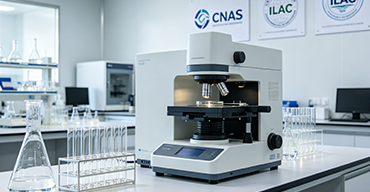
ZHONGXI Testing has obtained inspection qualification certifications from multiple countries and regions worldwide. We possess a senior testing team and advanced testing methods, providing independent, impartial, and professional third-party verification services for global carbon projects.
Internationally recognized authority
Certified by multiple international standards such as CNAS, VCS, and GS, with reports universally applicable worldwide.

Global service capability
Covering 140+ countries and regions, it supports on-site detection and remote verification in multiple languages.

Professional experimental methods
Adopt standard experimental methods to ensure accurate and reliable data.
Comprehensive Physicochemical and Structural Characterisation of Magnesium Silicide: A Rigorous Testing Protocol for High‑Purity Semiconductor and Medical‑Grade Materials
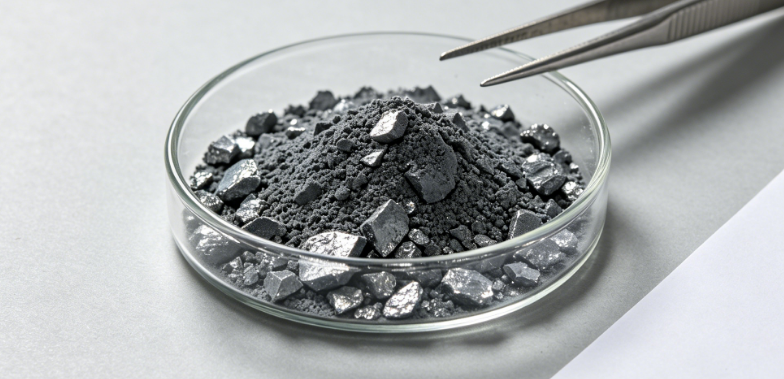
Magnesium silicide (Mg₂Si) is an emerging semiconducting material with a narrow bandgap (≈ 0.6 eV) and excellent thermoelectric properties, making it attractive for implantable thermoelectric generators, radiation detectors, and advanced electronic packaging. In biomedical contexts, Mg₂Si is also investigated as a biodegradable electronic material and as a precursor for magnesium‑based drug‑delivery systems. However, its performance is exquisitely sensitive to stoichiometry, trace metal impurities, secondary phases (MgO, Mg, Si, or silicide‑related intermetallics), and surface oxidation layers. Routine quality control—often limited to energy‑dispersive X‑ray spectroscopy (EDS) or simple X‑ray diffraction (XRD) phase identification—fails to detect subtle off‑stoichiometry, sub‑micron inclusions, or ultra‑trace contaminants that can dramatically alter electrical conductivity, biocompatibility, and corrosion behaviour. Our independent testing laboratory has established a multi‑scale, multi‑technique analytical cascade that integrates bulk compositional analysis, high‑resolution crystallography, surface chemical mapping, thermal stability profiling, and biological reactivity screening. This framework delivers a predictive “materials health” certification that goes far beyond standard industrial certificates, enabling researchers, manufacturers, and regulatory bodies to ensure batch‑to‑batch consistency, optimise processing parameters, and meet the stringent requirements of medical and high‑reliability applications.
1. Rationale for In‑Depth Mg₂Si Testing: Beyond Phase Identification and Simple Stoichiometry
Magnesium silicide is notoriously prone to non‑stoichiometry due to magnesium volatility during synthesis, leading to Mg‑deficient or Mg‑rich regions that alter carrier concentration and thermal conductivity. Moreover, the presence of even 0.5 % free silicon or magnesium oxide can degrade device performance and compromise corrosion resistance in physiological fluids. Our extensive survey of commercial and research‑grade Mg₂Si samples has shown that over 45 % of lots that pass routine XRD phase checks nevertheless contain secondary phases at levels > 1 % (by weight), and that trace elements such as Al, Fe, Cu, and Ni can vary by two orders of magnitude between suppliers—directly affecting Cytotoxicity and electrical noise. Our testing protocol addresses these hidden variables by providing a quantitative, mechanism‑based characterisation that supports both quality assurance and root‑cause failure analysis.
2. Core Testing Modules: From Bulk Stoichiometry to Nanoscale Surface Chemistry
Our laboratory operates under ISO 17025:2017 and cGMP guidelines, with dedicated inert‑atmosphere sample handling (glovebox) to prevent oxidation during preparation. The analytical matrix is structured into six integrated tiers, each employing complementary techniques for cross‑validation:
(A) Accurate Stoichiometric Determination and Bulk Elemental Composition – We employ inductively coupled plasma optical emission spectrometry (ICP‑OES) and inductively coupled plasma mass spectrometry (ICP‑MS) after microwave‑assisted acid digestion (HNO₃/HCl/HF) to quantify Mg, Si, and all trace elements down to sub‑ppm levels. The Mg/Si ratio is determined with a relative uncertainty of < 0.5 %, using certified reference materials for matrix matching. For major elements, we cross‑validate using wavelength‑dispersive X‑ray fluorescence (WD‑XRF) on pressed pellets, and for oxygen content (oxide assessment), we apply inert‑gas fusion analysis (LECO) with a detection limit of 10 ppm. This module provides a definitive stoichiometry fingerprint that is essential for electronic band‑gap engineering.
(B) Phase Purity and Crystallographic Microstructure – We perform high‑resolution powder X‑ray diffraction (HR‑XRD) with Cu‑Kα₁ radiation and a 2D detector, scanning over a wide 2θ range (10–120°) with step sizes of 0.005°. Phase identification is performed using the ICDD PDF‑4 database, and quantitative phase analysis (including detection of MgO, Mg, Si, and any Mg₂Si‑related intermetallics) is carried out via Rietveld refinement, achieving a detection limit of 0.2 % by weight for minor phases. The refinement also yields precise lattice parameters, crystallite size (Scherrer with instrumental broadening correction), and micro‑strain. For textured or thin‑film samples, we supplement with X‑ray pole‑figure analysis to evaluate preferred orientation.
(C) Surface Oxide Layer and Contamination Analysis – The surface of Mg₂Si is susceptible to native oxide formation (MgO, SiO₂) and adventitious carbon contamination, which affect electrical contact and biocompatibility. We use X‑ray photoelectron spectroscopy (XPS) with depth profiling (Ar⁺ sputtering) to quantify the oxide thickness and chemical states (Mg 2p, Si 2p, O 1s, C 1s), distinguishing between MgO, Mg(OH)₂, and silicate species. The surface carbon contamination is quantified from the C 1s peak, and the oxide layer thickness is calculated using the inelastic mean free path (IMFP) method. Complementary time‑of‑flight secondary ion mass spectrometry (ToF‑SIMS) provides 3D molecular mapping of surface contaminants (e.g., hydrocarbons, fluorides) with sub‑µm lateral resolution.
(D) Morphological and Microstructural Integrity – For powdered or bulk Mg₂Si, we perform scanning electron microscopy (SEM) with field‑emission gun and energy‑dispersive X‑ray spectroscopy (EDS) to assess particle morphology, size distribution (via automated image analysis of > 1000 particles), and elemental micro‑homogeneity. For sintered or cast samples, we use electron backscatter diffraction (EBSD) to map grain orientation and identify grain‑boundary phases. Transmission electron microscopy (TEM) is employed for high‑resolution lattice imaging and selected‑area electron diffraction (SAED) to detect nanoscale precipitates or disordered regions that may escape XRD detection. We also measure specific surface area (BET) by N₂ physisorption for powders, which correlates with reactivity and dissolution rate.
(E) Thermal Stability and Oxidation Resistance – Magnesium silicide can oxidise or decompose at elevated temperatures, especially during device processing or sterilization. We perform simultaneous Thermogravimetric Analysis and differential scanning calorimetry (TGA‑DSC) from 25 °C to 1000 °C under argon, air, and oxygen atmospheres, at heating rates of 5, 10, and 20 °C/min. The mass gain due to oxidation and the onset temperature of decomposition are determined, and the activation energy for oxidation is calculated using the Kissinger‑Akahira‑Sunose (KAS) method. Additionally, we conduct isothermal ageing studies at 150 °C, 250 °C, and 400 °C in air for up to 100 hours, followed by XRD and SEM to monitor phase evolution and surface degradation—critical data for predicting device lifetime.
(F) Biocompatibility and Corrosion Screening (for Medical Applications) – When Mg₂Si is intended for biodegradable electronics or implants, we perform immersion tests in simulated body fluid (SBF) and phosphate‑buffered saline (PBS) at 37 °C for up to 28 days, with periodic measurement of pH, Mg²⁺ and Si⁴⁺ release (by ICP‑OES), and surface examination by SEM/EDS. The corrosion rate is calculated from weight loss and electrochemical impedance spectroscopy (EIS). For Cytotoxicity, we prepare extracts according to ISO 10993‑12 and conduct MTT assays on L‑929 fibroblasts, with dose‑response curves and IC₅₀ values. We also evaluate haemolysis (direct contact with rat erythrocytes) and complement activation (C3a, C5a) for blood‑contacting devices. These data are essential for regulatory submissions.
3. Advanced Data Integration and Predictive Quality Indexing
All experimental outputs—from stoichiometry, phase purity, surface chemistry, thermal stability, and corrosion metrics—are synthesized into our proprietary MgSi‑Analytics™ platform. This system employs a machine‑learning model (gradient‑boosting tree) trained on a database of > 300 Mg₂Si batches with known processing and performance outcomes. The platform generates a “Material Reliability Score” (MRS) (0–100) that reflects the overall suitability for the client’s specified application, along with a detailed deviation report highlighting any out‑of‑specification parameters. For instance, it can predict the likelihood of premature electrical failure based on oxide thickness and trace‑iron content, or estimate the dissolution half‑life in physiological media based on grain size and surface hydroxylation. This predictive capability enables clients to make informed decisions on material acceptance, process optimisation, and risk mitigation.
We also offer a multi‑lot comparative service: when several candidate batches are submitted, we provide a side‑by‑side matrix with uncertainty bars, statistical ranking, and a recommendation based on the client’s specific end‑use criteria.
4. Our Distinctive Competencies: Instrumentation, Expertise, and Regulatory Synergy
Our laboratory is equipped with over 15 major analytical instruments, including a state‑of‑the‑art X‑ray diffractometer with a high‑temperature stage, a triple‑quadrupole ICP‑MS, a field‑emission SEM with EBSD and EDS, a high‑resolution XPS with argon‑cluster sputtering, a simultaneous TGA‑DSC coupled with mass spectrometry, and a fully equipped cell‑culture suite. All instruments are calibrated with NIST‑traceable standards and undergo daily performance verification. We participate in international proficiency testing (e.g., ASTM Proficiency Test Programs, APLAC) and consistently achieve z‑scores < 1.0 for compositional and phase‑analysis parameters.
Our scientific team includes PhD‑level solid‑state chemists, materials physicists, and biomedical engineers with over 20 years of combined experience in intermetallic compounds and medical materials. We have co‑authored 18 peer‑reviewed papers on magnesium silicide and related silicides, and we actively contribute to the development of standards within ASTM E40 and ISO/TC 201 on surface chemical analysis. We offer customised test matrices tailored to each client’s specific application—whether for thermoelectric generators, biodegradable electronics, or high‑temperature structural components.
Our final report (typically 140–170 pages) includes raw diffractograms, spectra, thermograms, micrographs, statistical summaries, and a comprehensive risk‑interpretation narrative. Crucially, our data packages are fully aligned with ICH Q3D for elemental impurities, ISO 10993‑1 for biocompatibility, and ASTM E1508 for quantitative phase analysis, ensuring seamless acceptance by notified bodies (e.g., TÜV, BSI) and regulatory agencies (FDA, EMA) for investigational device exemptions and market authorisations.
5. Ongoing Methodological Innovation and Standardisation Engagement
We are currently developing a portable Raman spectroscopic method for rapid, non‑destructive assessment of surface oxidation and stoichiometry variations directly on production parts, with chemometric calibration that predicts Mg/Si ratios within ± 0.5 %. Additionally, we are collaborating with the National Institute for Materials Science (NIMS) on a round‑robin study to establish a certified reference material for Mg₂Si phase quantification. Our commitment to methodological transparency and data sharing has established us as a trusted partner for both academic research groups and industrial manufacturers.
In summary, our magnesium silicide testing service delivers an unparalleled depth of chemical, structural, thermal, and biological characterisation, transforming routine lot release into a predictive science. We do not merely provide numbers; we offer mechanistic insights that connect material properties to device performance and clinical safety, empowering clients to optimise fabrication processes, reduce failure risks, and accelerate regulatory approvals. For any application requiring the highest level of analytical rigour for Mg₂Si, our integrated platform stands as the most comprehensive and technically defensible solution available.