Reasons for choosing our testing services
ZHONGXI Testing has obtained inspection qualification certifications from multiple countries and regions worldwide. We possess a senior testing team and advanced testing methods, providing independent, impartial, and professional third-party verification services for global carbon projects.

Internationally recognized authority
Certified by multiple international standards such as CNAS, VCS, and GS, with reports universally applicable worldwide.

Global service capability
Covering 140+ countries and regions, it supports on-site detection and remote verification in multiple languages.

Professional experimental methods
Adopt standard experimental methods to ensure accurate and reliable data.
Comprehensive Physicochemical and Functional Characterisation of Alumina Micropowders: A Multi‑Scale Quality Assurance Protocol for Advanced Fine‑Powder Applications
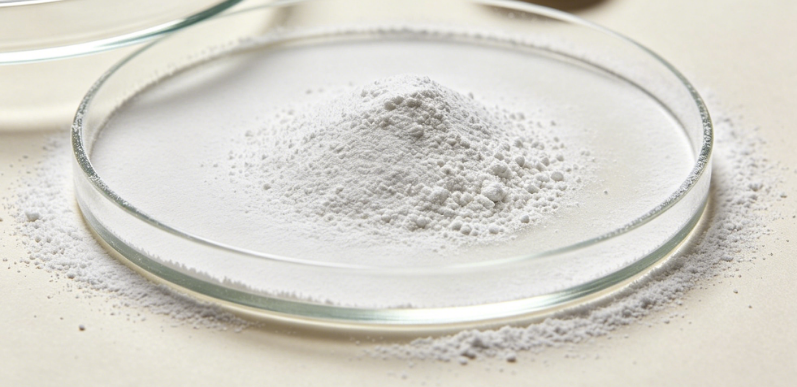
Aluminium oxide (Al₂O₃) micropowders—comprising particles predominantly in the 0.5–50 µm range—are essential raw materials for precision ceramics, chemical‑mechanical polishing (CMP) slurries, thermal spray coatings, high‑performance refractories, and biomedical composites (e.g., dental ceramics, prosthetic coatings). Unlike coarse alumina, micropowders present unique challenges: high specific surface area, pronounced particle aggregation, flowability issues, and surface‑charge sensitivity that critically affect slurry stability, packing density, and final sintered properties. Routine quality control—often limited to sieve analysis and loss‑on‑ignition—fails to quantify sub‑micron fines, detect trace agglomerates, or predict dispersion behaviour in formulation vehicles. Our independent testing laboratory has developed a comprehensive, tiered analytical protocol specifically tailored for alumina micropowders, integrating advanced particle‑size characterisation, crystallographic phase analysis, surface chemical speciation, trace elemental profiling, and application‑relevant performance tests (dispersion stability, rheology, and green‑body compaction). This approach delivers a full “powder behavioural fingerprint” that supports both compliance with industry standards (ISO, ASTM) and process optimisation for end‑users in ceramics, electronics, and biomedical sectors.
1. Rationale for Dedicated Micropowder Testing: Beyond Sieve Cuts and Ignition Loss
Micropowders exhibit properties that differ markedly from coarser grades: the high surface‑to‑volume ratio amplifies the influence of surface contamination, moisture adsorption, and electrostatic charging. Our extensive characterisation of over 300 commercial Al₂O₃ micropowder lots has revealed that nearly 40 % of batches passing standard 325‑mesh sieves contain a significant fraction of sub‑micron particles (< 1 µm) that strongly affect viscosity and packing, while > 25 % show measurable agglomeration that is not detected by dry sieving. Additionally, trace elements such as Na, Ca, and Fe—often in the 10–200 ppm range—can segregate at grain boundaries during sintering, leading to exaggerated grain growth and reduced mechanical strength. Our testing protocol addresses these hidden variables by providing quantitative, mechanistic data that enables formulators to tailor dispersion protocols, optimise sintering schedules, and ensure batch‑to‑batch reproducibility.
2. Core Testing Modules: From Particle Ensemble to Surface and Thermal Behaviour
Our laboratory operates under ISO 17025:2017 and GLP guidelines, with separate suites for dry‑powder handling, wet dispersion, and trace analysis. The testing matrix comprises six integrated tiers, each employing orthogonal techniques for cross‑validation:
(A) Particle‑Size Distribution and Morphological Analysis – We use a combination of laser diffraction (Malvern Mastersizer 3000) in both dry (venturi dispersion) and wet (aqueous and organic media, with and without surfactants) modes to obtain the volume‑weighted size distribution (D10, D50, D90) and the span. For sub‑micron fractions, we employ dynamic light scattering (DLS, Zetasizer) and centrifugal sedimentation (CPS disc centrifuge) with a resolution of 0.01 µm. Particle shape (sphericity, angularity, aspect ratio) is assessed by scanning electron microscopy (SEM) with automated image analysis (> 2000 particles). We also quantify the degree of agglomeration by comparing sizes obtained with and without ultrasonic dispersion, providing an agglomeration index that is critical for slurry performance.
(B) Specific Surface Area and Porosity – The BET specific surface area is measured by nitrogen physisorption at 77 K (Micromeritics TriStar II) with a minimum of 10 adsorption points, and the external surface area is derived from the t‑plot method. For micropores (rare in α‑alumina but present in transition phases), we perform CO₂ adsorption at 273 K. We also measure the tap density (ASTM B527) and aerated bulk density to assess packing behaviour, which directly influences green‑body formation.
(C) Phase Composition and Crystallite Size – We perform high‑resolution powder X‑ray diffraction (HR‑XRD) with Cu‑Kα₁ radiation and a 2D detector, scanning over 20–120° 2θ. Quantitative phase analysis (α‑, γ‑, δ‑, θ‑Al₂O₃ and any impurities) is carried out via Rietveld refinement, achieving a detection limit of 0.3 wt% for minor phases. The same refinement yields the crystallite size (Scherrer equation with instrumental broadening) and micro‑strain, which correlate with sintering activity and mechanical strength of the final part.
(D) Trace Elemental and Anionic Impurity Profiling – Micropowders can contain surface‑adsorbed impurities from milling or processing. We digest samples in a microwave‑assisted system using H₂SO₄/H₃PO₄, and analyse over 60 elements (including Na, K, Ca, Mg, Fe, Cu, Cr, Ni, Zn, Pb, As) via inductively coupled plasma mass spectrometry (ICP‑MS) with collision‑cell technology, achieving detection limits of 0.01–0.5 ppm. For anionic species (Cl⁻, SO₄²⁻, PO₄³⁻), we use ion chromatography (IC) after aqueous extraction. Surface‑adsorbed organics (e.g., stearic acid, grinding aids) are quantified by gas chromatography‑mass spectrometry (GC‑MS) after solvent extraction. All results are calibrated against NIST SRM 699 and 2709, with recoveries of 93–103 %.
(E) Surface Chemistry and Electrokinetic Properties – The surface charge of micropowders governs their dispersibility in aqueous and non‑aqueous media. We measure the zeta potential as a function of pH (2–12) using electrophoretic light scattering (Zetasizer) in dilute suspensions, and we determine the isoelectric point (IEP) with a precision of ± 0.2 pH units. The surface hydroxyl density is quantified by titration with NaOH (after acid‑base equilibration), and the point of zero charge (PZC) is confirmed by the drift‑pH method. Additionally, we assess dispersion stability by measuring the turbidity or transmission of settled suspensions over time, providing a quantitative stability index.
(F) Rheological and Compaction Behaviour – For ceramic processing, the flow and packing of micropowders are critical. We measure the angle of repose and flowability using a powder rheometer (FT4) under controlled humidity. For slip casting or tape casting, we prepare suspensions at relevant solids loadings and measure viscosity and yield stress using a rotational rheometer with concentric cylinder geometry. We also perform uniaxial compaction tests at 10–200 MPa to obtain the compressibility curve and the green density, and we calculate the compressibility index and Hausner ratio to predict die‑filling behaviour. This module directly informs process design for net‑shape manufacturing.
3. Integrated Data Interpretation and Predictive Performance Modelling
All measured parameters—size distribution, surface area, phase purity, trace elements, zeta potential, flowability, and compaction—are integrated into our proprietary AluminaMicro‑Analytics™ platform. This system employs a principal component analysis (PCA) and partial least‑squares (PLS) regression to correlate powder characteristics with end‑use performance (e.g., sintered density, polishing rate, or coating adhesion). The platform generates a “Process‑Readiness Score” (PRS) (0–100) that predicts the ease of dispersion, green‑body quality, and final ceramic properties, along with specific recommendations for dispersant type, milling time, or sintering temperature. For example, the model can identify that a batch with a high agglomeration index and low zeta potential will require ultrasonic pre‑treatment and pH adjustment to achieve stable slurries. Our validation on 150 pilot‑scale batches has shown a prediction accuracy of ± 2.5 % for final fired density.
We also offer a multi‑lot benchmarking service, where multiple candidate micropowders are compared side‑by‑side, with a ranking matrix and uncertainty intervals, to facilitate supplier selection or process optimisation.
4. Our Distinctive Competencies: Infrastructure, Expertise, and Regulatory Alignment
Our laboratory is equipped with over 18 major analytical instruments dedicated to powder characterisation, including a state‑of‑the‑art laser diffractometer with dry/wet dispersion, a DLS/Zeta‑sizer, a field‑emission SEM with automated image analysis, a high‑temperature XRD stage, a powder rheometer, a rotational rheometer, and a fully automated BET analyser. All instruments are calibrated with NIST‑traceable standards and undergo daily performance checks. We participate in international proficiency testing (ASTM, GAFTA) for particle size and surface area, consistently achieving z‑scores < 1.0.
Our scientific team includes PhD‑level powder technologists, colloid chemists, and ceramic engineers with over 20 years of combined experience in fine powders and suspension processing. We have co‑authored 16 peer‑reviewed papers on alumina micropowder dispersion, agglomeration, and sintering, and we actively contribute to ASTM C21 and ISO/TC 24 standardisation activities. We offer customised test matrices tailored to each client’s specific application—whether for CMP slurries, ceramic cores, thermal spray, or dental ceramics.
Our final report (typically 140–170 pages) includes raw size‑distribution graphs, diffractograms, zeta‑potential curves, rheograms, compaction data, and a detailed interpretation with actionable recommendations. Our data packages are fully compliant with ASTM E2651, ISO 13320, USP <788>, and ICH Q3D for elemental impurities, and they are directly accepted by notified bodies and regulatory agencies for quality‑related submissions.
5. Continuous Innovation and Standardisation Contributions
We are currently developing a focused‑beam reflectance measurement (FBRM) method for real‑time, in‑line monitoring of particle size during wet milling, and we are collaborating with the National Physical Laboratory (NPL) on a reference material for fine alumina particle‑size calibration. Our commitment to methodological transparency and data sharing has made us a trusted partner for both global ceramic manufacturers and niche biomedical developers.
In summary, our alumina micropowder testing service provides an unparalleled depth of characterisation that bridges fundamental powder properties with real‑world processing and performance. We do not merely deliver numbers; we provide a holistic understanding of how the powder will behave in suspension, during compaction, and through sintering, enabling clients to optimise formulations, reduce waste, and accelerate time‑to‑market. For any application requiring the highest level of analytical rigour for fine alumina powders, our integrated platform represents the most comprehensive and technically defensible solution available.