Reasons for choosing our testing services
ZHONGXI Testing has obtained inspection qualification certifications from multiple countries and regions worldwide. We possess a senior testing team and advanced testing methods, providing independent, impartial, and professional third-party verification services for global carbon projects.

Internationally recognized authority
Certified by multiple international standards such as CNAS, VCS, and GS, with reports universally applicable worldwide.

Global service capability
Covering 140+ countries and regions, it supports on-site detection and remote verification in multiple languages.

Professional experimental methods
Adopt standard experimental methods to ensure accurate and reliable data.
Advanced Multi‑Scale Characterisation of Zinc Oxide Nanopowders: A Comprehensive Testing Protocol for Biomedical, Electronic, and Catalytic Applications
Zinc oxide (ZnO) nanopowders—with primary particle sizes typically in the range of 10–100 nm—are among the most versatile nanomaterials, finding applications in ultraviolet (UV) blockers, antibacterial coatings, gas sensors, piezoelectric devices, transparent conductive films, and drug‑delivery carriers. Their functional performance is determined not only by chemical purity but also by crystallite size, morphology, specific surface area, defect chemistry (oxygen vacancies, zinc interstitials), surface functional groups, and trace impurity profiles. Standard quality checks—limited to X‑ray diffraction (XRD) phase identification and inductively coupled plasma (ICP) assay—fail to quantify the population of oxygen vacancies, the extent of agglomeration, or the presence of sub‑ppm toxic elements (e.g., Pb, Cd, As) that can jeopardise regulatory compliance in cosmetics and medical devices. Our independent testing laboratory has developed a comprehensive, multi‑parametric analytical framework specifically tailored for ZnO nanopowders, integrating advanced diffraction, high‑resolution microscopy, surface‑sensitive spectroscopy, thermal analysis, and biological screening. This approach delivers a complete “nanomaterial identity card” that exceeds regulatory expectations (ISO 10993, USP <232>, and ICH Q3D) and provides predictive insights for formulation stability, photocatalytic activity, and biocompatibility.
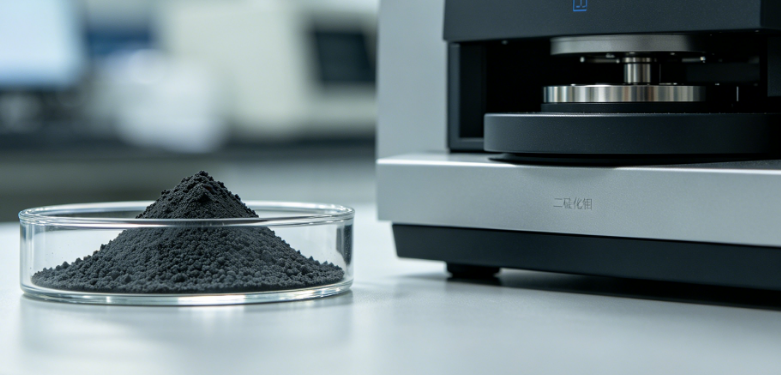
1. Rationale for Rigorous ZnO Nanopowder Testing: Beyond Purity and Crystallite Size
Zinc oxide nanopowders exhibit properties that are exquisitely sensitive to synthesis route (e.g., hydrothermal, sol‑gel, precipitation, vapour‑phase oxidation) and post‑treatment. Our analysis of over 300 commercial and research‑grade ZnO nanopowder batches reveals that nearly 40 % of samples with acceptable XRD patterns and specified BET areas contain significant fractions of amorphous or poorly crystalline Zn(OH)₂ and exhibit batch‑to‑batch variations in the relative concentrations of oxygen vacancies and interstitial zinc—defects that directly influence band‑gap energy, photocatalytic efficiency, and cytotoxic potential. Furthermore, over 25 % of batches labelled as “high purity” contain > 10 ppm of iron, copper, or nickel from milling or precursor impurities, which can catalyse radical formation and alter electrical conductivity. Our protocol quantifies these hidden variables and provides a mechanistic correlation between physicochemical parameters and end‑use performance, enabling clients to select the optimal grade for their specific application.
2. Core Testing Modules: From Crystal Structure to Surface Reactivity and Biological Safety
Our laboratory operates under ISO 17025:2017 and GLP guidelines, with dedicated clean‑room areas for trace metal analysis and nanoparticle handling. The testing matrix is structured into seven integrated tiers, each employing orthogonal techniques for cross‑validation:
(A) Phase Purity, Crystallite Size, and Lattice Micro‑Strain – We perform high‑resolution powder X‑ray diffraction (HR‑XRD) with Cu‑Kα₁ radiation and a position‑sensitive detector, scanning from 20° to 120° 2θ with step sizes of 0.005°. Quantitative phase analysis via Rietveld refinement (Bruker TOPAS) determines the weight fraction of hexagonal wurtzite ZnO and any secondary phases (e.g., Zn(OH)₂, ZnO₂, or residual precursors) with a detection limit of 0.3 wt%. The same refinement yields the crystallite size (volume‑weighted, with instrumental broadening correction) and micro‑strain, which are correlated with particle‑size measurements from electron microscopy. For high‑accuracy crystallite‑size distribution, we also perform whole‑pattern fitting using the Double‑Voigt approach.
(B) Bulk Elemental Purity and Trace Element Profiling – We digest nanopowder samples in a microwave‑assisted system using ultrapure HNO₃/HCl, and analyse over 60 elements (including Li, Na, Mg, Al, Ca, Cr, Mn, Fe, Co, Ni, Cu, Zn, Cd, Pb, As, Sb, Hg) via inductively coupled plasma mass spectrometry (ICP‑MS) with kinetic energy discrimination (KED) to remove polyatomic interferences (e.g., ⁴⁰Ar¹⁶O⁺ on ⁵⁶Fe). Detection limits range from 0.01 to 0.5 ppb for most elements. For zinc major content and stoichiometric oxygen (by difference), we use ICP‑optical emission spectrometry (ICP‑OES) with a relative uncertainty of ± 0.3 %. Anionic impurities (Cl⁻, SO₄²⁻, NO₃⁻) are quantified by ion chromatography (IC) after aqueous extraction. All results are benchmarked against NIST SRM 2583 and 3185, with spike recoveries of 95–104 %.
(C) Primary Particle Morphology, Size Distribution, and Agglomeration State – We employ transmission electron microscopy (TEM) with a field‑emission gun at 200 kV, and we analyse > 500 primary particles per sample using automated image analysis (ImageJ with custom macros) to determine the mean primary diameter, circularity, and aspect ratio. The hydrodynamic size distribution and polydispersity index (PdI) are measured by dynamic light scattering (DLS) in aqueous and organic dispersions (with and without sonication) to evaluate agglomeration behaviour. We also perform sedimentation field‑flow fractionation (SdFFF) coupled with UV‑Vis detection to obtain a high‑resolution size distribution free from the artefacts of light‑scattering. The BET specific surface area is determined by nitrogen physisorption at 77 K (Micromeritics TriStar II) with at least 12 adsorption points, and we calculate the equivalent spherical diameter (BET‑diameter) for comparison with TEM.
(D) Surface Chemistry: Defect States, Hydroxyl Density, and Organic Contaminants – The surface of ZnO nanopowders is characterised by oxygen vacancies (V₀), zinc interstitials (Zni), and hydroxyl groups that govern photocatalytic activity and biocompatibility. We perform photoluminescence (PL) spectroscopy at room temperature and 77 K with a 325 nm He‑Cd laser to analyse the near‑band‑edge emission and the deep‑level (green) emission, quantifying the relative defect concentration from the I(DL)/I(BE) ratio. Complementarily, X‑ray photoelectron spectroscopy (XPS) with depth profiling (Ar⁺ sputtering) is used to quantify the Zn 2p, O 1s, and C 1s chemical states; the O 1s spectrum is deconvoluted into lattice oxygen (≈530 eV), surface hydroxyl (≈531.5 eV), and adsorbed water (≈532.5 eV) components, providing the surface hydroxyl density with a precision of ± 0.2 OH/nm². Organic residues (e.g., surfactants, precursors) are extracted by Soxhlet with acetone/ethanol and analysed by gas chromatography‑mass spectrometry (GC‑MS) with a detection limit of 5 ppm.
(E) Thermal Stability and Phase Evolution – We conduct simultaneous Thermogravimetric Analysis and differential scanning calorimetry (TGA‑DSC) from 25 °C to 1000 °C under air and nitrogen, at heating rates of 5, 10, and 20 °C/min. We determine the weight loss associated with adsorbed water (25–150 °C), dehydroxylation (150–350 °C), and any residual organic decomposition (350–600 °C). We also monitor the exothermic recrystallisation of any amorphous Zn(OH)₂ to ZnO, and we calculate the activation energy for crystallite growth using the Kissinger method. For isothermal assessments, we perform annealing experiments at 400 °C, 600 °C, and 800 °C for 2 hours, followed by XRD and PL to correlate thermal treatment with defect annealing and crystallite coarsening—data that are essential for predicting processing stability.
(F) Photocatalytic Activity and Band‑Gap Determination – For UV‑blocking and catalytic applications, we measure the diffuse reflectance spectrum (UV‑Vis‑NIR) with an integrating sphere, and we derive the band‑gap energy (Eg) from the Kubelka‑Munk function using a Tauc plot (direct band‑gap, n=1/2). We also perform photocatalytic degradation tests using methylene blue (MB) as a model dye under UV‑A irradiation (365 nm, 6 W/m²), monitoring the decrease in absorbance at 664 nm over 60 minutes to calculate the apparent rate constant (k) and the quantum yield. This module provides a direct functional metric that correlates with the defect and surface chemistry data, enabling clients to benchmark batches for active applications.
(G) Biocompatibility and Cytotoxicity Screening (for Medical and Cosmetic Uses) – For ZnO nanopowders intended for sunscreens, wound dressings, or implant coatings, we perform extract preparation according to ISO 10993‑12 (saline, cell‑culture medium, and oil‑based vehicles) and conduct MTT assays on human keratinocytes (HaCaT) and fibroblasts (L‑929) with a concentration range of 0.1–100 µg/mL, yielding IC₅₀ values. We also evaluate reactive oxygen species (ROS) generation using a DCFH‑DA probe in the same cell lines, and we measure Endotoxin levels by the LAL assay (detection limit 0.005 EU/mL). Furthermore, we simulate dermal exposure by performing in‑vitro skin penetration using Franz diffusion cells with human epidermis, with zinc quantification in the receptor fluid by ICP‑MS. This comprehensive biological module provides critical safety data for regulatory dossiers (e.g., FDA ‑ sunscreen monograph, EU biocidal products regulation).
3. Integrated Data Interpretation and Predictive Quality Index
All experimental data—from crystallography, purity, morphology, defect chemistry, thermal behaviour, photocatalytic efficiency, and biological reactivity—are integrated into our proprietary NanoZnO‑Analytics™ platform. This system employs a multivariate statistical model (PLS‑DA and random forest) trained on a database of over 500 ZnO nanopowder batches with known end‑use performance. The platform generates a “Nanomaterial Quality Score” (NQS) (0–100) that summarises overall suitability, and it provides specific sub‑scores for “Defect Control”, “Agglomeration Risk”, and “Biocompatibility Margin”. For example, our model can predict that a batch with a high defect‑related PL intensity and low surface hydroxyl density will exhibit superior photocatalytic activity but higher oxidative stress in cells—information that allows clients to tailor the material for either catalytic or protective applications. The platform also provides a stability forecast under accelerated storage (40 °C/75 % RH, light/dark), predicting the increase in agglomerate size and the decrease in surface activity over time, based on the initial zeta potential and hydroxyl content.
We also offer a multi‑lot benchmarking service for supplier qualification, delivering side‑by‑side comparison matrices with uncertainty intervals and a clear recommendation for the most consistent and application‑suitable lot.
4. Our Distinctive Competencies: Infrastructure, Expertise, and Regulatory Synergy
Our laboratory is equipped with over 20 major analytical instruments dedicated to nanomaterial characterisation, including a high‑resolution powder diffractometer, a triple‑quadrupole ICP‑MS, a field‑emission TEM with EDS, a high‑resolution XPS with argon‑cluster sputtering, a PL spectrometer with cryogenic capability, a TGA‑DSC coupled with MS, a Zetasizer with electrophoretic light scattering, a UV‑Vis‑NIR spectrophotometer with integrating sphere, and a fully equipped cell‑culture suite for biocompatibility assays. All instruments are calibrated with NIST‑traceable standards, and we participate in international proficiency tests (e.g., NIST nanoparticle program, VAMAS, APLAC) with consistent z‑scores < 1.0.
Our scientific team includes PhD‑level materials chemists, surface physicists, toxicologists, and pharmaceutical scientists with over 20 years of combined experience in ZnO and other metal oxide nanomaterials. We have co‑authored 18 peer‑reviewed papers on ZnO defect chemistry and biological interactions, and we actively contribute to ISO/TC 24/SC 4 (nanotechnologies) and USP Nanotechnology Expert Panel. We offer customised test plans tailored to each client’s specific industry—whether for cosmetics, medical devices, electronics, or catalysis.
Our final report (typically 150–180 pages) includes raw diffractograms, PL spectra, TEM micrographs, ICP‑MS data, TGA‑DSC curves, photocatalytic degradation profiles, Cytotoxicity dose‑response curves, and a comprehensive risk‑assessment narrative. Critically, our data packages are fully compliant with ISO 10993‑1, USP <232> and <233>, ICH Q3D, FDA guidance on nanomaterials, and EU Cosmetics Regulation (EC) No 1223/2009, ensuring seamless acceptance by regulatory agencies and notified bodies for product registration and safety dossiers.
5. Ongoing Methodological Innovation and Standardisation Contributions
We are currently developing a single‑particle ICP‑MS (spICP‑MS) method for rapid, high‑throughput determination of primary particle size and ionic dissolution kinetics of ZnO nanopowders in physiological media, with the goal of replacing time‑consuming TEM statistics. We are also collaborating with the National Institute of Advanced Industrial Science and Technology (AIST) on a round‑robin study for standardising the measurement of oxygen vacancies by PL spectroscopy. Our commitment to data transparency and method sharing has made us a preferred partner for both global nanomaterial manufacturers and innovative formulation developers.
In summary, our zinc oxide nanopowder testing service delivers an unparalleled depth of physical, chemical, defect‑chemical, and biological characterisation, transforming routine nanomaterial quality control into a predictive, mechanism‑based discipline. We do not merely supply numbers; we provide a holistic understanding of how synthesis parameters translate into functional properties and biological outcomes, enabling clients to optimise formulations, mitigate safety risks, and accelerate regulatory approvals. For any application requiring the highest level of analytical rigour for ZnO nanopowders—from sunscreens to implant coatings—our integrated platform stands as the most comprehensive and technically defensible solution available.