Reasons for choosing our testing services
ZHONGXI Testing has obtained inspection qualification certifications from multiple countries and regions worldwide. We possess a senior testing team and advanced testing methods, providing independent, impartial, and professional third-party verification services for global carbon projects.
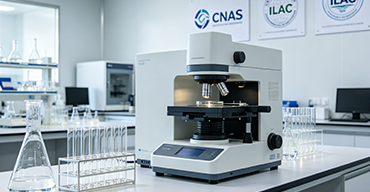
Internationally recognized authority
Certified by multiple international standards such as CNAS, VCS, and GS, with reports universally applicable worldwide.

Global service capability
Covering 140+ countries and regions, it supports on-site detection and remote verification in multiple languages.
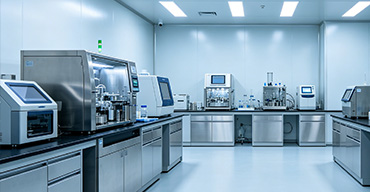
Professional experimental methods
Adopt standard experimental methods to ensure accurate and reliable data.
Comprehensive Analytical Characterisation of Manganese Dioxide – A Specialised Testing Service for Battery Materials, Catalysts, and Advanced Functional Oxides
Manganese dioxide (MnO₂) is a versatile and widely used material in primary batteries (zinc‑carbon and alkaline), supercapacitors, heterogeneous catalysis, and as a precursor for lithium‑ion battery cathodes (LiMn₂O₄, LiNiMnCoO₂). Its electrochemical and catalytic performance is critically governed by a complex interplay of crystalline polymorph (α, β, γ, δ, ε, λ), exact oxygen stoichiometry (MnO₂ vs. MnOₓ), specific surface area, pore architecture, trace elemental impurities (especially Fe, Cu, Pb, Co, Ni, K, Na), and the presence of structural water or surface hydroxyl groups. Clients seeking testing for manganese dioxide typically face challenges such as inconsistent battery discharge capacity, poor rate capability, thermal instability, unexplained catalytic deactivation, or batch‑to‑batch variability in electrochemical performance. Our laboratory provides a fully integrated, multi‑technique analytical platform that delivers a definitive, application‑oriented characterisation of manganese dioxide, enabling you to control synthesis parameters, ensure quality consistency, and optimise performance for batteries, capacitors, and catalytic processes with the highest scientific rigour.
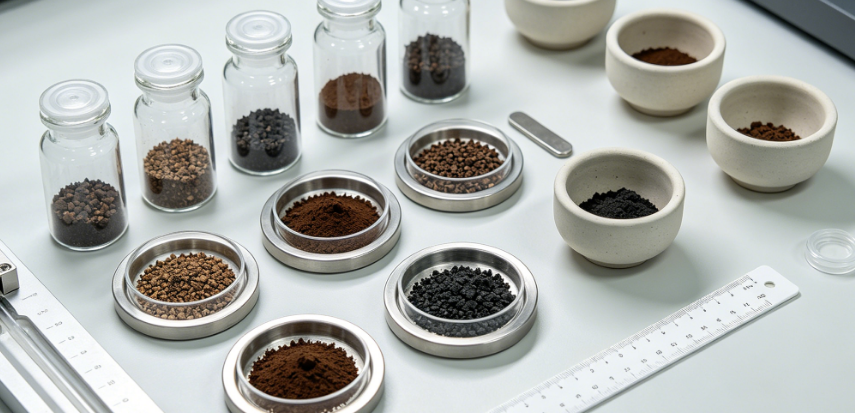
Why Comprehensive Testing of Manganese Dioxide Is Indispensable
The electrochemical and catalytic properties of MnO₂ are highly dependent on its crystal structure, oxidation state, and defect chemistry. For instance, the γ‑phase (intergrowth of ramsdellite and pyrolusite) is the preferred cathode material for primary alkaline batteries due to its superior discharge capacity, while the λ‑phase (spinel) is used in lithium‑ion cathodes. The presence of even trace amounts of iron or copper impurities can promote parasitic reactions and accelerate self‑discharge. Additionally, specific surface area and mesoporosity directly influence the utilisation of active material and the rate of electrochemical reactions. Clients seeking testing for MnO₂ are often motivated by the need to qualify new suppliers, optimise synthesis conditions (electrolytic or chemical), troubleshoot product failures, or meet strict specifications for automotive and industrial battery applications. Our comprehensive characterisation suite is designed to address these needs by providing quantitative, statistically robust data that directly correlates with end‑use performance, thereby minimising risk and accelerating development cycles.
Our Advanced Analytical Suite for Manganese Dioxide Characterisation
We employ a multi‑scale, orthogonal set of techniques to profile every critical aspect of your manganese dioxide samples, from bulk composition and crystalline structure to surface chemistry and electrochemical behaviour:
Precise Stoichiometric and Elemental Profiling – The exact Mn/O ratio and the presence of dopants or impurities are fundamental to performance. We determine total manganese (Mn) and other elements (Fe, Cu, Pb, Co, Ni, K, Na, Ca, Mg, etc.) by inductively coupled plasma optical emission spectrometry (ICP‑OES) after microwave‑assisted acid digestion, achieving repeatability of < 0.2% RSD and expanded uncertainty (k=2) of < 0.3% relative. For ultra‑trace impurities (sub‑ppm and ppb levels), we employ inductively coupled plasma tandem mass spectrometry (ICP‑MS/MS) with collision/reaction cell technology (O₂, NH₃, H₂) to eliminate polyatomic interferences (e.g., 40Ar14N⁺ on 54Fe, 40Ar35Cl⁺ on 75As) and achieve detection limits of 0.01–0.5 ppb for over 50 elements. Oxygen stoichiometry is determined by a combination of inert gas fusion (IGF) for total oxygen and iodometric titration to determine the effective oxygen content (MnO₂ equivalent)—a critical parameter that differentiates MnO₂ from sub‑stoichiometric MnOₓ. We also measure loss on ignition (LOI) at 450 °C and 900 °C to quantify volatile species (water, CO₂, etc.). All results are reported with expanded uncertainties (k=2) and are traceable to NIST reference materials, providing a complete stoichiometric fingerprint.
Polymorph Identification and Crystalline Phase Quantification – The electrochemical activity of MnO₂ is highly phase‑dependent. We use high‑resolution powder X‑ray diffraction (HR‑XRD) with Cu Kα radiation and a step size of 0.003° 2θ, applying Rietveld refinement to quantify the relative fractions of α, β, γ, δ, ε, and λ phases with an accuracy of ±0.3 wt% and to detect impurity phases (e.g., Mn₂O₃, Mn₃O₄, or hausmannite) down to 0.2 wt%. We also determine crystallite size and microstrain via the Scherrer and Williamson‑Hall methods, which correlate with electrochemical reaction kinetics. For rapid phase screening and stress analysis, we use Raman microspectroscopy (532 nm and 785 nm excitation) to identify characteristic Mn‑O vibrational modes (e.g., the strong peak at ~650 cm⁻¹ for pyrolusite and the split bands for γ‑phase). The combined XRD‑Raman approach ensures definitive phase purity certification, essential for qualifying materials for specific battery chemistries.
Thermal Stability and Phase Transformation Behaviour – Manganese dioxide undergoes thermal decomposition to Mn₂O₃ and Mn₃O₄, which affects its stability in drying and calcination processes. We perform simultaneous Thermogravimetric Analysis and differential scanning calorimetry (TGA‑DSC) from 30 °C to 800 °C under air, nitrogen, and argon at heating rates of 2, 5, and 10 °C/min. We identify the dehydroxylation, loss of structural water, oxygen release, and phase transitions (e.g., γ→β, or MnO₂→Mn₂O₃→Mn₃O₄) with mass resolution of 0.01 mg and temperature precision of ±0.5 °C. Coupled evolved gas analysis‑mass spectrometry (EGA‑MS) monitors the release of H₂O, CO₂, and O₂, providing a complete thermal profile. We also conduct isothermal stability tests at 200 °C, 300 °C, and 400 °C for up to 24 hours, followed by XRD and BET re‑characterisation to assess thermal robustness and phase stability—critical for electrode manufacturing and thermal management.
Surface Area, Porosity, and Particle Morphology – The specific surface area and pore architecture of MnO₂ directly affect its electrochemical utilisation and catalytic activity. We measure specific surface area (BET) by nitrogen physisorption at 77 K with a multi‑point method (reproducibility < 0.5%), and we obtain pore size distributions by applying DFT and BJH models to full isotherms (relative pressure up to 0.995). We also perform mercury intrusion porosimetry (MIP) up to 60,000 psi to characterise macroporosity and inter‑particle voids. Particle size distribution (0.02–2000 µm) is determined by laser diffraction (wet and dry dispersion) with repeatability < 1% RSD, reporting D10, D50, D90, and span. Scanning electron microscopy (FE‑SEM) with energy‑dispersive X‑ray spectroscopy (EDS) mapping provides high‑resolution images of particle shape, agglomeration state, and elemental homogeneity at the sub‑micron level. For nanostructured MnO₂, we use transmission electron microscopy (TEM) with selected area electron diffraction (SAED) to assess crystallinity and lattice fringe imaging. These textural and morphological data are essential for predicting electrode slurry rheology, packing density, and electrochemical accessibility.
Surface Chemistry, Oxidation State, and Hydroxyl Content – The surface of MnO₂ typically contains hydroxyl groups, adsorbed water, and varying Mn oxidation states (III and IV) that influence charge transfer and catalytic activity. We perform X‑ray photoelectron spectroscopy (XPS) with monochromatic Al Kα source and depth profiling (Ar⁺ cluster sputtering) to obtain Mn 2p, O 1s, and C 1s core‑level spectra. Deconvolution of the Mn 2p region provides the relative fractions of Mn(IV), Mn(III), and Mn(II), while the O 1s spectrum distinguishes lattice oxygen (O²⁻), hydroxyl groups (OH⁻), and adsorbed water with precision of ±2%. We also use temperature‑programmed desorption (TPD) of water and acid‑base titrations to quantify surface hydroxyl density and surface acidity/basicity. This surface chemical profile is critical for understanding catalytic mechanisms and for optimising surface treatments to enhance battery performance.
Electrochemical Performance Screening (Optional) – To directly link material properties to functional performance, we offer customised electrochemical testing in a three‑electrode or two‑electrode configuration using a potentiostat/galvanostat. For battery applications, we perform galvanostatic discharge at various current densities (0.1‑10 C) in alkaline (KOH) or non‑aqueous electrolytes, measuring specific capacity (mAh/g), discharge plateau voltage, and rate capability. We also conduct cyclic voltammetry (CV) over a range of scan rates to assess reversibility and reaction kinetics, and electrochemical impedance spectroscopy (EIS) over a frequency range of 100 kHz to 10 mHz to extract charge transfer resistance and ionic diffusion coefficients. For catalytic applications, we perform oxygen reduction reaction (ORR) or oxygen evolution reaction (OER) polarisation curves to evaluate onset potential, Tafel slope, and overpotential. All electrochemical data are reported with expanded uncertainties and are correlated with the physico‑chemical parameters to guide material optimisation.
Our Distinctive Competencies and Unmatched Analytical Depth
Our service is uniquely distinguished by the orthogonal integration of ICP‑MS/MS elemental profiling, HR‑XRD with Rietveld refinement, TGA‑EGA‑MS thermal characterisation, BET and MIP for texture, XPS surface chemical analysis, and electrochemical performance testing—all performed on the same representative batch to eliminate cross‑sample variability and to enable direct, multivariate correlations (e.g., phase purity vs. discharge capacity, or impurity level vs. cycle stability). We operate under ISO/IEC 17025 accreditation and maintain in‑house reference manganese dioxide materials (including electrolytic and chemical grades) with certified purity, phase composition, and electrochemical capacity, regularly cross‑checked with NIST and other international standards. Our proprietary “Manganese Dioxide Quality and Performance Index” (MDQPI™) combines stoichiometric purity, phase purity, BET surface area, and discharge capacity into a single numerical score that predicts battery performance and catalytic efficiency. This index has been validated against more than 50 commercial MnO₂ products from major global suppliers.
We achieve exceptional measurement precision: < 0.2% RSD for Mn assay, < 0.3 wt% for phase fraction, < 0.5 m²/g for BET area, < 0.02% for LOI, and < 1% for discharge capacity. Our turnaround time for the full characterisation suite (including electrochemical testing) is 10–14 working days, with expedited 5‑day service for urgent quality issues. Crucially, our team of PhD‑level inorganic chemists, electrochemists, and materials scientists provides a comprehensive interpretative report that translates each measured parameter into actionable guidance—e.g., how to adjust electrolytic deposition conditions to achieve the desired γ/β phase ratio, how to identify trace metal contaminants that accelerate gassing, or how to optimise the drying temperature to preserve mesoporosity and surface area. With over 35 successful projects on manganese dioxide and related manganese oxides, we empower our clients to achieve consistent battery performance, reduce product rejects, and meet the stringent specifications of consumer, automotive, and industrial energy storage applications—all with the highest level of scientific rigour and technical credibility.
To discuss your specific manganese dioxide characterisation requirements, please contact our technical team for a confidential consultation and a customised analytical plan.