Reasons for choosing our testing services
ZHONGXI Testing has obtained inspection qualification certifications from multiple countries and regions worldwide. We possess a senior testing team and advanced testing methods, providing independent, impartial, and professional third-party verification services for global carbon projects.

Internationally recognized authority
Certified by multiple international standards such as CNAS, VCS, and GS, with reports universally applicable worldwide.

Global service capability
Covering 140+ countries and regions, it supports on-site detection and remote verification in multiple languages.

Professional experimental methods
Adopt standard experimental methods to ensure accurate and reliable data.
Comprehensive Gibberellin Biosynthesis Enzyme Detection Services for Advanced Plant Research and Agricultural Biotechnology
Gibberellins (GAs) constitute a large family of diterpenoid phytohormones that govern virtually every aspect of plant growth and development, including seed germination, stem elongation, leaf expansion, flower induction, and fruit set. The precise orchestration of GA homeostasis is achieved through a tightly regulated biosynthetic pathway, wherein each enzymatic step—from geranylgeranyl diphosphate (GGDP) to the bioactive GA1 and GA4—is catalyzed by a dedicated class of enzymes, including ent-kaurene synthases (KS), ent-kaurene oxidases (KO), ent-kaurenoic acid oxidases (KAO), GA 20-oxidases (GA20ox), GA 3-oxidases (GA3ox), and the catabolic GA 2-oxidases (GA2ox). The qualitative and quantitative profiling of these enzymes is not merely an analytical exercise; it is a fundamental prerequisite for deciphering the molecular mechanisms underlying GA-regulated phenotypes, optimizing crop productivity, and engineering stress-resilient cultivars. Recognizing this critical need, our specialized platform offers a suite of high-fidelity detection services tailored to the rigorous demands of contemporary plant science and agro-biotechnological innovation.
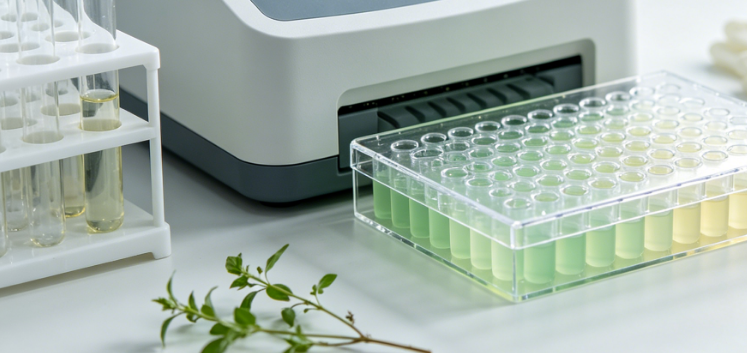
Understanding the Scientific Rationale for Gibberellin Biosynthesis Enzyme Analysis
Researchers and industry professionals seek gibberellin biosynthesis enzyme detection for a multiplicity of strategic objectives. At the forefront is the functional characterization of mutant lines—whether generated through CRISPR/Cas9-mediated genome editing, T-DNA insertion, or chemical mutagenesis—where the phenotypic aberrations observed in stature, flowering time, or seed dormancy must be causally linked to alterations in specific enzymatic activities within the GA pathway. Moreover, the elucidation of tissue-specific and developmental-stage-dependent GA metabolism necessitates the spatial and temporal resolution of enzyme abundance and catalytic efficiency, particularly in meristematic tissues, developing seeds, and elongating internodes. In the context of climate-resilient agriculture, the detection of GA biosynthetic enzymes serves as a diagnostic tool for evaluating the responsiveness of elite germplasm to environmental cues such as drought, salinity, and temperature extremes, given that GA metabolism is a primary nexus for stress-signaling crosstalk. Furthermore, the pharmacological screening of plant growth regulators (PGRs) and the assessment of their modes of action demand precise enzymatic assays to validate putative inhibitors or activators targeting specific GA biosynthetic steps. Our service is architected to address these diverse research paradigms with unwavering analytical rigor and biological relevance.
Advanced Methodological Platforms for Gibberellin Biosynthesis Enzyme Quantification
Our detection infrastructure integrates a triad of orthogonal, state-of-the-art analytical technologies, each selected for its complementary strengths in sensitivity, specificity, and throughput. The cornerstone of our quantitative approach is high-performance liquid chromatography coupled with tandem mass spectrometry (HPLC-MS/MS), employing isotopically labeled internal standards (e.g., 2H2-GA1, 13C6-GA4) to achieve absolute quantification of both the enzyme substrates and products in a single analytical run. This method provides a direct measurement of in vivo catalytic activity when combined with optimized extraction protocols that preserve the native conformational integrity of the enzymes. For in-depth mechanistic inquiries, we deploy ultra-performance liquid chromatography (UPLC) coupled to high-resolution quadrupole time-of-flight (Q-TOF) mass spectrometry, which enables the unambiguous identification of transient intermediates and side-branch metabolites, thereby furnishing a comprehensive metabolomic snapshot of the GA flux. Complementing these mass spectrometric platforms, we offer colorimetric and fluorometric enzyme activity assays using chromogenic substrate analogs (e.g., p-nitrophenyl derivatives) and NADPH-coupled continuous spectrophotometric monitoring, which are particularly advantageous for high-throughput screening of large sample cohorts and for real-time kinetic parameter determinations (Km, Vmax, and Kcat). Additionally, our western blot-based immunodetection employing highly specific polyclonal antibodies raised against conserved epitopes of GA20ox, GA3ox, and GA2ox families, combined with densitometric analysis, affords semi-quantitative protein abundance data that are indispensable for correlating transcriptomic changes with translational outcomes.
Unparalleled Analytical Depth and Sensitivity in Enzyme Detection
Our platform consistently achieves limits of detection (LOD) in the low-femtomole range (10−15 mol) for key GA metabolites and sub-nanogram sensitivity for enzyme protein quantification, a performance benchmark that substantially exceeds the conventional requirements of most research laboratories. More importantly, we have pioneered a multiplexed enzymatic activity profiling (MEAP) workflow that simultaneously monitors the sequential oxidative and reductive reactions catalyzed by KO, KAO, and GA20ox in a single microtiter plate well, thereby conserving precious biological material—a critical advantage when working with scarce mutant seeds, microdissected tissues, or laser-capture microdissected cell populations. Our proprietary membrane-intact microsome preparation technique preserves the endomembrane localization of cytochrome P450 monooxygenases (CYP701A, CYP88A, and CYP714D families), ensuring that the measured catalytic activities faithfully recapitulate the physiological membrane-embedded state of the enzymes. Furthermore, we employ stable isotope labeling by amino acids in cell culture (SILAC) in applicable plant cell culture systems, coupled with parallel reaction monitoring (PRM) on a high-field Orbitrap instrument, to deliver time-resolved turnover dynamics of GA biosynthetic enzymes under various pharmacological and environmental perturbations. This unparalleled depth of analysis empowers our clients to distinguish between transcriptional regulation, post-translational modification, and allosteric modulation as mechanisms underlying observed phenotypic changes.
Distinctive Advantages of Our Gibberellin Biosynthesis Enzyme Assay Services
Our service differentiates itself through a constellation of strategic advantages that are germane to the success of our clients' research and development programs. First, we maintain a comprehensive and continually curated reference library of over 120 GA-related metabolites and 15 recombinant enzyme isoforms, encompassing major agronomically relevant species including Oryza sativa, Arabidopsis thaliana, Zea mays, Triticum aestivum, and Solanum lycopersicum, which enables immediate cross-species comparative analyses without the lag time of reagent acquisition. Second, our custom-tailored assay protocols accommodate a wide spectrum of sample types—from as little as 5 mg of fresh plant tissue, 104 cultured cells, to 100 µL of xylem sap or apoplastic washing fluid—ensuring that the detection service is adaptable to the most challenging experimental designs. Third, we have implemented a stringent quality assurance/quality control (QA/QC) framework that includes internal recovery standards, process blanks, and certified reference material (CRM) verification in every analytical batch, culminating in a data reproducibility of ≥95% (coefficient of variation < 5%) across inter-assay and inter-operator conditions. Fourth, our team comprises Ph.D.-level scientists with specialized expertise in plant biochemistry, enzymology, and metabolomics, who provide dedicated one-on-one consultation throughout the project lifecycle—from experimental design and sample preparation advice to data interpretation and manuscript-ready figure generation. Fifth, we offer a rapid turnaround time of 10 to 15 business days for standard enzyme activity panels, with expedited options available for time-sensitive projects, without compromising the granularity or accuracy of the data delivered. Finally, all data outputs are accompanied by comprehensive raw data files, processed chromatograms, instrument settings, and a detailed method section compliant with the reporting standards of high-impact journals such as Nature Plants, Plant Cell, and Journal of Experimental Botany, thereby facilitating seamless manuscript submission and peer review.
Comprehensive Data Reporting and Interpretive Support
We recognize that the delivery of numerical results represents only the initial stage of the scientific value chain. Therefore, our reporting package extends beyond the conventional tables of activity units (nmol min−1 mg−1 protein) and metabolite concentrations (pmol g−1 fresh weight) to include heatmap visualizations of enzyme activity profiles across treatment groups, principal component analysis (PCA) biplots that delineate clustering patterns, and pathway flux maps annotated with statistically significant alterations (fold-change ≥ 1.5, p-value ≤ 0.05 via Student's t-test or ANOVA with post-hoc Tukey's HSD). For clients pursuing deeper mechanistic insights, we provide kinetic modeling outputs generated using the Michaelis-Menten and Hill equation frameworks, including enzyme-inhibitor dissociation constants (Ki) and half-maximal inhibitory concentrations (IC50) for PGR screening studies. Our interpretive support extends to integrative correlation analysis with transcriptomic (RNA-seq) and proteomic (LC-MS/MS shotgun) datasets, should the client elect to combine our enzymatic service with our complementary multi-omics offerings. We also furnish detailed protocol optimization records that document the rationale for specific buffer compositions, pH optima, temperature regimes, and cofactor additions (e.g., Fe2+, 2-oxoglutarate, ascorbate) for each enzyme assay, thus endowing our clients with the methodological transparency necessary to replicate or adapt the procedures in their own laboratories.
Applications Across Fundamental Research and Commercial Biotechnology
The applicability of our gibberellin biosynthesis enzyme detection service spans a broad spectrum of scientific and commercial endeavors. In academic fundamental research, our assays are routinely deployed to unravel the regulatory nodes of GA signal transduction, to validate the biochemical functions of newly identified GA-related genes, and to dissect the crosstalk between GA and other phytohormones such as auxin, brassinosteroids, and strigolactones in the orchestration of plant architecture. In agricultural biotechnology, our service underpins the screening of elite varieties with optimized semi-dwarf traits (e.g., the "green revolution" alleles in wheat and rice) by quantifying the residual GA3ox and GA20ox activities and correlating them with lodging resistance and harvest index improvements. For horticultural and floricultural industries, we enable the precise titration of GA biosynthesis inhibitors (e.g., paclobutrazol, uniconazole, trinexapac-ethyl) to achieve desired ornamental phenotypes, such as compact bedding plants or synchronized flowering, while minimizing off-target metabolic perturbations. In the burgeoning field of synthetic biology and metabolic engineering, our enzymatic assays serve as the critical quality control checkpoint for engineered microbial or plant chassis designed for the heterologous production of high-value GA derivatives with pharmaceutical or nutraceutical applications. Additionally, our service is instrumental in the environmental risk assessment of genetically modified (GM) crops, providing regulatory bodies and stakeholders with rigorous enzymatic evidence regarding the equivalence or divergence of GA metabolic profiles between transgenic and conventional counterparts.
Commitment to Scientific Excellence and Client-Centric Innovation
We are steadfastly committed to the continuous evolution of our technological repertoire and the cultivation of a collaborative ethos that prioritizes our clients' scientific objectives. Our dedicated research and development (R&D) unit actively explores emerging methodologies, including nano-flow liquid chromatography (nanoLC) for single-cell metabolomics, activity-based protein profiling (ABPP) with bioorthogonal probes for the selective enrichment of active GA enzymes, and molecular dynamics (MD) simulation-assisted interpretation of mutational effects on enzyme catalytic efficiency, all of which are progressively being integrated into our service catalog. We also engage in pre-competitive collaborative research agreements with academic consortia and industrial partners, offering tiered service models that range from fee-for-service single assays to multi-year longitudinal projects with dedicated technical support and periodic milestone reviews. Our global logistics network ensures the secure and temperature-controlled shipment of biological samples from any location, with detailed customs-cleared documentation and real-time tracking, thereby eliminating geographical barriers to accessing our specialized analytical capabilities.
In summary, our gibberellin biosynthesis enzyme detection service is not a transactional offering but a comprehensive scientific partnership calibrated to empower breakthrough discoveries in plant biology and its translational applications. By entrusting your critical samples to our platform, you gain access to world-class analytical fidelity, interpretative depth, and a responsive team that is as invested in your research outcomes as you are. We invite you to engage with us to tailor a detection strategy that not only answers your current hypotheses but also lays the groundwork for your future explorations into the dynamic and fascinating realm of gibberellin metabolism.