Reasons for choosing our testing services
ZHONGXI Testing has obtained inspection qualification certifications from multiple countries and regions worldwide. We possess a senior testing team and advanced testing methods, providing independent, impartial, and professional third-party verification services for global carbon projects.

Internationally recognized authority
Certified by multiple international standards such as CNAS, VCS, and GS, with reports universally applicable worldwide.

Global service capability
Covering 140+ countries and regions, it supports on-site detection and remote verification in multiple languages.

Professional experimental methods
Adopt standard experimental methods to ensure accurate and reliable data.
Precision Lipid Profiling and Quantification in Microalgae for Biofuel, Nutraceutical, and Feed Applications
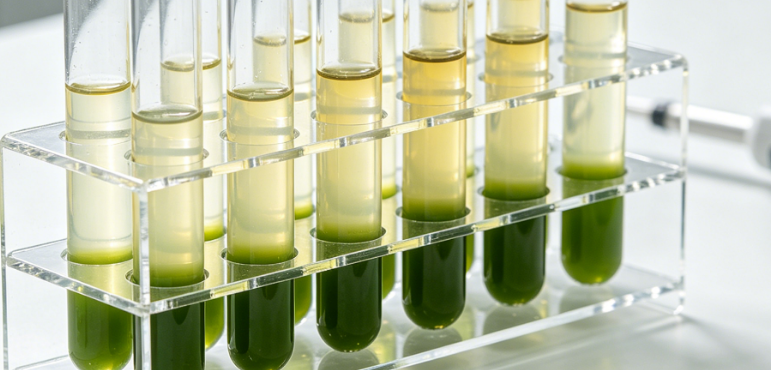
The commercial and scientific interest in microalgae has surged dramatically over the past decade, primarily driven by their exceptional capacity to accumulate high-value lipids—including triacylglycerols (TAGs) for biodiesel, polyunsaturated fatty acids (PUFAs) such as EPA and DHA for nutraceuticals, and polar lipids with bioactive properties. However, the accurate determination of lipid content and composition in microalgae presents formidable analytical challenges due to the complex cell wall structures that impede efficient extraction, the wide polarity range of lipid classes, the presence of co-extracted pigments and sterols, and the susceptibility of unsaturated acyl chains to oxidative degradation during sample handling. Our specialized detection platform has been meticulously developed to overcome these obstacles, offering a comprehensive, validated suite of gravimetric, chromatographic, and mass spectrometric methods that deliver unprecedented accuracy, reproducibility, and structural detail in microalgal lipid analysis. Whether the client's goal is to screen novel strains for high-oil productivity, optimize cultivation conditions for maximal TAG accumulation, monitor lipid profile shifts during nutrient stress, or validate product labels for commercial algal oil, our service provides the rigorous analytical foundation required for sound scientific and industrial decision-making.
Scientific Rationale for Microalgal Lipid Analysis in Research and Industry
Clients seeking microalgal lipid detection are typically motivated by a range of strategic objectives. In biofuels R&D, the primary driver is to quantify the total lipid content and the fraction of saponifiable neutral lipids (principally TAGs) that can be transesterified into fatty acid methyl esters (FAMEs), as well as to determine the fatty acid profile—specifically the ratios of C16:0, C18:1, C18:2, and C18:3—which directly affect biodiesel quality parameters such as cetane number, cold filter plugging point, and oxidative stability. In nutraceutical development, the emphasis shifts to the precise quantification of omega-3 long-chain PUFAs (EPA and DHA) and the minor bioactive lipids like carotenoid esters and galactolipids, which require resolution from the bulk neutral lipid pool. In aquafeed formulation, the detection of lipid classes (phospholipids, glycolipids, and neutral lipids) and their fatty acid distributions is critical for assessing the nutritional value of the algal meal. For fundamental metabolic studies, researchers require detailed lipidomics data to track the flux of carbon into lipid biosynthesis pathways under various stress regimes (nitrogen starvation, salinity, high light) and to understand the regulatory nodes controlling lipid droplet formation. Our service addresses these diverse needs by offering flexible analytical workflows that can be tailored to prioritize total lipid quantitation, class-level separation, or comprehensive molecular species identification, all while maintaining the highest standards of analytical rigor.
Advanced Analytical Technologies for Comprehensive Lipid Determination
Our methodology integrates a cascade of orthogonal techniques that collectively provide a complete picture of the microalgal lipidome. The primary quantitative anchor is the gravimetric determination of total extractable lipids using a modified Folch or Bligh & Dyer extraction with internal recovery standards (e.g., triheptadecanoin, C17:0 TAG, and cholesteryl heptadecanoate). To maximize extraction efficiency, we employ a combination of bead-beating cell disruption (with zirconia-silica beads at 6,000 rpm for 2 minutes) and ultrasonication-assisted extraction in a 2:1 chloroform:methanol mixture, followed by washing with aqueous NaCl to remove non-lipid contaminants. The resultant extract is dried under nitrogen, weighed, and normalized to dry biomass, achieving intra-day reproducibility of ≤ 2% RSD and recoveries of 97–103% for spiked standards. For lipid class separation and quantification, we deploy thin-layer chromatography with flame ionization detection (TLC-FID) (Iatroscan system), which resolves neutral lipids (TAGs, free fatty acids, sterols), glycolipids (MGDG, DGDG, SQDG), and phospholipids (PC, PE, PG, PI) in a single run, with detection limits of 0.5 µg per spot. This is complemented by high-performance liquid chromatography coupled to evaporative light scattering detection (HPLC-ELSD) and charged aerosol detection (CAD) for quantitative class analysis with enhanced linearity over a wide dynamic range (0.1–100 µg). For detailed fatty acid profiling, we perform direct transesterification of the total lipid extract (or directly from biomass) using 5% H2SO4 in methanol, followed by gas chromatography with flame ionization detection (GC-FID) on a highly polar capillary column (100 m, cyanopropyl phase) that achieves baseline separation of all C12–C24 fatty acid methyl esters, including critical positional and geometrical isomers. Identification is confirmed by GC-electron impact mass spectrometry (GC-EI-MS) and comparison against a comprehensive library of authentic FAME standards. Finally, for lipidomic depth, we employ ultra-high-performance liquid chromatography coupled to high-resolution tandem mass spectrometry (UHPLC-HRMS/MS) with a C30 reversed-phase column, enabling the identification and quantification of over 300 individual lipid molecular species across 15 major classes, with mass accuracy < 2 ppm and limits of quantification in the low ng/mL range using isotopically labeled internal standards (e.g., TAG 17:0/17:0/17:0, PC 17:0/17:0, and LPC 17:0).
Exceptional Analytical Depth and Structural Resolution in Lipid Characterization
Our platform routinely achieves total lipid quantification with a measurement uncertainty of less than ±3% across microalgal samples with widely varying lipid contents (5–60% dry weight). For fatty acid profiles, we resolve up to 35 individual fatty acids, including the determination of the double bond positions (via GC-EI-MS of picolinyl ester derivatives) and the sn-2 positional distribution in TAGs using pancreatic lipase hydrolysis, providing information crucial for understanding oil nutritional quality and crystallization behavior. In lipidomics mode, our UHPLC-HRMS/MS workflows provide regioisomeric resolution of TAG species (e.g., differentiating TAG 18:1/18:1/18:2 from 18:1/18:2/18:1) and the distinction between acyl chain lengths and unsaturation levels within the same nominal mass. We also implement ion mobility spectrometry (IMS) as an orthogonal separation dimension, enabling the separation of co-eluting isobaric lipid species that differ only in collision cross-section (CCS), further enhancing specificity. For clients requiring liposomal oxidation stability assessment, we provide accelerated oxidation tests with conjugated diene (CD) and thiobarbituric acid reactive substances (TBARS) measurements, coupled with GC-MS analysis of volatile oxidation products (e.g., hexanal, propanal), yielding a comprehensive oxidative stability profile. Furthermore, our proprietary data processing pipeline uses the LipidMatch and LipidBlast libraries, combined with in-house curated databases, to achieve automated annotation with a false discovery rate (FDR) below 1% for high-confidence identifications. This depth of analysis allows our clients to move beyond simple oil content to a genuine understanding of lipid metabolism, enabling them to make precise decisions on strain selection, culture condition optimization, and downstream processing design.
Distinctive Advantages of Our Microalgal Lipid Detection Service
Our service offers a range of competitive advantages that translate into superior outcomes for our clients. First, we maintain a dedicated microalgae culture and harvesting facility that allows us to offer comprehensive workflow from wet biomass to final lipidomic report, including standardized sample preparation (freeze-drying, weighing, and homogenization) to minimize inter-laboratory variability. Second, our multi-matrix validation covers not only pure algal cultures but also complex matrices such as algal-bacterial consortia, biofilm scrapings, and flocculated or freeze-dried commercial powders, with method adaptations that account for differential extractability. Third, we provide rapid screening options using Fourier-transform infrared (FTIR) spectroscopy with partial least squares (PLS) calibration models, offering a non-destructive, high-throughput estimate of total lipid content (within ±5% of gravimetric values) for large-scale screening (up to 96 samples per hour), while reserving detailed GC and LC-MS analyses for the most promising candidates. Fourth, our reporting integrates quantitative data with interpretive analytics, including unsaturation index, average fatty acid chain length, and biodiesel property predictors (cetane index, iodine value, cold filter plugging point) calculated according to EN 14214 and ASTM D6751 standards, thus directly linking analytical outcomes to end-use performance metrics. Fifth, we offer tailored statistical consulting to help clients design experiments (e.g., response surface methodology for optimization studies) and analyze variance components, ensuring that the minimal number of samples is required to achieve statistically significant conclusions. Sixth, all our methods are fully documented with standard operating procedures (SOPs) and are compliant with OECD and ICH guidelines for non-clinical testing, and we provide detailed method validation reports including linearity, accuracy, precision, limit of detection (LOD), limit of quantification (LOQ), matrix effect, and stability studies, making our data defensible in regulatory submissions and high-impact publications.
Comprehensive Data Interpretation and Application-Specific Reporting
We recognize that raw lipid data are only as valuable as their translation into biological or process-relevant insights. Our final reports are therefore structured to provide multi-level outputs: a one-page executive summary with key metrics (total lipid %, TAG %, FAME distribution, and key quality indices) for quick assessment, followed by detailed tabular data for each sample, including normalized concentrations of individual fatty acids and lipid classes, along with their standard deviations and coefficients of variation. For time-course or dose-response studies, we provide graphical visualizations such as stacked bar charts of class composition, radar plots for fatty acid profiles, and heatmaps of molecular species abundance. We also supply mass spectral data files (.raw, .mzML) and processed quantification tables in Excel and CSV formats for clients who wish to perform their own bioinformatic analyses. Additionally, our expert scientists prepare a narrative interpretation that contextualizes the results with respect to the client's specific objectives—for example, linking high 18:1 content to improved oxidative stability for biodiesel, or low EPA/DHA ratios to possible requirements for supplementation in feed. For collaborative projects, we offer bi-weekly virtual meetings to discuss intermediate results and adjust analytical strategies as needed, ensuring that the final deliverable fully addresses the client's evolving research questions.
Broad Applicability Across Diverse Microalgal Strains and Production Systems
Our detection service has been validated on a wide spectrum of microalgal species, including but not limited to Chlorella vulgaris, Nannochloropsis oculata, Haematococcus pluvialis, Scenedesmus dimorphus, Isochrysis galbana, Phaeodactylum tricornutum, Pavlova lutheri, and numerous genetically modified or wild-type isolates. We have also successfully analyzed samples from open raceway ponds, photobioreactors (flat-panel, tubular, and hybrid), and attached growth systems, accommodating variations in cell size, wall thickness, and matrix viscosity. Our protocols are adaptable to both laboratory-scale cultures (milliliter volumes) and pilot or production-scale harvests (kilogram quantities), with appropriate scaling of extraction and analysis. For clients with limited sample availability, we offer a miniaturized micro-extraction protocol requiring only 10 mg of freeze-dried biomass, providing gravimetric and GC-FID data with only slightly reduced precision (still < 5% RSD). Conversely, for clients with abundant material, we perform scale-up preparative HPLC to isolate pure lipid fractions for NMR-based structural confirmation or biological activity assays. This flexibility ensures that our service remains accessible and cost-effective regardless of the client's stage of development, from early strain screening to commercial production quality assurance.
Commitment to Innovation, Quality Assurance, and Collaborative Partnership
We are continuously advancing our analytical capabilities through internal R&D and active participation in international collaborative projects. Recent developments include the implementation of direct infusion shotgun lipidomics (nanospray-MS) for ultra-fast lipid profiling (3 minutes per sample) with minimal carryover, and the integration of machine learning-based predictive models that use real-time Raman spectroscopy data to estimate lipid content and unsaturation levels without sample destruction. We also engage in inter-laboratory cross-validation studies with academic and industrial partners to ensure our data are harmonized with global standards, and we hold accreditations from A2LA (for ISO/IEC 17025) and certifications from the American Oil Chemists' Society (AOCS) for specific lipid analyses. Our quality assurance program includes regular analysis of in-house quality control materials (from a reference strain with stable lipid composition) and participation in proficiency testing schemes such as the FAPAS® Microalgal Oil Series, consistently achieving z-scores within ±1.0. We offer flexible pricing models—from per-sample rates to bulk discounts and subscription-based long-term monitoring agreements—and provide rapid turnaround times: standard lipid panels are typically delivered within 5 business days, while comprehensive lipidomics reports may take 10 business days, with expedited options for urgent projects. Our global shipping logistics ensure that samples maintain their integrity during transit, with dry-ice packaging and real-time GPS temperature tracking. Ultimately, we view every client engagement as a partnership, striving not only to deliver analytical excellence but also to share our expertise in lipid biology and process optimization, empowering our clients to achieve their scientific and commercial goals with confidence.
In conclusion, our microalgal lipid detection service offers a comprehensive, precise, and application-oriented solution for the full characterization of lipid content, class distribution, and molecular composition. By integrating state-of-the-art instrumentation, rigorous validation, deep interpretive support, and a client-centric approach, we provide the analytical backbone for innovative microalgal research and industrial development. We invite you to collaborate with us to unlock the lipid potential of your microalgal systems and to accelerate your journey from discovery to market.