Reasons for choosing our testing services
ZHONGXI Testing has obtained inspection qualification certifications from multiple countries and regions worldwide. We possess a senior testing team and advanced testing methods, providing independent, impartial, and professional third-party verification services for global carbon projects.
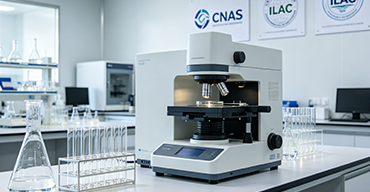
Internationally recognized authority
Certified by multiple international standards such as CNAS, VCS, and GS, with reports universally applicable worldwide.

Global service capability
Covering 140+ countries and regions, it supports on-site detection and remote verification in multiple languages.
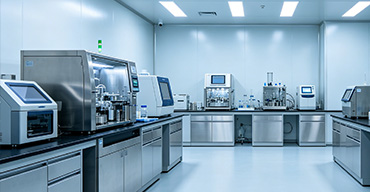
Professional experimental methods
Adopt standard experimental methods to ensure accurate and reliable data.
Comprehensive Resveratrol Detection and Quantification Services for Food, Pharmaceutical, and Nutraceutical Quality Assurance
Resveratrol (3,5,4′-trihydroxy-trans-stilbene) is a naturally occurring polyphenolic phytoalexin found in grapes, berries, peanuts, and particularly in Polygonum cuspidatum (Japanese knotweed). Renowned for its potent antioxidant, anti-inflammatory, cardioprotective, and chemopreventive properties, resveratrol has become a flagship compound in the nutraceutical, cosmeceutical, and pharmaceutical industries. However, the accurate and reliable detection of resveratrol—in its trans and cis isomeric forms, as well as its glucosylated derivatives (piceid) and oligomeric analogues—presents significant analytical challenges. These include photochemical isomerization, oxidative degradation, matrix interference from complex botanical extracts, and the need for enantioselective separation in certain matrices. Our specialized detection platform offers a comprehensive, fully validated suite of chromatographic, spectroscopic, and mass spectrometric methods that deliver unparalleled sensitivity, specificity, and structural elucidation for resveratrol and its metabolites in a wide range of sample types. Whether the client is a raw material supplier, a formulation manufacturer, a contract research organization, or a regulatory compliance laboratory, our service provides the high-fidelity, actionable data required to ensure product integrity, label claim accuracy, and consumer safety.
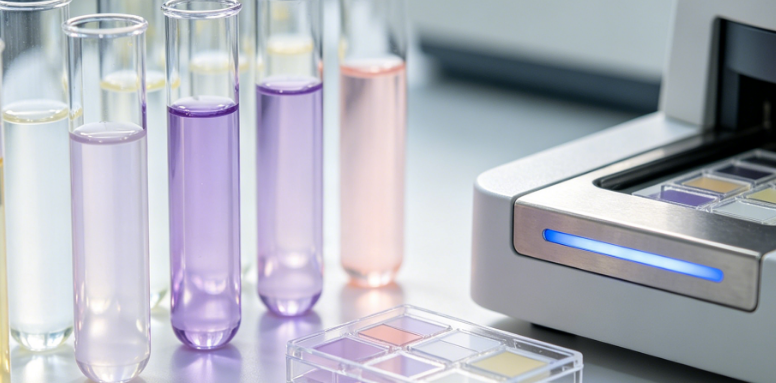
Scientific and Regulatory Drivers for Resveratrol Analysis
Clients seeking resveratrol detection services are motivated by a range of critical objectives. In raw material authentication and quality control, the primary need is to confirm the identity and quantify the concentration of trans-resveratrol—the biologically active isomer—while also monitoring the levels of cis-resveratrol and glucoside conjugates, which affect overall bioactivity and stability. In formulation development and stability studies, manufacturers require detailed kinetic data on resveratrol degradation under various environmental conditions (light, heat, pH, oxygen) to establish appropriate shelf-life and storage recommendations. In nutraceutical and dietary supplement compliance, stringent labeling regulations (e.g., USP, FDA DSHEA, EFSA Novel Food) mandate accurate quantification of the active ingredient, as well as screening for potential adulterants, heavy metals, and pesticide residues. In pharmaceutical research and preclinical studies, precise determination of resveratrol and its phase II metabolites (sulfates, glucuronides) in plasma, tissues, and excreta is essential for pharmacokinetic and bioavailability assessments. Furthermore, in food industry applications, resveratrol is monitored as a quality marker for wine, grape juice, and functional beverages, with specific legal limits in certain regions. Our service is architected to address these diverse requirements, offering a modular analytical framework that can be tailored to the specific sample matrix (plant material, dietary supplement, biological fluid, food product) and the client's specific regulatory or research question.
Integrated Analytical Pipeline for Comprehensive Resveratrol Profiling
Our analytical platform is structured around four interconnected modules that collectively provide a complete characterization of resveratrol and related stilbenoids. The Extraction and Sample Preparation Module employs optimized solid-liquid extraction with solvent systems (e.g., ethanol/water, methanol/water) tailored to the sample matrix, incorporating ultrasonication and accelerated solvent extraction (ASE) to maximize recovery. For biological fluids, we use protein precipitation and solid-phase extraction (SPE) with mixed-mode sorbents (e.g., Oasis HLB) to achieve clean extracts with recoveries of 95–102% and matrix effect reductions below 5%. The Chromatographic Separation Module utilizes ultra-high-performance liquid chromatography (UHPLC) with a C18 reversed-phase column (1.8 µm, 100 mm), employing a mobile phase gradient of water/acetonitrile with 0.1% formic acid, achieving baseline separation of trans- and cis-resveratrol isomers (resolution Rs > 2.5) within a run time of 8 minutes. For complex mixtures containing resveratrol oligomers (e.g., viniferins, pallidol), we apply two-dimensional LC (LC×LC) to increase peak capacity. The Detection and Quantification Module offers dual detection options: photodiode array (PDA) at 306 nm (for trans-resveratrol, LOQ 0.1 µg/mL) and electrospray ionization tandem mass spectrometry (ESI-MS/MS) in negative ion mode, with multiple reaction monitoring (MRM) transitions for resveratrol (m/z 227→143/185) and its glucoside (piceid, m/z 389→227), achieving LOQs in the low ng/mL range (0.1–0.5 ng/mL) for plasma and urine. For absolute quantification, we employ isotopically labeled internal standards (resveratrol-d4) to correct for matrix effects and ion suppression, providing inter-day precision below 3% RSD and accuracy within 98–102%. The Metabolite and Isomer Module includes a chiral column (Chiralpak IA) for enantiomeric separation of resveratrol enantiomers (only the trans- form has reported bioactivity, but enantiomeric purity is sometimes required), as well as hydrolysis protocols using β-glucosidase to quantify free resveratrol versus total (free + glucosylated) forms. For comprehensive fingerprinting, we perform high-resolution quadrupole time-of-flight (Q-TOF) MS with full-scan and data-dependent MS/MS, enabling the identification of unknown stilbenoid derivatives and degradation products via molecular formula determination (mass accuracy < 2 ppm) and fragmentation pattern matching against our in-house database of >100 resveratrol-related compounds.
Unmatched Analytical Depth, Sensitivity, and Structural Elucidation
Our platform delivers performance metrics that significantly exceed typical commercial capabilities. In routine quantification, our UHPLC-MS/MS method provides a linear dynamic range spanning five orders of magnitude (0.1–10,000 ng/mL) with correlation coefficients (R²) consistently > 0.999. The limit of detection (LOD) is 0.03 ng/mL for trans-resveratrol in plasma, enabling the quantification of picogram levels necessary for low-dose pharmacokinetic studies. We achieve complete resolution of trans-resveratrol from its cis-isomer under standard conditions (retention time difference > 0.8 min), and we provide photostability assessments by exposing samples to controlled UV light and monitoring isomerization kinetics, with first-order rate constants accurately derived. For structural characterization, our Q-TOF MS acquires MS/MS spectra at high resolution (≥ 30,000 FWHM), enabling the differentiation of isomeric resveratrol sulfates (e.g., 3-sulfate vs. 4′-sulfate) based on their diagnostic product ions. We also perform untargeted metabolomic profiling to identify unexpected degradation products or biotransformation metabolites in complex matrices, using feature detection and molecular networking to cluster related compounds. Our accelerated stability testing under ICH conditions (40°C/75% RH, with light exposure) provides degradation kinetics and activation energy (Ea) for resveratrol in finished products, allowing clients to predict shelf-life with high confidence. Additionally, we offer dissolution testing for solid dosage forms (tablets, capsules) using USP apparatus, providing dissolution profiles (Q values at specified time points) to ensure bioavailability. This depth of analysis ensures that our clients receive not only concentration data but also a comprehensive understanding of their resveratrol-containing product's stability, purity, and performance.
Distinctive Advantages of Our Resveratrol Detection Service
Our service is distinguished by several unique features that deliver exceptional value to clients. First, we have developed matrix-specific validated protocols for over 20 different sample types—including raw herbal powders, oily extracts, softgels, beverages, animal plasma, urine, and tissue homogenates—each with optimized extraction, cleanup, and chromatographic conditions to minimize interferences and maximize recovery. Second, we maintain a comprehensive in-house reference standard library comprising trans- and cis-resveratrol, piceid, resveratrol sulfate and glucuronide metabolites, and various oligomeric stilbenoids (e.g., ε-viniferin, resveratrol trimers), enabling us to provide both targeted quantification and confirmatory identification for unusual peaks. Third, we offer a rapid screening service using UV-Vis spectrophotometry with a chemometric calibration model (PLS) that can estimate total resveratrol content (as trans-resveratrol equivalents) in crude extracts within 5 minutes, with an accuracy of ±8% relative to UHPLC, ideal for in-process checks and triage of large sample batches. Fourth, our isomeric and purity assessment includes the determination of the trans/cis ratio and the purity index (as % of total resveratrol-related compounds), which is critical for ensuring that products labelled as "high-resveratrol" indeed contain the active isomer and not degradation products. Fifth, we provide full method validation packages in compliance with ICH, USP, and AOAC guidelines, including specificity, linearity, accuracy, precision, LOD, LOQ, ruggedness, and stability in sample solutions—data packages that are essential for regulatory submissions and quality certifications. Sixth, our team includes phytochemical and analytical experts who offer interpretive guidance, helping clients to understand, for example, how a change in extraction solvent affects the isomer ratio, or how the presence of other polyphenols may impact resveratrol stability. We also provide customizable reporting formats—from simple certificate of analysis (CoA) to detailed investigational reports with chromatographic overlays, statistical analysis, and trend charts, according to the client's needs.
Advanced Data Interpretation, Predictive Stability Modeling, and Regulatory Support
Our reporting goes beyond delivering numerical results. We provide integrated data analysis packages that include stability kinetic plots (degradation vs. time) with fitted exponential decay curves and calculated shelf-life (T90, T95) under specified storage conditions. For formulation development clients, we offer comparative profiles of resveratrol release from different dosage forms, using model-independent parameters (e.g., dissolution efficiency, mean dissolution time) and model-dependent fitting (Weibull, Higuchi, Korsmeyer-Peppas) to guide formulation optimization. For regulatory submissions, we compile dossiers that include validation data, batch analysis certificates, and stability summaries, formatted to meet the expectations of the FDA, EMA, and other global regulatory bodies. We also perform forced degradation studies (acid/base hydrolysis, oxidation, photolysis, thermal stress) to identify degradation products and establish intrinsic stability, a requirement for ICH Q1A(R2). Our trend analysis service tracks quality metrics over multiple production batches, generating control charts and highlighting any drift in resveratrol content or impurity profile, enabling proactive quality management. Furthermore, we offer expert witness and consulting services for litigation or regulatory disputes involving resveratrol content claims. We view each client engagement as a collaborative partnership, providing clear explanations of analytical challenges and limitations, ensuring that the data are not only accurate but also fit-for-purpose for the client's decision-making process.
Broad Applications Across Raw Material Supply, Manufacturing, Research, and Regulatory Compliance
The versatility of our resveratrol detection service spans the entire value chain. In raw material supply, we help growers and extractors verify the potency of their batches against customer specifications, facilitating trade with confidence. In manufacturing quality control, our routine release testing ensures that finished products meet label claims, reducing the risk of regulatory action or consumer complaints. In research and development, our deep analytical capabilities support formulation screening, stability optimization, and bioavailability studies, providing the data needed to advance new product concepts. In regulatory affairs, our GMP- and GLP-compliant data packages expedite submissions for health claims and novel food approvals. In clinical research, our sensitive bioanalytical methods support pharmacokinetic and pharmacodynamic studies, enabling accurate exposure-response correlations. In food and beverage industries, our quality verification helps producers maintain consistent resveratrol levels in wines, juices, and fortified products, ensuring brand reputation. We also support contract research organizations (CROs) and testing laboratories with outsourced analytics, providing backup capacity and specialized expertise. Our ability to adapt our methods to each client's specific matrix, throughput, and regulatory environment has made us a preferred partner for organizations ranging from small startups to multinational corporations.
Commitment to Innovation, Quality, and Client Success
We are dedicated to maintaining leadership in resveratrol analysis through continuous technological and methodological advancement. Our current R&D includes the development of paper-based microfluidic devices for rapid, field-deployable semi-quantitative resveratrol testing, and the integration of machine learning algorithms for automated chromatographic peak identification and integration, reducing human error and analysis time. We also actively engage with standardization bodies (e.g., USP, AOAC, ISO) to contribute to the development of official methods for resveratrol, ensuring our procedures remain aligned with emerging global standards. Our quality management system is ISO/IEC 17025 accredited and we participate in proficiency testing schemes (e.g., FAPAS Dietary Supplements series) with a proven track record of z-scores within ±1.0. We offer flexible engagement models—from ad-hoc single sample analysis to long-term service agreements with dedicated capacity, volume discounts, and priority turnaround. Our global sample intake system ensures that samples from any location are processed with minimal administrative delay, and we provide detailed sampling and shipping guidance to preserve analyte integrity. With a standard turnaround of 3–5 business days for routine testing and expedited (24-hour) options for urgent projects, we deliver timely, decision-ready results. Ultimately, our success is built on our clients' success, and we are committed to providing not just data, but the insights and confidence needed to bring safe, effective, and compliant resveratrol products to the market.
In summary, our resveratrol detection service offers a comprehensive, precise, and regulatory-ready analytical solution that covers every critical aspect from isomeric purity and stability to metabolite profiling and dissolution performance. By integrating cutting-edge instrumentation, matrix-optimized protocols, expert interpretation, and a client-centric collaborative approach, we empower our customers to achieve the highest standards of quality, safety, and efficacy in their resveratrol-containing products. We invite you to partner with us to ensure that your resveratrol analyses are conducted with the utmost scientific rigor and operational excellence.