Reasons for choosing our testing services
ZHONGXI Testing has obtained inspection qualification certifications from multiple countries and regions worldwide. We possess a senior testing team and advanced testing methods, providing independent, impartial, and professional third-party verification services for global carbon projects.

Internationally recognized authority
Certified by multiple international standards such as CNAS, VCS, and GS, with reports universally applicable worldwide.

Global service capability
Covering 140+ countries and regions, it supports on-site detection and remote verification in multiple languages.

Professional experimental methods
Adopt standard experimental methods to ensure accurate and reliable data.
Comprehensive Anaerobic Digestion Effluent and Digestate Analysis for Process Optimization, Nutrient Management, and Environmental Compliance
Anaerobic digestion (AD) is a cornerstone technology for sustainable waste treatment, renewable energy production (biogas), and nutrient recovery from organic feedstocks such as agricultural residues, food waste, manure, and municipal sludge. The liquid fraction of the digested effluent—commonly referred to as anaerobic fermentation tail liquid or digestate supernatant—is a complex matrix containing residual organic matter, volatile fatty acids (VFAs), ammonia, phosphate, heavy metals, and a diverse microbial community. Its composition directly influences downstream applications (e.g., land application as biofertilizer, discharge to water bodies, or further treatment) and reflects the stability and efficiency of the AD process itself. However, the reliable and comprehensive analysis of this tail liquid poses substantial analytical challenges: the high suspended solids and colloidal content require robust sample preparation; the volatility of short-chain fatty acids and ammonia demands careful handling and rapid analysis; the co-existence of organic and inorganic constituents necessitates multi-method approaches; and the potential presence of pathogens or inhibitory compounds calls for specialized microbiological and toxicological screening. Our specialized detection platform offers a fully integrated, validated suite of physico-chemical, microbiological, and ecotoxicological assays tailored to anaerobic digestion tail liquids, delivering the high-resolution, actionable data needed for process monitoring, nutrient management, regulatory compliance, and valorization of digestate products.
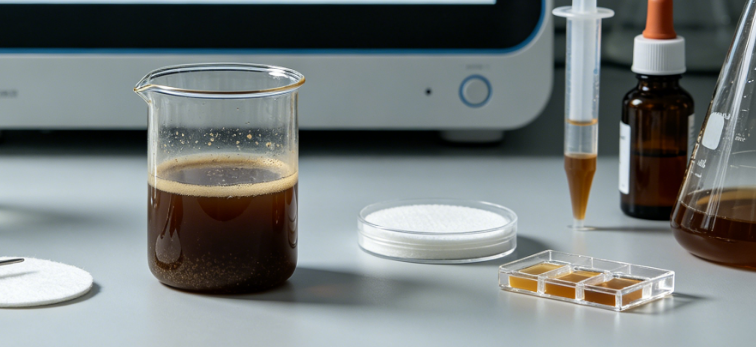
Scientific and Operational Rationale for Anaerobic Digestion Tail Liquid Analysis
Clients seeking analytical services for AD tail liquids are driven by diverse operational, regulatory, and research imperatives. In process monitoring and control, the primary need is to track key stability indicators—particularly volatile fatty acids (VFAs), alkalinity, and ammonia nitrogen—to detect process imbalances early (e.g., acidification, ammonia inhibition) and adjust feeding rates or buffering accordingly. In nutrient management for agricultural use, accurate quantification of total nitrogen, ammonium-N, phosphate, potassium, and micronutrients is essential to formulate customised fertilization plans that meet crop demands while minimizing environmental losses. In environmental compliance, tail liquid discharge must meet stringent limits for chemical oxygen demand (COD), biochemical oxygen demand (BOD), heavy metals, pathogens (e.g., E. coli, Salmonella), and emerging contaminants, as stipulated by local and international regulations (e.g., EU Nitrates Directive, US EPA Clean Water Act). In research and process development, detailed characterization of recalcitrant organics, inhibitory substances (e.g., phenols, long-chain fatty acids), and microbial community dynamics (via metagenomics) is needed to optimise pretreatment strategies, co-digestion ratios, and post-treatment technologies. Our service is architected to address these multifaceted needs, offering a modular, scalable analytical framework that accommodates everything from routine daily quality control to in-depth research profiling.
Integrated Analytical Pipeline for Holistic AD Tail Liquid Profiling
Our analytical platform comprises six interconnected modules that collectively deliver a complete compositional and functional characterisation. The Basic Physicochemical Module measures pH, electrical conductivity (EC), total solids (TS), total suspended solids (TSS), volatile solids (VS), alkalinity (total and bicarbonate) using standard APHA/AWWA methods, with measurement uncertainties below 2%. For organic matter load, we determine chemical oxygen demand (COD) by the closed-reflux titrimetric method (LOQ 5 mg/L) and five-day biochemical oxygen demand (BOD5) using the manometric or dilution method (LOQ 2 mg/L). The Nutrient and Ion Module employs ion chromatography (IC) for anions (nitrate, nitrite, phosphate, sulfate, chloride) and segmented flow analysis (SFA) for ammoniacal nitrogen (NH3-N), total Kjeldahl nitrogen (TKN), and total phosphorus (TP) after persulfate digestion, achieving LOQs of 0.05 mg/L for nitrate, 0.02 mg/L for ammonia, and precision within ±2% RSD. For metals, we use inductively coupled plasma optical emission spectrometry (ICP-OES) and ICP-MS to quantify macro-elements (K, Ca, Mg, Na, Fe) and trace/heavy metals (Cu, Zn, Ni, Cr, Pb, Cd, As, Hg) with LOQs in the low µg/L range. The Organic Micropollutant Module targets volatile fatty acids (VFAs: acetate, propionate, butyrate, isobutyrate, valerate, isovalerate) using gas chromatography with flame ionization detection (GC-FID) after acidification and ether extraction, with LOQs of 1 mg/L and linearity R² > 0.999. For other organic contaminants (e.g., pesticides, pharmaceuticals, PAHs), we employ gas chromatography-mass spectrometry (GC-MS) and liquid chromatography-tandem mass spectrometry (LC-MS/MS) with solid-phase extraction (SPE) enrichment, providing LODs in the ng/L range. The Microbiological Module performs total Coliforms and E. coli enumeration using the Colilert® defined substrate method (IDEXX), enterococci by membrane filtration, and Salmonella spp. by ISO 6579-1 enrichment and culture. For deeper insight, we apply 16S rRNA amplicon sequencing (Illumina MiSeq) to profile the bacterial community and its potential metabolic functions, as well as qPCR for specific functional genes (e.g., mcrA for methanogens, nifH for nitrogen fixers). The Ecotoxicological Module assesses the phytotoxicity of the tail liquid using seed germination tests (OECD 208) with cress or lettuce, and acute toxicity on Daphnia magna (OECD 202) and Vibrio fischeri (Microtox®), providing EC50 values and toxic units. Finally, the Process Performance Integration Module uses all chemical and biological data to compute key indices such as VFAs/alkalinity ratio, ammonia/free ammonia concentration, COD/N/P ratios, and specific methanogenic activity (SMA) – the latter via batch anaerobic toxicity assays – offering a comprehensive stability and potential for post-treatment.
Unmatched Analytical Depth, Sensitivity, and Data Reliability
Our platform consistently delivers exceptional performance across all parameters. For VFAs, our GC-FID method resolves six individual acids with baseline separation (Rs > 2.0) in under 18 minutes, and we include an internal standard (2-ethylbutyric acid) to correct for extraction losses, achieving recoveries of 95–105%. In ammonia analysis, our SFA method uses the salicylate-nitroprusside reaction with a linear range of 0.05–50 mg N/L and an inter-laboratory reproducibility of < 3%. For ICP-MS, our collision/reaction cell technology eliminates polyatomic interferences, delivering LOQs of 0.1 µg/L for Cd, 0.5 µg/L for Pb, and 0.05 µg/L for Hg in the digestate matrix. The microbiological methods are performed with negative and positive controls for each batch, and we report results as most probable number (MPN) with 95% confidence intervals. Our ecotoxicological tests follow OECD guidelines with standardized reference toxicants (e.g., K2Cr2O7 for Daphnia) to ensure test validity, and we calculate EC50 values with 95% fiducial limits using probit analysis. Furthermore, we provide sample stability and preservation protocols – e.g., acidification for VFAs, refrigeration for microbiology, and filtration for dissolved ions – to guarantee integrity from sampling to analysis. Our extensive quality control includes analysis of certified reference materials (CRMs) for nutrients, metals, and organic compounds, and we participate in international proficiency testing schemes (e.g., WEPAL, Aquacheck) to continually verify our accuracy. This systematic rigor ensures that our clients receive not just numbers, but data with known uncertainty, traceability, and defensibility.
Distinctive Advantages of Our Anaerobic Digestion Tail Liquid Detection Service
Our service offers several unique benefits that directly address the complex demands of AD tail liquid analysis. First, we have developed matrix-specific pre-treatment protocols for high-solids, high-color, and high-ammonia samples, including centrifugation, filtration, and dilution strategies that minimize matrix interferences while preserving labile analytes – for example, our method for VFAs uses a two-step acidification and salting-out extraction that improves recovery by 15% compared to standard methods. Second, we provide a rapid on-site screening service using handheld meters for pH, EC, and ammonia, as well as photometric test kits for COD and phosphate, delivering preliminary results within 30 minutes of sampling – ideal for troubleshooting and real-time process adjustments. Third, we offer customised reporting dashboards that compare current results with historical data from the same digester, with trend analysis and alarm thresholds for key parameters (e.g., VFA accumulation, rising ammonia, decreasing alkalinity), enabling proactive process management. Fourth, we integrate mass balance calculations to estimate nutrient recovery potential and provide recommendations for land application rates, reducing the client's risk of over-fertilisation and environmental non-compliance. Fifth, our microbiological and molecular analyses go beyond pathogen detection to include functional gene profiling that identifies the metabolic potential of the microbial community – for instance, the abundance of acetoclastic versus hydrogenotrophic methanogens, which is critical for diagnosing poor biogas yield. Sixth, we maintain accreditation under ISO/IEC 17025 for all listed parameters, and our methods are validated in accordance with EPA, APHA, and ISO standards, ensuring that our results are accepted by regulatory authorities worldwide. Additionally, our team of environmental chemists, microbiologists, and process engineers provides consultative interpretation, helping clients to understand the implications of their results – for example, explaining why a rising propionate/acetate ratio may indicate a syntrophic imbalance, and suggesting corrective measures.
Advanced Data Integration, Predictive Modeling, and Strategic Reporting
We go beyond traditional reporting by providing integrated data analytics that transform raw measurements into actionable intelligence. Our final report includes: (i) a single-page process health summary with colour-coded indicators for stability, nutrient content, and toxicity, benchmarked against industry reference ranges; (ii) a detailed results section with all analytical data, chromatograms, calibration curves, and quality control metrics; (iii) a time-series trend analysis (for repeat clients) highlighting changes in key ratios and identifying potential early warning signs; and (iv) a predictive section using our internally developed models to forecast ammonia inhibition potential or methane yield based on VFA and nutrient profiles, enabling clients to pre-emptively adjust process parameters. For clients using digestate as fertiliser, we compute crop-specific application rates based on soil nutrient content (if provided) and tail liquid composition, along with environmental loss risk assessments (e.g., nitrate leaching, ammonia volatilisation). We also offer customised data exports in CSV, Excel, and PDF formats for easy integration into clients' own management systems. Our reporting is designed to support decision-making at all levels, from plant operators to management to regulatory auditors.
Broad Applications Across Biogas Plants, Wastewater Treatment, Agriculture, and Research
The versatility of our AD tail liquid analysis service makes it indispensable across multiple sectors. In biogas plant operations, our routine monitoring (daily/weekly) helps maintain optimal digestion conditions, prevents process upsets, and ensures consistent biogas quality. In wastewater treatment facilities that incorporate anaerobic stages, our analysis supports compliance with discharge permits and helps optimise sludge management. In agriculture, our detailed nutrient profiles enable safe and efficient use of digestate as a biofertiliser, aligning with sustainable farming practices. In food and beverage industry wastewater treatment, our characterisation aids in pretreatment design and performance evaluation. In environmental consulting, our data support site assessments and remediation plans. In academic and industrial R&D, our comprehensive profiling (including metagenomics and toxicity) provides the detailed mechanistic insight needed for developing novel feedstocks, additives, or process configurations. We also support technology providers and engineering firms by delivering pre- and post-treatment performance data for new AD systems. Our ability to handle high-throughput (over 100 samples per day) as well as specialised single samples ensures that we meet the scale and scope of any project.
Commitment to Innovation, Quality, and Client Success
We are dedicated to leading the field of anaerobic digestion analytics through continuous technological advancement. Our current R&D focuses on near-infrared (NIR) spectroscopy with chemometric models for rapid, non-destructive prediction of COD, NH3-N, and VFAs, reducing analysis time to minutes; and on microfluidic electrochemical sensors for in-line monitoring of key ions. We actively participate in standardisation committees (e.g., CEN/TC 400 on bio-based products) to contribute to evolving methods for digestate characterisation. Our quality system is ISO 17025 and ISO 14001 certified, and we undergo regular external audits. We offer flexible service agreements – from occasional spot testing to long-term partnerships with dedicated sample collection, priority turnaround, and volume discounts. Our global logistics network provides detailed sampling kits (with preservatives) and transport instructions, ensuring sample integrity during shipment. Turnaround times range from 24 hours for emergency rapid screens to 5 working days for full comprehensive packages, with expedited options available. We provide online client portals for result access, data downloads, and order history. Ultimately, our success is measured by our clients' ability to operate efficient, safe, and compliant anaerobic digestion systems. We are committed to delivering not just analytical excellence, but the knowledge and confidence that empower our clients to achieve their sustainability and productivity goals. We invite you to partner with us for rigorous, reliable, and actionable analytical support for your anaerobic digestion tail liquids.
In summary, our anaerobic digestion tail liquid detection service offers a complete, precise, and process-oriented analytical solution that spans physicochemical parameters, nutrients, organic pollutants, microbiology, and ecotoxicity. By integrating advanced instrumentation, matrix-optimised protocols, expert interpretation, and a client-first approach, we enable our customers to optimise digester performance, ensure regulatory compliance, and maximise the value of their digestate products. We look forward to supporting your anaerobic digestion operations with our unparalleled analytical capabilities.