Reasons for choosing our testing services
ZHONGXI Testing has obtained inspection qualification certifications from multiple countries and regions worldwide. We possess a senior testing team and advanced testing methods, providing independent, impartial, and professional third-party verification services for global carbon projects.

Internationally recognized authority
Certified by multiple international standards such as CNAS, VCS, and GS, with reports universally applicable worldwide.

Global service capability
Covering 140+ countries and regions, it supports on-site detection and remote verification in multiple languages.

Professional experimental methods
Adopt standard experimental methods to ensure accurate and reliable data.
Comprehensive Nectary Content Analysis for Plant-Insect Interaction Studies, Floral Physiology, and Ecological Research
Nectaries are specialized plant secretory structures that produce nectar—a complex aqueous solution containing predominantly sugars (sucrose, glucose, fructose), amino acids, organic acids, phytohormones, phenolic compounds, alkaloids, and volatiles. The chemical composition of nectar directly influences pollinator attraction, feeding preferences, antimicrobial defense, and overall plant fitness. Moreover, nectar chemistry serves as a key phenotypic trait in evolutionary biology, crop pollination research, and the study of plant-microbe and plant-insect interactions. However, the accurate and comprehensive analysis of nectary contents—whether collected from floral extrafloral nectaries, or from experimental droplet samples—presents substantial analytical challenges: the minute volumes (often 0.1–5 µL per flower), rapid enzymatic degradation of sugars, volatilization of aromatic compounds, and the presence of interfering matrix components such as pigments and polysaccharides demand ultra-sensitive, high-resolution, and robust analytical methodologies. Our specialized detection platform provides a fully integrated suite of assays tailored to the detailed characterization of nectar, covering sugar profiling, amino acid and protein analysis, hormone quantification, phenolic fingerprinting, volatile organic compound (VOC) analysis, and enzymatic activity assessment. Whether the client is an ecologist, an entomologist, a plant physiologist, a crop scientist, or a pollination biologist, our service delivers the precision, sensitivity, and interpretive depth required to unravel the chemical secrets of nectar and its ecological functions.
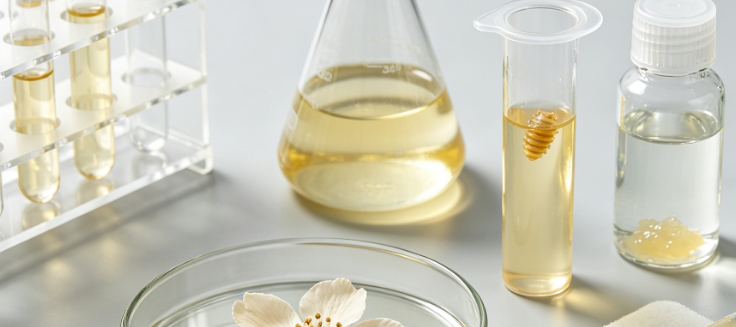
Scientific and Ecological Rationale for Nectary Content Analysis
Clients seeking nectary content analysis are motivated by a range of fundamental and applied objectives. In pollination ecology, the primary need is to link nectar composition to pollinator behavior—for example, determining whether sugar ratios (sucrose/hexose) correlate with the preference of specific bee species, or whether amino acid profiles influence pollinator learning and memory. In plant defense research, quantifying secondary metabolites such as alkaloids, phenolics, and volatile terpenes helps elucidate the role of nectar as a chemical defense against nectar-robbing ants or microbial pathogens. In agricultural biotechnology, breeders seek to optimize nectar traits for enhanced pollinator visitation and crop yield, requiring accurate screening of germplasm and transgenic lines. In climate change studies, monitoring shifts in nectar composition under altered temperature or CO₂ conditions provides insights into plant-pollinator mismatches. Furthermore, in pharmacognosy and natural product research, nectar-derived compounds (e.g., phenolic glycosides) may possess bioactive properties for drug discovery. Our service is designed to address these diverse questions with a modular, fully validated analytical framework that is adaptable to minute sample volumes and complex matrices.
Integrated Analytical Pipeline for Holistic Nectary Profiling
Our analytical platform is organized into six interconnected modules that collectively provide a complete chemical inventory of nectar. The Sampling and Microextraction Module employs capillary microsampling (using calibrated glass microcapillaries or microliter syringes) combined with ultrasonication-assisted extraction in methanol/water (70:30, v/v) to ensure quantitative recovery of both polar and moderately polar analytes. For volatile compounds, we use solid-phase microextraction (SPME) directly from the nectar headspace. The Sugar Profiling Module uses high-performance anion-exchange chromatography with pulsed amperometric detection (HPAEC-PAD) to separate and quantify sucrose, glucose, fructose, and minor oligosaccharides (e.g., raffinose, stachyose) with LOQs of 0.1–0.5 pmol and linearity R² > 0.999, providing sugar ratio and total sugar content with precision below 3% RSD. The Amino Acid and Protein Module employs UHPLC-MS/MS with derivatization (AccQ-Tag or iTRAQ) for the quantification of up to 40 amino acids and small peptides in sub-picomolar amounts, achieving LOQs in the low fmol range. For total protein, we use a nano-LC-MS/MS shotgun proteomic approach to identify and quantify nectar proteins (e.g., nectarins, defence-related enzymes) with sequence coverage > 20% for major components. The Phytohormone Module determines abscisic acid (ABA), auxins (IAA, IBA), cytokinins, gibberellins, and jasmonates by LC-MS/MS with stable isotope internal standards, achieving LOQs as low as 0.01–0.1 ng/mL. The Phenolic and Flavonoid Module uses UHPLC-DAD-QTOF-MS to perform untargeted profiling and targeted quantification of major phenolic acids (chlorogenic, caffeic, coumaric), flavonoids (quercetin, kaempferol glycosides), and other secondary metabolites, with mass accuracy < 2 ppm and MS/MS spectral matching against our in-house database (>200 plant phenolic standards). The Volatile Organic Compound (VOC) Module employs GC-MS with SPME or thermal desorption, resolving over 100 volatiles (terpenoids, benzenoids, fatty acid derivatives) with LODs in the low pg range and using retention index matching against NIST libraries for identification. The Enzymatic Activity Module measures the activity of key nectar enzymes such as invertase, peroxidase, and catalase using microplate fluorometric or colorimetric assays, with sensitivity down to 0.1 mU per sample. All modules are validated with pooled nectar reference samples and include appropriate quality controls (system suitability, internal standards, blank corrections) to ensure data integrity across batches.
Unmatched Sensitivity, Resolution, and Structural Coverage
Our platform excels in analyzing ultra-small nectar volumes. For sugar analysis, HPAEC-PAD provides baseline separation of all major neutral and acidic sugars with peak resolution > 2.0, and we routinely quantify sucrose/hexose ratios with uncertainty < 2%. In amino acid analysis, our derivatization method resolves isobaric leucine/isoleucine and provides linearity over four orders of magnitude. For phytohormones, the use of 13C- or 2H-labeled internal standards corrects for matrix suppression, ensuring accuracy within 90–110% across a range of species with varying nectar pH and osmolarity. In untargeted metabolomics, our QTOF-MS platform acquires full-scan MS and data-dependent MS/MS at a resolution of 40,000 FWHM, enabling the annotation of unexpected compounds via our custom plant metabolome library. For volatiles, our GC-MS method employs a polar (DB-WAX) and non-polar (DB-5) column combination to resolve co-eluting isomers, and we provide semi-quantitative peak area ratios with respect to an internal standard (e.g., 2-octanol). Additionally, we perform stable isotope probing (SIP) using 13C-glucose feeding to trace carbon flux into nectar sugars and metabolites, offering mechanistic insights into nectar secretion dynamics. Our integrated approach allows for correlation analysis between metabolites and pollinator visitation data (if provided), enabling the identification of key chemical attractants or repellents.
Distinctive Advantages of Our Nectary Content Detection Service
Our service offers unique benefits that directly address the challenges of nectar analysis. First, we have developed microscale extraction protocols that use as little as 0.5 µL of nectar for a full multi-parametric analysis, preserving valuable samples for multiple replicates or additional assays. Second, we maintain a comprehensive in-house reference compound library covering over 300 relevant nectar metabolites, including rare sugar alcohols, cyclitols, and alkaloids, enabling confident identification even in the absence of commercial standards. Third, we provide a rapid on-site screening service using a handheld refractometer for total soluble solids (Brix) and a portable fluorometer for chlorophyll and phenolic estimation, delivering immediate results (< 5 minutes) for preliminary assessments or field trials. Fourth, our time-course monitoring service for nectar secretion can track changes in composition over a flower's lifespan, with hourly sampling and rapid analysis, providing critical data on diurnal rhythms and floral senescence. Fifth, we offer spatial profiling by dissecting different nectary regions (e.g., floral vs. extrafloral) to compare secretions, using microdissection and our micro-extraction workflows. Sixth, all our methods are validated according to ICH and Eurachem guidelines, with full documentation of recovery, matrix effect, precision, and stability, ensuring data quality for publication and regulatory applications. Our team of chemists, botanists, and ecologists provides consultative interpretation, helping clients to relate chemical fingerprints to ecological hypotheses—for instance, linking elevated phenolic content to lower microbial growth in nectar or correlating specific volatiles with particular pollinator guilds.
Advanced Data Integration, Ecological Modeling, and Interpretive Reporting
Our reporting transforms analytical data into ecological intelligence. We provide a comprehensive report comprising: (i) a visual dashboard with sugar profiles, amino acid chromatograms, and VOC fingerprints presented as comparison charts and heatmaps; (ii) a quantitative data sheet with all concentration values and statistical summary (mean, SD, CV) for each sample; (iii) a multivariate analysis section (PCA, PLS-DA) that highlights compositional differences between treatment groups or species, with clear biplots and variable importance plots; and (iv) an ecological interpretation that translates the data into functional traits—for example, calculating the nectar quality index (sugar to amino acid ratio), the attractiveness score based on known pollinator preferences, or the defense potential (total phenolics or alkaloid content). For time-course studies, we provide kinetic plots and fitted secretion curves (exponential or polynomial), deriving parameters like secretion rate and half-life. We also include recommendations for further experiments, such as testing specific volatile blends in behavioral assays. All raw data files (chromatograms, mass spectra, processing logs) are available upon request, ensuring full transparency.
Broad Applications Across Ecology, Agriculture, Evolution, and Pollinator Science
The versatility of our nectary content analysis makes it essential for a wide range of fields. In basic plant ecology, our data support studies on floral trait evolution, nectar robbery, and plant-herbivore interactions. In crop science, our screening of breeding lines helps select varieties with improved pollinator attraction and higher fruit set. In conservation biology, we monitor nectar quality in endangered plant species to assess their viability in the wild. In chemical ecology, our volatile profiling aids in the discovery of novel semiochemicals for pest management. In beekeeping and apiculture, we analyze honeydew and floral nectar sources to understand honey quality and colony health. In pharmacognosy, we screen for bioactive nectar compounds with potential therapeutic applications. Our ability to adapt sampling and analysis to almost any flowering plant—from tropical orchids to temperate crops—ensures that we serve a diverse client base with expert, flexible support.
Commitment to Innovation, Quality, and Collaborative Research
We are dedicated to advancing the field of nectar chemistry through continuous methodological improvement. Our current R&D includes the development of miniaturized SPME fibers for in-situ volatile trapping in the field, and the use of ion mobility spectrometry (IMS) coupled with GC-MS for enhanced isomer separation. We actively participate in international networks on plant-pollinator interactions, contributing to best-practice guidelines for nectar sampling and analysis. Our quality management system is ISO 17025 certified, and we perform regular cross-laboratory comparisons to ensure inter-study comparability. We offer flexible service models, from single-sample characterizations to multi-year projects with seasonal sampling, dedicated project managers, and priority turnaround. Our global logistics support includes shipping kits with preservatives and instructions for nectar collection, ensuring sample integrity during transport. Turnaround times are typically 2–4 weeks for full metabolomic profiling and 1 week for targeted sugar/amino acid analysis, with express options for urgent projects. We pride ourselves on being a collaborative partner—our scientists are available for discussions, grant proposal support, and co-authorship opportunities where appropriate. We invite you to partner with us to unlock the chemical treasures of nectaries and to advance your research on plant-animal interactions, pollination biology, and floral trait evolution.
In summary, our nectary content detection service provides a comprehensive, ultra-sensitive, and ecologically relevant analytical solution for the full characterization of nectar chemistry—from sugars and amino acids to volatiles and defense compounds. By combining state-of-the-art instrumentation, micro-scale sample handling, and expert ecological interpretation, we empower our clients to address fundamental questions in plant ecology, evolution, and applied pollination science. We look forward to supporting your nectary research with our specialized analytical capabilities.