Reasons for choosing our testing services
ZHONGXI Testing has obtained inspection qualification certifications from multiple countries and regions worldwide. We possess a senior testing team and advanced testing methods, providing independent, impartial, and professional third-party verification services for global carbon projects.

Internationally recognized authority
Certified by multiple international standards such as CNAS, VCS, and GS, with reports universally applicable worldwide.

Global service capability
Covering 140+ countries and regions, it supports on-site detection and remote verification in multiple languages.

Professional experimental methods
Adopt standard experimental methods to ensure accurate and reliable data.
Comprehensive Quality and Bioactivity Assessment of Dendrobium officinale Stem Cell Lyophilized Powder for Nutraceutical and Pharmaceutical Applications
Dendrobium officinale, a precious orchid species used in traditional Chinese medicine, is renowned for its diverse bioactive constituents, including polysaccharides (glucomannans), alkaloids (e.g., dendrobine), flavonoids, phenolic compounds, and bibenzyl derivatives, which collectively contribute to its immunomodulatory, antioxidant, anti-aging, and gastroprotective properties. The advent of plant stem cell biotechnology has enabled the sustainable production of D. officinale stem cell biomass via controlled cell culture, followed by lyophilization (freeze-drying) to produce a stable, concentrated powder. However, the quality, safety, and efficacy of such stem cell-based products depend critically on rigorous analytical characterization, given the inherent variability of cell culture conditions, the potential for microbial contamination, and the need to verify the presence of active phytochemicals at levels consistent with traditional herbal preparations. Our specialized detection platform provides a fully integrated suite of validated assays for the comprehensive evaluation of D. officinale stem cell lyophilized powder, covering fingerprint profiling of bioactive constituents, polysaccharide molecular weight distribution, heavy metal and pesticide residue screening, microbiological safety, and cellular bioactivity testing. Whether the client is a functional food manufacturer, a cosmetic ingredient supplier, a pharmaceutical company, or a regulatory agency, our service delivers the precision, reliability, and interpretive depth required to ensure product quality, label accuracy, and consumer safety.
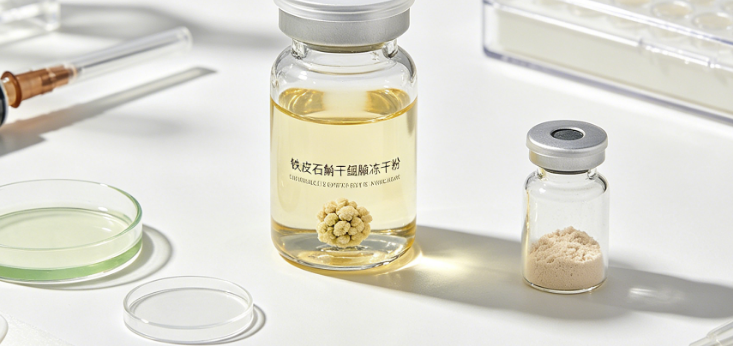
Scientific and Regulatory Drivers for Dendrobium officinale Stem Cell Powder Analysis
Clients seeking analytical services for D. officinale stem cell lyophilized powder are motivated by a range of critical objectives. In manufacturing quality control, the primary need is to verify that each batch meets the specified content of key markers—particularly total polysaccharides, mannose/glucose ratio, and dendrobine—to ensure batch-to-batch consistency and therapeutic potential. In product development and standardization, comprehensive metabolomic profiling is required to establish a chemical fingerprint that distinguishes authentic stem cell-derived material from field-grown plant extracts or adulterated products. In regulatory compliance, safety tests for heavy metals (Pb, Cd, As, Hg), pesticide residues, aflatoxins, and pathogenic microorganisms are mandatory for products marketed as dietary supplements or food ingredients, in accordance with FDA, EFSA, and national pharmacopoeia standards. In efficacy substantiation, cell-based bioassays (e.g., macrophage stimulation, antioxidant activity) are often needed to support health claims. Furthermore, in stability studies, monitoring the degradation of polysaccharides and other labile compounds under various storage conditions is essential to establish shelf-life. Our service is architected to address these diverse requirements through a modular, ISO 17025-accredited framework that combines classical pharmacopoeial methods with cutting-edge metabolomics and bioactivity assays.
Integrated Analytical Pipeline for Holistic Characterization of Stem Cell Lyophilized Powder
Our analytical platform comprises six interconnected modules that collectively provide a comprehensive evaluation. The Macromolecular and Polysaccharide Module quantifies total polysaccharides by the phenol-sulfuric acid method (with glucose as standard) and determines the molecular weight distribution using high-performance size-exclusion chromatography (HPSEC) coupled with multi-angle light scattering (MALS) and refractive index (RI) detection, providing weight-average (Mw) and number-average (Mn) molecular weights, as well as polydispersity indices, with precision within ±3% RSD. For monosaccharide composition, we perform acid hydrolysis followed by HPAEC-PAD to quantify the molar ratios of mannose, glucose, galactose, and arabinose, achieving LOQs of 0.01 µmol/mg and baseline resolution of all major sugars. The Secondary Metabolite Module uses UHPLC-QTOF-MS with a C18 column for the simultaneous identification and quantification of dendrobine, bibenzyls (e.g., moscatilin), flavonoids (e.g., rutin, quercetin), and phenolic acids. We employ a targeted MRM method for dendrobine (LOQ 1 ng/mL) and untargeted full-scan with data-dependent MS/MS for fingerprinting, with mass accuracy < 2 ppm and spectral matching against our in-house database of >100 Dendrobium compounds. The Elemental and Contaminant Module uses microwave digestion followed by ICP-MS to quantify Pb, Cd, As, Hg, Cu, and Cr, achieving LODs of 0.01–0.1 µg/kg, and GC-MS/MS for a multi-residue screen of >500 pesticides (QuEChERS method) with LOQs at the regulatory MRL levels (0.01–0.1 mg/kg). Aflatoxins (B1, B2, G1, G2) and ochratoxin A are determined by LC-MS/MS with immunoaffinity cleanup, with LOQs of 0.1–0.5 µg/kg. The Microbiological Module performs total aerobic microbial count (TAMC), total yeast and mold count (TYMC), bile-tolerant Gram-negative bacteria, E. coli, Salmonella, and Staphylococcus aureus per USP <61> and <62>, using validated membrane filtration or pour-plate methods, with detection limits of 1 CFU/g for pathogens. The Stability Module subjects the powder to accelerated aging conditions (40°C/75% RH, and UV light exposure) and monitors changes in polysaccharide content, color, and antioxidant activity (DPPH, ABTS) over time, providing shelf-life predictions using Arrhenius modeling. The Bioactivity Module evaluates immunomodulatory activity using a murine macrophage (RAW 264.7) assay measuring NO production and cytokine secretion (TNF-α, IL-6) upon stimulation, and antioxidant capacity via cellular ROS scavenging (DCFH-DA) assay. Results are expressed as relative bioactivity index (%) compared to a reference standard or positive control. All modules are validated with in-house reference material (from authenticated stem cell batches) and include robust QC procedures (system suitability, recovery, and internal standards).
Unmatched Analytical Depth, Sensitivity, and Structural Elucidation
Our platform delivers exceptional performance across all parameters. For polysaccharides, HPSEC-MALS provides absolute molecular weights without column calibration assumptions, and our method resolves high-molecular-weight (>1000 kDa) and low-molecular-weight fractions with reproducibility within 2% RSD. In metabolomics, our UHPLC-QTOF-MS combines high-resolution (40,000 FWHM) and high mass accuracy with automated feature extraction and molecular networking to reveal novel or unexpected compounds, and we provide MS/MS spectral libraries for unambiguous identification. For elemental analysis, our ICP-MS with collision cell technology eliminates polyatomic interferences, providing sub-ppb LODs and recoveries of 95–105% for spiked samples. In stability studies, our kinetic models estimate degradation rate constants (k) and activation energy (Ea) for polysaccharides and dendrobine, enabling accurate shelf-life predictions. For bioactivity, our cellular assays are performed in triplicate with Z’-factors > 0.7, ensuring a high signal-to-noise window. Moreover, we offer comparative fingerprinting with field-grown D. officinale samples to authenticate the stem cell origin, using multivariate statistical analysis (PCA, OPLS-DA) to identify discriminative markers. This comprehensive approach ensures that our clients receive not just compositional data but a holistic quality and efficacy profile.
Distinctive Advantages of Our Dendrobium officinale Stem Cell Powder Assay Service
Our service provides several unique benefits. First, we have developed matrix-specific sample preparation protocols for lyophilized powders that ensure complete extraction of both water-soluble polysaccharides and hydrophobic secondary metabolites, with optimized solvent ratios and sonication parameters validated for recoveries > 95% for all target analytes. Second, we maintain a comprehensive reference compound library for Dendrobium phytochemicals, including rare bibenzyls and alkaloid standards, enabling accurate quantitation even in the absence of commercial standards for all markers. Third, we offer a rapid screening service using near-infrared (NIR) spectroscopy with a chemometric model to predict total polysaccharides, moisture, and dendrobine content within 15 minutes, with accuracy within ±8% of reference HPLC values—ideal for incoming batch inspection. Fourth, our stability-accelerated service can simulate up to 24 months of real-time storage in just 3 months, providing early shelf-life estimates for product launch. Fifth, we provide customized documentation packages tailored to specific regulatory frameworks, including USP, EP, JP, and Chinese Pharmacopoeia formats, complete with method validation data and certificates of analysis that meet the requirements for health food registration. Sixth, all our methods are ISO/IEC 17025 accredited and we participate in proficiency testing schemes (e.g., FAPAS for mycotoxins, heavy metals) to ensure ongoing accuracy. Our team of phytochemists, biochemists, and regulatory specialists provides interpretive consultations, helping clients to understand the significance of polysaccharide molecular weight profiles (e.g., higher Mw often correlates with stronger immunomodulatory activity) and advising on formulation or processing improvements.
Advanced Data Integration, Modeling, and Regulatory-Ready Reporting
Our reporting transforms analytical data into actionable intelligence. We deliver a comprehensive report containing: (i) a one-page certificate of analysis summarizing all quality parameters (polysaccharide %, dendrobine content, heavy metals, pesticides, microbiological status) with pass/fail indicators; (ii) a detailed analytical section with raw chromatograms, mass spectra, calibration curves, and system suitability data; (iii) a fingerprint comparison displaying the sample's UHPLC profile overlaid with that of a reference standard, with similarity index calculated (e.g., >0.95 for authentic material); (iv) a stability summary with degradation trends and recommended shelf-life; and (v) a bioactivity scorecard with cellular assay results and a relative potency rating. For clients with multiple batches, we provide statistical control charts (X-bar and R charts) to monitor process consistency. We also offer predictive modeling of polysaccharide content based on cultivation parameters, if historical data are provided. All raw data files (e.g., .d, .raw, .csv) are supplied for client review. Our reporting is designed to be readily accepted by regulators, auditors, and internal QA/QC departments, reducing the burden on our clients for data compilation.
Broad Applications Across Supplement Manufacturing, Cosmeceutical, Herbal Drug, and Research Sectors
The versatility of our service makes it indispensable across the value chain. In dietary supplement manufacturing, our release testing ensures compliance with label claims and safety standards. In cosmetic ingredient supply, our characterization supports the marketing of stem cell extracts as anti-aging actives. In herbal drug development, our full fingerprinting supports Investigational New Drug (IND) applications. In quality assurance for contract manufacturing, our third-party analysis provides independent verification. In academic research, our detailed metabolomic and bioactivity data support mechanistic studies on Dendrobium pharmacology. We also support farm and biotech companies by comparing stem cell-derived material to field-grown plants to demonstrate equivalence or superiority. Our ability to tailor the analytical package to the client's specific needs—whether it is a basic 5-parameter test or a full GMP-compliant validation—ensures that we serve clients at every stage, from R&D to commercial production.
Commitment to Innovation, Quality, and Client Success
We are continuously enhancing our capabilities through R&D in the field of plant biotechnology analytics. Our current projects include the development of DNA barcoding (ITS2 and matK sequencing) for species authentication directly from the powder, and the implementation of metabolomic-driven process optimization to link cultivation parameters to desired chemical profiles. We actively engage with standardization bodies for Dendrobium quality control and contribute to the revision of pharmacopoeial monographs. Our quality system is audited annually and we maintain ISO 9001 and ISO 17025 certifications. We offer flexible service agreements, from one-off sample analysis to long-term partnerships with dedicated technical support, volume-based pricing, and priority handling. Our global logistics provide detailed sampling guidance and preservation instructions (e.g., maintain dessication, avoid heat) to ensure sample integrity. Turnaround times are typically 5–7 business days for the standard package and 10–14 business days for a comprehensive profile including bioactivity and stability. We believe in transparent communication, providing regular updates and expert interpretation. Our success is reflected in the confidence our clients have in their products' quality and regulatory compliance. We invite you to partner with us to ensure that your Dendrobium officinale stem cell lyophilized powder meets the highest standards of safety, efficacy, and consistency.
In summary, our Dendrobium officinale stem cell lyophilized powder detection service provides a comprehensive, precise, and regulatory-ready analytical solution integrating chemical fingerprinting, safety screening, stability assessment, and bioactivity verification. By combining advanced instrumentation, expert phytochemical knowledge, and client-focused interpretive reporting, we empower our clients to confidently market and scale their high-value natural products. We look forward to supporting your quality assurance and innovation endeavors with our specialized analytical capabilities.