Reasons for choosing our testing services
ZHONGXI Testing has obtained inspection qualification certifications from multiple countries and regions worldwide. We possess a senior testing team and advanced testing methods, providing independent, impartial, and professional third-party verification services for global carbon projects.

Internationally recognized authority
Certified by multiple international standards such as CNAS, VCS, and GS, with reports universally applicable worldwide.

Global service capability
Covering 140+ countries and regions, it supports on-site detection and remote verification in multiple languages.

Professional experimental methods
Adopt standard experimental methods to ensure accurate and reliable data.
Comprehensive Threonine Protein Phosphatase Detection and Activity Profiling for Signal Transduction, Drug Discovery, and Biomarker Research
Threonine protein phosphatases—comprising the PPP (phosphoprotein phosphatase) and PPM (protein phosphatase magnesium/manganese-dependent) families—are essential regulators of cellular signaling, cell cycle progression, apoptosis, and metabolism. These enzymes, including PP1, PP2A, PP2B (calcineurin), PP2C, and PP4/PP6, catalyze the dephosphorylation of phosphothreonine (and often phosphoserine) residues on target proteins, counteracting the actions of kinases. Their dysregulation is strongly associated with cancer, neurodegenerative diseases, diabetes, cardiovascular disorders, and inflammatory conditions. Accurate detection and functional characterization of threonine phosphatases—at the protein, activity, and interaction levels—are indispensable for understanding disease mechanisms, identifying therapeutic targets, screening phosphatase inhibitors, and validating drug candidates. However, the analysis of these enzymes presents substantial challenges: low endogenous expression, transient regulation by post-translational modifications and regulatory subunits, the need to distinguish between closely related isoforms, and the requirement for sensitive, specific activity measurements in complex cellular matrices. Our specialized detection platform offers a fully integrated suite of orthogonal assays—including quantitative proteomics, enzyme activity kinetics (using phosphopeptide substrates), binding affinity measurements (SPR, BLI), and cellular functional readouts—delivering unparalleled sensitivity, specificity, and mechanistic insight. Whether the client is a pharmaceutical company, a clinical research organization, or an academic laboratory, our service provides the high-quality, actionable data required to accelerate phosphatase-targeted research and development.
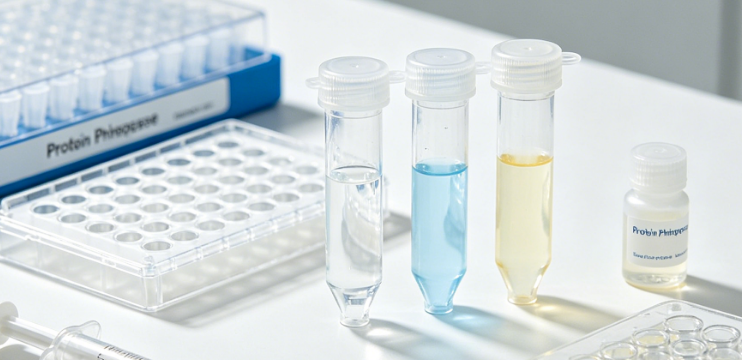
Scientific and Clinical Rationale for Threonine Phosphatase Analysis
Clients seeking detection services for threonine phosphatases are driven by diverse objectives. In drug discovery, the primary need is to screen compound libraries for potent and selective inhibitors against specific phosphatase targets (e.g., PP2A, PP2B) while simultaneously assessing off-target effects on related family members. In biomarker development, quantifying the expression or activity of specific phosphatases in patient-derived samples (e.g., tumor biopsies, plasma, cerebrospinal fluid) is essential for diagnosing disease progression, predicting therapy response, or monitoring drug efficacy. In signal transduction research, detailed kinetic parameters (Km, Vmax, kcat) and activation/inhibition mechanisms are required to reconstruct complex regulatory networks. In quality control for biopharmaceuticals, testing for contaminating phosphatase activity in recombinant protein preparations is critical to ensure product stability and efficacy. In basic enzymology, the role of metal ions (Mg²⁺, Mn²⁺), pH optima, and regulatory proteins is often investigated. Our service is architected to address these needs through a flexible, modular analytical framework that adapts to the specific target phosphatase, matrix, and research stage.
Integrated Analytical Pipeline for Holistic Threonine Phosphatase Characterization
Our analytical platform is organized into four interconnected modules that collectively provide comprehensive data on identity, quantity, activity, and interactions. The Quantitative Detection Module employs high-sensitivity ELISA (sandwich format) using monoclonal antibodies validated for specificity against the target phosphatase and its major isoforms, achieving LOQs as low as 0.05 ng/mL in complex matrices and inter-assay precision < 6% RSD. For absolute quantification without antibodies, we utilize parallel reaction monitoring (PRM)-based LC-MS/MS on a high-resolution Q-Orbitrap instrument, targeting signature peptides unique to the phosphatase of interest. This method provides linearity over 5 orders of magnitude, LOQs in the low fmol range, and simultaneous quantification of multiple phosphatase species in a single run, using stable isotope-labeled peptide internal standards to correct for matrix effects. The Activity Profiling Module uses fluorogenic or chromogenic phosphopeptide substrates that mimic physiological sequences (e.g., RRA(pT)VA or kemptide analogues), or generic substrates (e.g., p-nitrophenyl phosphate, 6,8-difluoro-4-methylumbelliferyl phosphate) for initial screening. We determine Michaelis-Menten parameters with precision within ±5% and detect activity down to 0.1 mU/mL. For native substrate specificity, we use phosphoproteomic substrate arrays with LC-MS/MS readout to profile the dephosphorylation of a panel of phosphopeptides, providing a substrate specificity fingerprint. The Binding and Interaction Module employs surface plasmon resonance (SPR) and biolayer interferometry (BLI) to measure real-time binding kinetics (association/dissociation rates, affinity constants KD) between the phosphatase and its regulatory subunits, inhibitors, or antibodies, with sensitivity in the low nM range. We also perform thermal shift assays (DSF) to assess ligand-induced stabilization. The Post-Translational Modification Module uses immunoblotting with phospho-specific antibodies and LC-MS/MS-based phosphopeptide mapping to identify and quantify phosphorylation, methylation, or oxidation events on the phosphatase protein itself, achieving site-specific occupancy estimates with mass accuracy < 5 ppm. All modules are integrated with our LIMS system, ensuring full traceability and compliance with GLP standards.
Unmatched Sensitivity, Specificity, and Mechanistic Resolution
Our platform consistently delivers superior analytical performance. For activity assays, our fluorogenic substrates provide signal-to-background ratios > 100:1 at low enzyme concentrations, and our kinetic analysis software calculates initial rates with an R² typically > 0.99. For PRM-based quantitation, we achieve retention time reproducibility < 0.5% RSD and peak area precision < 4% RSD across replicate injections. In binding studies, our SPR instruments offer real-time response resolution of 0.1 RU, allowing the detection of weak interactions (KD up to 100 µM). Our PTM analysis can identify phosphorylation events present at < 1% stoichiometry, using enrichment methods (TiO₂, IMAC) to increase coverage. Moreover, we provide cross-activity panels against a panel of >20 phosphatases to assess inhibitor selectivity, with IC50 values determined with a 95% confidence interval. We also offer cellular activity assays using engineered cell lines expressing fluorescent reporter substrates (e.g., FRET-based sensors) to evaluate inhibitor efficacy in the physiological context, delivering cell-based EC50 with Z’-factors > 0.6 indicating robust assay quality. This multi-dimensional data allows clients to distinguish between competitive, allosteric, and uncompetitive mechanisms, and to identify promising lead compounds with high confidence.
Distinctive Advantages of Our Threonine Phosphatase Detection Service
Our service provides several unique benefits that directly address client needs. First, we have established validated protocols for over 30 phosphatase targets, including PP1 (all isoforms), PP2A (with multiple subunit combinations), PP2B (calcineurin), PP2C (several isoforms), PP4, PP5, PP6, and PP7, with species-specific variants for human, mouse, rat, and other model organisms. Second, we maintain a library of active recombinant phosphatase proteins as positive controls, and we offer custom substrate design for clients with novel targets. Third, we provide a rapid screening service using a fluorescent probe-based plate reader assay that delivers IC50 estimates within 24 hours from sample receipt, ideal for hit identification. Fourth, our mechanistic assay suite includes pH rate profiles, metal ion dependency (Mg²⁺, Mn²⁺, Ca²⁺), and inhibitor mode-of-action studies (e.g., reversibility, time-dependence, and dilution assays), providing critical data for lead optimization and patent applications. Fifth, we offer multi-matrix compatibility—including cell lysates, tissue homogenates, blood plasma, serum, and even formalin-fixed paraffin-embedded (FFPE) samples—with customized extraction protocols that preserve enzymatic activity and protein integrity. Sixth, all our methods are compliant with ICH Q2(R1), CLSI, and FDA guidance for bioanalytical method validation, and we provide full validation packages (linearity, accuracy, precision, recovery, stability, matrix effect) that are ready for regulatory submission. Our team of experienced biochemists and enzymologists provides dedicated interpretive support, helping clients to understand the significance of kinetic deviations, selectivity gaps, or PTM patterns, and to design subsequent experiments.
Advanced Data Integration, Modeling, and Regulatory-Ready Reporting
Our reporting goes beyond simple numbers to provide a complete narrative of the phosphatase's functional state. We deliver a comprehensive final report that includes: (i) an executive summary with key activity and binding metrics (kcat, Km, KD, IC50) presented in tables and dose-response curves; (ii) a detailed experimental section with all raw data, instrument parameters, calibration curves, and QC samples; (iii) a statistical and mechanistic interpretation that fits the data to appropriate models (e.g., Michaelis-Menten, Morrison, Cheng-Prusoff) and discusses the mode of inhibition; and (iv) a comparative benchmarking against literature or in-house historical data to contextualize performance. For clients with multiple compounds, we provide structure-activity relationship (SAR) tables and clustering analyses to highlight key pharmacophores. We also offer predictive modeling of compound potency based on physicochemical properties, using machine learning algorithms that leverage our extensive internal dataset. All reports are provided in both PDF and editable formats, with raw data files (e.g., .xlsx, .cvs, .SPR sensorgrams, .MS chromatograms) available for client download. Our commitment to transparency ensures that clients can independently verify and reuse the data.
Broad Applications Across Drug Discovery, Clinical Diagnostics, and Fundamental Research
The versatility of our threonine phosphatase detection service makes it essential for a wide range of sectors. In pharmaceutical R&D, our activity and selectivity profiling is a cornerstone of hit-to-lead and lead optimization campaigns. In academic research, our detailed kinetic and interaction data support mechanistic studies on cell signaling and disease models. In diagnostic development, our quantitative assays provide the basis for companion diagnostics that measure phosphatase levels as patient stratification biomarkers. In environmental and toxicological studies, we monitor phosphatase activity as an indicator of cellular stress or contaminant exposure. In bioprocess quality control, we check for residual phosphatase activity in purified biotherapeutics to ensure product stability. We also support CROs and core facilities by providing high-quality, outsourced phosphatase analysis that complements their internal capabilities. Our ability to adapt methods to each client's specific needs—including custom substrate synthesis, assay miniaturization, and high-throughput automation—ensures that we remain the partner of choice for phosphatase-related analysis.
Commitment to Innovation, Quality, and Collaborative Partnership
We are dedicated to advancing phosphatase analytics through continuous technology upgrades and method innovation. Our current R&D includes the development of time-resolved FRET (TR-FRET) assays for homogeneous detection of phosphatase activity in native cellular contexts, and the integration of microfluidics-based kinase-phosphatase cascade platforms to study network dynamics. We actively participate in inter-laboratory cross-validation studies and contribute to the development of reference standards for phosphatase activity. Our quality system is ISO 17025 and ISO 9001 certified, and we adhere to GLP for all regulated studies. We offer flexible engagement models—from single-target screening to multi-target, multi-matrix projects with dedicated project managers, volume discounts, and priority turnaround. Our global logistics network provides specialized shipping protocols (cold chain, protease inhibitors, and inert atmosphere) to preserve sample integrity. Turnaround times are typically 5–7 business days for standard activity/quantitation panels and 10–15 business days for comprehensive profiling including binding and PTM analysis. We maintain open communication, providing regular progress updates and expert advice. Our success is measured by our clients' ability to advance their research and development programs with confidence. We invite you to partner with us to unlock the full potential of threonine phosphatase analysis in your scientific endeavors.
In summary, our threonine protein phosphatase detection service delivers a comprehensive, precise, and mechanistically insightful analytical solution that spans quantitative detection, kinetic profiling, binding characterization, and PTM analysis. By combining state-of-the-art instrumentation, validated assays, and expert interpretation, we empower our clients to accelerate drug discovery, deepen mechanistic understanding, and achieve regulatory compliance. We look forward to supporting your threonine phosphatase research with our dedicated expertise and cutting-edge capabilities.