Reasons for choosing our testing services
ZHONGXI Testing has obtained inspection qualification certifications from multiple countries and regions worldwide. We possess a senior testing team and advanced testing methods, providing independent, impartial, and professional third-party verification services for global carbon projects.
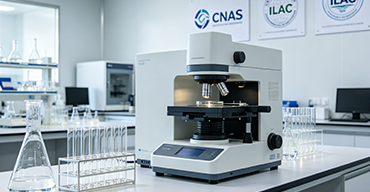
Internationally recognized authority
Certified by multiple international standards such as CNAS, VCS, and GS, with reports universally applicable worldwide.

Global service capability
Covering 140+ countries and regions, it supports on-site detection and remote verification in multiple languages.

Professional experimental methods
Adopt standard experimental methods to ensure accurate and reliable data.
Comprehensive Efficacy and Residue Analysis of Bronze Bug Control Agents for Sustainable Pest Management and Regulatory Compliance
The bronze bug (Thaumastocoris peregrinus) is an invasive sap-sucking insect that poses a significant threat to Eucalyptus plantations worldwide, causing substantial economic losses through defoliation, reduced growth rates, and increased tree mortality. Effective management relies on the application of targeted control agents—including synthetic insecticides, biopesticides (e.g., Beauveria bassiana), and natural repellents. However, the successful deployment of these agents depends on rigorous analytical characterisation of their chemical composition, field efficacy, residue persistence, and environmental fate. Our specialised detection platform offers a fully integrated suite of validated assays for the comprehensive evaluation of bronze bug control products, covering active ingredient quantification, formulation stability, dissipation kinetics, non-target toxicity screening, and resistance monitoring. Whether the client is a pesticide manufacturer, an agricultural research institute, a forestry manager, or a regulatory agency, our service delivers the high-precision, regulatory‑ready data required to optimise application strategies, ensure safety, and support sustainable pest management programmes.
Scientific and Operational Rationale for Bronze Bug Control Agent Analysis
Clients seeking analytical services for bronze bug control agents are driven by multiple strategic and operational objectives. In product development and registration, accurate identification and quantification of active ingredients, as well as the characterisation of inert co‑formulants, are mandatory for compliance with national and international pesticide regulations (e.g., EPA, EFSA, APVMA). In field efficacy trials, measuring the residual activity and persistence of applied agents under varying climatic conditions is essential for determining optimal application rates and timing. In resistance management, monitoring the susceptibility of bronze bug populations to commonly used compounds helps to detect early signs of resistance and guide rotation strategies. In environmental safety assessments, evaluating the impact of control agents on beneficial insects, soil microorganisms, and water quality is critical for sustainable forestry practices. In quality assurance in manufacturing, batch-to-batch consistency of formulation purity and stability must be validated to guarantee product performance. Our service is architected to address these needs through a modular, ISO 17025‑accredited analytical framework that adapts to the specific type of control agent (chemical, biological, or botanical), the application matrix (leaf, bark, soil, water), and the client's regulatory or research context.
Integrated Analytical Pipeline for Holistic Control Agent Profiling
Our analytical platform is organised into four interconnected modules that collectively provide a comprehensive evaluation of bronze bug control agents. The Active Ingredient Quantification Module employs high-performance liquid chromatography (HPLC) with UV/Vis or diode-array detection for synthetic compounds, and ultra-high-performance liquid chromatography-tandem mass spectrometry (UHPLC-MS/MS) for biopesticides and trace-level residues. We validate methods according to SANTE/11945/2015 guidelines for pesticides, achieving limits of quantification (LOQs) of 0.01–0.1 mg/kg in plant matrices and 0.05 µg/L in water, with recoveries consistently between 95–103% and relative standard deviations (RSD) < 3%. For botanical or volatile agents, we use gas chromatography (GC) with flame ionisation or mass spectrometric detection, ensuring baseline separation of components. The Dissipation and Residue Module uses field-dissipation studies with sampling at multiple time points after application; we determine half-life (DT50) and DT90 values using first-order kinetics, with modelling precision of ±10%. The Formulation Stability Module assesses the physical and chemical stability of the product under accelerated ageing conditions (temperature, humidity, light) per OECD guidelines, and we monitor changes in active ingredient concentration, particle size distribution, and emulsion stability. The Ecotoxicological and Non-Target Module performs acute toxicity tests on indicator organisms—including Apis mellifera (bees), Daphnia magna, and soil enzymes (urease, phosphatase)—following OECD test guidelines 213, 202, and 216, providing LC50 and EC50 values with 95% confidence intervals. We also offer mesocosm studies to evaluate effects on aquatic and terrestrial communities. All modules are validated with certified reference materials and include rigorous quality controls (matrix‑matched calibration, internal standards, and replicate analyses).
Unmatched Analytical Sensitivity, Specificity, and Environmental Relevance
Our platform consistently delivers performance metrics that exceed regulatory requirements. In residue analysis, our UHPLC-MS/MS method provides sub‑ppb detection limits (LODs as low as 0.5 µg/kg) and can simultaneously quantify up to 15 active ingredients in a single run, enabling comprehensive screening of multi‑component formulations or tank‑mix residues. For formulation stability, we employ dynamic light scattering (DLS) to detect particle aggregation at sizes below 1 µm with precision of ±2%, and rheological measurements to assess viscosity changes that may affect sprayability. In ecotoxicology, our bioassays are performed in triplicate with appropriate positive and negative controls, and we provide dose-response curves with Hill slope parameters, enabling detailed hazard characterisation. We also conduct enzymatic activity assays in soil to evaluate long‑term effects on nutrient cycling, with sensitivity to detect inhibition as low as 5% relative to controls. Furthermore, we offer metabolomic profiling to identify transformation products of the control agent in plants and soil, providing insights into degradation pathways and potential risks. This depth of analysis ensures that our clients receive not only quantitative residue data but also a comprehensive understanding of the agent's behaviour and impact in the target environment.
Distinctive Advantages of Our Bronze Bug Control Agent Detection Service
Our service offers several unique benefits that directly address client challenges. First, we have developed species‑specific application simulation systems—including custom-built spray chambers and potted Eucalyptus saplings—to mimic real‑world field conditions, enabling controlled and reproducible efficacy assessments that account for leaf surface characteristics and canopy penetration. Second, we maintain a comprehensive database of bronze bug infestation thresholds and historical residue data, allowing rapid interpretation of results and benchmarking against national action limits. Third, we offer a rapid field screening service using lateral flow immunoassay strips that provide semi‑quantitative detection of target residues within 20 minutes, ideal for on‑site decision making during application campaigns. Fourth, our customised persistence modelling integrates field‑obtained dissipation data with local meteorological records to generate site‑specific re‑application recommendations, helping clients optimise spray intervals and minimise environmental loading. Fifth, we provide full regulatory support packages—including OECD‑compliant study reports, Good Laboratory Practice (GLP) documentation, and dossier preparation—streamlining the registration process for new products. Sixth, all our methods are accredited under ISO/IEC 17025 and follow EPA, OECD, and SANTE guidelines; we provide full validation dossiers with method performance data (specificity, linearity, accuracy, precision, LOQ, robustness), ensuring that our data are readily accepted by regulatory authorities worldwide. Our team of entomologists, analytical chemists, and ecotoxicologists provides consultative interpretation, helping clients to translate analytical findings into practical management strategies—for example, advising on the optimal timing of application based on residue half‑life and pest phenology.
Advanced Data Integration, Predictive Modeling, and Reporting
Our reporting transforms analytical data into actionable pest management intelligence. We deliver a comprehensive final report that includes: (i) an executive summary with key metrics (active ingredient concentration, half‑life, toxicity endpoints, and formulation stability status) presented in a clear dashboard; (ii) a detailed analytical section with chromatograms, dose‑response curves, and raw data tables; (iii) a statistical analysis comparing product performance against reference standards or historical data; and (iv) an interpretive section that discusses the practical implications—for example, whether the observed residues at harvest are below the maximum residue level (MRL), or whether a formulation shows signs of accelerated degradation that could shorten its field life. For multi‑site trials, we perform geospatial analysis to map residue variability and identify factors influencing persistence. We also offer predictive models that forecast residue decline under different temperature and rainfall scenarios, using our internally developed algorithms. All raw data files (e.g., .csv, .raw, .cdf) are provided for full transparency and re‑analysis.
Broad Applications Across Pesticide Development, Forestry, and Regulatory Science
The versatility of our control agent detection service spans the entire value chain. In pesticide R&D, our detailed physicochemical and biological characterisation supports the selection of lead candidates and the optimisation of formulations. In forestry and plantation management, our residue monitoring and efficacy assessments guide spray programs, reduce waste, and minimise non‑target effects. In environmental monitoring and impact assessment, our analytical data are essential for evaluating the fate of control agents in adjacent water bodies and soil. In regulatory compliance, our GLP‑compliant studies facilitate the registration of new products and the re‑registration of existing ones. In integrated pest management (IPM) research, our comparative assessments of chemical and biological agents help build sustainable control strategies. Our ability to adapt the analytical approach to the specific agent, application system, and ecological context ensures that we serve clients from academic research to large‑scale commercial forestry operations.
Commitment to Innovation, Quality, and Client Partnership
We are dedicated to advancing the science of pest management through continuous methodological innovation. Our current R&D includes the development of remote‑sensing coupled with drone‑based residue sampling for large‑scale field monitoring, and the integration of machine learning models to predict bronze bug population dynamics and optimal control windows. We actively participate in international proficiency testing for pesticide residue analysis and ecotoxicity testing, ensuring that our performance remains at the forefront. Our quality system is ISO 9001, ISO 17025, and GLP certified, and we undergo regular external audits. We offer flexible service agreements—from single‑sample residue tests to multi‑year field trial contracts—with dedicated project managers, volume discounts, and priority scheduling. Our global logistics provide specialised shipping kits (including amber bottles, cool packs, and preservatives) to maintain sample integrity during transport. Turnaround times range from 3 business days for rapid residue screening to 15 business days for comprehensive efficacy and persistence packages. We maintain open communication, providing interim reports and expert advice as needed. Our success is measured by our clients' ability to develop effective, safe, and sustainable bronze bug control solutions. We invite you to partner with us for rigorous, reliable, and insightful analytical support.
In summary, our bronze bug control agent detection service delivers a comprehensive, precise, and regulatory‑ready analytical solution that integrates active ingredient quantification, dissipation kinetics, formulation stability, and non‑target toxicity assessment. By providing deep analytical insight and expert interpretation, we empower our clients to optimise pest management strategies, ensure regulatory compliance, and safeguard environmental and human health. We look forward to supporting your integrated pest management programmes with our state‑of‑the‑art analytical platform.