Reasons for choosing our testing services
ZHONGXI Testing has obtained inspection qualification certifications from multiple countries and regions worldwide. We possess a senior testing team and advanced testing methods, providing independent, impartial, and professional third-party verification services for global carbon projects.
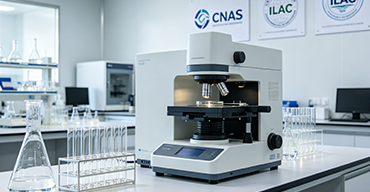
Internationally recognized authority
Certified by multiple international standards such as CNAS, VCS, and GS, with reports universally applicable worldwide.

Global service capability
Covering 140+ countries and regions, it supports on-site detection and remote verification in multiple languages.

Professional experimental methods
Adopt standard experimental methods to ensure accurate and reliable data.
Comprehensive Analytical and Safety Assessment of Liquid Pollen Products for Nutraceutical, Cosmetic, and Functional Food Applications
Liquid pollen—obtained through aqueous or hydroalcoholic extraction, fermentation, enzymatic hydrolysis, or supercritical fluid processing—represents a concentrated form of the bioactive constituents of natural pollen, including proteins, free amino acids, carbohydrates, lipids, vitamins, minerals, flavonoids, phenolic acids, phytosterols, and volatile compounds. This liquid format enhances bioavailability and facilitates incorporation into beverages, dietary supplements, skincare products, and functional foods. However, the compositional complexity, inherent batch variability, and susceptibility to microbial contamination, oxidation, and degradation make rigorous analytical characterisation indispensable for product quality, safety, and efficacy. Our specialised detection platform offers a fully validated, multi‑parametric suite of chemical, microbiological, and physical assays tailored to liquid pollen matrices, delivering the high‑precision data needed to optimise processing, substantiate label claims, ensure regulatory compliance, and build consumer trust.

Scientific and Market Rationale for Liquid Pollen Analysis
Clients seeking analytical services for liquid pollen are driven by a combination of quality assurance, regulatory, and innovation imperatives. In manufacturing and quality control, the primary needs are to verify the concentration of key bioactive markers (e.g., total polyphenols, flavonoids, proteins, and specific amino acids) and to ensure that the product meets its nutritional or functional specifications. In process development and optimisation, monitoring changes in composition during extraction, hydrolysis, or stabilisation steps is critical for maximising yield and bioactivity. In safety and regulatory compliance, thorough screening for heavy metals (Pb, As, Cd, Hg), pesticide residues, mycotoxins (aflatoxins, ochratoxin A), and pathogenic microorganisms is mandatory for market approval under FDA, EFSA, and other international regulations. In stability and shelf‑life studies, understanding the degradation kinetics of labile compounds (polyphenols, vitamins, polyunsaturated fatty acids) under different storage conditions is essential for setting expiration dates and optimising packaging. In authenticity and adulteration detection, the botanical origin of the pollen and the absence of synthetic additives must be confirmed. Our service is architected to address these needs with a flexible, ISO 17025‑accredited analytical framework that adapts to the specific liquid pollen formulation (e.g., whole extract, fermented liquor, enzyme‑treated syrup) and the client's regulatory or research context.
Integrated Analytical Pipeline for Holistic Liquid Pollen Profiling
Our analytical platform is organised into five interconnected modules that together deliver a complete chemical and biological fingerprint of liquid pollen products. The Nutritional and Bioactive Module quantifies total protein (Kjeldahl or Dumas combustion), total carbohydrates (phenol‑sulfuric acid), total lipids (gravimetric after Bligh‑Dyer or Folch extraction), and ash by muffle furnace, with precision within ±2% RSD. Amino acid profiles are determined by UHPLC‑MS/MS after acid hydrolysis and derivatisation, achieving LOQs of 0.01 mg/L for each amino acid. For polyphenols and flavonoids, we employ UHPLC‑PDA‑MS/MS to quantify individual compounds (e.g., rutin, quercetin, kaempferol, chlorogenic acid) with linearity R² > 0.999 and recoveries of 96–103%. The Elemental and Contaminant Module uses ICP‑MS for heavy metals (LOQ of 0.05 µg/kg for Pb, 0.02 µg/kg for As), GC‑MS/MS for pesticide residues (LOQs at the regulatory MRL level (0.01 mg/kg)), and LC‑MS/MS for mycotoxins with LOQs of 0.1–0.5 µg/kg. The Microbiological Module performs TAMC, TYMC, bile‑tolerant Gram‑negative bacteria, E. coli, Salmonella, and Staphylococcus aureus per USP <61> and <62>, with detection limits of 1 CFU/g for pathogens. For liquid pollen intended for cosmetic use, we also test for preservative efficacy (USP <51>) and total aerobic microbial count. The Physicochemical Module measures pH, viscosity (Brookfield), refractive index (Brix), colour (L*a*b* and ΔE), and turbidity, providing key parameters for product consistency and sensory quality. The Authenticity and Botanical Origin Module uses DNA barcoding (ITS2 and matK sequencing) to confirm the botanical species of the pollen source, and stable isotope ratio analysis (δ13C, δ15N, δ2H) to detect geographic mislabelling or adulteration with cheaper syrups. All modules are validated with in‑house reference materials (from authentic pollen sources) and NIST‑traceable standards, and we include rigorous quality controls (system suitability, blank subtraction, and replicate analysis).
Unmatched Analytical Sensitivity, Specificity, and Structural Coverage
Our platform routinely achieves performance that exceeds typical industry and academic standards. In bioactive profiling, our UHPLC‑MS/MS method resolves all major flavonoids and phenolic acids with baseline resolution (Rs > 2.0) and provides mass accuracy < 2 ppm using a Q‑TOF instrument, enabling confident identification and quantitation of even low‑abundance compounds. For polysaccharide analysis, we employ HPAEC‑PAD after acid hydrolysis to determine monosaccharide composition (glucose, xylose, mannose, galactose, etc.) with LOQs of 0.01 mg/L and linearity over four orders of magnitude. In heavy metal analysis, our collision‑cell ICP‑MS eliminates polyatomic interferences, delivering sub‑ppt detection limits and recoveries of 95–105% for all target elements. For microbiological testing, we combine automated VITEK 2 for species‑level identification with MALDI‑TOF mass spectrometry for confirmation, ensuring 100% specificity. Additionally, we offer untargeted metabolomics using high‑resolution LC‑MS to discover novel bioactive constituents, and enzyme activity assays (e.g., superoxide dismutase, catalase) to evaluate functional quality. Our ability to integrate metabolomic, elemental, and microbiological data into a unified quality score provides clients with a holistic understanding of their product's safety, stability, and nutritional value—a level of insight rarely available from single‑parameter analyses.
Distinctive Advantages of Our Liquid Pollen Detection Service
Our service is distinguished by several unique benefits that directly address the challenges of liquid pollen analysis. First, we have developed matrix‑specific sample preparation protocols for the diverse range of liquid pollen products—including clear extracts, cloudy suspensions, viscous syrups, and fermented broths—that effectively remove interfering substances (lipids, pigments, polysaccharides) while preserving labile analytes, achieving recoveries > 95% for all target compounds. Second, we maintain a comprehensive reference database of pollen constituents, including rare flavonoids, phytosterols, and species‑specific amino acid patterns, enabling rapid identification and accurate quantitation even without commercial standards. Third, we offer a rapid screening service using a handheld FTIR‑ATR spectrometer with a PLS calibration model, providing instant estimates of total polyphenols, total protein, and Brix within 5 minutes—ideal for incoming batch inspection and in‑process control. Fourth, our customised stability studies can simulate real‑world storage and transport conditions, and we provide clients with statistically robust recommendations for packaging, preservative systems, and shelf‑life dating. Fifth, we provide integrated data reporting that includes a quality index score combining nutritional value, safety, and processing efficiency, helping clients to quickly compare different batches or suppliers. Sixth, all our methods are accredited under ISO/IEC 17025 and follow USP, EP, and JP guidelines; we supply full validation dossiers with method performance data (specificity, linearity, accuracy, precision, LOD, LOQ, robustness) that are readily accepted by regulatory authorities. Our team of food chemists, microbiologists, and regulatory specialists provides consultative interpretation, helping clients to translate analytical findings into actionable improvements—for example, advising on processing adjustments to enhance flavonoid retention, or to reduce the level of a specific impurity.
Advanced Data Integration, Predictive Modeling, and Reporting
Our reporting transforms analytical data into strategic intelligence. We deliver a comprehensive final report that includes: (i) a certificate of analysis (CoA) summarising all key quality attributes (nutrient composition, bioactive content, contaminant levels, microbiological status, and physicochemical parameters) with clear pass/fail indicators against client‑defined specifications; (ii) a detailed analytical section containing raw chromatograms, mass spectra, calibration curves, and quality control results; (iii) a statistical summary with means, standard deviations, and confidence intervals for each parameter; and (iv) an interpretive summary that discusses the biological and processing significance of the results—for example, explaining how a high polyphenol content correlates with antioxidant activity, or how a specific monosaccharide profile may indicate partial hydrolysis of complex polysaccharides. For clients with multiple batches, we provide multivariate analysis (PCA, PLS‑DA) to track consistency and detect outliers. We also offer predictive modelling of shelf‑life based on degradation kinetics of key markers, enabling clients to plan production and inventory with confidence. All raw data files (e.g., .raw, .cdf, .csv) are provided to ensure full transparency and re‑analysis capability.
Broad Applications Across Nutraceutical, Cosmetic, and Research Sectors
The versatility of our liquid pollen analytical service makes it essential across the entire product lifecycle. In nutraceutical and dietary supplement manufacturing, our quality control testing supports raw material authentication, in‑process monitoring, and final product release. In cosmetic formulation development, our bioactive profiling helps formulators select optimal extraction conditions and stabilise active compounds. In pharmaceutical research, our detailed characterisation supports preclinical safety and efficacy studies. In academic research, our metabolomic and elemental data provide insights into the chemical diversity of pollen and its ecological significance. In contract manufacturing and testing, our third‑party verification provides independent assurance for suppliers and buyers. In regulatory submissions, our validated data packages facilitate applications for novel food ingredients and health claims. Our ability to tailor the analytical approach to the specific processing method, intended application, and regulatory framework ensures that we serve a diverse global clientele with scientific rigour and practical relevance.
Commitment to Innovation, Quality, and Client Partnership
We are dedicated to advancing liquid pollen analytics through continuous methodological innovation. Our current R&D includes the development of microfluidic chip‑based assays for real‑time monitoring of bioactive degradation during processing, and the application of machine learning algorithms to predict shelf‑life from initial quality parameters. We actively participate in international proficiency testing for botanical analysis and contribute to the development of standard reference materials. Our quality management system is ISO 9001 and ISO 17025 certified, and we follow GLP for all regulatory studies. We offer flexible service agreements—from single‑sample analysis to long‑term quality assurance contracts—with dedicated project managers, volume discounts, and priority handling for urgent requests. Our global logistics provide specialised shipping kits (with preservatives, amber vials, and temperature control) to ensure sample integrity during transit. Turnaround times range from 2 business days for rapid screening to 12 business days for full comprehensive characterisation, with expedited options available. We maintain open communication, providing interim reports and expert advice as needed. Our success is measured by our clients' ability to innovate, ensure safety, and achieve regulatory approvals. We invite you to partner with us to unlock the full potential of your liquid pollen products.
In summary, our liquid pollen detection service delivers a complete, precise, and regulatory‑ready analytical solution that covers nutritional profiling, bioactive quantification, contaminant screening, microbiological safety, stability assessment, and authenticity verification. By integrating cutting‑edge instrumentation with deep botanical and food science expertise, we empower our clients to optimise processing, substantiate quality claims, and launch safe and effective health products. We look forward to supporting your liquid pollen analysis needs with our unwavering commitment to scientific excellence.