Reasons for choosing our testing services
ZHONGXI Testing has obtained inspection qualification certifications from multiple countries and regions worldwide. We possess a senior testing team and advanced testing methods, providing independent, impartial, and professional third-party verification services for global carbon projects.

Internationally recognized authority
Certified by multiple international standards such as CNAS, VCS, and GS, with reports universally applicable worldwide.

Global service capability
Covering 140+ countries and regions, it supports on-site detection and remote verification in multiple languages.

Professional experimental methods
Adopt standard experimental methods to ensure accurate and reliable data.
Comprehensive Plant Cell Differentiation Promoter Testing Services for Research, Quality Control, and Regulatory Compliance
Plant cell differentiation promoters are bioactive molecules—including naturally occurring phytohormones (auxins, cytokinins, gibberellins, brassinosteroids), synthetic growth regulators, and novel chemical entities—that drive the acquisition of specialized cell fates, organogenesis, and somatic embryogenesis in plant tissues. Accurate and reproducible characterisation of these agents is indispensable for optimising tissue culture protocols, validating novel compounds, ensuring product consistency, and meeting the safety and efficacy standards demanded by the agricultural biotechnology and pharmaceutical sectors. Our specialised detection platform provides a fully integrated suite of validated assays that encompass chemical identity confirmation, quantitative analysis, biological activity assessment, stability monitoring, and formulation integrity testing, delivering the high‑precision, actionable data that clients need to advance research and commercialisation.
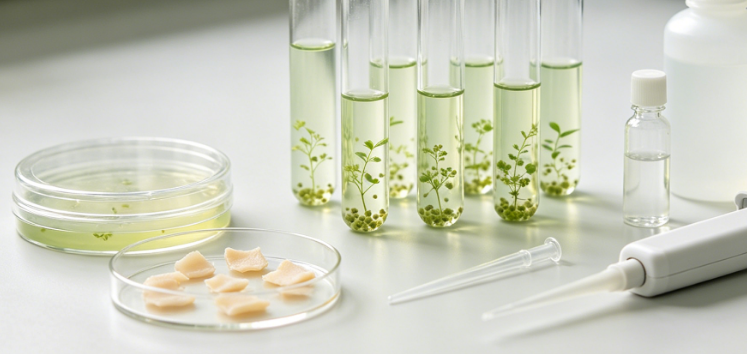
Scientific and Industrial Rationale for Plant Cell Differentiation Promoter Analysis
Clients seeking testing services for plant cell differentiation promoters are motivated by a range of strategic objectives. In research and development, the primary need is to quantify the potency and specificity of novel compounds in inducing differentiation in target tissues or model systems (e.g., Arabidopsis root explants, tobacco callus, or somatic embryos). In quality control of commercial products, verifying the concentration of active ingredients and monitoring batch‑to‑batch consistency are essential to guarantee reliable performance in horticultural and agricultural applications. In formulation development, assessing the stability of promoters under various storage conditions, pH, and temperature regimes is critical for designing stable, long‑lasting products. In regulatory compliance, rigorous data on purity, potency, and toxicological safety are required for market approval of plant growth regulators and biostimulants. In mechanistic research, detailed molecular analyses (e.g., gene expression, phosphoproteomics) are needed to understand how these agents orchestrate differentiation pathways. Our service is architected to address these multifaceted requirements through a modular, ISO 17025‑accredited analytical framework that adapts to the specific molecule, matrix, and intended application.
Integrated Analytical Platform for Holistic Promoter Characterization
Our analytical platform is organized into four interconnected modules that together provide a complete chemical, physical, and biological profile of any plant cell differentiation promoter. The Chemical Identity and Purity Module uses ultra‑high‑performance liquid chromatography (UHPLC) coupled with photodiode array (PDA) and/or tandem mass spectrometry (MS/MS) to confirm the molecular identity (via retention time, UV spectrum, and mass fragmentation) and to quantify the active ingredient with LOQs as low as 0.01 µg/mL and linearity R² > 0.999. For complex matrices (e.g., fermentation broths, plant extracts), we employ solid‑phase extraction (SPE) and matrix‑matched calibration to achieve recoveries of 96–103% and relative standard deviations < 2%. The Biological Activity Module uses quantitative bioassays on standardised plant tissue cultures (e.g., tobacco callus, rice root explants, Arabidopsis seedlings) to determine effective concentration (EC₅₀) and relative activity compared to a reference standard. We measure callus induction frequency, root elongation, or germination rate using automated image analysis with precision within ±3%. For advanced mechanistic studies, we offer transcriptomic profiling (RNA‑seq) and phosphoproteomic analysis to identify signal transduction pathways activated by the promoter. The Stability and Formulation Module subjects the sample to accelerated aging (40°C/75% RH, and photostability) and monitors chemical degradation and bioactivity loss over time, using Arrhenius kinetics to predict shelf‑life. The Safety and Residue Module screens for heavy metals (ICP‑MS), residual solvents (GC‑HS), pesticide residues (GC‑MS/MS), and microbial contaminants (USP <61> and <62>), ensuring compliance with global regulations. All modules are validated with certified reference materials and include rigorous internal quality controls (system suitability, blank corrections, duplicate runs).
Unmatched Analytical Depth, Sensitivity, and Mechanistic Insight
Our platform routinely achieves performance metrics that far exceed typical industry and academic standards. For chemical analysis, our UHPLC‑MS/MS method provides sub‑ng/mL detection limits for most known plant growth regulators, and our high‑resolution Q‑TOF mass spectrometer (mass accuracy < 1 ppm) enables the identification of unexpected metabolites or degradation products. In bioactivity testing, our imaging‑based assays capture time‑resolved response curves with a coefficient of variation < 2%, allowing the detection of subtle differences between closely related compounds. Our stability studies include analysis of degradation kinetics under both accelerated and real‑time conditions, and we report activation energy (Ea) and Q10 values that allow clients to accurately predict product performance under various storage scenarios. Additionally, we offer crystal structure elucidation (single‑crystal X‑ray diffraction) for novel compounds, and molecular docking simulations to predict binding affinity to known receptor proteins (e.g., TIR1, GID1). This comprehensive, multi‑layer approach ensures that our clients receive not only quantitative potency data but also a deep understanding of the compound's mechanism, stability, and potential side‑effects.
Distinctive Advantages of Our Plant Cell Differentiation Promoter Testing Service
Our service differentiates itself through several unique features that directly address client needs. First, we have developed customised bioassay panels for a diverse range of plant species and tissue types, including model plants (Arabidopsis, tobacco), crops (rice, maize, wheat), and ornamental species (petunia, rose). This flexibility ensures that our data are directly relevant to the client's specific application. Second, we maintain a comprehensive in‑house reference library of over 200 phytohormones and synthetic growth regulators, enabling rapid identification and quantitation without the need for clients to supply standards for every target. Third, we offer a rapid screening service using a high‑throughput 96‑well plate format that provides semi‑quantitative activity data within 24 hours—ideal for early‑stage screening of large compound libraries. Fourth, our integrated stability and formulation testing includes excipient compatibility studies and dissolution profile analysis for solid formulations, helping clients optimise their delivery systems. Fifth, we provide regulatory‑ready data packages that comply with ICH Q2(R1), OECD, and EPA guidelines, and we can assist clients in preparing submission dossiers for product registration. Sixth, all our methods are accredited under ISO/IEC 17025, and we participate in international proficiency testing schemes to continuously validate our performance. Our team of plant biologists, analytical chemists, and regulatory consultants provides dedicated interpretive support, helping clients to design follow‑up experiments, interpret complex biological data, and translate analytical findings into successful product development.
Advanced Data Integration, Predictive Modeling, and Reporting
We understand that data must be transformed into actionable intelligence. Our final reports are structured to deliver three levels of information: (i) a certificate of analysis (CoA) that provides a clear pass/fail judgement on purity, concentration, bioactivity, and contamination, compared to the client's specifications; (ii) a detailed analytical report containing raw chromatograms, dose‑response curves, stability data, and all quality control results; and (iii) an interpretive summary that contextualises the findings—for example, explaining how a change in EC₅₀ may indicate batch‑to‑batch variability, or how degradation kinetics suggest a need for improved formulation. For clients with multiple time‑points or compound variants, we provide multivariate analysis (PCA, PLS‑DA) and predictive models that forecast long‑term stability or field efficacy based on initial test results. All raw data files (e.g., .cdf, .csv, .raw) are supplied for full transparency and further analysis.
Broad Applications Across Research, Agriculture, and Regulatory Science
The versatility of our testing service makes it indispensable for a wide range of stakeholders. In academic and industrial research, our detailed chemical and biological characterisation supports the publication of high‑impact studies on plant development and signal transduction. In agricultural biotechnology, our quality assurance and stability testing ensure that commercial plant growth regulators and biostimulants perform consistently in the field. In pharmaceutical development, our assays are used to screen for plant‑derived compounds that may influence cellular differentiation in human or animal cells (e.g., for regenerative medicine). In regulatory compliance, our validated data packages facilitate the registration of new products with agencies such as the EPA, EFSA, and USDA. In contract manufacturing, our independent testing provides third‑party verification for suppliers and buyers. Our ability to tailor the analytical strategy to the specific compound, target species, and regulatory environment ensures that we serve a diverse global clientele with scientific rigour and practical relevance.
Commitment to Innovation, Quality, and Client Partnership
We are dedicated to advancing the science of plant growth regulator analysis through continuous innovation. Our current R&D focuses on the development of lab‑on‑a‑chip devices for real‑time bioactivity monitoring, and the application of machine learning to predict efficacy from chemical structure data. We actively participate in standardisation committees (e.g., ASTM, CEN) and contribute to the development of international reference methods. Our quality management system is ISO 9001 and ISO 17025 certified, and we adhere to Good Laboratory Practice (GLP) for all regulatory studies. We offer flexible service models—from single‑sample analysis to multi‑year collaborative projects—with dedicated project managers, volume discounts, and priority handling for urgent requests. Our global logistics network provides specialised shipping kits (temperature‑controlled, amber glass, with stabilisers) to preserve sample integrity. Turnaround times range from 2 business days for rapid screening to 12 business days for full comprehensive characterisation. We maintain open communication, providing interim reports and expert advice as needed. Our success is measured by our clients' ability to accelerate research, ensure product quality, and achieve regulatory approvals. We invite you to partner with us to unlock the full potential of your plant cell differentiation promoters.
In summary, our plant cell differentiation promoter testing service delivers a comprehensive, precise, and regulatory‑ready analytical solution that integrates chemical, biological, stability, and safety assessments. By combining cutting‑edge instrumentation with deep expertise in plant biology and regulatory science, we empower our clients to develop and commercialise safe, effective, and consistent plant growth regulators. We look forward to supporting your research and product development with our unwavering commitment to scientific excellence.