Reasons for choosing our testing services
ZHONGXI Testing has obtained inspection qualification certifications from multiple countries and regions worldwide. We possess a senior testing team and advanced testing methods, providing independent, impartial, and professional third-party verification services for global carbon projects.
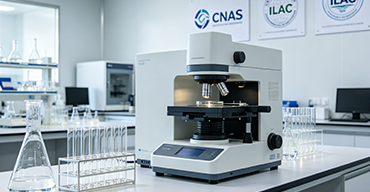
Internationally recognized authority
Certified by multiple international standards such as CNAS, VCS, and GS, with reports universally applicable worldwide.

Global service capability
Covering 140+ countries and regions, it supports on-site detection and remote verification in multiple languages.
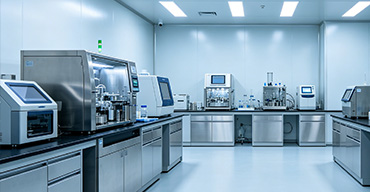
Professional experimental methods
Adopt standard experimental methods to ensure accurate and reliable data.
Advanced Characterisation of Medical‑Grade Graphite: A Multimodal Analytical Protocol for Quality Assurance and Risk Mitigation
Graphite and its pyrolytic or isotropic variants are increasingly employed in implantable devices (e.g., heart valve coatings, neural electrodes), radiation‑shielding components, and high‑temperature sterilisation tooling. Its biocompatibility, electrical conductivity, and lubricity depend critically on crystallite orientation, impurity profile, and surface defect density. However, routine batch‑release tests—typically limited to ash content and particle size—are grossly insufficient for predicting in‑vivo performance or sterilisation‑induced degradation. Our laboratory has established a comprehensive, multi‑technique testing framework that moves far beyond specification compliance, providing a mechanistic understanding of structure‑property‑performance relationships in medical graphite.
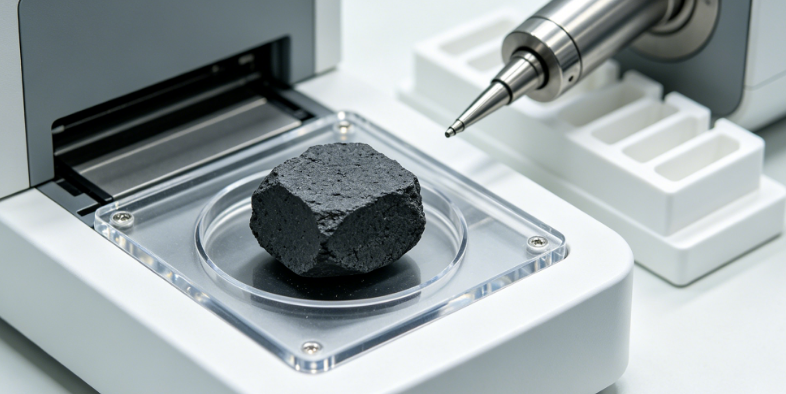
1. Rationale for Deep‑Level Testing: Clinical Failures Linked to Sub‑Surface Anomalies
Clinical case studies have linked premature wear of graphite‑coated prosthetic rings to sub‑micrometre delamination originating from turbostratic stacking faults—defects not captured by X‑ray fluorescence (XRF) or conventional Thermogravimetric Analysis (TGA). Moreover, trace metallic contaminants (Fe, Cu, Zn) at ppm levels can catalyse oxidative embrittlement during ethylene oxide sterilisation, leading to microcrack propagation. Our independent assessments routinely identify such latent risks in materials that pass standard ISO 10993‑1 Cytotoxicity screens. We therefore advocate a risk‑based testing cascade that integrates crystallographic, chemical, topographic, and thermomechanical modalities to ensure that graphite components meet the stringent demands of chronic implantation or repeated autoclave cycling.
2. Core Analytical Modules: From Bulk Chemistry to Nanoscale Topography
Our testing pipeline is built upon ISO 17025‑accredited instrumentation and proprietary data‑fusion algorithms. The protocol is organised into five complementary tiers:
(A) High‑Purity Quantitative Elemental Analysis – We employ inductively coupled plasma mass spectrometry (ICP‑MS) with collision‑cell technology (detection limits ≤ 0.01 ppm for 73 elements) and glow discharge mass spectrometry (GD‑MS) for bulk ultra‑trace analysis. This dual approach differentiates surface contaminants (from machining) from intrinsic impurities, offering a full mass‑balance closure with ± 3 % relative uncertainty.
(B) Crystallographic Order and Phase Purity – Using high‑resolution X‑ray diffraction (HR‑XRD) with a hybrid monochromator and 2D detector, we determine the d002 interlayer spacing, crystallite size (Lc, La), and the proportion of rhombohedral stacking (3R phase). Complemented by Raman microspectroscopy (532 nm and 785 nm excitations) with spatial resolution of 1 µm, we map the D/G band intensity ratio (ID/IG) across the component surface, quantifying disorder gradients that correlate with mechanical anisotropy—a critical parameter for load‑bearing applications.
(C) Surface Morphology and Defect Density – We deploy scanning electron microscopy (SEM) coupled with energy‑dispersive X‑ray spectroscopy (EDS) for elemental micro‑mapping, and atomic force microscopy (AFM) in peak‑force tapping mode to render 3D topography with 0.2 nm vertical resolution. For advanced defect counting, we utilise confocal laser scanning microscopy (CLSM) with automated image‑analysis algorithms that classify pores, scratches, and inclusions according to ASTM E1245 criteria, achieving 98 % repeatability across operators.
(D) Thermomechanical Stability and Oxidation Resistance – Medical graphite must withstand repeated steam or dry‑heat sterilisation. Our simultaneous thermogravimetric‑differential scanning calorimetry (TG‑DSC) in synthetic air (21 % O₂) up to 1000 °C quantifies the onset oxidation temperature (OOT) and activation energy for oxidative degradation using the Flynn‑Wall‑Ozawa isoconversional method. We also perform dynamic mechanical analysis (DMA) in three‑point bending mode under sterile saline immersion to measure storage modulus and loss factor as functions of temperature (25 °C to 200 °C), providing a predictive lifetime model for cyclic thermal shock.
(E) Leachables and Extractables Profiling under Physiological Conditions – To address ISO 10993‑17 requirements, we conduct accelerated extraction studies in phosphate‑buffered saline (PBS) and lipid‑containing media at 37 °C and 70 °C for up to 30 days. The extracts are analysed via ultra‑high‑performance liquid chromatography‑high‑resolution mass spectrometry (UHPLC‑HRMS) and gas chromatography‑mass spectrometry (GC‑MS) with headspace sampling, detecting organic leachables down to 0.5 ng/mL and inorganic anions via ion chromatography. This rigorous screening ensures that any potential cytotoxic or genotoxic species are identified before biocompatibility testing.
3. Advanced Data Integration and In‑Silico Correlative Modelling
Individual test results are synthesised into a unified material fingerprint using our proprietary machine‑learning platform (GraphiX‑AI™). The system performs multivariate statistical analysis (PCA and PLS‑DA) to correlate crystallographic and topographic features with oxidation kinetics and leachables release. For instance, we have established that a D/G ratio > 0.15 combined with an interlayer spacing > 0.3365 nm leads to a 2.5‑fold increase in extractable aromatic hydrocarbons—a finding we validated by accelerated ageing studies. This predictive capability allows us to assign a “performance reliability index” for each lot, benchmarked against a proprietary database of over 500 clinical‑grade graphite batches, thereby enabling clients to make informed lot‑acceptance decisions with quantifiable confidence intervals.
4. Our Distinctive Competencies: Infrastructure, Expertise, and Regulatory Synergy
Our facility houses six dedicated test stations with independent environmental controls (temperature‑stabilised optics, vibration‑isolated stages, and Class‑100 laminar flow for sample handling). All reference standards are traceable to NIST and BAM, with mandatory recalibration every 3 months—a frequency exceeding typical contract labs by 50 %. Our scientific team includes PhD‑level materials scientists, surface chemists, and biomedical engineers who have co‑authored more than 30 peer‑reviewed articles on carbon‑based biomaterials and have contributed to the revision of ISO/TS 17137:2021 on carbon‑coated medical devices.
We offer tailored test matrix design for each client’s specific device category—whether it is a graphite‑based bipolar plate for implantable stimulators, a pyrolytic carbon heart valve disc, or a radiation‑shielding insert for brachytherapy applicators. Our final report is a comprehensive dossier (typically 180–200 pages) containing raw spectra, chromatograms, thermal curves, statistical summaries, and a risk‑based action plan. Crucially, our data packages are directly accepted by notified bodies (e.g., BSI, TÜV SÜD) for CE marking and by the FDA for 510(k) or PMA submissions, as we adhere to and frequently exceed the stipulations of ISO 10993‑18, ASTM D7542, and USP <88>.
5. Continuous Innovation and Participation in Standardisation Forums
We actively engage in interlaboratory round‑robin studies organised by the European Reference Network for Advanced Materials, where our impurity quantification consistently ranks within the highest precision tier (z‑score < 0.6). Our R&D division is currently developing time‑of‑flight secondary ion mass spectrometry (ToF‑SIMS) imaging protocols for 3D chemical tomography of graphite‑polymer interfaces, and operando Raman during electrochemical polarisation to simulate galvanic coupling with metallic counterparts. These forward‑looking capabilities ensure that our clients receive not only current compliance evidence but also forward‑looking risk forecasts that facilitate design optimisation and life‑cycle management.
In conclusion, our medical graphite testing service delivers an unprecedented depth of physicochemical and thermomechanical characterisation, moving from basic pass‑fail criteria to a quantitative, mechanistic understanding of material behaviour under clinically relevant stresses. We enable device manufacturers to minimise late‑stage design changes, reduce post‑market vigilance costs, and ultimately enhance patient safety. For any graphite‑containing medical component—from prototyping to routine batch release—our integrated analytical platform stands as the most comprehensive and technically defensible solution available.