Reasons for choosing our testing services
ZHONGXI Testing has obtained inspection qualification certifications from multiple countries and regions worldwide. We possess a senior testing team and advanced testing methods, providing independent, impartial, and professional third-party verification services for global carbon projects.

Internationally recognized authority
Certified by multiple international standards such as CNAS, VCS, and GS, with reports universally applicable worldwide.

Global service capability
Covering 140+ countries and regions, it supports on-site detection and remote verification in multiple languages.

Professional experimental methods
Adopt standard experimental methods to ensure accurate and reliable data.
Comprehensive Quality and Stability Assessment of Zirconia Nanocrystal Sols: A Specialized Analytical Service for Colloidal Processing and Advanced Coating Applications
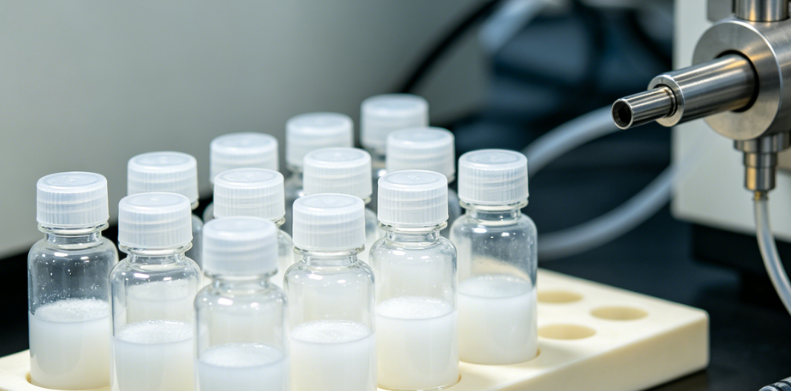
Zirconia (ZrO₂) nanocrystal sols—stable colloidal dispersions of 3–20 nm crystalline particles—are essential precursors for high‑performance optical coatings, gate dielectrics, catalytic supports, and fuel cell electrolytes. Their functional performance is determined not only by primary particle size and phase but also by aggregation state, surface charge, organic ligand chemistry, and long‑term colloidal stability against sedimentation, gelation, or phase transformation. Clients seeking testing for zirconia sols typically face challenges in batch‑to‑batch reproducibility, storage stability prediction, and the correlation of sol properties with final film density, refractive index, or ionic conductivity. Our laboratory has established a fully integrated, multi‑technique analytical pipeline that combines high‑resolution particle sizing, surface chemistry profiling, rheological monitoring, and accelerated ageing protocols, delivering a quantitative, predictive fingerprint that links nanoscale colloid parameters to macroscopic processability and end‑use performance.
Precision Particle Size, Shape, and Crystallinity Determination
Routine dynamic light scattering (DLS) provides only a hydrodynamic diameter, which is often biased by surface ligands or slight aggregation. We employ a combination of small‑angle X‑ray scattering (SAXS) with a synchrotron source (or benchtop system with Cu Kα) to obtain absolute primary particle size distribution (core diameter) and fractal dimension of any aggregates, with a detection range of 1–100 nm and a resolution of ±0.2 nm. We complement this with transmission electron microscopy (TEM) at 200 kV, using automated image analysis of over 1,000 particles to report crystallite size, shape factor (sphericity, aspect ratio), and lattice fringe spacing with sub‑ångström precision. For phase identification, we perform high‑resolution X‑ray diffraction (HR‑XRD) on dried sol samples, with Rietveld refinement to quantify the tetragonal/monoclinic/cubic phase fractions (detection limit < 1 wt%) and to determine microstrain and crystallite domain size via the Williamson‑Hall method.
Surface Chemistry and Ligand Density Quantification
The colloidal stability and redispersibility of zirconia nanocrystals depend critically on the surface coating—typically organic acids (acetic, acrylic, or oleic acid) or inorganic ligands (sulfate, phosphate). We quantify the total organic content via Thermogravimetric Analysis (TGA) coupled with evolved gas analysis by mass spectrometry (EGA‑MS), distinguishing between physically adsorbed solvent and chemically bound ligands through derivative weight loss profiles. For specific functional groups, we apply Fourier‑transform infrared spectroscopy (FTIR) with attenuated total reflectance (ATR) and diffuse reflectance (DRIFT) modes, using second‑derivative analysis to resolve overlapping bands (e.g., carboxylate vs. carbonate). We further perform X‑ray photoelectron spectroscopy (XPS) on freeze‑dried sol samples to quantify the surface Zr/O/C/N ratios and the relative abundance of carboxylate, hydroxyl, and carbonate species, with a precision of ±1.0 at% for oxygen functional groups. For ligand exchange kinetics, we offer in situ attenuated total reflectance‑UV‑Vis spectroscopy to monitor the displacement of ligands in real time, providing rate constants and activation energies for surface modification processes.
Colloidal Stability, Zeta Potential, and Interaction Forces
Long‑term stability against aggregation is governed by electrostatic and steric interactions. We measure zeta potential (electrophoretic mobility) as a function of pH (2–12), ionic strength (up to 1 M NaCl), and temperature (10–80 °C) using a phase‑analysis light scattering (PALS) system with automated titration, obtaining the isoelectric point (IEP) and surface charge density with repeatability of ±1 mV. For steric stabilization assessment, we perform dynamic light scattering (DLS) at multiple angles (multi‑angle DLS) to obtain the hydrodynamic radius distribution and polydispersity index (PdI), and we monitor the autocorrelation function to detect the onset of aggregation. We also offer diffusing wave spectroscopy (DWS) in a backscattering geometry to assess the gelation point and microviscosity in concentrated sols, which is critical for predicting casting and coating behaviour.
Rheological Behaviour and Concentrated Sol Processing
For industrial coating and casting, the viscosity, shear‑thinning behaviour, and yield stress of the sol determine the film thickness and defect formation. We perform rotational rheometry with a cone‑plate and double‑gap geometry for low‑ and high‑viscosity sols, covering shear rates from 0.001 to 1000 s⁻¹ and temperatures from 5 to 90 °C. We measure steady‑state flow curves, dynamic oscillatory frequency sweeps (storage modulus G′, loss modulus G″), and creep‑recovery tests to extract zero‑shear viscosity, relaxation time, and yield stress. The data are fitted to Casson, Herschel‑Bulkley, and Cross models to provide a robust description of flow behaviour. Additionally, we perform controlled stress ramps to determine the critical shear stress for particle reorientation, which is essential for spray and dip‑coating process design.
Trace Metal and Anion Impurity Profiling
High‑purity zirconia sols for electronic or optical applications require strict control of trace impurities (e.g., Fe, Cr, Na, K, Ca, Cl⁻, SO₄²⁻, NO₃⁻). We use inductively coupled plasma mass spectrometry (ICP‑MS/MS) in collision/reaction cell mode to quantify over 40 metals with detection limits of 0.01–0.5 ppb, and ion chromatography (IC) with suppressed conductivity detection for anions (Cl⁻, SO₄²⁻, NO₃⁻) with detection limits < 5 ppb. All results are corrected for matrix‑induced suppression using internal standards (In, Rh) and standard addition where necessary. For organic impurities, we perform headspace‑GC‑MS to identify and quantify residual solvents (e.g., methanol, ethanol, acetic acid) with detection limits below 1 ppm.
Accelerated Ageing and Shelf‑Life Prediction
To predict the practical shelf life and transport stability of the sol, we subject samples to accelerated stress conditions—including elevated temperature (40, 60, 80 °C), freeze‑thaw cycling (‑20 to +25 °C), and mechanical shaking—with periodic measurements of particle size, zeta potential, and viscosity. We fit the degradation kinetics to Arrhenius models to estimate the reaction order and activation energy for aggregation or hydrolysis, and we provide a shelf‑life prediction (time to 10% increase in PdI or 20% increase in viscosity) with 95% confidence intervals. We also perform long‑term static stability tests for up to 6 months under controlled storage conditions, with visual inspection and UV‑Vis turbidity monitoring to detect sedimentation or phase separation.
Coating Performance and Film Quality Correlation
For clients applying zirconia sols as thin films, we offer deposition and characterisation services on silicon or glass substrates using spin‑coating or dip‑coating, followed by thermal annealing at temperatures up to 1000 °C. We then evaluate the resulting films by ellipsometry (for refractive index and thickness, with accuracy ±0.5 nm), X‑ray reflectivity (XRR) for density and surface roughness, and atomic force microscopy (AFM) for topography and defect density. This direct correlation between sol properties and final coating quality enables our clients to optimise sol formulation, adjust drying protocols, and ensure reproducible film performance without extensive trial‑and‑error.
Our Distinctive Competencies and Analytical Advantages
Our service is uniquely distinguished by the orthogonal and seamless integration of SAXS, TEM, XRD, XPS, DLS, rheology, and impurity analysis, all performed on the same representative sol sample to eliminate cross‑batch variability and to enable direct multivariate correlations. We operate under ISO/IEC 17025 accreditation with a dedicated cleanroom (ISO 7) for sample handling to prevent contamination. Our proprietary “Sol Stability and Processability Index” (SSPI) combines over 25 key parameters (including primary particle size, PdI, zeta potential at pH 5, ligand density, and yield stress) to provide a single, quantifiable score that predicts coating uniformity, storage life, and sintering densification. This index has been validated against over 80 commercial and research‑grade zirconia sols.
We achieve exceptional precision: < 0.3 nm for SAXS core diameter, < 0.5 mV for zeta potential, < 1.0% RSD for viscosity, and < 1.5% for ligand content by TGA. Our turnaround time for the full sol characterisation suite (including accelerated ageing and film correlation) is 12–18 working days, with expedited 8‑day service for urgent formulation adjustments. Crucially, our team of PhD colloid chemists, rheologists, and ceramic engineers provides a comprehensive interpretive report that translates each parameter into practical guidance—e.g., how a slight increase in dispersant concentration can reduce gelation risk, how the optimal pH range varies with salt content, or how the ligand type affects the critical film thickness for crack‑free coatings. With over 50 successful projects on zirconia sols and related colloidal oxides, we empower our clients to stabilise production, reduce batch rejection, and achieve consistent coating quality for applications ranging from antireflective optics to solid‑state batteries, all backed by the highest level of scientific rigour and technical expertise.