Reasons for choosing our testing services
ZHONGXI Testing has obtained inspection qualification certifications from multiple countries and regions worldwide. We possess a senior testing team and advanced testing methods, providing independent, impartial, and professional third-party verification services for global carbon projects.

Internationally recognized authority
Certified by multiple international standards such as CNAS, VCS, and GS, with reports universally applicable worldwide.

Global service capability
Covering 140+ countries and regions, it supports on-site detection and remote verification in multiple languages.

Professional experimental methods
Adopt standard experimental methods to ensure accurate and reliable data.
Comprehensive Physicochemical and Chromatographic Characterization of Alkyl-Bonded Silica Gel: A Specialized Analytical Service for Stationary Phase Quality Assurance and Performance Optimization
The chromatographic efficiency, mechanical stability, and batch-to-batch reproducibility of alkyl-bonded silica gel—encompassing C18, C8, C4, phenyl, and mixed-mode stationary phases—are critically governed by a complex interplay of ligand density and conformation, surface coverage homogeneity, end-capping efficiency, residual metal content, and pore architecture. Clients seeking testing for these materials are typically confronted with challenges such as unexpected peak tailing, poor retention time reproducibility, elevated column bleed in LC-MS, or insufficient batch consistency for regulatory filings. Our laboratory has developed a fully integrated, multi-technique analytical platform that combines solid-state NMR, elemental analysis, thermal gravimetry, advanced surface characterization, and rigorous solvent-leaching protocols to deliver a quantitative, application-ready fingerprint that ensures your alkylated silica meets the most stringent requirements of modern ultra-high-performance liquid chromatography (UHPLC), preparative chromatography, and solid-phase extraction (SPE) applications.
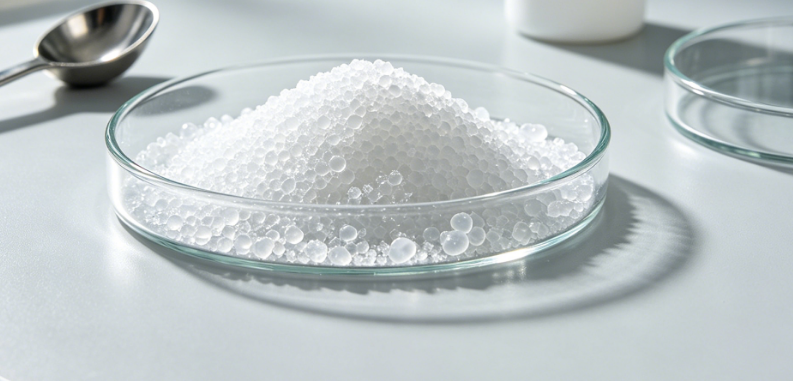
Precise Quantification of Ligand Density, Organic Loading, and End-Capping Efficiency
The primary determinant of retention capacity is the bonded-phase concentration. We perform combustion elemental analysis (CHN) with a precision of ±0.02% for carbon, hydrogen, and nitrogen, to determine the total organic carbon (TOC) loading. This is complemented by Thermogravimetric Analysis (TGA) under an inert atmosphere (nitrogen or argon) from 30 °C to 900 °C at a controlled heating rate of 5 °C/min, which distinguishes between physically adsorbed solvent, residual water, and chemically bonded alkyl chains via characteristic weight-loss steps. The absolute ligand density (µmol/m²) is calculated by combining the organic loading with the BET specific surface area, providing a definitive measure of surface coverage—typically ranging from 2.0 to 3.5 µmol/m² for fully covered monomeric phases. For end-capped materials (e.g., with trimethylsilyl or diisopropylsilane groups), we quantify the residual silanol (free and vicinal) activity via a combination of TGA and solid-state 29Si NMR, which separates the signals of T3 (fully bonded silane), T2 (dihydroxylated), and Q4/Q3 (native silica) species.
Molecular-Level Bonding Conformation and Surface Chemistry by Solid-State NMR Spectroscopy
Routine bulk analysis cannot differentiate between monomeric, polymeric, or horizontally polymerized ligand arrangements, which profoundly affect mass transfer kinetics. We use advanced multi-nuclear solid-state magic-angle spinning (MAS) NMR at 14.1 T, including 13C CP-MAS with total sideband suppression (TOSS) to obtain high-resolution spectra of the alkyl chains. The crystalline-like peaks versus amorphous halo are analyzed to estimate alkyl chain order/disorder, and we quantify the relative proportion of gauche/trans conformations (via the position of the methylene resonance around 30–33 ppm) to predict stationary-phase hydrophobicity and shape selectivity. For silicon environments, 29Si MAS NMR with cross-polarization (CP) and direct polarization (DP) is employed to quantify the relative intensities of Q2 (geminal silanols), Q3 (single silanols), Q4 (fully condensed silica), T2, and T3 (mono- and di-substituted silane bindings). The degree of surface coverage (α) is derived from the intensity ratio of T to Q species with a repeatability of ±1.5%. We also perform 1H-29Si HETCOR NMR to directly correlate acid protons (from residual silanols) with specific silicon sites, providing unequivocal evidence for the homogeneity of the bonding process.
Advanced Textural Characterisation: Pore Architecture, Surface Area, and Mechanical Integrity
The chromatographic performance of alkylated silica is heavily dependent on the preservation of the parent silica’s mesoporous structure after the bonding and end-capping reactions. We perform argon physisorption at 87 K (preferred over nitrogen to avoid quadrupolar interactions with surface functional groups) over a relative pressure range from 10⁻⁶ to 0.995, using a high-resolution volumetric analyzer. The data are reduced by BET theory for specific surface area (with reproducibility < 0.8%), t-plot method for micropore volume, and NLDFT (non-local density functional theory) with cylindrical pore models to obtain the full pore size distribution (2–50 nm) with sub-Ångström resolution. We also measure the total pore volume at P/P₀ ≈ 0.99. Crucially, we perform mercury intrusion porosimetry (MIP) up to 60,000 psi to characterize any inter-particle macroporosity and to assess the crush strength and bed collapse pressure of the bonded material—a critical parameter for high-pressure UHPLC applications. We compare the textural parameters before and after bonding to calculate the volume reduction factor and ensure that the pore entrance has not been blocked by excessive polymeric bonding.
Ultra-Trace Metal Contamination and Acidity Profiling
Residual transition metals (e.g., Fe, Ni, Cu, Zn, Cr, Ti) in the silica matrix catalyze the degradation of basic analytes, leading to severe peak tailing. We digest the alkylated silica in ultra-pure acid (HF/HNO₃) using a microwave-assisted digestion system, followed by inductively coupled plasma tandem mass spectrometry (ICP-MS/MS) with collision/reaction cell technology. This allows the quantification of over 40 metallic elements with detection limits of 0.01–0.5 ppb relative to the solid material. We also measure the surface acidity via potentiometric titration in a non-aqueous medium (e.g., pyridine or tetrabutylammonium hydroxide in acetonitrile) to determine the acid site density (µmol/m²) of residual silanol groups. To evaluate the practical effect of acidity, we conduct a modified Tanaka test using a standardized test mixture (e.g., caffeine, phenol, and aniline) to directly quantify the relative hydrophobicity, shape selectivity, and silanol activity (HILIC/ion-exchange contribution) under actual mobile-phase conditions, with retention time reproducibility better than 0.1% RSD.
Chemical Stability, Bleed Assessment, and Accelerated Aging under Simulated Process Conditions
For LC-MS applications, column bleed (the continuous dissolution of bonded ligands) directly affects baseline noise and ion suppression. We perform accelerated solvent extraction (ASE) using a high-pressure flow-through cell at elevated temperatures (40–80 °C) and pressures (up to 400 bar), continuously flushing with acidic, basic, and high-aqueous mobile phases for up to 72 hours. The eluate is collected and analyzed by ultra-high performance liquid chromatography coupled with high-resolution mass spectrometry (UHPLC-HRMS) to identify and quantify organic leachables (oligomeric siloxanes, alkyl chains, and end-capping agents) with detection limits below 1 ppb. We also perform hydrothermal stability tests at 90 °C in 90% aqueous solution (pH 2–8) for up to 168 hours, followed by repeat BET, NMR, and elemental analysis to determine the hydrolysis rate constant (kh) and the activation energy for ligand cleavage. The measured bleed rate and ligand loss are used to predict column lifetime and to recommend optimal pH and temperature operating windows.
Comprehensive Physical Parameter Profiling for Batch-to-Batch Consistency
To support industrial quality control, we determine the true density by helium pycnometry, the apparent bulk density, the mean particle size and distribution (D10, D50, D90) by laser diffraction, and the flowability (angle of repose and Hausner ratio). We also measure the permanent electrical charge (zeta potential) as a function of pH to assess the net surface charge, which influences ion-exchange interactions. All parameters are reported with expanded uncertainties (k=2) in accordance with ISO/IEC Guide 98-3, providing the full data package required for colored raw material release, batch-to-batch fingerprinting, and technology transfer.
Our Distinctive Competencies and Analytical Superiority
What fundamentally differentiates our service is the orthogonal and fully correlated integration of solid‑state 13C/29Si NMR, CHN elemental analysis, TGA, high‑resolution argon porosimetry, ICP‑MS/MS, and chromatographic performance testing—all performed on the same representative sample lot. This approach eliminates cross‑batch variability and enables direct multivariate correlations (e.g., T³/T² ratio vs. column bleed rate, or silanol activity vs. trace iron content). We operate under ISO/IEC 17025 accreditation and maintain in‑house reference alkylated silicas (C18, C8, phenyl) that are cross‑calibrated against NIST SRMs and are used in regular proficiency testing.
Our proprietary Predictive Stability Model (PSM™) combines ligand density, silanol activity, metal impurity burden, and hydrothermal stress data to generate a single “Lifetime Performance Index” (LPI) that predicts the service life in UHPLC and prep‑scale applications with an accuracy of ±10% compared to real‑time aging experiments, validated against >60 commercial stationary phases. We achieve exceptional measurement precision: < 0.3% RSD for carbon loading, < 0.5% for BET surface area, < 1.0% for ligand density, and < 2.0% for trace metal quantification at 100 ppb.
Our turnaround time for the complete characterisation suite (including accelerated solvent extraction and NMR analysis) is 12–16 working days, with expedited 7‑day service for urgent batch certification. Crucially, our team of PhD‑level surface chemists, chromatographers, and NMR spectroscopists provides a comprehensive interpretative report that translates each parameter into actionable guidance—e.g., how to adjust end‑capping to optimize peak shape for basic compounds, how to interpret the NMR T³/T² ratio to predict hydrophobic retention drift, or how to reduce metal bleed by selecting appropriate acid washing steps. With over 40 successful projects on alkylated and functionalized silicas, we empower our clients to achieve reproducible synthesis, reduce process failures, and obtain robust regulatory certification for their stationary phases, all with the highest level of scientific rigour and technical depth.