Reasons for choosing our testing services
ZHONGXI Testing has obtained inspection qualification certifications from multiple countries and regions worldwide. We possess a senior testing team and advanced testing methods, providing independent, impartial, and professional third-party verification services for global carbon projects.

Internationally recognized authority
Certified by multiple international standards such as CNAS, VCS, and GS, with reports universally applicable worldwide.

Global service capability
Covering 140+ countries and regions, it supports on-site detection and remote verification in multiple languages.

Professional experimental methods
Adopt standard experimental methods to ensure accurate and reliable data.
Comprehensive Quality and Safety Assessment of Defluorinated Tricalcium Phosphate: A Specialized Analytical Service for Feed, Food, and Pharmaceutical Applications
Defluorinated tricalcium phosphate (DFP, Ca₃(PO₄)₂ with controlled fluorine content) is a vital source of bioavailable calcium and phosphorus in animal nutrition, toothpaste abrasives, and bone graft materials. Its performance and safety are critically dependent on residual fluoride concentration, calcium-to-phosphorus stoichiometry, trace heavy metal burden, crystalline phase purity, and in vitro bioaccessibility. Clients seeking testing for DFP are typically driven by the need to comply with international feed safety regulations (e.g., EU 68/2018, FDA 21 CFR 582.1221), verify supplier declarations, optimise defluorination processes, or troubleshoot variable bioavailability in animal trials. Our laboratory has established a multi-tiered, application-oriented analytical platform that integrates ultra-trace fluoride speciation, high-precision elemental profiling, crystallographic phase analysis, and simulated gastrointestinal digestion, delivering a definitive, risk-based fingerprint that ensures your material meets the most stringent specifications for both nutritional efficacy and toxicological safety.
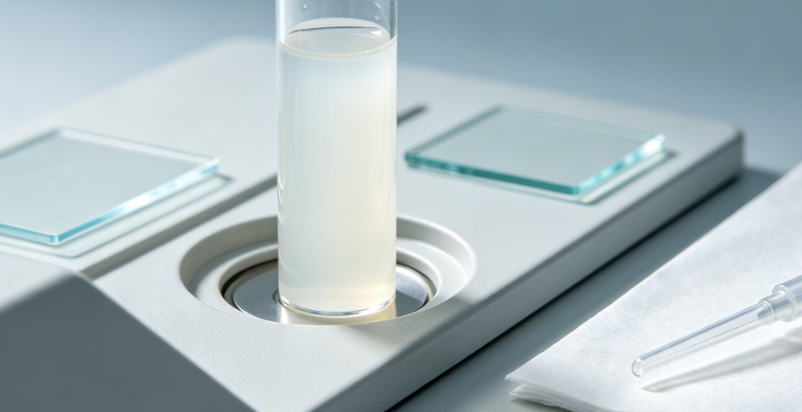
Ultra‑Trace Fluoride Quantification and Speciation
Total fluoride content is the single most critical safety parameter for DFP, with regulatory limits typically ranging from 0.05% to 0.10% (500–1000 ppm) depending on the intended species. We employ a three‑method validation approach to guarantee accuracy across all concentration levels. The primary method is ion‑selective electrode (ISE) potentiometry after perchloric acid‑assisted distillation to eliminate phosphate and silicate interferences, achieving a detection limit of 2 ppm and a repeatability of < 1.5% RSD at typical levels. For verification and for samples requiring speciation (e.g., free vs. bound fluoride), we use ion chromatography (IC) with suppressed conductivity after water extraction, providing detection limits of 0.05 mg/L in solution and sub‑ppm levels in solid. For ultimate confidence, we apply combustion‑ion chromatography (CIC) with high‑temperature oxygen combustion and trap absorption, which achieves detection limits of 0.2 ppm for total fluorine and is insensitive to matrix effects. All results are reported with expanded uncertainties (k=2) and are cross‑validated using certified reference materials (e.g., NIST SRM 120c, phosphate rock). We also perform continuous monitoring of fluoride release under simulated gastric conditions (pH 2.0, 37 °C) to distinguish between rapidly available fluoride and that sequestered in the crystal lattice—a crucial distinction for assessing chronic toxicity risk.
Precise Elemental Stoichiometry and Trace Impurity Profiling
The nutritional value of DFP depends on the exact Ca/P molar ratio (target ≈ 1.5 for tricalcium phosphate), and the presence of toxic elements (Pb, As, Cd, Hg, V) must be strictly controlled. We quantify calcium, phosphorus, magnesium, sodium, and potassium by inductively coupled plasma optical emission spectrometry (ICP‑OES) with matrix‑matched calibration, achieving relative expanded uncertainties < 0.8% for major analytes. For trace and ultra‑trace elements (including Pb, Cd, As, Hg, V, Cr, Co, Ni, and rare earths), we employ inductively coupled plasma tandem mass spectrometry (ICP‑MS/MS) with collision/reaction cell technology (using O₂, NH₃, or H₂ gases) to eliminate polyatomic interferences (e.g., 40Ca35Cl⁺ on 75As, 48Ca16O⁺ on 64Zn). Detection limits range from 0.01 to 0.5 ppb in digest solutions, corresponding to sub‑ppm levels in the original solid. We also measure anions (chloride, sulfate, nitrate) by ion chromatography and total carbon and sulfur by combustion‑infrared detection. The stoichiometric Ca/P ratio is calculated with a precision of ±0.02, and we provide a complete mass balance that verifies the chemical formula and identifies any dilution by inert fillers or processing aids.
Crystalline Phase Purity and Structural Integrity Assessment
The bioavailability and thermal stability of DFP are influenced by the relative abundance of α‑tricalcium phosphate (α‑TCP), β‑TCP, hydroxyapatite (HAp), and unreacted calcium oxide or phosphate phases. We perform high‑resolution powder X‑ray diffraction (HR‑XRD) with Cu Kα radiation and a step size of 0.005° 2θ, employing Rietveld refinement to quantify phase fractions with an accuracy of ±0.3 wt% and to determine lattice parameters (±0.0002 Å), crystallite size (via Scherrer and Williamson‑Hall methods), and microstrain. For samples with low crystallinity or amorphous content, we use internal standard addition (e.g., corundum) to quantify the amorphous phase fraction. We complement XRD with Raman spectroscopy (532 nm and 785 nm excitation) to probe local phosphate vibrational modes (PO₄ symmetric and asymmetric stretching) and to detect partial substitution of phosphate by carbonate or fluoride—a phenomenon that alters solubility and bone‐remodelling behaviour. Additionally, we perform Fourier‑transform infrared spectroscopy (FTIR) with attenuated total reflectance (ATR) to identify surface hydroxyl groups, adsorbed water, and carbonate content, with spectral resolution of 2 cm⁻¹.
Simulated Bioaccessibility and Dissolution Kinetics
The nutritional efficacy of DFP is ultimately governed by the release of calcium and phosphorus in the gastrointestinal tract. We have developed a dynamic in vitro digestion model that mimics the sequential exposure to gastric fluid (pH 2.0, with pepsin) and intestinal fluid (pH 6.8, with pancreatin and bile salts), following the INFOGEST 2.0 protocol. We monitor the real‑time release of Ca, P, and F using online ICP‑OES and fluoride‑selective microelectrodes, and we construct dissolution profiles that are fitted to zero‑order, first‑order, and Weibull models to extract rate constants and extent of bioaccessible fractions. We also determine the soluble Ca/P ratio after digestion, which directly correlates with intestinal absorption efficiency. In parallel, we assess the residual solid phase by XRD and SEM‑EDS to identify any acid‑resistant calcium phosphate species that would be unavailable to the animal. These data enable you to predict biological performance and to adjust processing conditions (e.g., calcination temperature, quenching rate) to maximise bioavailability.
Physical Characterisation for Handling and Processing
Powder flowability, particle size distribution, and bulk density directly influence mixing homogeneity and feed manufacturing. We measure particle size distribution (0.02–2000 µm) by laser diffraction (dry and wet dispersion) with repeatability < 1% RSD, reporting D10, D50, D90, and span. Bulk and tapped densities are determined using a volumeter and a tapping device, allowing calculation of the Hausner ratio and compressibility index for flowability classification. We also measure specific surface area (BET) by nitrogen physisorption with a multi‑point method, and true density by helium pycnometry. For abrasive applications, we perform moisture content by oven drying and loss on ignition (LOI) at 1000 °C. These physical parameters are essential for designing optimal storage, pneumatic conveying, and batch mixing operations.
Accelerated Stability and Environmental Contamination Screening
DFP may degrade upon exposure to humidity, heat, or acidic conditions, leading to formation of undesirable calcium phosphate polymorphs or release of bound fluoride. We conduct accelerated aging tests at 40 °C/75% RH, 60 °C/ambient RH, and cyclic temperature (‑20 to +40 °C) for up to 6 months, with periodic re‑analysis of phase purity (XRD), fluoride content (ISE), and bioaccessibility. For environmental safety, we perform leaching tests according to EN 12457 and EPA TCLP methods, analysing the leachates for fluoride, heavy metals, and phosphate. We also screen for dioxins, furans, and polychlorinated biphenyls (PCBs) by HRGC‑HRMS upon request, ensuring comprehensive safety for feed and food‐contact applications.
Our Distinctive Competencies and Unmatched Analytical Depth
Our service is uniquely distinguished by the orthogonal integration of fluoride speciation, high‑precision ICP‑MS/MS, Rietveld XRD, simulated digestion, and physical characterisation—all performed on the same representative sample lot to eliminate cross‑batch variability. This enables direct correlations between fluoride content, phase composition, and bioaccessibility, allowing you to identify the root cause of any off‑specification parameter. We operate under ISO/IEC 17025 accreditation with in‑house reference DFP materials that are cross‑calibrated with international proficiency testing schemes (e.g., FAPAS, BIPEA). Our proprietary “DFP Quality and Bioavailability Index” (DBI™) combines over 25 parameters (including total F, Ca/P ratio, β‑TCP fraction, soluble F after gastric digestion, and heavy metal sum) to provide a single, quantitative score that predicts nutritional performance and regulatory compliance. This index has been validated against >50 commercial DFP samples.
We achieve exceptional precision: < 0.3% RSD for Ca and P, < 1.0% RSD for fluoride by ISE, < 0.3 wt% for phase fraction, and < 2.0% for bioaccessible calcium. Our turnaround time for the full characterisation suite (including digestion and stability) is 10–14 working days, with expedited 7‑day service for urgent batch release. Crucially, our team of PhD‑level inorganic chemists, mineralogists, and animal nutritionists provides a comprehensive interpretive report that translates each parameter into actionable insights—e.g., how the presence of α‑TCP increases early calcium release, how trace vanadium contamination may affect bone metabolism, or how to adjust the defluorination furnace temperature to minimise residual fluoride without compromising phase purity. With over 35 successful projects on defluorinated phosphate products, we empower our clients to achieve consistent product quality, satisfy export market regulations, and optimize animal performance—all with the highest level of scientific rigour and technical credibility.