Reasons for choosing our testing services
ZHONGXI Testing has obtained inspection qualification certifications from multiple countries and regions worldwide. We possess a senior testing team and advanced testing methods, providing independent, impartial, and professional third-party verification services for global carbon projects.

Internationally recognized authority
Certified by multiple international standards such as CNAS, VCS, and GS, with reports universally applicable worldwide.

Global service capability
Covering 140+ countries and regions, it supports on-site detection and remote verification in multiple languages.

Professional experimental methods
Adopt standard experimental methods to ensure accurate and reliable data.
Comprehensive Multi-Scale Characterization of Silicon Carbide Fibers: A Specialized Analytical Service for Advanced Ceramic Composite Qualification and Process Optimization
Silicon carbide (SiC) fibers—including first‑generation (e.g., Nicalon), second‑generation (Hi‑Nicalon), and third‑generation (Hi‑Nicalon Type S, Tyranno SA) variants—are the primary reinforcement for high‑performance ceramic matrix composites (CMCs) used in turbine engines, nuclear fuel cladding, and hypersonic thermal protection systems. Their exceptional high‑temperature creep resistance, oxidation stability, and neutron transparency are critically dependent on a complex set of microstructural features: grain size and crystallinity, oxygen and carbon content, free carbon distribution, surface defects, tensile strength, Weibull modulus, and thermal/chemical stability under extreme environments. Clients seeking testing for SiC fibers are typically facing challenges related to batch‑to‑batch variability in tow strength, unexpected oxidation embrittlement, poor composite infiltration behaviour, or failure to meet stringent aerospace or nuclear specifications. Our laboratory has established a fully integrated, multi‑scale analytical platform that combines advanced electron microscopy, high‑temperature mechanical testing, surface analysis, and environmental ageing protocols, delivering a quantitative, process‑relevant fingerprint that enables manufacturers to optimise fibre production, ensure composite integrity, and achieve qualification for the most demanding applications.
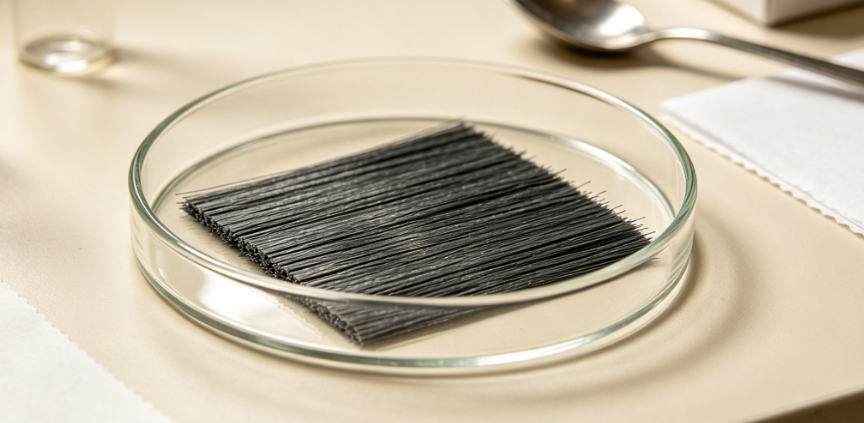
Precision Morphological and Dimensional Characterization: Filament Diameter, Defect Density, and Surface Topography
The mechanical performance of SiC fibres is exquisitely sensitive to filament diameter and surface flaw distribution. We employ scanning electron microscopy (SEM) with field‑emission gun (FEG) and in‑lens detection to acquire high‑resolution images (down to 1 nm) of fibre surfaces and cross‑sections. Using automated image analysis software, we measure the diameter distribution (mean, D10, D50, D90) from >500 filaments per tow with a precision of ±0.05 µm. For surface defect quantification (pits, nodules, scratches, and adhering particles), we use a combination of SEM and atomic force microscopy (AFM) in tapping mode to obtain 3D surface roughness parameters (Sa, Sq, Sz) and to identify critical flaw sizes that serve as fracture origins. We also perform focused ion beam (FIB) serial sectioning to inspect internal pore and inclusion distributions within the fibre cross‑section, providing a 3D reconstruction of the internal defect population. These dimensional and topological data are statistically correlated with tensile strength to derive the critical defect size distribution and to predict Weibull behaviour.
Crystalline Phase, Grain Size, and Nanostructure by X‑Ray Diffraction and Raman Spectroscopy
The crystallinity of SiC fibres—ranging from fully amorphous (first‑generation) to near‑stoichiometric polycrystalline (third‑generation) with grain sizes of 2–50 nm—dictates their creep resistance and oxidation kinetics. We use high‑resolution powder X‑ray diffraction (HR‑XRD) with synchrotron radiation (or Cu Kα with monochromator) over a wide 2θ range (10–140°) with a step size of 0.005°. Rietveld refinement determines the relative fraction of β‑SiC (cubic) vs. α‑SiC (hexagonal) polytypes, the crystallite size (via Scherrer and Williamson‑Hall analysis) with an accuracy of ±1 nm, and the microstrain. For amorphous and free carbon assessment, we perform Raman spectroscopy (with 532 nm and 785 nm lasers) over a spectral range of 100–2000 cm⁻¹, quantifying the intensity ratio of the SiC transverse optical (TO) and longitudinal optical (LO) peaks, as well as the D/G band ratio of free carbon. The free carbon content is further estimated from the integrated intensity of the carbon bands relative to a calibration curve prepared from standards of known carbon content. We also perform grazing‑incidence XRD (GIXRD) to probe the surface‑to‑core crystallinity gradient, which is critical for evaluating the effectiveness of annealing treatments.
Chemical Composition and Trace Element Profiling: Oxygen, Carbon, Nitrogen, and Metallic Impurities
The high‑temperature stability of SiC fibres is strongly influenced by the interstitial oxygen (which promotes grain growth and creep) and excess free carbon (which reduces oxidation resistance). We determine total oxygen and nitrogen by inert gas fusion (IGF) with infrared and thermal conductivity detection, achieving detection limits of 10 ppm and precision of ±2% relative. Total carbon (combined SiC‑C and free C) is measured by combustion‑infrared detection, and the free carbon content is obtained by dry oxidation at 450 °C followed by combustion analysis (or by Raman integrated intensity after calibration). For trace metals (Fe, Ni, Cr, Al, Ti, etc.), we digest the fibres in a high‑pressure microwave system with HF/HNO₃ and analyse by inductively coupled plasma tandem mass spectrometry (ICP‑MS/MS) with detection limits of 0.01–0.5 ppb. We also measure surface‑specific elemental composition by X‑ray photoelectron spectroscopy (XPS) with depth profiling (Ar⁺ sputtering) to detect surface segregation of impurities or silicon oxycarbide (SiOC) phases, which can influence fibre‑matrix bonding. The stoichiometry (C/Si ratio) is derived from the combined carbon and silicon data, with a target value of 1.0 for near‑stoichiometric fibres, and deviations are reported with expanded uncertainties (k=2).
High‑Temperature Mechanical Testing: tensile strength, Weibull Statistics, and Creep Performance
The practical application of SiC fibres demands reliable strength data at both ambient and elevated temperatures. We perform single‑filament tensile tests according to ASTM D3379 and ISO 19630 using a micro‑tensile tester with a 10 N load cell and pneumatic grips, with a crosshead speed of 2 mm/min. A minimum of 50 filaments per condition are tested to derive the mean tensile strength, Weibull modulus (m), and characteristic strength (σ₀). For high‑temperature testing, we use a resistance‑heated furnace attached to the tensile frame, with temperature control up to 1600 °C under argon or vacuum, and we measure strength retention and strain‑to‑failure at 1000, 1200, and 1400 °C. Creep testing is performed under constant load (creep stress of 100–500 MPa) at 1200–1400 °C, measuring the steady‑state creep rate (ε̇) and the stress exponent (n) to assess deformation mechanisms (e.g., grain boundary sliding or diffusion creep). We also perform cyclic fatigue tests (both tensile‑tensile and thermal cycling) to evaluate damage tolerance and residual strength. All mechanical data are processed using maximum likelihood estimation (MLE) for Weibull parameters, and we provide confidence intervals (95%) for each batch.
Thermal and Oxidative Stability: TGA, Oxidation Kinetics, and Phase Evolution
Oxidative degradation is the primary failure mode for SiC fibres in air. We perform simultaneous Thermogravimetric Analysis and differential scanning calorimetry (TGA‑DSC) from 30 °C to 1600 °C under synthetic air (20% O₂/Ar) at heating rates of 1, 5, and 10 °C/min. The oxidation onset temperature (Ton), the maximum oxidation rate temperature (Tmax), and the total mass gain (due to SiO₂ formation) are determined with reproducibility of ±2 °C and ±0.1% mass. We also conduct isothermal oxidation experiments at 1000, 1200, and 1400 °C for up to 100 hours, followed by cross‑sectional SEM‑EDS to measure the oxide scale thickness and morphology. The oxidation kinetics are fitted to parabolic (diffusion‑controlled) or linear (interface‑controlled) models to derive the apparent activation energy (Ea). For advanced evaluation, we perform in situ high‑temperature XRD during heating in air to monitor phase transformation (β→α) and SiO₂ cristobalite formation, which affects thermal shock resistance.
Interface and Composite Compatibility Assessment
For customers integrating SiC fibres into ceramic matrices (e.g., SiC, C, Al₂O₃), the fibre‑matrix interfacial shear strength (IFSS) and the presence of a suitable interphase (e.g., pyrolytic carbon, BN) are critical. We offer single‑fibre push‑in and push‑out tests on micro‑composite specimens using a nanoindenter with a flat punch (diameter 5–10 µm) and a piezo‑stage, recording force‑displacement curves and extracting the debonding stress and frictional sliding stress. We also perform fibre coating analysis by high‑resolution TEM on cross‑sections to measure the interphase thickness and uniformity, and we apply electron energy loss spectroscopy (EELS) to map the chemistry across the interface. These data are correlated with composite flexural strength and fracture toughness to guide the selection of optimal fibre and interphase systems.
Environmental and Durability Testing: Moisture, Radiation, and High‑Temperature Steam
For nuclear and aerospace applications, we provide accelerated ageing under humid air (85% RH, 60 °C), proton or neutron irradiation (in collaboration), and high‑temperature steam (900 °C, 10 bar) for up to 1000 hours. After ageing, the fibres are subjected to the full characterisation suite (tensile, XRD, TGA, SEM) to quantify the residual strength, phase stability, and surface degradation. We also measure the weight change and oxide scale composition to predict in‑service lifetime. Our comprehensive durability reports include lifetime predictions based on Arrhenius and Larson‑Miller parameters.
Our Distinctive Competencies and Analytical Superiority
Our service is uniquely distinguished by the orthogonal integration of FEG‑SEM/AFM morphometry, HR‑XRD with Rietveld analysis, high‑temperature mechanical testing (up to 1600 °C), TGA‑DSC oxidation kinetics, ICP‑MS/MS ultra‑trace impurity profiling, and interface push‑out testing—all performed on the same representative fibre tow to eliminate batch‑to‑batch variations. We operate under ISO/IEC 17025 accreditation and maintain in‑house reference SiC fibres (Nicalon, Hi‑Nicalon, Tyranno) that are cross‑calibrated through interlaboratory comparisons. Our proprietary data fusion platform combines over 35 parameters (including crystallite size, free carbon content, Weibull modulus, oxidation activation energy, and interface shear stress) into a single “SiC Fibre Performance Index” (SFPI), which predicts composite toughness and high‑temperature durability. This index has been validated against >40 commercial and research‑grade fibre batches.
We achieve exceptional precision: < 1.5% RSD for tensile strength (at room temperature), < 0.2% for diameter distribution, < 0.5 wt% for oxygen content, < 0.3 nm for crystallite size, and < 2% for Weibull modulus. Our turnaround time for the complete characterisation suite (including high‑temperature creep and oxidation up to 1400 °C) is 14–20 working days, with expedited 10‑day service for urgent qualification projects. Crucially, our team of PhD‑level ceramic engineers, fracture mechanics specialists, and high‑temperature chemists provides a comprehensive interpretative report that translates each parameter into practical guidance—e.g., how a 5% increase in free carbon reduces oxidation resistance but improves tensile ductility, how the presence of trace iron accelerates grain growth at 1400 °C, or how the optimal oxygen content balances creep and composite infiltration. With over 30 successful projects on SiC and related non‑oxide fibres, we empower our clients to achieve consistent fibre quality, reduce process‑induced defects, and gain certification for the most demanding aerospace, nuclear, and automotive applications—all with the highest level of scientific rigour and technical credibility.