Reasons for choosing our testing services
ZHONGXI Testing has obtained inspection qualification certifications from multiple countries and regions worldwide. We possess a senior testing team and advanced testing methods, providing independent, impartial, and professional third-party verification services for global carbon projects.
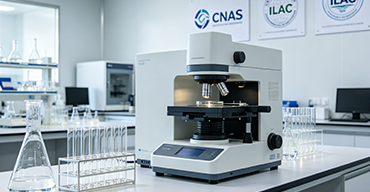
Internationally recognized authority
Certified by multiple international standards such as CNAS, VCS, and GS, with reports universally applicable worldwide.

Global service capability
Covering 140+ countries and regions, it supports on-site detection and remote verification in multiple languages.
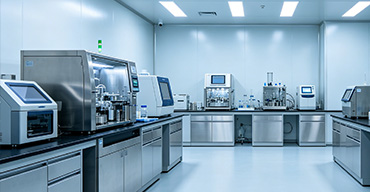
Professional experimental methods
Adopt standard experimental methods to ensure accurate and reliable data.
Comprehensive Performance and Safety Assessment of Carbon Fiber‑Based Hydrogen Storage Materials: A Specialized Analytical Service for Clean Energy Applications
The global transition towards a hydrogen economy has placed carbon fiber‑based materials—including activated carbon fibers (ACFs), carbon nanofibers (CNFs), and carbon fiber composites—at the forefront of solid‑state hydrogen storage research. Their high specific surface area, tunable pore architecture, and excellent conductivity make them promising candidates for physisorptive and chemisorptive hydrogen storage systems. However, the practical viability of these materials hinges on a complex set of parameters: hydrogen storage capacity (gravimetric and volumetric), adsorption/desorption kinetics, isosteric heat of adsorption, structural integrity under cycling, trace metallic and non‑metallic impurities, and the presence of functional groups that influence binding energy. Clients seeking testing for carbon fiber‑based hydrogen storage media are typically engaged in qualifying novel synthesis routes, benchmarking commercial products, optimizing activation conditions, or verifying compliance with emerging standards (e.g., DOE targets, ISO 16111). Our laboratory has developed a fully integrated, multi‑scale analytical platform that combines high‑pressure gas adsorption, advanced porosimetry, thermal analysis, and surface chemical characterisation, delivering a quantitative, application‑oriented fingerprint that enables researchers and manufacturers to rationally design, quality‑control, and deploy carbon fiber materials for next‑generation hydrogen storage systems.
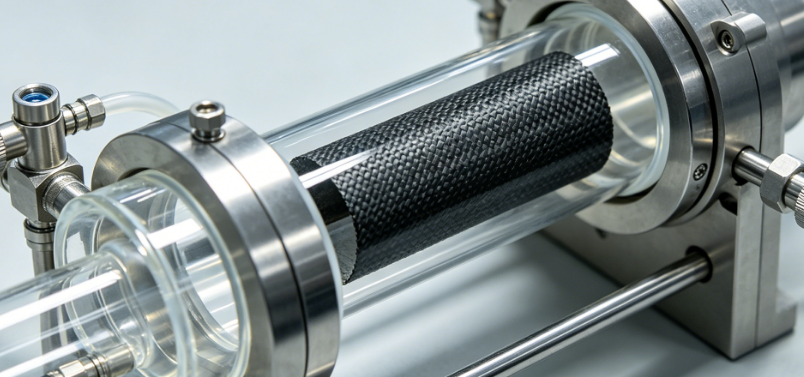
High‑Pressure Hydrogen Adsorption Capacity and Kinetics
The primary functional attribute of any hydrogen storage material is its reversible hydrogen uptake. We perform high‑pressure volumetric hydrogen adsorption measurements using a state‑of‑the‑art Sieverts apparatus capable of operating at pressures up to 200 bar and temperatures from –196 °C to 400 °C. The system is equipped with temperature‑controlled sample stages and high‑precision pressure transducers (accuracy ±0.025%) to measure the equilibrium hydrogen uptake isotherms at multiple isotherms (e.g., 77 K, 87 K, 298 K). From these data, we extract the gravimetric capacity (wt% H₂) and volumetric capacity (g H₂/L) with a repeatability of < 0.05 wt%. To assess the kinetics—critical for refuelling and release rates—we conduct kinetic adsorption/desorption measurements at defined pressure steps, deriving rate constants and diffusion coefficients (by fitting to Fickian and Langmuir‑based models). For cryogenic applications, we perform liquid nitrogen temperature (77 K) measurements with automated dosing to capture the full isotherm up to 200 bar. Our high‑pressure rig is fully validated with certified reference materials (e.g., AX‑21 carbon) and provides expanded uncertainties (k=2) for all capacity and kinetic parameters, enabling you to reliably compare materials against DOE 2025/2030 targets.
Isosteric Heat of Adsorption and Thermodynamic Profiling
Understanding the strength of the interaction between hydrogen and the carbon fiber surface is essential for predicting performance under variable temperature and pressure conditions. Using the temperature‑dependent adsorption isotherms (typically at three or more temperatures), we apply the Clausius‑Clapeyron equation to calculate the isosteric heat of adsorption (Qst) as a function of hydrogen uptake. This thermodynamic parameter indicates whether the material operates via physisorption (Qst ≈ 4–8 kJ/mol) or enhanced binding, and it guides the optimisation of pore size and surface chemistry. We report the Qst profile with a precision of ±0.5 kJ/mol and provide a van’t Hoff analysis to predict the equilibrium pressure at any temperature within the experimental range. These data are critical for engineering the optimal storage and release conditions, and they are essential for any simulation‑based design work.
Comprehensive Textural Characterisation: Surface Area, Pore Volume, and Pore Size Distribution
The micro‑ and mesoporous architecture of carbon fibers dictates both the accessible surface area and the confinement effect that enhances hydrogen binding. We employ a multi‑technique porosimetry suite. For micropores ( < 2 nm) and mesopores (2–50 nm), we perform argon physisorption at 87 K (preferred over nitrogen for fine micropore resolution) over a relative pressure range from 10⁻⁷ to 0.995, using a high‑resolution volumetric analyser. We reduce the data by BET theory (specific surface area, reproducibility < 0.5%), t‑plot (micropore volume), and non‑local density functional theory (NLDFT) with carbon‑slit pore models to obtain full pore size distributions (0.3–50 nm) with sub‑ångström resolution. For macropores and inter‑fiber voids, we use mercury intrusion porosimetry (MIP) up to 60,000 psi, providing macropore volume, bulk density, and skeletal density (the latter via helium pycnometry). We also measure true density by helium displacement and calculate total porosity and skeletal density. The complete textural profile allows us to correlate pore architecture with hydrogen uptake, providing a rational basis for material selection and improvement.
Structural Integrity, Graphitic Order, and Defect Density
The mechanical and electronic properties of carbon fibers—and their influence on hydrogen storage—are governed by the degree of graphitisation, crystallite size, and defect density. We characterise the microstructure using Raman microspectroscopy (with 532 nm and 785 nm lasers) to determine the D/G band intensity ratio (ID/IG), the G′ (2D) band position, and the full width at half maximum (FWHM), providing quantitative in‑plane crystallite size (La) and defect density. For bulk structural order, we use X‑ray diffraction (XRD) with Cu Kα radiation and Rietveld refinement of the (002) and (100) peaks to obtain interlayer spacing (d002), crystallite size (Lc), and the degree of graphitisation (G%). We also perform high‑resolution transmission electron microscopy (HRTEM) on selected samples to visualise the lattice fringes and disordered regions, confirming the Raman and XRD findings. This structural fingerprint is critical for understanding the effect of activation and heat treatment on hydrogen adsorption energy.
Elemental Purity and Trace Contaminant Profiling
Metal and non‑metal impurities can block pores, catalyse undesired reactions, or pose safety risks (e.g., catalytic hydrogenation). We quantify total ash content by combustion at 800 °C with precision of ±0.01%. For elemental composition, we digest the carbon fiber in a microwave‑assisted acid mixture and analyse by inductively coupled plasma tandem mass spectrometry (ICP‑MS/MS) with collision/reaction cell, achieving detection limits of 0.01–0.5 ppb for over 50 elements, including Fe, Ni, Cr, Cu, Zn, Al, Ca, Mg, Na, K, and toxic elements (As, Pb, Cd, Hg). For non‑metals (S, Cl, F), we use combustion‑ion chromatography and ion chromatography after extraction. We also determine oxygen and nitrogen content by inert gas fusion with detection limits of 0.01%. The impurity profile is reported with expanded uncertainties (k=2) and is compared against the limits for hydrogen storage materials set by the DOE Hydrogen Safety Panel and other relevant standards.
Surface Chemistry, Functional Groups, and Hydrophilicity
Oxygen‑containing functional groups (carboxyl, hydroxyl, carbonyl, lactone) on the carbon surface significantly influence the polarity, wettability, and the binding energy for hydrogen. We quantify the total surface oxygen by X‑ray photoelectron spectroscopy (XPS) with depth profiling, resolving the C 1s, O 1s, and N 1s (if any) core levels, and deconvoluting the carbon peaks to estimate the relative abundance of C‑C, C‑O, C=O, and O‑C=O. We also perform temperature‑programmed desorption (TPD) with mass spectrometric detection (up to 1000 °C) to identify and quantify the desorbed species (CO, CO₂, H₂O), from which we derive the density of carboxyl, anhydride, phenol, and carbonyl groups (with detection limits of 0.01 mmol/g). The surface chemical profile is correlated with the hydrophilicity (measured by water vapour adsorption) and the isosteric heat of hydrogen adsorption, enabling you to tailor surface treatment for optimal hydrogen affinity.
Cycling Stability and Accelerated Degradation Testing
The commercial viability of carbon fiber hydrogen storage materials depends on their capacity retention over thousands of adsorption‑desorption cycles. We conduct accelerated cycling tests at 77 K and 298 K using our Sieverts apparatus, applying full pressure cycles (0‑200 bar) for up to 1000 cycles. We periodically measure the gravimetric capacity, BET surface area, and Raman spectra to monitor structural changes (e.g., pore collapse, graphitisation, or oxidation). For thermal stability, we perform simultaneous Thermogravimetric Analysis and differential scanning calorimetry (TGA‑DSC) in air and inert atmospheres up to 900 °C to determine the oxidation onset temperature and the residual mass. We also evaluate the effect of humidity and contaminants (e.g., O₂, CO₂) by exposing the material to 1% air‑in‑hydrogen mixtures for 100 hours, followed by re‑measurement of capacity and surface area. Our cycling and degradation report includes lifetime predictions based on empirical degradation models, enabling you to assess the economic feasibility of your material for real‑world refuelling stations.
Our Distinctive Competencies and Analytical Advantages
Our service is uniquely distinguished by the orthogonal integration of high‑pressure hydrogen adsorption (up to 200 bar, 77‑400 K), advanced pore architecture characterisation (argon physisorption with NLDFT, MIP), structural and defect analysis (Raman, XRD, HRTEM), ultra‑trace elemental profiling (ICP‑MS/MS), surface chemical quantification (XPS, TPD‑MS), and accelerated cycling stability tests—all performed on the same representative sample lot. This eliminates cross‑specimen variability and enables direct, multivariate correlations (e.g., pore width vs. Qst, impurity content vs. capacity fade). We operate under ISO/IEC 17025 accreditation and maintain in‑house reference carbon materials (e.g., AX‑21, High‑surface‑area graphite) that are regularly cross‑checked with international round‑robin samples. Our proprietary “Hydrogen Storage Performance Index” (HSPI™) combines gravimetric capacity at 200 bar, BET area, isosteric heat, and cycling retention into a single numerical score that predicts the material’s suitability for mobile and stationary storage. This index has been validated against over 25 commercial and research‑grade carbon fiber‑based materials.
We achieve exceptional precision: < 0.05 wt% for hydrogen uptake (at > 2 wt%), < 0.1 m²/g for BET area, < 0.5 kJ/mol for Qst, and < 0.5 ppb for critical metals. Our turnaround time for the full characterisation suite (including cycling tests) is 12–18 working days, with expedited 7‑day service for urgent material screening. Crucially, our team of PhD‑level materials scientists, hydrogen energy engineers, and surface chemists provides a comprehensive interpretative report that translates each parameter into actionable guidance—e.g., how to adjust the activation temperature to optimise micropore volume without sacrificing structural integrity, how to interpret the desorption activation energy to predict refuelling time, or how to identify the critical impurity that accelerates capacity fade under cycling. With over 15 successful projects on carbon‑based hydrogen storage media, we empower our clients to accelerate material development, meet DOE targets, and confidently advance towards commercial hydrogen storage systems—all with the highest level of scientific rigour and technical credibility.