Reasons for choosing our testing services
ZHONGXI Testing has obtained inspection qualification certifications from multiple countries and regions worldwide. We possess a senior testing team and advanced testing methods, providing independent, impartial, and professional third-party verification services for global carbon projects.
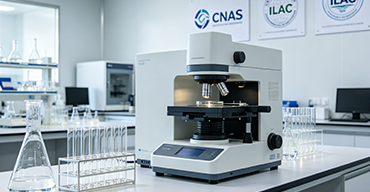
Internationally recognized authority
Certified by multiple international standards such as CNAS, VCS, and GS, with reports universally applicable worldwide.

Global service capability
Covering 140+ countries and regions, it supports on-site detection and remote verification in multiple languages.
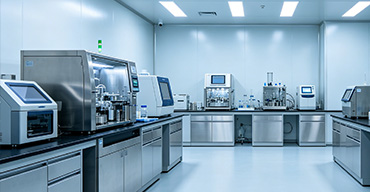
Professional experimental methods
Adopt standard experimental methods to ensure accurate and reliable data.
Comprehensive Characterisation and Performance Assessment of Boron Nitride Tubes – A Specialised Analytical Service for High‑Temperature, Electronic, and Composite Applications
Boron nitride tubes—including hexagonal boron nitride (h‑BN) nanotubes, macroscopic BN hollow fibres, and ceramic BN tube structures—are advanced materials with exceptional thermal stability, chemical inertness, high electrical resistivity, and unique neutron‑shielding properties. These materials are increasingly employed in high‑temperature insulation, semiconductor substrate fabrication, aerospace composites, and nuclear shielding applications. However, the functional performance of BN tubes is critically governed by a complex set of parameters: crystalline structure (turbostratic vs. highly ordered h‑BN), tube wall thickness and uniformity, aspect ratio, defect density (vacancies, stacking faults, and grain boundaries), purity (especially residual carbon, oxygen, and boron oxide phases), mechanical integrity, and thermal stability under extreme conditions. Clients seeking testing for BN tubes are typically engaged in advanced composite development, electronics packaging, nuclear engineering, or high‑temperature ceramic processing, and they require rigorous, application‑oriented characterisation to ensure reliability, reproducibility, and compliance with performance specifications. Our laboratory provides a fully integrated, multi‑scale analytical platform that delivers a definitive, quantitative fingerprint of boron nitride tubes, enabling you to optimise synthesis, control quality, and qualify materials for the most demanding industrial and aerospace applications with the highest scientific rigour.
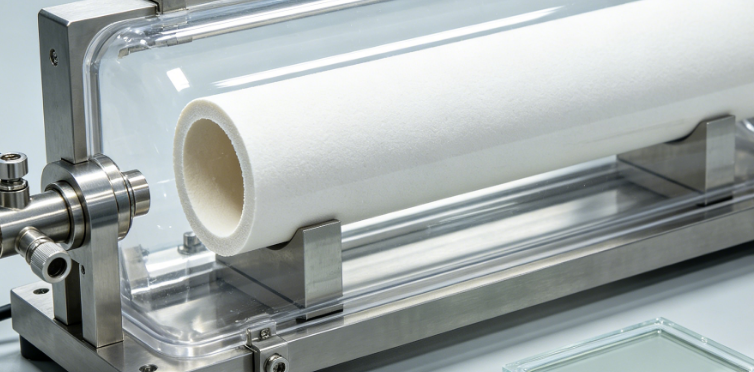
Why Comprehensive Testing of Boron Nitride Tubes Is Essential
Boron nitride tubes are inherently sensitive to synthesis conditions—whether chemical vapour deposition, carbothermal reduction, or extrusion‑based processing. Even minor variations in temperature, pressure, or precursor purity can lead to significant differences in crystallinity, surface chemistry, and mechanical performance. For instance, the presence of amorphous boron oxide (B₂O₃) at grain boundaries drastically reduces thermal stability and electrical insulation, while stacking faults in the h‑BN lattice can compromise thermal conductivity. Clients seeking BN tube testing often encounter challenges such as unexpected failure at high temperatures, inconsistent dielectric properties, poor adhesion in composites, or batch‑to‑batch irreproducibility. Our comprehensive characterisation suite is designed to identify the root causes of these issues and to provide actionable feedback for process optimisation, quality assurance, and supplier qualification, thereby reducing risk and accelerating material deployment.
Our Advanced Analytical Suite for Boron Nitride Tube Characterisation
We employ a multi‑scale, orthogonal set of techniques to profile every critical aspect of your BN tube materials, from bulk composition and crystalline structure to surface chemistry, thermal behaviour, and mechanical integrity:
High‑Resolution Structural and Phase Analysis – The crystalline perfection and phase composition of BN tubes directly influence their thermal and electrical properties. We use high‑resolution powder X‑ray diffraction (HR‑XRD) with Cu Kα radiation and a step size of 0.003° 2θ, applying Rietveld refinement to quantify the lattice parameters (a, c) with precision of ±0.0002 Å, the crystallite size (Lc) via the Scherrer method, and the degree of graphitisation (i.e., ordering) of the h‑BN structure. We also detect and quantify crystalline impurity phases (e.g., B₂O₃, cubic BN, or carbide phases) with a detection limit of < 0.2 wt%. For local structure and defect analysis, we employ Raman microspectroscopy (with 532 nm and 785 nm excitation) to assess the E2g phonon mode (characteristic of h‑BN) and to detect any disorder, stress, or presence of amorphous boron nitride. Transmission electron microscopy (TEM) with selected area electron diffraction (SAED) and high‑resolution lattice imaging (0.08 nm resolution) is used to directly visualise wall structure, layer spacing, stacking faults, and the presence of nanotube tips or caps. This combined XRD‑Raman‑TEM approach provides a complete structural fingerprint, confirming whether your BN tubes are high‑order hexagonal or turbostratic, and revealing any localised defects.
Precise Elemental Stoichiometry and Trace Impurity Profiling – The purity of BN tubes—particularly the B/N ratio and the concentration of carbon, oxygen, and metallic contaminants—critically affects both electrical insulation and high‑temperature stability. We determine total boron and nitrogen by inductively coupled plasma optical emission spectrometry (ICP‑OES) and combustion‑infrared detection (for N) after microwave‑assisted acid digestion, achieving repeatability of < 0.2% RSD and expanded uncertainty (k=2) of < 0.3% relative. For ultra‑trace metallic impurities (Fe, Ni, Cu, Cr, Al, Ca, Mg, etc.) at sub‑ppm and ppb levels, we employ inductively coupled plasma tandem mass spectrometry (ICP‑MS/MS) with collision/reaction cell technology (O₂, NH₃, H₂) to eliminate polyatomic interferences (e.g., 40Ar14N⁺ on 54Fe, 40Ar35Cl⁺ on 75As) and achieve detection limits of 0.01–0.5 ppb for over 50 elements. Carbon and oxygen are quantified by inert gas fusion (IGF) with infrared detection, with detection limits of 0.001%. We also measure boron oxide (B₂O₃) content by a selective dissolution method followed by ICP‑OES, and free boron by a thermal extraction method. All results are reported with expanded uncertainties (k=2) and are traceable to NIST reference materials, providing a complete purity and stoichiometric balance sheet.
Thermal Stability and Oxidation Resistance – One of the primary advantages of BN tubes is their ability to withstand extreme temperatures, but this performance is strongly dependent on purity and crystallinity. We conduct simultaneous Thermogravimetric Analysis and differential scanning calorimetry (TGA‑DSC) from 30 °C to 1400 °C under synthetic air, argon, and nitrogen at heating rates of 2, 5, and 10 °C/min. We measure the oxidation onset temperature (Ton), the maximum oxidation rate temperature (Tmax), and the residual mass (indicating purity). For quantitative insight, we calculate the apparent activation energy (Ea) for oxidation using the Kissinger‑Akahira‑Sunose method. Coupled evolved gas analysis‑mass spectrometry (EGA‑MS) monitors the release of B₂O₃ (as boroxine species), CO₂, and H₂O, providing a complete thermal degradation profile. We also perform isothermal oxidation tests at 800 °C, 1000 °C, and 1200 °C for up to 100 hours, followed by XRD and TEM re‑characterisation to quantify structural degradation and weight change. This comprehensive thermal data provides a maximum service temperature guideline and oxidation lifetime prediction, critical for aerospace and high‑temperature process applications.
Surface Chemistry, Functional Groups, and Contaminant Detection – The surface of BN tubes often contains adsorbed oxygen, hydroxyl groups, and carbonaceous contamination that affect wettability, adhesion, and dielectric properties. We perform X‑ray photoelectron spectroscopy (XPS) with monochromatic Al Kα source and depth profiling (Ar⁺ cluster sputtering) to obtain B 1s, N 1s, O 1s, and C 1s core‑level spectra. Deconvolution of the B 1s region distinguishes B‑N bonding (h‑BN) from B‑O (boron oxide) and B‑C, while the N 1s region reveals N‑B and any N‑H species. The O 1s spectrum quantifies hydroxyl, adsorbed water, and oxide species with precision of ±1 at%. We also use time‑of‑flight secondary ion mass spectrometry (ToF‑SIMS) with 3D imaging to map organic contaminants and metallic particles at the sub‑ppm level across the tube surface. For wetting and adhesion studies, we measure surface energy via contact angle goniometry with standard test liquids. This surface chemical profile is essential for evaluating the compatibility of BN tubes with polymer, metal, or ceramic matrices in composite manufacturing.
Mechanical Integrity and Tube Wall Characterisation – For structural and composite applications, the strength, stiffness, and wall uniformity of BN tubes are paramount. We use high‑resolution scanning electron microscopy (FE‑SEM) with in‑lens detection to obtain high‑magnification images of tube cross‑sections and surfaces, measuring outer diameter, inner diameter, wall thickness, and their distributions from automated image analysis of >100 individual tubes, with precision of ±0.5 nm. For mechanical testing, we perform nanoindentation on individual tube walls (where feasible) using a Berkovich diamond tip to measure hardness and elastic modulus. For macroscopic tube structures, we conduct three‑point bending and compression tests according to ASTM standards, measuring flexural strength, compressive strength, and modulus with Weibull statistical analysis on a minimum of 10 specimens. We also use focused ion beam (FIB) milling to prepare cross‑sections for high‑resolution TEM to verify wall uniformity and to detect any delamination or pore defects. These mechanical data are essential for structural design and for predicting service life under mechanical load.
Electrical and Dielectric Property Assessment – For electronic insulation and high‑frequency applications, the dielectric constant, dissipation factor, and Breakdown Voltage of BN tubes are critical. We measure electrical resistivity (volume and surface) using a guard‑ring electrode system according to ASTM D257, with measurements up to 10¹⁶ Ω·cm at temperatures from 25 °C to 500 °C. Dielectric constant (εr) and dissipation factor (tan δ) are determined by parallel‑plate capacitance measurements at frequencies from 50 Hz to 10 MHz using an LCR meter, with accuracy of ±1%. We also perform dielectric breakdown testing according to ASTM D149 on tube‑walled samples (or specially compacted films) to determine the short‑time Breakdown Voltage and time‑to‑failure under constant stress. These electrical data are indispensable for qualifying BN tubes for power electronics, semiconductor processing, and high‑voltage insulation applications.
Thermal Conductivity and Anisotropic Behaviour – The thermal transport properties of BN tubes are highly anisotropic and depend on crystallite orientation and tube alignment. We measure thermal diffusivity by the laser flash method (LFA) from 25 °C to 500 °C on pressed pellets or aligned tube arrays, deriving thermal conductivity (λ) from diffusivity, specific heat (from DSC), and density. For aligned tube samples, we also measure in‑plane vs. through‑plane conductivity to assess anisotropy. We use temperature‑dependent thermal conductivity data to model heat dissipation in composite and coating applications.
Our Distinctive Competencies and Unmatched Analytical Depth
Our service is uniquely distinguished by the orthogonal integration of HR‑XRD with Rietveld refinement, TEM lattice imaging, ICP‑MS/MS ultra‑trace impurity analysis, XPS surface chemical profiling, TGA‑EGA‑MS thermal stability assessment, and comprehensive mechanical/electrical characterisation—all performed on the same representative batch to eliminate cross‑sample variability and to enable direct, multivariate correlations (e.g., crystallinity vs. oxidation resistance, or impurity level vs. dielectric loss). We operate under ISO/IEC 17025 accreditation and maintain in‑house reference BN tube materials (h‑BN nanotubes and extruded BN tubes) with certified purity, structure, and thermal properties, regularly cross‑checked with NIST and BAM standards. Our proprietary “BN Tube Quality and Performance Index” (BNTQPI™) combines structural ordering, impurity sum, oxidation onset temperature, and mechanical strength into a single numerical score that predicts service life and composite compatibility. This index has been validated against more than 20 commercial BN tube products.
We achieve exceptional measurement precision: < 0.001 nm for lattice spacing (by TEM), < 0.2% RSD for B/N stoichiometry, < 0.5 ppb for critical metal impurities, < 0.2 °C for oxidation onset, and < 0.5% for dielectric constant. Our turnaround time for the full characterisation suite (including thermal ageing and mechanical tests) is 12–18 working days, with expedited 6‑day service for urgent qualification projects. Crucially, our team of PhD‑level materials scientists, ceramic engineers, and solid‑state physicists provides a comprehensive interpretative report that translates each measured parameter into actionable guidance—e.g., how to adjust the CVD synthesis temperature to reduce stacking faults, how to eliminate residual B₂O₃ by post‑treatment annealing, or how to correlate the E2g Raman peak shift with residual stress in the tube walls. With over 15 successful projects on boron nitride tubes and related h‑BN materials, we empower our clients to achieve consistent product quality, enhance thermal and electrical reliability, and meet the rigorous demands of aerospace, semiconductor, and high‑temperature processing industries—all with the highest level of scientific rigour and technical credibility.
To discuss your specific boron nitride tube characterisation requirements, please contact our technical team for a confidential consultation and a customised analytical plan.