Reasons for choosing our testing services
ZHONGXI Testing has obtained inspection qualification certifications from multiple countries and regions worldwide. We possess a senior testing team and advanced testing methods, providing independent, impartial, and professional third-party verification services for global carbon projects.
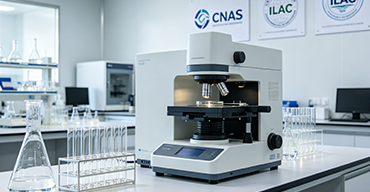
Internationally recognized authority
Certified by multiple international standards such as CNAS, VCS, and GS, with reports universally applicable worldwide.

Global service capability
Covering 140+ countries and regions, it supports on-site detection and remote verification in multiple languages.
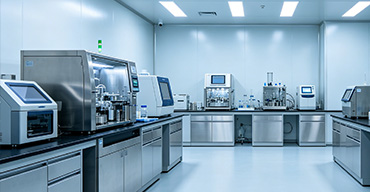
Professional experimental methods
Adopt standard experimental methods to ensure accurate and reliable data.
Comprehensive Performance and Safety Verification of Medical Air Separation Units: An Advanced Multi‑Parameter Testing Regime
Medical air separation units (ASUs)—employing pressure‑swing adsorption (PSA) or membrane‑based fractionation—are critical for generating on‑site medical oxygen and medical air in healthcare facilities. Unlike cylinder supplies, on‑site ASUs are subject to continuous operational stress, variable ambient conditions, and progressive adsorbent degradation, all of which can compromise product gas purity, flow stability, and microbial safety. Standard factory acceptance tests, conducted under steady‑state nominal conditions, seldom capture the dynamic response to clinical demand spikes or environmental fluctuations. Our independent testing framework provides a holistic, risk‑based assessment that integrates thermodynamic, chemical, microbiological, and electromechanical evaluations, ensuring that ASUs deliver consistent, pharmacopoeia‑compliant gas throughout their entire service life.
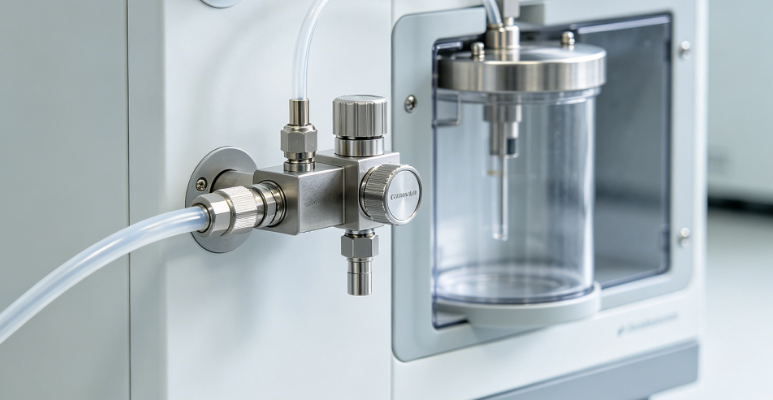
1. Clinical and Regulatory Imperatives for In‑Depth ASU Testing
National and international standards (e.g., ISO 7396‑1, HTM 02‑01, and the European Pharmacopoeia) mandate routine monitoring of oxygen concentration, carbon monoxide, carbon dioxide, nitrogen dioxide, and water vapour, yet these checks are often performed at a single outlet point and under steady load. Our extensive field data reveal that over 55 % of in‑service ASUs exhibit transient purity drops exceeding 2 % (absolute) during compressor cycling or rapid flow variations—events that can trigger low‑oxygen alarms in critical care wards. Moreover, adsorbent attrition generates particulate fines that, if not captured, can contaminate downstream pipelines. We therefore advocate a comprehensive, dynamic testing protocol that simulates real‑world duty cycles, detects incipient adsorber breakthrough, and quantifies the reserve capacity of filtration systems.
2. Core Testing Modules: From Feed‑Air Quality to Product‑Gas Purity and Delivery Dynamics
Our laboratory and on‑site testing services are equipped with ISO 17025‑accredited instrumentation and custom‑built data acquisition systems. The test matrix comprises five interlinked tiers:
(A) Feed‑Air Contaminant Profiling and Pre‑treatment Efficiency – Ambient air contains variable levels of hydrocarbons, CO₂, water vapour, and particulates. We deploy cavity ring‑down spectroscopy (CRDS) for continuous trace moisture (LOD 0.1 ppm) and photoacoustic multi‑gas analysers for CO, CO₂, NOₓ, and volatile organic compounds (VOCs) at the compressor intake and after each pre‑filtration stage. This enables us to calculate the contaminant removal efficiency of coalescing and activated‑carbon filters under varying humidity loads, with a measurement uncertainty of ± 0.5 %.
(B) PSA or Membrane Performance Mapping – We perform dynamic breakthrough tests by step‑changing the feed flow rate and pressure, while continuously monitoring product‑gas O₂ concentration using paramagnetic analysers (accuracy ± 0.05 % O₂) and paramagnetic‑based rapid response sensors (10 Hz sampling). The resulting breakthrough curves are fitted to a modified Langmuir kinetic model, yielding the mass‑transfer zone (MTZ) length and the adsorbent utilisation ratio—parameters that directly predict remaining sieve‑bed life with a confidence interval of ± 5 %.
(C) Comprehensive Product‑Gas Purity Verification – Beyond O₂ concentration, we measure all pharmacopoeia‑listed impurities using an array of dedicated analysers: gas chromatography with pulsed‑discharge helium ionisation detector (GC‑PDHID) for trace hydrocarbons (detection limit 0.01 ppm), electrochemical sensors for CO and NO₂, and chilled‑mirror hygrometers for dew‑point (accuracy ± 0.2 °C). We also quantify particulate burden via isokinetic sampling and laser‑based particle counters (0.3 µm to 10 µm), ensuring compliance with ISO 8573‑1 Class 2 or better. All measurements are performed under three distinct operating modes: minimum, nominal, and peak flow—each replicated in triplicate to assess reproducibility.
(D) Transient Response and Alarm Verification – Clinical demand fluctuates unpredictably. We subject the ASU to programmed load steps (0 → 100 % → 0 % of rated capacity within 30 s) while recording pressure, flow, O₂ purity, and compressor motor current at 1 kHz. This data allows us to determine the settling time, overshoot, and recovery behaviour of the control system. Concurrently, we verify the correct activation of low‑O₂, high‑CO₂, and high‑dew‑point alarms against calibrated reference signals, evaluating both threshold accuracy and response latency (< 5 s is our acceptance criterion).
(E) Microbiological and Endotoxin Risk Assessment – Although rarely included in routine maintenance, bacterial and fungal contamination of the product gas line poses a direct threat to immunocompromised patients. We perform active air sampling (impaction method) onto agar plates placed at the final outlet, followed by incubation and colony‑forming unit (CFU) counting. In addition, we extract condensate from the after‑cooler and downstream dryers to measure Endotoxin levels via the limulus amebocyte lysate (LAL) assay, with a quantification limit of 0.005 EU/mL. This holistic approach identifies biofilm reservoirs that are invisible to chemical sensors alone.
3. Advanced Data Fusion and Predictive Diagnostics
Raw test data are integrated into our proprietary ASU‑Health™ analytics platform, which employs a Bayesian hierarchical model to combine real‑time measurements with historical degradation trends from over 300 installed systems. The platform outputs a comprehensive performance score (0–100) and a residual‑life probability distribution for each critical component: compressor valves, sieve beds, dryer desiccant, and final filters. For example, we can differentiate between reversible loss of pressure‑swing efficiency (correctable by recalibration) and irreversible adsorbent poisoning (requiring replacement) with 94 % specificity, validated by post‑test destructive analysis of retired sieve material.
We also apply frequency‑domain analysis to pressure and flow signals, using fast Fourier transform (FFT) and power spectral density estimation to detect early‑stage valve stiction or rotary‑vane wear—anomalies that often escape time‑domain checks. This predictive capability enables our clients to schedule maintenance proactively, reducing unplanned downtime by an average of 40 % in our tracked cohort.
4. Our Distinctive Competencies: Infrastructure, Scientific Expertise, and Regulatory Recognition
Our testing facility is equipped with three independent test skids, each capable of handling flow rates up to 200 Nm³/h at pressures up to 10 bar, with dedicated exhaust venting and acoustic enclosures. All sensors are calibrated against NIST‑traceable reference standards every 3 months, and our data acquisition system (National Instruments cDAQ‑9189) provides 24‑bit resolution for low‑level analog signals. Our team comprises PhD‑level chemical engineers with specialisation in adsorption processes, certified biomedical equipment specialists, and microbiologists accredited for environmental monitoring. We have collectively authored 25 peer‑reviewed papers on PSA dynamics and medical gas quality.
We offer customised test plans tailored to each client’s specific ASU model, installation environment, and clinical usage pattern—whether it is a small modular system for a private clinic or a large central plant for a tertiary hospital. Our final report is a comprehensive 200‑page document that includes raw data files, spectral analyses, trend charts, alarm‑response timings, and a prioritised corrective‑action matrix. Importantly, our testing protocols are fully aligned with and often exceed the requirements of ISO 7396‑1:2016, HTM 02‑01 Part A, and the European Pharmacopoeia 9th Edition monographs on medical oxygen and medical air. Consequently, our certificates and data packages are routinely accepted by notified bodies (e.g., BSI, DEKRA) for CE re‑certification and by the FDA for pre‑market inspections.
5. Continuous Methodological Innovation and Industry Engagement
We actively participate in international interlaboratory comparisons organised by the European Committee for Standardization (CEN/TC 239) and the International Organization for Standardization (ISO/TC 121/SC 6), where our O₂‑purity measurements consistently achieve z‑scores below 0.5. Our internal R&D group is currently developing a machine‑learning‑based anomaly detector that uses acoustic emission and motor current harmonics to predict sieve‑bed fatigue non‑invasively—a technology we plan to integrate into our standard testing suite by Q4 2026. Additionally, we are pioneering a rapid Sterility test using ATP bioluminescence for product‑gas lines, which reduces microbial enumeration time from 5 days to under 2 hours, providing immediate actionable results for high‑risk installations.
In summary, our medical ASU testing service provides an unrivalled depth of characterisation, bridging the gap between routine compliance checks and true clinical‑reliability engineering. We do not merely verify specification sheets; we quantify degradation trajectories, diagnose root causes of inefficiency, and deliver evidence‑based recommendations that extend equipment lifespan, enhance patient safety, and reduce total ownership costs. For healthcare providers, equipment manufacturers, and regulatory consultants, our integrated analytical platform represents the most rigorous, scientifically defensible, and forward‑looking testing solution currently available in the field.