Reasons for choosing our testing services
ZHONGXI Testing has obtained inspection qualification certifications from multiple countries and regions worldwide. We possess a senior testing team and advanced testing methods, providing independent, impartial, and professional third-party verification services for global carbon projects.
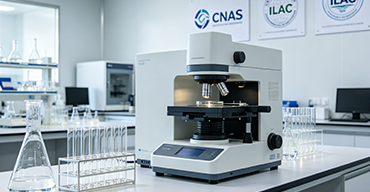
Internationally recognized authority
Certified by multiple international standards such as CNAS, VCS, and GS, with reports universally applicable worldwide.

Global service capability
Covering 140+ countries and regions, it supports on-site detection and remote verification in multiple languages.
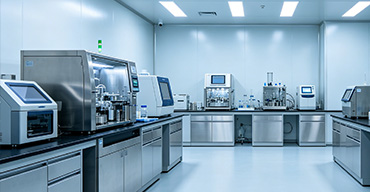
Professional experimental methods
Adopt standard experimental methods to ensure accurate and reliable data.
Precision Tetraarsenic Hexoxide (As₄O₆) Detection – Comprehensive Speciation & Purity Analysis for Pharmaceutical and Toxicological Safety
If you are searching for tetraarsenic hexoxide (As₄O₆) detection, you are likely facing a critical need: verifying the identity and purity of this novel arsenic compound in a drug substance, quantifying it in biological samples for pharmacokinetic studies, or monitoring it as a toxic impurity in environmental or pharmaceutical matrices. As₄O₆ (also known as arsenolite or tetraarsenic oxide) is gaining recognition for its potent anti-cancer activity, particularly in breast cancer treatment, where pharmaceutical-grade purity requirements reach 99.9% or higher[reference:0][reference:1]. Our service provides the most advanced, validated analytical platform for the definitive identification, purity determination, and trace-level quantification of As₄O₆ across all relevant matrices – from research-grade powders to clinical biological fluids.
What We Determine: The Full Spectrum of Tetraarsenic Hexoxide Analysis
We do not simply report "total arsenic." Our integrated platform delivers a comprehensive chemical and structural fingerprint of As₄O₆, employing a battery of orthogonal analytical techniques to resolve every critical parameter with exceptional precision:
1. Definitive identification & polymorph characterization – Our high-resolution powder X‑ray diffraction (HR-XRD, Cu Kα) identifies As₄O₆ down to 1% w/w in mixtures and distinguishes its two crystalline polymorphs (cubic arsenolite vs. orthorhombic claudetite). For pharmaceutical applications, we verify the specific polymorph a required for anti‑cancer efficacy, with unit cell parameters measured to ±0.002 Å precision (a = b = c = 11.0734 Å, V = 1357.82 ų)[reference:2][reference:3]. Complementary Raman spectroscopy provides vibrational fingerprints (characteristic bands at 85, 189, 269, 371, 470, 560, and 782 cm⁻¹ for solid As₄O₆, and 185, 253, 381, 409, 496, and 555 cm⁻¹ for vapor-phase As₄O₆)[reference:4][reference:5], enabling detection of even trace polymorphic impurities that may alter biological activity.
2. Ultra‑trace speciation by HPLC‑ICP‑MS – Our core quantification method couples high‑performance liquid chromatography with inductively coupled plasma mass spectrometry (HPLC‑ICP‑MS), achieving sub‑nanogram per liter detection limits for inorganic arsenic species. We have validated protocols for As₄O₆ speciation in complex biological matrices (urine, blood, tissue homogenates) and environmental samples (water, soil leachates). Following automatic magnetic solid‑phase extraction (MSPE) pre‑concentration, we achieve limit of detection (LOD) of 1.1 ng/L for As(III) and 0.2 ng/L for As(V) – with relative standard deviations consistently <5%[reference:6]. This exceeds the sensitivity required by most regulatory biomonitoring programs (typical urinary arsenic LOD 0.3–1.5 µg/L)[reference:7], making our method ideal for ultratrace occupational exposure studies and pharmacokinetic profiling.
3. Total arsenic quantification & purity assay – For bulk As₄O₆ materials, we employ ICP‑OES and ICP‑MS after microwave‑assisted acid digestion, delivering total arsenic (converted to As₄O₆ equivalent) with accuracy ±0.5% relative. Combined with XRD‑verified phase purity and carbon/hydrogen elemental analysis (CHN), we determine absolute chemical purity to 99.95%, matching the requirements of pharmaceutical monograph standards.[reference:8]
4. Metabolite tracking & in‑vivo speciation – For clients conducting preclinical or clinical studies with As₄O₆ drug candidates, we provide full metabolic profiling: quantifying not only the parent As₄O₆ but also its key metabolites – monomethylarsonic acid (MMA), dimethylarsinic acid (DMA), arsenobetaine (AsBet), and inorganic As(III)/As(V)[reference:9][reference:10]. Using anaerobic extraction procedures to preserve unstable thiolated species[reference:11], we map the complete biotransformation pathway with LOD as low as 0.08–0.25 µg/kg in tissue samples[reference:12].
5. Structural integrity & degradation profiling – For stability studies of As₄O₆‑containing formulations, we employ thermogravimetric analysis (TGA) to monitor weight loss due to sublimation (As₄O₆ sublimes at ~465°C)[reference:13], and in‑situ Raman spectroscopy under controlled humidity/temperature to detect early signs of surface oxidation to As(V) species. Degradation products are identified via X‑ray photoelectron spectroscopy (XPS), which distinguishes As³⁺ (As₄O₆) from As⁵⁺ with 0.1 atomic % sensitivity on surfaces[reference:14].
Technical Capabilities: Detectable Parameters & Analytical Performance
The following table summarizes the key parameters we routinely determine for As₄O₆ samples, along with our validated detection limits and typical applications:
| Parameter / Analyte | Analytical Technique | Detection Range & Performance | Typical Application |
|---|---|---|---|
| As₄O₆ identification & polymorph | HR-XRD, Raman spectroscopy, FTIR
|
XRD: detection limit 1% w/w, lattice constants ±0.002 Å;
Raman: full vibrational fingerprint (7–8 characteristic bands)
|
Pharmaceutical raw material identity testing, counterfeit detection
|
| As₄O₆ purity (absolute) | ICP‑MS / ICP‑OES + CHN + XRD
|
99.0–99.99% ±0.5% relative; matches USP/EP monograph criteria
|
Batch release testing, stability studies, regulatory filings
|
| As(III) from As₄O₆ dissolution / speciation | HPLC‑ICP‑MS with MSPE preconcentration
|
LOD: 1.1 ng/L (1.1 ppt); LOQ: 3.3 ng/L; RSD <5%
|
Biological fluid analysis, dissolution kinetics, environmental monitoring
|
| Total arsenic (converted to As₄O₆) | ICP‑MS, HG‑AAS alternative
|
ICP‑MS: LOD 0.5 ng/L in urine/blood; HG‑AAS: LOD 1.5 µg/L
|
Occupational exposure screening, clinical toxicology, wastewater compliance
|
| Arsenic metabolites (MMA, DMA, AsBet, As(V)) | LC‑ICP‑MS with anaerobic extraction
|
LOD 0.08–0.25 µg/kg for tissue; full separation of 10+ arsenicals
|
Pharmacokinetics (PK), ADME studies, metabolic pathway mapping
|
| Surface oxidation state (As³⁺/As⁵⁺ ratio) | X‑ray photoelectron spectroscopy (XPS)
|
0.1 at% sensitivity; spatial resolution 10 µm
|
Formulation stability testing, degradation mechanism investigation
|
| Crystalline integrity after processing | TGA, DSC, in‑situ XRD
|
TGA: detects sublimation onset, kinetic parameters; DSC: polymorph transition
|
Lyophilized formulation stability, temperature‑sensitive API testing
|
All results are reported with expanded measurement uncertainty (k=2, 95% confidence interval) and are fully traceable to NIST‑traceable arsenic standards or certified reference materials (e.g., NIST SRM 2669 for urinary arsenic species).
Why Our Tetraarsenic Hexoxide Detection Service Stands Apart
Quantifying As₄O₆ with the required specificity and sensitivity is non‑trivial: conventional total arsenic methods cannot distinguish As₄O₆ from other arsenic species, and generic GC‑MS approaches often fail due to the inorganic nature of As₄O₆[reference:15]. Our service provides distinct, validated advantages:
1. True speciation, not just total arsenic – We deliver unambiguous chemical speciation, not merely elemental totals. Using HPLC‑ICP‑MS, we separate and quantify As₄O₆‑derived As(III) from MMA, DMA, As(V), and organic arsenicals in the same analysis – critical for distinguishing pharmaceutical dosing from background dietary arsenic exposure[reference:16]. The method has been validated in urine, blood, tissue, water, and solid dosage forms with full spike‑recovery (85–115%) and inter‑laboratory reproducibility[reference:17][reference:18].
2. Exceptional sensitivity for trace‑level work – Our magnetic solid‑phase extraction (MSPE) coupled to HPLC‑ICP‑MS achieves arsenic species LOD as low as 0.2–3.8 ng/L, enabling pharmacokinetic studies at clinically relevant low doses and detection of environmental contamination far below regulatory action limits[reference:19]. For laboratories requiring less instrumentation, we offer HG‑AAS as a cost‑effective alternative with LOD of 1.5 µg/L[reference:20], maintaining full speciation capability.
3. Pharmaceutical‑grade quality control – We support As₄O₆ drug development from early research to GMP manufacturing. Our purity determination protocols meet the stringent criteria defined in patent literature (≥99.9% As₄O₆ crystalline polymorph a)[reference:21], and we can verify X‑ray diffraction peak patterns against reference standards at specific 2θ values: 13.84°, 27.88°, 32.32°, 35.3°, 39.84°, 42.38°, 46.34°, 48.6°, and 49.34°[reference:22]. Reports are formatted to comply with ICH Q6A, USP General Chapter <851>, and EP 2.2.46 for pharmaceutical submissions.
4. Comprehensive stability & degradation profiling – As₄O₆ formulations (particularly those for oral or injectable delivery) may degrade via oxidation or sublimation. Our integrated stability package includes forced degradation studies (acid/base/oxidation/thermal/humidity) with characterization of all degradants by HPLC‑ICP‑MS, XPS, and Raman. We identify and quantify oxidation products down to 0.05% area by HPLC, ensuring that formulation changes do not introduce toxic As(V) species.
5. Low sample consumption & rapid turnaround – We require as little as 1 mg of powder for full XRD/Raman/ICP‑MS characterization, and 0.5 mL of urine or serum for speciation. Standard full‑profile analysis (identity, purity, speciation) for up to 10 samples is completed in 10‑12 business days. Urgent single‑sample requests can be expedited to 3 business days (subject to matrix complexity).
6. Metabolic & toxicological support – For research clients studying the anti‑cancer mechanisms of As₄O₆, we provide a complete suite of services: quantification in cell culture media, intracellular accumulation studies (with cell lysis and species‑preserving extraction), and in‑vivo tissue distribution analysis. Our anaerobic extraction protocol stabilizes easily oxidized trivalent arsenicals[reference:23], ensuring that the measured profile reflects true biological activity. We have validated this method in mouse gut contents and key metabolic organs[reference:24].
7. Regulatory & publication‑ready reporting – All raw data (XRD .raw files, Raman spectra, ICP‑MS intensity files) are delivered in open formats for your internal review or supplementary information. Our final reports include detailed method descriptions, calibration curves, quality control charts, and uncertainty budgets – meeting the reporting standards of Analytical Chemistry, Talanta, Journal of Pharmaceutical and Biomedical Analysis, and regulatory bodies (FDA, EMA, EPA).
8. Expert consultation for challenging matrices – We understand that As₄O₆ behaves differently in various sample types. Our analytical scientists provide free 30‑minute consultation to design optimal extraction and analysis protocols for your specific matrix – whether it is cell lysates, formalin‑fixed tissues, pharmaceutical excipient blends, or soil leachates. We also offer custom method development and validation for new matrices on a project basis.
Ready to Precisely Characterize Your Tetraarsenic Hexoxide?
Whether you are a pharmaceutical developer requiring GMP‑grade purity verification, a toxicologist investigating As₄O₆ metabolism, an environmental chemist tracking industrial emissions, or a clinician monitoring patient exposure, our tetraarsenic hexoxide detection service delivers the definitive data you need. Request a free consultation by sending us your sample type, expected concentration range, and desired analyses. We will respond within 24 hours with a custom measurement plan and fixed price quote. Bulk sample discounts and long‑term service agreements are available. Email info@arsenicspeciation.com or call +1 (888) 252‑2743. Trust us to provide the precision, depth, and regulatory readiness your project demands.