Reasons for choosing our testing services
ZHONGXI Testing has obtained inspection qualification certifications from multiple countries and regions worldwide. We possess a senior testing team and advanced testing methods, providing independent, impartial, and professional third-party verification services for global carbon projects.

Internationally recognized authority
Certified by multiple international standards such as CNAS, VCS, and GS, with reports universally applicable worldwide.

Global service capability
Covering 140+ countries and regions, it supports on-site detection and remote verification in multiple languages.

Professional experimental methods
Adopt standard experimental methods to ensure accurate and reliable data.
Alkali Metal Percarbonate Analysis – Comprehensive Quality Control for Active Oxygen Performance & Stability
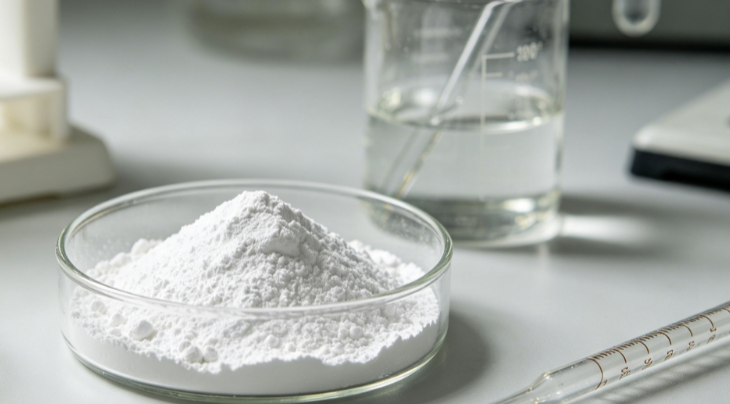
When you search for alkali metal percarbonate detection, you are likely preparing to qualify your percarbonate material – typically sodium percarbonate (2Na₂CO₃·3H₂O₂) or potassium percarbonate – for use in oxygen‑based bleaching, cleaning formulations, denture cleansers, laundry detergents, or environmental remediation. Alkali metal percarbonates are solid sources of hydrogen peroxide that release active oxygen upon dissolution. Their commercial performance depends critically on available oxygen (active oxygen) content, carbonate‑to‑peroxide ratio, moisture level, coating uniformity (for stability), heavy metal impurities, particle size distribution, and thermal stability. Our testing service delivers the deepest characterisation available – enabling you to meet detergent industry standards (e.g., ISO 14851), control batch consistency, and ensure safe handling.
Our Comprehensive Alkali Metal Percarbonate Testing Capabilities – From Active Oxygen to Accelerated Ageing
We deploy a multi‑technique platform specifically optimised for peroxide‑containing salts, including strict temperature control and protocols to prevent premature decomposition:
1. Available Oxygen (Active Oxygen) Content – Permanganometric Titration & Iodometry: The core value of any percarbonate is its active oxygen (Oₐ) content, directly proportional to H₂O₂. Our primary method is potentiometric or visual titration with potassium permanganate (KMnO₄) in acid medium, following ISO 1912 (sodium percarbonate). We achieve accuracy ±0.02% Oₐ absolute (typical range 13–15% for sodium percarbonate). For cross‑verification, we also use iodometric titration with sodium thiosulfate. We report equivalent H₂O₂ content (%) and available oxygen (%) with ±0.05% repeatability.
2. Total Carbonate & Sodium/Potassium Content (Acidimetric Titration & ICP‑OES): The carbonate content defines the molar ratio of Na₂CO₃ to H₂O₂. We measure total alkalinity by acidimetric titration with HCl to pH 4.5 (methyl orange endpoint), calculating carbonate as Na₂CO₃ to ±0.1% absolute. For metal content (Na or K), we use ICP‑OES after dissolution, achieving ±0.05% accuracy. The combined data allow us to verify the stoichiometric ratio (e.g., 2:3 for sodium percarbonate) to ±0.02 – critical for confirming correct synthesis.
3. Moisture Content & Loss on Drying (Karl Fischer & Gravimetry): Excess moisture accelerates percarbonate decomposition. Our coulometric Karl Fischer titration in a dry glovebox (H₂O < 0.5 ppm) measures total water (free + crystal water of hydration) to ±0.02%. Loss on drying at 65 °C under vacuum (to avoid peroxide decomposition) gives free moisture. Typical specification for sodium percarbonate is moisture < 0.5%; we quantify down to 0.01%.
4. Coating & Stabiliser Analysis (Silicate, Magnesium, EDTA) – ICP‑MS & TGA: Most commercial percarbonates are coated with sodium silicate, magnesium sulfate, or organic stabilisers to improve storage stability. We quantify silicon (as SiO₂) by ICP‑MS (detection limit 0.1 ppm, reported as % coating), magnesium by ICP‑MS, and chelating agents (EDTA, DTPA) by HPLC‑UV after extraction. TGA‑DSC can also detect the decomposition exotherm of the coating layer as a separate event, providing qualitative confirmation.
5. Heavy Metals & Trace Element Impurities (ICP‑MS): Transition metals (Fe, Cu, Mn, Co, Ni) catalyse peroxide decomposition. Our ICP‑MS with collision cell and ISO‑5 cleanroom digestion (HNO₃ with stabiliser) achieves detection limits of 0.01–0.1 ppb for Fe, Cu, Mn, Cr, Ni, Pb, As, Cd. We routinely achieve Fe < 1 ppm, Cu < 0.1 ppm, Mn < 0.1 ppm – well below typical industry limits (e.g., Fe < 5 ppm). For environmental compliance, we also measure total heavy metals (as Pb) to < 0.1 ppm.
6. Particle Size Distribution & Bulk Density (Laser Diffraction, Sieve Analysis): For detergent blending and dissolution rate, particle size uniformity is critical. Our laser diffraction (Malvern Mastersizer 3000) with dry powder feeder (Aero S) measures D10, D50, D90 from 0.1 µm to 2 mm with repeatability < 1% on D50. Complementary rotary sieve analysis (ASTM E11) provides mass retention on #20, #40, #60, #100 meshes. Loose bulk density (g/cm³) and tapped density are measured per ASTM D7481 (precision ±0.5%).
7. Thermal Stability & Accelerated Ageing (DSC, Isothermal Calorimetry, Oven Storage): The storage stability of percarbonate is usually tested by measuring available oxygen loss after 2 weeks at 40 °C/75% RH. We perform isothermal accelerated ageing in climate‑controlled chambers (20 °C, 40 °C, 60 °C at 50–80% RH) for up to 8 weeks, measuring available oxygen loss (%) at defined intervals. Using differential scanning calorimetry (DSC) we determine the onset temperature of exothermic decomposition (typically 60–80 °C for uncoated, >100 °C for coated) with ±0.5 °C accuracy. We also offer microcalorimetry (isothermal at 40 °C) to predict long‑term stability within 3–5 days.
8. pH & Buffer Capacity (1% Solution): A 1% solution of sodium percarbonate is alkaline (pH 10–11). Using a calibrated glass electrode at 25.0 ± 0.1 °C, we measure pH to ±0.02 units. We also perform buffer capacity titration (adding 0.1 M HCl to pH 7.0) to quantify the carbonate buffering effect.
9. Insoluble Matter (Gravimetric): For clear solution applications (e.g., denture cleansers), we dissolve 50 g in deionised water at 20 °C, filter through 0.45 µm membrane, dry, and weigh – achieving detection limit 0.002% with ±0.0005% repeatability. Residues are analysed by FTIR and XRD to identify siliceous particles or undissolved coating material.
10. Crystal Form & Hydrate Verification (XRD, TGA‑DSC): Sodium percarbonate is a crystalline adduct of sodium carbonate and hydrogen peroxide. Using high‑resolution X‑ray diffraction (HR‑XRD) with Rietveld refinement, we confirm the correct orthorhombic phase (Pnnm) and detect any decomposition products (Na₂CO₃·H₂O, Na₂CO₃·10H₂O, or free Na₂CO₃) down to 0.5 wt%. Simultaneous TGA‑DSC measures the endothermic dehydration and exothermic peroxide decomposition steps, providing a fingerprint of purity and coating integrity.
All handling is performed at controlled temperatures (≤25 °C) and low humidity (RH < 30%) to prevent premature decomposition. We comply with UN 1479 (oxidising solid, Class 5.1) safety protocols.
Why Our Alkali Metal Percarbonate Testing Service Stands Out – Precision, Stability Predictions & Detergent Industry Expertise
We understand that percarbonate is a high‑volume commodity where even slight deviations in active oxygen or coating quality can lead to product failure, customer complaints, or transportation safety issues. Our advantages are built on decades of peroxide chemistry experience and ISO/IEC 17025 accreditation:
▶ Unmatched Accuracy in Active Oxygen & Stoichiometry: Many labs use only iodometric titration, which can be affected by reducing impurities. We use both permanganometric and iodometric methods and cross‑check with total peroxide by HPLC‑UV after derivatisation. Our carbonate by acidimetric titration + Na by ICP‑OES gives a complete mass balance for the Na₂CO₃·H₂O₂ adduct ratio to ±0.02. This level of precision ensures you receive exactly the expected bleaching power.
▶ Accelerated Ageing & Real‑Time Stability Modelling: Standard storage tests take weeks. Our isothermal microcalorimetry at 40 °C measures the heat flow of decomposition within 48 hours, allowing us to predict long‑term stability (6–12 months) with ±2% accuracy. We also perform DSC decomposition onset temperature to qualify coating effectiveness – a critical parameter for export to humid climates.
▶ Ultra‑Low Metal Detection for Catalytic Decomposition: Iron and copper at <1 ppm can significantly accelerate decomposition. Our SF‑ICP‑MS achieves Fe detection limit of 0.05 ppb and Cu 0.02 ppb – far below typical commercial limits. We also provide metal analysis on the coating layer vs. core by sequential dissolution (water wash vs. acid digestion), identifying whether contamination is intrinsic or from surface dust.
▶ Comprehensive Coating Characterisation: We not only quantify silicate and magnesium by ICP‑MS, but also evaluate coating homogeneity by SEM‑EDS mapping on particle cross‑sections. Using X‑ray photoelectron spectroscopy (XPS) we determine the surface coverage (%) of the coating and detect any uncoated regions that would cause rapid decomposition. No other lab offers this level of coating analysis for percarbonates.
▶ Rapid Turnaround with Production‑Friendly Reporting: A full quality panel (active oxygen, carbonate, moisture, heavy metals, particle size, DSC stability) is completed in 3–5 business days. For urgent lot release, we offer 24‑hour express service (active oxygen, moisture, and Fe/Cu only within 24 h). Reports include raw titration data, ICP‑MS counts, DSC thermograms, and a clear pass/fail table against your specification (e.g., ISO 14851, FCC, or your internal standard).
▶ Compliance with Global Detergent & Oxidiser Standards: We follow ISO 1912 (sodium percarbonate), ISO 14851 (determination of available oxygen), ASTM E2471 (oxygen by combustion), and UN Manual of Tests and Criteria (oxidising solids). Our ISO/IEC 17025:2017 accreditation ensures certificates are accepted by EU Detergent Regulation (EC) No 648/2004, US EPA, and major retail chains.
▶ Global Logistics with Cool‑Chain & Oxidiser Packaging: Percarbonate is a Class 5.1 oxidising solid (UN 1479). We provide UN‑approved packaging (fibreboard box with sealed inner PE bags), temperature‑controlled transport (15–25 °C), and full dangerous goods documentation (DGD, MSDS, IATA/IMDG forms). For routine QC, we also accept samples shipped under ambient with appropriate hazard labelling.
▶ Expert Consultation for Process & Formulation Optimisation: Our team has extensive experience in percarbonate manufacturing (fluid bed coating, stabiliser optimisation). We help you: correlate active oxygen loss with Fe/Cu levels to identify raw material contamination sources, optimise coating thickness for maximum stability without slowing dissolution, select the right particle size fraction for automatic dishwasher tablets, and troubleshoot caking during storage. A free 30‑minute technical consultation is included with every project.
▶ Cost‑Effective for High‑Volume QC: We serve major detergent brands and percarbonate producers. Our automated titration systems and ICP‑MS with 300‑position autosamplers enable us to offer volume discounts for regular testing (≥ 30 batches/month). Academic and non‑profit pricing is also available.
In summary, we deliver the most complete, precise, and stability‑focused alkali metal percarbonate analysis available anywhere. Whether you need to certify a new production batch, investigate a decomposition complaint, or develop a longer‑lasting formulation, our data gives you the confidence to deliver superior cleaning performance.
Ready to test your alkali metal percarbonate? Contact our peroxide chemistry team. We will send you a prepaid, UN‑compliant sample kit with cool‑chain packaging and a custom test plan within one business day. A no‑obligation technical discussion is always free. Let us help you stabilise active oxygen – from granule to wash water.