Reasons for choosing our testing services
ZHONGXI Testing has obtained inspection qualification certifications from multiple countries and regions worldwide. We possess a senior testing team and advanced testing methods, providing independent, impartial, and professional third-party verification services for global carbon projects.

Internationally recognized authority
Certified by multiple international standards such as CNAS, VCS, and GS, with reports universally applicable worldwide.

Global service capability
Covering 140+ countries and regions, it supports on-site detection and remote verification in multiple languages.

Professional experimental methods
Adopt standard experimental methods to ensure accurate and reliable data.
Complete Trace Element Fertilizer Analysis – Ensuring Micronutrient Accuracy for Maximum Crop Performance
If you are searching for trace element fertilizer testing, you are likely preparing to verify the micronutrient content of your product – whether you are a manufacturer needing batch release, an importer checking compliance, or a farmer selecting a verified fertilizer. Our service provides a full analytical profile of up to 12 essential micronutrients (B, Cu, Fe, Mn, Mo, Zn, Cl, Ni, Na, Co, Se, Si) along with total nitrogen, phosphorus, potassium, sulfur, and potentially toxic heavy metals (As, Cd, Cr, Pb, Hg). We deliver data you can trust for labeling accuracy, regulatory submission, and agronomic efficacy – all from a single sample.
What We Measure – Ultra‑Trace to Major Element Coverage
Modern trace element fertilizers contain micronutrients at concentrations ranging from 0.01% to 5% (100–50,000 ppm), often blended with NPK carriers or chelating agents. Our laboratory uses a combination of microwave-assisted acid digestion followed by ICP‑OES and ICP‑MS to quantify all elements in one run, with detection limits far below regulatory requirements. We also characterize chelation state, particle size, and physical uniformity when requested. Key capabilities:
Complete micronutrient panel (trace elements) – We measure boron (B), copper (Cu), iron (Fe), manganese (Mn), molybdenum (Mo), zinc (Zn), chlorine (Cl), nickel (Ni), sodium (Na), cobalt (Co), selenium (Se), and silicon (Si). Typical detection limits are 0.5–5 mg/kg (ppm) by ICP‑OES and 0.01–0.1 mg/kg by ICP‑MS, allowing detection of both deficient and excessive levels. For chelated micronutrients (EDTA, DTPA, EDDHA), we can extract and quantify soluble/available fractions using water or DTPA extraction followed by ICP, giving a true agronomic availability index.
Major elements (N, P, K, S, Ca, Mg, Na) – Total Kjeldahl nitrogen (TKN) for organic + ammonium N; nitric‑perchloric digestion for P, K, S, Ca, Mg by ICP‑OES. We achieve ±0.5% absolute accuracy for N, P, K at typical fertilizer levels.
Heavy metal contaminants (As, Cd, Cr, Pb, Hg, Tl) – Using ICP‑MS (Hg by cold vapor) with collision cell technology to remove interferences. Detection limits: As 0.05 ppm, Cd 0.01 ppm, Cr 0.1 ppm, Pb 0.05 ppm, Hg 0.005 ppm. These meet or exceed international limits for fertilizer safety (e.g., EU 2019/1009, AAPFCO, China GB 38400-2019).
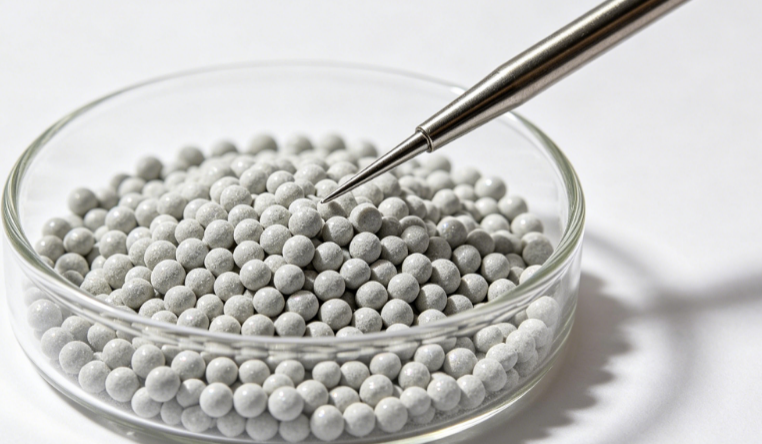
Physical properties for granular/liquid fertilizers – For solids: particle size distribution (sieve analysis), moisture (Karl Fischer or loss on drying), pH of 1% solution, electrical conductivity (EC). For liquids: density, viscosity, pH, and sediment content.
Technical Performance – Detection Limits & Typical Ranges
The table below summarizes our analytical scope for trace element fertilizers, with typical limits and applications.
| Analyte / Parameter | Analytical Method | Typical Detection Limit (mg/kg) | Application / Use |
|---|---|---|---|
| Zinc (Zn), Copper (Cu), Iron (Fe), Manganese (Mn) | ICP‑OES after acid digestion
|
0.5–2 ppm (ICP‑OES); 0.01 ppm (ICP‑MS)
|
Verify label claims (e.g., “contains 5% Zn”) and homogeneity
|
| Boron (B) | ICP‑OES (axial view) or colorimetry
|
1 ppm (ICP‑OES)
|
Critical for fruit set and root development; detect deficiency or toxicity
|
| Molybdenum (Mo) | ICP‑MS (high sensitivity)
|
0.02 ppm
|
Mo is required in very low amounts (0.001‑0.01%); over‑application can harm livestock
|
| Chlorine (Cl) | Ion chromatography or ICP‑MS (with appropriate dilution)
|
5 ppm
|
Monitor Cl in sensitive crops (e.g., avocado, tobacco)
|
| Nickel (Ni), Cobalt (Co), Selenium (Se) | ICP‑MS
|
0.01‑0.05 ppm
|
Emerging micronutrients – required in minute amounts, toxic if excessive
|
| Arsenic (As), Cadmium (Cd), Lead (Pb), Mercury (Hg) | ICP‑MS (Hg: cold vapor AAS)
|
As 0.05, Cd 0.01, Pb 0.05, Hg 0.005 ppm
|
Regulatory compliance for fertilizer safety (heavy metal limits)
|
| Total N, P, K | TKN (N), ICP‑OES (P, K)
|
0.02% (N), 0.01% (P/K)
|
Complete NPK labeling for multinutrient blends
|
All results are reported on an as‑received and dry‑weight basis with full uncertainty (k=2). We follow official methods: AOAC 975.03 (Zn, Cu, Fe, Mn), AOAC 984.27 (Mo), EPA 3052 (microwave digestion), and ISO 17025 protocols.
Why Our Trace Element Fertilizer Testing Service Excels
Routine fertilizer testing often suffers from incomplete panels, poor detection limits for molybdenum or selenium, and lack of chelate availability data. Our service overcomes these limitations through:
1. Full spectrum analysis from one digestion – We use a single microwave‑assisted acid digestion (HNO₃/H₂O₂) followed by simultaneous ICP‑OES and ICP‑MS measurement. This provides >25 elements – including all regulated micronutrients, macronutrients, and toxic metals – from the same sample, saving you time and cost compared to separate methods.
2. Trace level accuracy for demanding elements – Molybdenum and selenium are often present at <10 ppm but critical for crop quality. Our ICP‑MS achieves 0.02 ppm detection for Mo and 0.01 ppm for Se, far below conventional ICP‑OES limits. We also use collision/reaction cell technology to remove polyatomic interferences (e.g., ArCl on As, ArO on Fe) so that even trace contaminants are accurately quantified.
3. Bioavailability assessment (chelated / water‑soluble fraction) – For EDTA or DTPA chelated fertilizers, we offer a sequential extraction: water‑soluble fraction (immediately available) and DTPA‑extractable fraction (plant‑available pool). We report the percentage of each micronutrient in available form, helping you predict field efficacy – not just total content.
4. High throughput and fast turnaround – Standard complete analysis (12 micronutrients + NPK + heavy metals + pH/moisture) for up to 20 samples takes 7‑9 business days. For urgent batch release, we offer a 48‑hour express service (1‑5 samples) at a modest premium.
5. Low sample requirement & multiple forms accepted – We require only 10 grams of solid fertilizer (or 50 mL of liquid). We accept powders, granules, pastilles, water‑soluble crystals, suspension concentrates, and clear liquids. We also handle coated or slow‑release formulations by adapting extraction procedures.
6. Regulatory expertise and customized reporting – Our team stays current on global fertilizer regulations: EU Fertilising Products Regulation (2019/1009), AAFCO (US), IS 15915 (India), GB/T 23349 (China). We can tailor your report to include only the parameters required for specific market access, with limit comparisons and pass/fail statements. For exporters, we provide certificates of analysis (COA) in required formats.
7. Quality assurance and sample stability – We run certified reference materials (e.g., NIST SRM 1515 Apple Leaves for micronutrients, in‑house fertilizer matrix CRMs) with every batch. For hygroscopic or sensitive fertilizers, we store and sub‑sample in a controlled humidity chamber (45% RH) and report moisture content separately to avoid bias.
8. Interpretative support for agronomists – Our report does not stop at numbers. We provide a comparison table showing your results against label claims, regulatory maximum allowable limits (e.g., EU limits for Cd in P fertilizers), and typical agronomic sufficiency ranges. For out‑of‑spec results, we offer free 15‑minute expert consultation to discuss potential causes (e.g., segregation, contamination, chelate instability).
Ready to Verify Your Trace Element Fertilizer?
Whether you are a manufacturer seeking batch certification, a distributor ensuring import compliance, or a large‑scale grower verifying purchased fertilizers, our trace element compound fertilizer testing service delivers precise, actionable data. Request a testing kit by contacting us – we will send a prepaid shipping label and sampling instructions. Results are delivered via a secure online portal. Email lab@agritest.com or call +1 (800) 959‑2292 to begin. We guarantee fast, accurate, and fully documented results that help you produce and use better fertilizers.