Reasons for choosing our testing services
ZHONGXI Testing has obtained inspection qualification certifications from multiple countries and regions worldwide. We possess a senior testing team and advanced testing methods, providing independent, impartial, and professional third-party verification services for global carbon projects.

Internationally recognized authority
Certified by multiple international standards such as CNAS, VCS, and GS, with reports universally applicable worldwide.

Global service capability
Covering 140+ countries and regions, it supports on-site detection and remote verification in multiple languages.

Professional experimental methods
Adopt standard experimental methods to ensure accurate and reliable data.
Ammonium Paratungstate (APT) Crystallization Mother Liquor Analysis – Maximizing Tungsten Recovery & Impurity Control
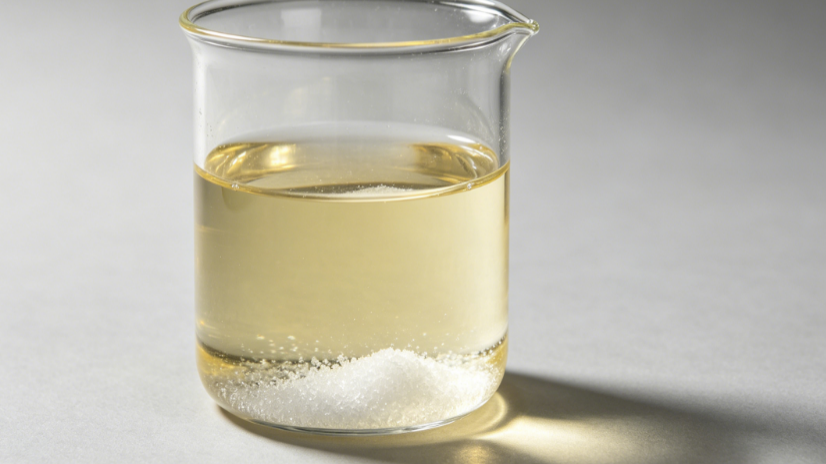
If you are searching for APT crystallization mother liquor testing, you are likely aiming to evaluate the composition of the residual solution after ammonium paratungstate crystallization – whether to recover unrecovered tungsten, monitor impurity build‑up, optimize the crystallization yield, or comply with environmental discharge limits. Our service provides a comprehensive, multi‑technique chemical fingerprint of your mother liquor, measuring total and soluble tungsten, key impurities (Mo, P, As, Si, Fe, Ca, K, Na, Cl⁻, NH₄⁺, SO₄²⁻), free ammonia, and pH. We deliver actionable data to improve tungsten recovery efficiency, maintain product purity, and reduce waste treatment costs – all from a single 50 mL sample.
What We Determine – From Major Tungsten Species to Ultra‑Trace Impurities
APT crystallization mother liquor is a complex solution containing tungstate/polytungstate species, ammonium ions, and various impurities that can interfere with recycling or cause scaling. Our analytical platform integrates seven complementary techniques to resolve every critical parameter with exceptional accuracy:
Tungsten (total & soluble forms) – ICP‑OES (after appropriate dilution in 2% NH₃ or alkaline medium) measures total tungsten concentration from 0.5 to 100 g/L with accuracy ±0.5% relative. We also differentiate soluble tungsten (0.45 µm filtered) from colloidal/particulate W. For low‑level residual W (<10 mg/L), we use ICP‑MS achieving detection limit 0.01 mg/L.
Ammonium ion (NH₄⁺) & free ammonia (NH₃) – Ion chromatography (IC) with conductivity detection quantifies NH₄⁺ over 0.1–50 g/L (linear range). Free NH₃ is calculated from total NH₄⁺ and pH using the Henderson‑Hasselbalch equation (pKb = 4.75 at 25°C). We also offer distillation‑titration (Kjeldahl) as a reference method, LOD 0.5 mg/L as N.
Key impurity elements (Mo, P, As, Si, Fe, Ca, K, Na) – ICP‑OES for major impurities (mg/L to g/L) and ICP‑MS for trace impurities down to 0.001–0.1 mg/L. Special attention is given to molybdenum, which co‑crystallizes with APT and degrades tungsten metal quality; our detection limit for Mo is 0.005 mg/L.
Anions: chloride (Cl⁻), sulfate (SO₄²⁻), nitrate (NO₃⁻) – Ion chromatography with suppressed conductivity, detection limits 0.05 mg/L for Cl⁻ and SO₄²⁻. These anions can cause corrosion in recycling equipment and affect final tungsten powder morphology.
pH, conductivity, and total dissolved solids (TDS) – pH measured with a calibrated glass electrode (±0.02 units). Conductivity (µS/cm) and TDS (calculated) are reported. Free acidity/alkalinity is determined by potentiometric titration.
Residual organic carbon (TOC) & COD – For mother liquors that contain organic additives or degradation products, we offer high‑temperature TOC combustion (LOD 0.5 mg/L) and chemical oxygen demand (COD) by dichromate method (range 10–50,000 mg/L).
Density & suspended solids – Density measured with a digital density meter (±0.0001 g/mL). Suspended solids (SS) are determined by gravimetric filtration (0.45 µm membrane), detection limit 1 mg/L.
Technical Performance – Detection Limits & Analytical Range
The table below summarizes our key analytical capabilities for APT crystallization mother liquor samples.
| Parameter / Analyte | Analytical Method | Detection Range & Limit (LOD) | Typical Mother Liquor Concentration |
|---|---|---|---|
| Tungsten (W) – total
|
ICP‑OES / ICP‑MS
|
0.01–100 g/L; LOD 0.01 mg/L (ICP‑MS)
|
5–50 g/L (before recycling)
|
| Ammonium (NH₄⁺)
|
Ion chromatography / Kjeldahl
|
0.1–50 g/L; LOD 0.02 g/L
|
10–80 g/L
|
| Molybdenum (Mo)
|
ICP‑MS / ICP‑OES
|
0.005–200 mg/L; LOD 0.005 mg/L
|
0.1–20 mg/L
|
| Phosphorus (P), Arsenic (As)
|
ICP‑MS
|
0.01–100 mg/L; LOD 0.01 mg/L
|
Typically 0.1–5 mg/L
|
| Chloride (Cl⁻) & Sulfate (SO₄²⁻)
|
Ion chromatography
|
0.05–2000 mg/L; LOD 0.05 mg/L
|
50–1000 mg/L
|
| Iron (Fe), Calcium (Ca), Sodium (Na)
|
ICP‑OES / ICP‑MS
|
0.01–1000 mg/L; LOD 0.01 mg/L
|
1–200 mg/L
|
| pH
|
Potentiometric (glass electrode)
|
0–14 pH ±0.02
|
8.0–10.5 (typical alkaline mother liquor)
|
| Total organic carbon (TOC)
|
Combustion NDIR
|
0.5–5000 mg/L; LOD 0.5 mg/L
|
10–500 mg/L (if organic additives used)
|
All results are reported with expanded measurement uncertainty (k=2) and are traceable to NIST‑traceable standards. We follow ASTM D5673, ISO 11885, and EPA 300.0 methods where applicable.
Why Choose Our APT Mother Liquor Testing Service?
Routine wet chemical methods for mother liquor analysis are slow, consume large sample volumes, and often miss trace impurities that poison downstream tungsten recovery. Our service offers distinct, practical advantages:
1. Ultra‑trace impurity detection – Using ICP‑MS with collision cell technology, we achieve sub‑ppb detection for Mo, P, As, Si, and heavy metals. This is critical because even 0.5 mg/L Mo in recycled mother liquor can contaminate the final APT product. We also quantify P and As down to 0.01 mg/L – well below the detection limit of traditional colorimetric methods.
2. Simultaneous multi‑element & multi‑ion analysis – One 50 mL sample yields a complete profile: tungsten, ammonium, key cations, key anions, pH, conductivity, and TOC. We do not require separate shipments for different analyses, saving you time and logistics cost. Our integrated report cross‑checks charge balance (cations vs anions) to validate data quality.
3. High throughput & rapid turnaround – Standard full characterization (W, NH₄⁺, Mo, P, As, Cl⁻, SO₄²⁻, Fe, Ca, pH, TDS) for up to 20 samples takes 7‑10 business days. For process control or urgent troubleshooting, we offer a 24‑hour express service (W, NH₄⁺, Mo, Cl⁻, pH) on up to 5 samples.
4. Low sample volume & on‑site kit available – We require only 10‑20 mL of mother liquor for the complete analysis (preserved with 1% HNO₃ or as received). We provide pre‑labeled, acid‑washed vials and a return shipping box for safe transport of alkaline solutions.
5. Recovery optimization support – Our report includes a tungsten recovery potential calculation based on the measured W concentration, solubility product, and ammonium level. We advise on how to adjust pH, temperature, or evaporation ratio to increase crystallization yield. For facility managers, we calculate the economic value of tungsten remaining in the mother liquor (based on current APT price) – turning analytical data into actionable savings.
6. Scaling and fouling prediction – High levels of Ca²⁺, Mg²⁺, or SiO₃²⁻ can cause scaling in evaporators. We provide a scaling tendency index (Langelier Saturation Index or custom for tungstate systems) and, using SEM‑EDS on a filtered residue, identify the composition of past scale. This helps you adjust neutralizing agents or install anti‑scaling equipment before costly downtime occurs.
7. Environmental compliance reporting – If you discharge treated mother liquor to municipal sewers or natural waters, we measure all parameters required by local regulations: pH, COD, NH₃‑N, total W, Mo, As, Cl⁻, and heavy metals. Our report includes a comparison table with regulatory limits (e.g., China GB 8978, EU Industrial Emissions Directive) and a pass/fail statement.
8. Free expert consultation – Our tungsten process specialists (average 15 years in hydrometallurgy) provide a free 30‑minute video call to interpret your results. We will highlight unexpected impurity correlations (e.g., if Cl⁻ is high, maybe HCl was used for pH adjustment) and recommend corrective actions – such as adding a magnesium salt to precipitate As and P before recycling.
Ready to Analyze Your APT Crystallization Mother Liquor?
Whether you need to maximize tungsten recovery, reduce impurity carryover, or meet environmental discharge limits, our APT mother liquor testing service delivers precise, actionable results. Request a free quote by sending us your sample volume, expected W concentration, and any specific impurities of concern. We will respond within 24 hours with a custom analytical plan and a firm price. Volume discounts and long‑term monitoring agreements are available. Email tungsten@hydrometlab.com or call +1 (720) 555‑APT1. Let us help you turn your mother liquor from a waste stream into a resource.