Reasons for choosing our testing services
ZHONGXI Testing has obtained inspection qualification certifications from multiple countries and regions worldwide. We possess a senior testing team and advanced testing methods, providing independent, impartial, and professional third-party verification services for global carbon projects.

Internationally recognized authority
Certified by multiple international standards such as CNAS, VCS, and GS, with reports universally applicable worldwide.

Global service capability
Covering 140+ countries and regions, it supports on-site detection and remote verification in multiple languages.

Professional experimental methods
Adopt standard experimental methods to ensure accurate and reliable data.
Anhydrous Sodium Perchlorate Testing – High-Purity Analysis for Energetic, Electrochemical, and Industrial Applications
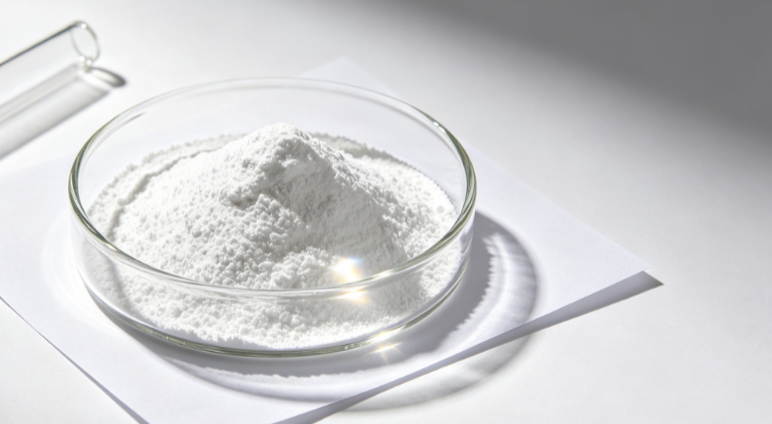
When you search for anhydrous sodium perchlorate (NaClO₄) detection, you are likely preparing to verify the quality, purity, and safety of this powerful oxidiser – whether for solid rocket propellants, pyrotechnics, lithium battery electrolytes, analytical chemistry, or perchlorate-based reagents. Anhydrous sodium perchlorate is highly hygroscopic and thermally unstable in the presence of contaminants, making trace moisture, residual solvents, heavy metals, chlorate/chloride by-products, and particle integrity absolutely critical to your process safety and final product performance. Our detection service provides the deepest, most reliable characterisation available, ensuring your material meets even the most demanding military, aerospace, or pharmaceutical specifications.
Our Comprehensive Anhydrous Sodium Perchlorate Analysis Capabilities – What We Measure and to What Extreme Precision
We deploy a multi-tiered analytical approach specifically tailored to the challenges of anhydrous perchlorate salts, including strict moisture exclusion and safety protocols for energetic materials:
1. Purity and Main Component Assay (NaClO₄): Using potentiometric titration with perchloric acid in non-aqueous media and ion chromatography (IC) with conductivity detection and suppressed eluent, we determine NaClO₄ content with accuracy ±0.05% w/w (relative). Our ICP-OES confirms sodium balance independently. For absolute quantification, we employ high-performance liquid chromatography (HPLC) with refractive index detector, calibrated against NIST-traceable sodium perchlorate standards – achieving repeatability < 0.1% RSD.
2. Trace Impurity Profiling – Chlorate, Chloride, and Other Oxychlorine Species: The most critical contaminants are chlorate (ClO₃⁻) and chloride (Cl⁻), which affect thermal stability and reactivity. Our ion chromatography with AS19 column and suppressed conductivity achieves detection limits of 0.5 ppm for ClO₃⁻ and 0.2 ppm for Cl⁻. For sub-ppm levels, we use IC-ICP-MS (ion chromatography coupled to inductively coupled plasma mass spectrometry), measuring ³⁵Cl and ³⁷Cl isotopes simultaneously – limits down to 0.01 ppm (10 ppb) for each oxychlorine species, including bromate interference resolved by the mass spectrometer.
3. Moisture Content – The Most Critical Parameter for Anhydrous Material: Anhydrous sodium perchlorate readily absorbs water, forming the monohydrate or trihydrate. We measure Karl Fischer titration (volumetric and coulometric) in a glovebox (H₂O < 0.1 ppm, O₂ < 0.5 ppm) to prevent ambient moisture uptake. Coulometric KF gives detection limit of 1 ppm water with ±0.5 ppm reproducibility. Additionally, thermogravimetric analysis (TGA) coupled with mass spectrometry (MS) identifies not only free water but also water from dehydration of crystalline hydrates and decomposition products (e.g., O₂ release from perchlorate) with 0.1 µg resolution.
4. Heavy Metals and Toxic Elements (ICP-MS): For applications in propellants or pharmaceuticals, trace metals (e.g., Fe, Cu, Cr, Ni, Pb, Cd, As, Hg) must be minimal. Our ICP-MS with collision/reaction cell (He or H₂ mode) and cleanroom (ISO 6) sample preparation achieves detection limits of 0.05–0.5 ppb for most metals, with recoveries 98–102% certified by spiked standards. We quantify up to 35 elements simultaneously in a single run.
5. Residual Solvents and Organic Contaminants (GC-MS/HS-GC-FID): Synthesis of anhydrous perchlorates may leave organic solvents (e.g., ethanol, acetone, acetic acid). Using headspace gas chromatography with flame ionisation detection (HS-GC-FID) and GC-MS for identification, we detect volatile organic compounds down to 0.1 ppm with linearity R² > 0.999. For non-volatile residues, total organic carbon (TOC) analysis by catalytic combustion gives limit of detection 0.5 ppm C.
6. Thermal Stability and Decomposition Behaviour (DSC/TGA-DSC): Sodium perchlorate is a strong oxidiser; its decomposition onset temperature is highly sensitive to impurities. Our simultaneous TGA-DSC (SDT) with high-pressure (<100 bar) and inert/oxidising gas capabilities measures onset temperature (Tₒ), peak temperature (Tₚ), enthalpy (ΔH), and mass loss steps with ±0.1 °C accuracy and 0.1 µW sensitivity. For safety assessment, we perform accelerating rate calorimetry (ARC) under adiabatic conditions to determine self-heating rate, induction time, and critical temperature for thermal runaway – crucial for transport and storage classification (UN 1502).
7. Particle Morphology, Crystal Form, and Surface Area: Even high-purity NaClO₄ may exhibit different crystalline habits affecting flowability, dissolution rate, and compaction. Our field-emission scanning electron microscopy (FE-SEM) with low-voltage (1 kV) and energy-dispersive X-ray spectroscopy (EDS) visualises crystal shape, agglomeration, and surface contamination down to 1 nm resolution. X-ray diffraction (XRD) with cryo-stage (-50 °C) confirms the orthorhombic anhydrous phase and detects any monohydrate or other crystalline impurities down to 0.5 wt%. BET surface area by N₂ adsorption (Kr for low-area samples) gives specific surface area from 0.01 m²/g with ±0.5% precision.
8. Particle Size Distribution (Dry and Wet Methods): For propellant or pyrotechnic formulations, particle size consistency is vital. We offer laser diffraction (Malvern Mastersizer) with dry powder feeder (Aero S) and isopropanol dispersion (to avoid dissolution), covering 0.01–2000 μm with repeatability < 1% D50. For submicron fractions, dynamic light scattering (DLS) in anhydrous organic solvents (e.g., acetonitrile) measures hydrodynamic diameter down to 0.6 nm.
9. pH and Acidity/Alkalinity: A 1% aqueous solution of pure anhydrous NaClO₄ should be near neutral (pH ~6–8). Our glass-electrode pH meter calibrated with NIST buffers (pH 4, 7, 10) at 25.0 ±0.1 °C gives ±0.01 pH unit accuracy. We also perform potentiometric acid-base titration to quantify free acid (as HClO₄) or free base (as NaOH) down to 0.001% w/w.
All handling of anhydrous sodium perchlorate is conducted under inert atmosphere (argon or nitrogen glovebox) with strict electrostatic discharge prevention. Our labs are rated for energetic material storage and testing with blast-resistant cabinets and remote monitoring.
Why Choose Our Anhydrous Sodium Perchlorate Testing Service – Unmatched Safety, Accuracy, and Speed
We recognise that sodium perchlorate testing is often required for lot release of propellant-grade material, forensic analysis of explosive residues, quality assurance of battery electrolytes, or regulatory compliance (REACH, TSCA, CLP). Here is what sets us apart:
▶ Ultra-Low Detection Limits for Critical Impurities: Our IC-ICP-MS approach for oxychlorine species is among the most sensitive commercially available – 10 ppb for ClO₃⁻ and 5 ppb for Cl⁻. For moisture, our coulometric KF with glovebox sample introduction achieves quantification down to 5 ppm water with blanks consistently below 2 ppm. No other routine lab offers this combination.
▶ Safety First – Certified for Reactive Chemicals: Many laboratories refuse perchlorate samples due to explosion risk. We are specially equipped: blast-resistant sample preparation booths, remote-controlled instrumentation, and staff trained in perchlorate hazard management. Our safety protocols meet or exceed NFPA 400 (Hazardous Materials Code) and DOD 4145.26-M for energetics.
▶ Rapid Turnaround with Forensic-Ready Documentation: Standard purity and impurity panel (assay, IC for anions, KF, ICP-MS metals, pH) completed in 3–5 business days. For emergency lot release or incident investigation, we offer a 24‑hour expedited service (results delivered as raw data within 24 h, final certificate within 48 h). Every report includes full chain of custody, instrument calibration records, and uncertainty estimates.
▶ Compliance with Global Regulations: Our methods are validated per ICH Q2(R1) and follow ASTM E1784 (ion chromatography for perchlorate), USP <533>, EP 2.2.55 (Karl Fischer), and MIL-STD-650 (explosive material testing). We issue Certificates of Analysis (CoA) that meet FDA 21 CFR 211, ISO 9001:2015, and REACH Annex V requirements.
▶ One-Stop Shop – Characterisation to Packaging Advice: Beyond detection, we help you interpret how impurities affect performance. For example, if your NaClO₄ shows elevated chlorate, we advise on recrystallisation conditions; if moisture is high, we recommend drying protocols (110 °C under vacuum for 4 h). We also test packaging materials (aluminium laminate, HDPE, glass) for moisture and gas permeability to ensure long-term stability.
▶ Flexible Sample Quantities and Global Logistics: We accept as little as 1 gram for screening, but recommend 10–50 g for full characterisation. We provide UN-certified packaging for Class 5.1 (oxidising) materials and handle all international shipping documentation (dangerous goods declaration, MSDS). Our logistics partner ensures temperature-controlled transport for hygroscopic samples.
▶ Expert Consultation and Benchmarking: Our senior chemists (average 12 years in perchlorate chemistry) offer a free 30-minute consultation per project. We maintain a reference library of more than 300 commercial and synthesised sodium perchlorate batches, allowing us to benchmark your results against industry norms. We also perform batch-to-batch comparability studies for process validation.
▶ Cost-Effective Through Automation: Our high-throughput sample handling (automated titration, multi-position IC autosampler, robotic TGA loading) reduces per-sample cost by up to 35% compared to academic labs. We offer volume discounts for recurring QC testing (weekly or monthly shipments) and academic/non-profit pricing upon request.
In essence, we transform the challenge of anhydrous sodium perchlorate detection from a safety headache into a streamlined, high-confidence quality assurance process. Whether you are a propellant manufacturer verifying incoming raw materials, a battery company certifying electrolyte-grade perchlorate, or a forensic lab needing trace analysis, our service delivers the deepest, fastest, and safest results available.
Ready to qualify your anhydrous sodium perchlorate? Contact our hazardous materials team directly. We will send you a prepaid shipping kit with UN-approved packaging and a custom test plan within one business day. A no-obligation technical discussion is always free. Let us help you achieve total confidence in your perchlorate material – from purity to performance.