Reasons for choosing our testing services
ZHONGXI Testing has obtained inspection qualification certifications from multiple countries and regions worldwide. We possess a senior testing team and advanced testing methods, providing independent, impartial, and professional third-party verification services for global carbon projects.
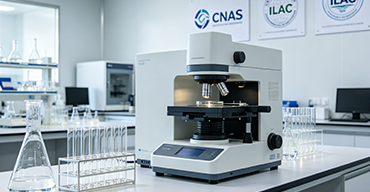
Internationally recognized authority
Certified by multiple international standards such as CNAS, VCS, and GS, with reports universally applicable worldwide.

Global service capability
Covering 140+ countries and regions, it supports on-site detection and remote verification in multiple languages.
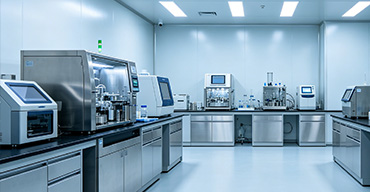
Professional experimental methods
Adopt standard experimental methods to ensure accurate and reliable data.
Colloidal Silica Characterisation – High‑Resolution Analysis for Dispersion Stability, Purity, and Performance
When you search for colloidal silica detection, you are likely preparing to qualify your colloidal silica dispersion – whether for chemical mechanical planarisation (CMP) slurries, high‑temperature binders, catalyst supports, precision coatings, or pharmaceutical excipients. The performance of colloidal silica depends critically on particle size distribution, surface chemistry (silanol density), aggregation state, metal ion contamination, zeta potential, and long‑term colloidal stability. Our analytical service delivers the deepest possible characterisation of your colloidal silica, from nanoparticle tracking to ultratrace elemental analysis, ensuring consistent process outcomes and regulatory compliance.
Our Comprehensive Colloidal Silica Testing Capabilities – What We Measure and at What Extreme Precision
We deploy an integrated multi‑instrument platform specifically optimised for silica colloids in aqueous or organic media, covering particle size from 1 nm to 100 µm and solids content from 0.1% to 50% w/w:
1. Particle Size Distribution – From Single Nanoparticles to Agglomerates: For monodisperse colloidal silica, our dynamic light scattering (DLS) with backscatter detection (173°) and cumulants/NNLS analysis delivers Z‑average diameter with ±0.1 nm repeatability and polydispersity index (PDI) resolution ±0.002. We also provide electrophoretic light scattering (ELS) for zeta potential simultaneously. For higher resolution, nanoparticle tracking analysis (NTA) visualises individual particles from 10 nm to 1000 nm, giving number‑weighted size distributions and concentration (particles/mL) with CV < 5%. For larger aggregates or micron‑sized silica, laser diffraction (LD) with wet dispersion (Mie theory, refractive index 1.45) covers 0.01–2000 µm, accuracy ±0.5% on D50.
2. Shape and Morphology – TEM, SEM, and Cryo‑Electron Microscopy: We image individual silica nanoparticles using transmission electron microscopy (TEM) at 80–300 kV with 0.2 nm point resolution, measuring primary particle size, sphericity, and necking. For soft aggregates in native liquid, cryo‑TEM (vitrified sample) preserves the hydrated state – ideal for detecting weak gel networks. Field‑emission SEM (FE‑SEM) on dried deposits provides surface topology at 1 nm resolution. Automated image analysis (over 10,000 particles) gives Feret diameters, aspect ratios, and circularity.
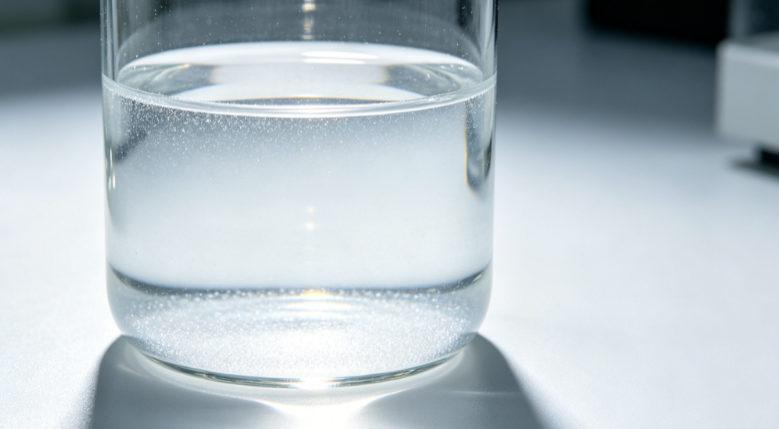
3. Surface Chemistry – Silanol Density, Dehydroxylation, and Surface Modifications: Colloidal silica’s reactivity is governed by ≡Si–OH (silanol) groups. We quantify silanol density via thermogravimetric analysis (TGA) coupled with mass spectrometry (MS) for water evolution (dehydroxylation at 200–600 °C), detection limit 0.01 mmol/g. For surface grafting (e.g., silanes), we use X‑ray photoelectron spectroscopy (XPS) to measure C, N, and Si bonding states with ±0.1 at% sensitivity and depth profiling (Ar⁺ cluster). Diffuse reflectance infrared Fourier transform spectroscopy (DRIFTS) identifies isolated vs. vicinal silanols, with resolution 1 cm⁻¹.
4. Zeta Potential and Colloidal Stability over pH and Ionic Strength: Using phase analysis light scattering (PALS) on a Zetasizer Ultra, we measure electrophoretic mobility converted to zeta potential via Smoluchowski or Henry models. Range -200 mV to +200 mV, reproducibility ±0.5 mV. We perform automated pH titrations (2–12) and conductivity titrations (up to 200 mS/cm) to determine the isoelectric point (IEP) and critical coagulation concentration (CCC). Full DLS stability screening at elevated temperatures (25–85 °C) provides aggregation kinetics (hydrodynamic radius vs. time).
5. Metal Contaminants (Na, Al, Fe, Ca, Mg, Ti, Cu, Ni, etc.): Ultra‑high purity colloidal silica for semiconductor CMP requires total metals < 1 ppm each. Our ICP‑MS (inductively coupled plasma mass spectrometry) with collision/reaction cell (He, H₂, or NH₃ modes) achieves detection limits of 0.02–0.5 ppb for 40+ elements. For sodium (often the dominant cation from silicate precursors), we also use ion chromatography (IC) with conductivity detection (LOD 1 ppb). Sample digestion in class 10 cleanroom with high‑purity HF/HNO₃ ensures blank control < 0.1 ppb per element.
6. Anion Impurities – Chloride, Sulfate, Nitrate, Phosphate: These anions affect CMP polishing rates and colloid aggregation. Our ion chromatography (IC) with suppressed conductivity and AS19 or AS22 columns provides LOD 0.1–0.5 ppm for each anion. For ultra‑trace requirements (< 0.1 ppm), we use IC‑ICP‑MS coupling, measuring ³⁵Cl and ³⁵S with sub‑ppb detection.
7. Solids Content, Specific Gravity, and Viscosity: Simple yet critical. Gravimetric analysis (110 °C to constant mass) gives solids content ±0.1% w/w. Density meter (oscillating U‑tube) provides specific gravity at 20 °C with ±0.0001 g/cm³. Rheology measurement (cone‑plate or concentric cylinder) at shear rates 0.1–1000 s⁻¹ yields viscosity (mPa·s) with ±1% accuracy and identifies Newtonian vs. shear‑thinning behaviour (especially for high‑silica gels).
8. Specific Surface Area and Porosity (BET): For colloidal silica powders (dried), we perform N₂ physisorption at 77 K (Micromeritics 3Flex) giving BET surface area from 0.05 to 1500 m²/g with ±0.5% repeatability. t‑Plot or DFT analysis quantifies micro‑ and mesoporosity – important for catalyst supports. For colloidal dispersions, we offer surface area by Sears titration (NaOH consumption) with ±2 m²/g.
9. Residual Monomers and Organics (TOC, GC‑MS): Organic residues (e.g., ammonium stabilisers, surfactants) are quantified by total organic carbon (TOC) with catalytic combustion and NDIR detection – LOD 0.1 ppm C. For volatile species, headspace GC‑MS identifies >30 solvent residues down to 1 ppm.
10. pH and Electrical Conductivity: Calibrated glass electrode (NIST buffers) at 25.0±0.1 °C, ±0.01 pH. Conductivity (pocket meter or lab probe) from 0.001 µS/cm to 2000 mS/cm with ±0.5%. These directly correlate with surface charge and ionic strength.
All measurements are performed in ISO 5 cleanrooms for trace metal work, with inert gas blanketing for oxygen‑sensitive samples. We also support customer‑specified dilution matrices (e.g., DI water, pH buffers, electrolyte solutions).
Why Our Colloidal Silica Testing Service Stands Out – Unmatched Depth, Speed, and Application Expertise
We understand that colloidal silica is often a mission‑critical component in semiconductor CMP slurries (for advanced nodes down to 3 nm), precision polishing of optics, high‑temperature investment casting, and stabilised silica sols for paper coatings. Here is what makes us the preferred partner:
▶ Trace Metal Sensitivity That Meets Semiconductor Requirements: Most commercial labs offer ICP‑MS detection at 1 ppb. Our cleanroom sample handling and sector‑field ICP‑MS (SF‑ICP‑MS) achieves detection limits of 0.01 ppb for Na, Al, Fe, Cu, and Ni – essential for qualifying CMP slurries for 5 nm node fabs. We report total metals and dissolved metals (after ultrafiltration) separately.
▶ Accurate Size Characterisation of both Primary Particles and Aggregates: Many labs report only DLS Z‑average, which is biased towards larger aggregates. We routinely combine DLS, NTA, TEM, and LD to distinguish true primary particle size from reversible and irreversible agglomerates. Our asymmetric flow field‑flow fractionation (AF4) coupled to multi‑angle light scattering (MALS) delivers absolute size distributions without model assumptions, covering 1 nm to 10 µm in a single run – ideal for polydisperse or fragile aggregates.
▶ Stability Prediction Beyond Simple Zeta Potential: We go beyond single‑point zeta measurements by providing automated DLS stability screening over 24–72 hours at controlled temperatures (4 °C, 25 °C, 40 °C, 60 °C). This predicts shelf life and aggregation under real storage conditions. For formulators, we offer interactive zeta potential vs. pH maps to identify the optimal pH for maximum repulsion.
▶ Rapid Turnaround with Process‑Oriented Reporting: Standard particle size + zeta potential + % solids + pH + conductivity can be completed in 24 hours. A full metals + anions + TEM + BET package takes 3–5 business days. For urgent line stoppage at a CMP fab, we provide a priority 12‑hour express service (results by phone followed by certificate). Our reports include clear pass/fail criteria against your specification (e.g., SEMI C66‑0321 for silica slurries).
▶ Compliance and Data Integrity: Our quality system is ISO/IEC 17025:2017 accredited. We follow ASTM E2865 (DLS), ASTM E3246 (NTA), ASTM D7649 (zeta potential), and SEMI C3.6 (metals by ICP‑MS). Data are managed under 21 CFR Part 11 compliant software with full audit trails. We provide Certificates of Analysis suitable for FDA, IATF 16949, or REACH submissions.
▶ Global Logistics and Safe Handling: Colloidal silica is shipped as aqueous dispersion (non‑hazardous for most concentrations). We provide prepaid return labels and triple‑walled HDPE containers. For high‑pH (>11) or concentrated (>40%) silica, we comply with IMDG/ADR Class 8 shipping. Our team handles all customs paperwork.
▶ Expert Interpretation for Formulation and Troubleshooting: Our scientists have over 15 years of experience in sol‑gel chemistry and colloid science. When your colloidal silica shows unexpected aggregation or polishing defects, we help pinpoint the root cause: e.g., sodium bridging induced by pH drift, or metal‑catalysed gelation. We also assist in benchmarking alternative suppliers or developing internal QC methods for your factory.
▶ Cost‑Effective with Volume Flexibility: Single samples are welcome. For recurring QC (e.g., daily or weekly slurries), we offer reduced rates per batch and dedicated instrument slots. Academic and non‑profit institutions receive a 20% discount upon verification.
In summary, we deliver the most rigorous and complete colloidal silica characterisation available from a single laboratory. Whether you need routine lot release or deep forensic analysis of a failed batch, our combination of ultratrace metal detection, multi‑technique particle sizing, and colloid stability expertise ensures you get reliable, actionable data.
Ready to qualify your colloidal silica? Submit a sample submission form via our secure portal. We need 10 mL of dispersion or 5 g of powder for standard testing. You will receive a custom test plan and quote within one business day. A free 30‑minute technical consultation is included with every project. Let us help you stabilise, optimise, and certify your colloidal silica – from nanoparticle to final application.