Reasons for choosing our testing services
ZHONGXI Testing has obtained inspection qualification certifications from multiple countries and regions worldwide. We possess a senior testing team and advanced testing methods, providing independent, impartial, and professional third-party verification services for global carbon projects.

Internationally recognized authority
Certified by multiple international standards such as CNAS, VCS, and GS, with reports universally applicable worldwide.

Global service capability
Covering 140+ countries and regions, it supports on-site detection and remote verification in multiple languages.

Professional experimental methods
Adopt standard experimental methods to ensure accurate and reliable data.
Ultra‑Precision Titanium Nitride (TiN) Powder Analysis – Full Characterisation for High‑Performance Coatings, Cutting Tools & Electronics
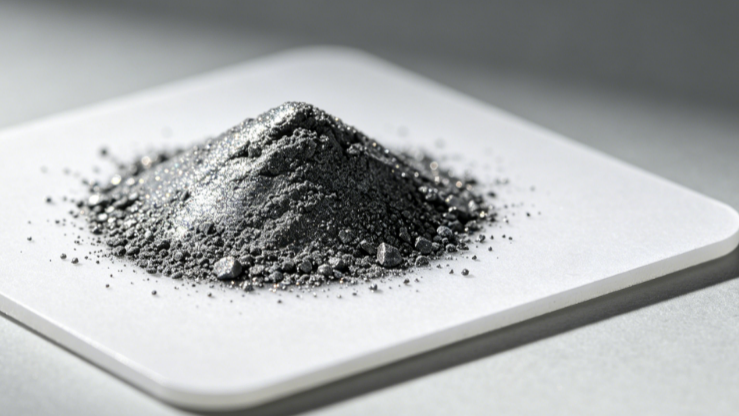
When you search for titanium nitride powder detection, you are likely preparing to qualify your TiN powder – whether for physical vapor deposition (PVD) targets, wear‑resistant coatings, decorative finishes, dispersion strengthening in composites, or as a conductive additive in batteries. Titanium nitride (TiN, CAS 25583‑20‑4) offers exceptional hardness (HV ~1800‑2400), high melting point (~2950 °C), electrical conductivity, and gold‑coloured appearance. However, its performance is critically dependent on phase purity, oxygen/nitrogen stoichiometry (TiNₓ), particle size distribution, free carbon content, metallic impurities, and surface oxidation. Our testing service delivers the deepest, most precise characterisation available – enabling you to control synthesis, ensure batch consistency, and meet the most demanding industrial specifications.
Our Comprehensive Titanium Nitride Powder Testing Capabilities – From Bulk Chemistry to Nanoparticle Surface Analysis
We deploy a fully integrated, multi‑technique platform specifically optimised for refractory nitride powders, including controlled‑atmosphere sample handling to prevent further oxidation:
1. Phase Purity & Stoichiometry (XRD with Rietveld Refinement): TiN adopts the rock‑salt (B1, NaCl‑type) structure, but deviations from 1:1 stoichiometry (TiN₀.₇ to TiN₁.₂) shift lattice parameters. Our high‑resolution X‑ray diffraction (HR‑XRD) with Cu Kα radiation and a position‑sensitive detector provides Rietveld refinement against standard TiN reference patterns (ICSD 24630). We report phase fraction of TiN (>99.9% achievable), lattice parameter a₀ (typically 4.235–4.245 Å) with ±0.0002 Å precision, and crystalline domain size (Scherrer/Warren‑Averbach) from 5 nm to 200 nm. Secondary phases (TiO₂ anatase/rutile, Ti₂N, TiC, or free Ti) are quantified down to 0.1 wt%. For oxygen‑sensitive samples, we use hermetically sealed, inert‑atmosphere XRD holders.
2. Oxygen & Nitrogen Content (LECO Inert Gas Fusion): The performance of TiN is extremely sensitive to dissolved oxygen (which forms TiO₂ domains) and the N/Ti atomic ratio. Using a LECO ONH836 analyser with nickel‑tin flux and graphite crucible heating to >2500 °C, we measure total oxygen (wt%) and nitrogen (wt%) with accuracy ±0.005% (absolute) and detection limits O ≤ 0.0005%, N ≤ 0.0005%. Samples are prepared in a glovebox (H₂O/O₂ < 0.1 ppm) and directly loaded into the instrument via a sealed autoloader – eliminating atmospheric pick‑up. We also calculate N/Ti atomic ratio from N wt% and Ti wt% (by ICP), giving stoichiometry to ±0.002.
3. Total Carbon & Free Carbon (LECO Combustion vs. Acid Leach): TiN powders can contain both free carbon (graphitic, from precursor) and combined carbon (as TiC solid solution). Our LECO CS744 carbon/sulfur analyser measures total carbon (TC) to ±0.001 wt%. To distinguish free carbon, we perform acid digestion (HF/HNO₃) to dissolve TiN, filter the insoluble residue, and determine carbon content on the residue by combustion – reporting free carbon (graphitic) to ±0.0005%. Combined carbon (TiC) is calculated by difference. This is critical for PVD target sputtering performance.
4. Metallic & Trace Element Impurities (ICP‑MS, GD‑MS, XRF): High‑purity TiN for semiconductor or optical applications requires total metals <100 ppm. Our ICP‑MS (inductively coupled plasma mass spectrometry) with collision/reaction cell and class 5 cleanroom sample preparation (microwave digestion with HF/HNO₃/H₂SO₄) achieves detection limits of 0.01–0.1 ppb for >45 elements, including Fe, Cr, Ni, Cu, Co, Mo, W, Al, Ca, Mg, Na, K. For rapid screening of major impurities (>0.001%), X‑ray fluorescence (XRF) on pressed powders provides non‑destructive analysis ±0.001 wt%. For depth‑resolved surface contamination, glow discharge mass spectrometry (GD‑MS) profiles from 10 nm to 50 µm depth.
5. Particle Size Distribution (Laser Diffraction, DLS, Image Analysis): TiN powders range from <100 nm (nanopowders) to 100 µm (spray‑dried granules). We offer three complementary methods: laser diffraction (Malvern Mastersizer 3000) with dry powder feeder (Aero S) for 0.1–2000 µm, dynamic light scattering (DLS) for 1 nm–10 µm (with non‑invasive backscatter), and static image analysis (Camsizer) for shape descriptors. Typical repeatability on D50 is <0.5%, and we report D10, D50, D90, span, and specific surface area (calculated). For nanoparticles, we also provide BET‑correlated size.
6. Specific Surface Area (BET) & Porosity: For sintered TiN targets or catalyst supports, surface area dictates reactivity. Our automated gas physisorption analyser (N₂ at 77 K) delivers BET surface area from 0.01 m²/g to 3000 m²/g with ±0.5% repeatability. For low‑area coarse powders, krypton adsorption extends down to 0.001 m²/g. We also measure pore volume and pore size distribution (BJH/DFT models, 0.35–100 nm) when relevant.
7. Morphology & Surface Chemistry (SEM‑EDS, TEM, XPS): Field‑emission scanning electron microscopy (FE‑SEM) at 1–10 kV provides high‑resolution images (1 nm) of particle shape, agglomeration, and surface texture. Energy‑dispersive X‑ray spectroscopy (EDS) mapping confirms elemental homogeneity. For nanopowders, transmission electron microscopy (TEM) with selected area electron diffraction (SAED) reveals crystal facets, oxide shells (amorphous TiO₂), and defects at atomic scale (<0.2 nm). X‑ray photoelectron spectroscopy (XPS) with monochromatic Al Kα quantifies surface oxide thickness (through Ti 2p peak deconvolution), nitrogen bonding states (Ti‑N vs. adsorbed N₂), and adventitious carbon contamination, all with ±0.05 eV binding energy accuracy.
8. Mechanical & Physical Properties – Hardness, Density, Flowability: For applications in cutting tools or wear parts, we measure Vickers microhardness (HV₀.₁, HV₀.₂) on pressed and sintered compacts of your TiN powder (20 g pressed at 5 GPa, then sintered at 1400 °C under N₂). True density (helium pycnometry) is measured with ±0.0005 g/cm³ precision – deviations from theoretical density (5.43 g/cm³ for stoichiometric TiN) indicate porosity or oxygen substitution. Hall flowmeter (ASTM B213) measures flow rate (s/50 g) and angle of repose for powder handling.
9. Crystallite Size & Microstrain (XRD Line Profile Analysis): Using Williamson‑Hall and Warren‑Averbach methods on high‑resolution XRD patterns (step size 0.005° 2θ), we determine volume‑weighted crystallite size and microstrain (ε) – critical for understanding sintering behaviour and mechanical strength. For nanocrystalline TiN (<20 nm), we also perform small‑angle X‑ray scattering (SAXS) to measure primary particle size distribution independent of agglomeration.
10. Thermal Stability & Oxidation Resistance (TGA‑DSC‑MS): TiN powder begins to oxidise in air above 400 °C to form TiO₂ and release N₂. Our simultaneous thermogravimetric analysis‑differential scanning calorimetry (TGA‑DSC) coupled with mass spectrometry (MS) for N₂ (m/z=28), NO (m/z=30), and O₂ (m/z=32) measures oxidation onset temperature (±1 °C), mass gain (to ±0.01%), and exothermic heat flow (±0.1 J/g). We also provide isothermal oxidation kinetics at user‑specified temperatures (500–1000 °C) and activation energy (Eₐ) via the Kissinger method.
All sample handling for oxygen‑sensitive TiN nanopowders is performed in argon‑filled gloveboxes (H₂O < 0.1 ppm, O₂ < 0.5 ppm) with static charge mitigation. Our labs are equipped for pyrophoric and reactive metal powders (Class 4.2).
Why Our Titanium Nitride Powder Testing Service Is Trusted by Coatings, Aerospace & Semiconductor Manufacturers
We understand that TiN powder is often a high‑value, mission‑critical raw material for physical vapour deposition (PVD) targets, metal matrix composites, and wear‑resistant coatings. Our advantages are built on decades of refractory materials expertise and uncompromising precision:
▶ Unmatched Accuracy in Stoichiometry & Light Element Analysis: Many labs cannot reliably measure oxygen below 0.1% or distinguish free vs. combined carbon. Our LECO analysers with glovebox integration achieve oxygen quantitation down to 5 ppm and nitrogen down to 10 ppm with blank values consistently <0.001%. Combined with Rietveld‑refined lattice parameters, we give you the most accurate N/Ti ratio available – essential for controlling colour (gold vs. bronze) and electrical resistivity.
▶ Ultra‑Low Trace Metal Detection: For semiconductor‑grade TiN (sputtering targets for barrier layers), total metals must be <50 ppm, with individual alkali/alkaline earths <0.1 ppm. Our SF‑ICP‑MS (sector field) achieves detection limits of 0.01 ppb for Na, Al, K, Ca, Fe, Cu. We also monitor U and Th (to 0.001 ppb) for alpha‑particle emissions.
▶ Surface Oxide Characterisation – Critical for Powder Sintering & Target Fabrication: A thin native TiO₂ layer (1–3 nm) on TiN powder significantly affects pressing and sintering behaviour. Our angle‑resolved XPS (ARXPS) quantifies oxide thickness ±0.2 nm and identifies substoichiometric TiᵪOᵧ intermediates. We correlate this with high‑resolution TEM cross‑sections to directly visualise the oxide shell.
▶ Rapid Turnaround with Actionable Process Feedback: Standard characterisation (XRD, LECO O/N/C, ICP‑MS metals, BET, particle size) is completed in 5–7 business days. For urgent production troubleshooting (e.g., sputtering defects or coating discolouration), we offer a 48‑hour express service that includes a root‑cause summary linking impurity levels to process parameters. Reports include full raw data (XRD patterns, LECO traces, ICP‑MS counts) and an expert interpretation.
▶ Compliance with International Standards: Our methods follow ASTM B822 (particle size by LD), ASTM E2471 (O/N by inert gas fusion), ASTM E2578 (surface area by BET), and ISO 4498 (hardness of sintered metals). We are ISO/IEC 17025:2017 accredited, and our Certificates of Analysis are accepted for Nadcap, AS9100D (aerospace), and IATF 16949 (automotive) quality systems.
▶ Global Logistics & Safety for Reactive Powders: TiN fine powder can be pyrophoric if the oxide layer is damaged. We provide UN‑approved packaging (Class 4.2, PG II) with inert‑gas‑purged bags and anti‑static liners. Our logistics team manages all dangerous goods declarations, IATA/IMDG documentation, and temperature‑controlled routing for moisture‑sensitive samples. We also accept samples already passivated by controlled oxidation.
▶ Expert Consultation for Material Optimisation: Our scientists have published research on TiN synthesis (carbothermal reduction, plasma, RF sputtering). We help you: adjust oxygen/nitrogen content to achieve target PVD deposition rate, correlate free carbon with target arcing, optimise particle size distribution for uniform coating porosity, and benchmark competitive products. A free 30‑minute technical consultation is included with every project.
▶ Cost‑Effective for R&D & Production QC: We offer academic/non‑profit discounts and volume pricing for recurring QC testing (≥ 20 batches/month). For development projects, we provide tailored test matrices – you only pay for the parameters you need. Our automated sample processing ensures low per‑sample cost without compromising precision.
In summary, we deliver the most comprehensive, precise, and safely executed titanium nitride powder analysis available worldwide. Whether you are qualifying a new PVD target batch, investigating coating defects, or developing a novel composite, our data gives you the confidence to move forward.
Ready to test your TiN powder? Contact our refractory materials team. We will send you a prepaid, UN‑certified sample shipping kit and a custom test plan within one business day. A no‑obligation technical discussion with our powder metallurgy experts is always free. Let us help you unlock the full performance potential of your titanium nitride powder – from atomic stoichiometry to final coating brilliance.