Reasons for choosing our testing services
ZHONGXI Testing has obtained inspection qualification certifications from multiple countries and regions worldwide. We possess a senior testing team and advanced testing methods, providing independent, impartial, and professional third-party verification services for global carbon projects.
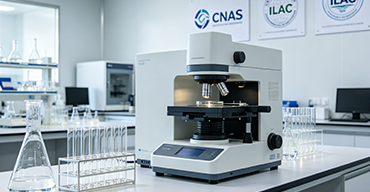
Internationally recognized authority
Certified by multiple international standards such as CNAS, VCS, and GS, with reports universally applicable worldwide.

Global service capability
Covering 140+ countries and regions, it supports on-site detection and remote verification in multiple languages.

Professional experimental methods
Adopt standard experimental methods to ensure accurate and reliable data.
High-Precision Sodium Aluminium Phosphate (SALP) Analysis – Complete Characterisation for Food, Industrial & Regulatory Compliance
When you search for sodium aluminium phosphate (SALP) detection, you are likely preparing to qualify your SALP material – whether as a leavening acid in baked goods (food additive E541), a component in processed cheese emulsifiers, a ceramic binder, or a raw material for specialty glass and refractory applications. Sodium aluminium phosphate exists in several variants (acidic, basic, and anhydrous forms, typically Na₃Al₂H₁₅(PO₄)₈ or Na₅Al₃(OH)₆(PO₄)₈·4H₂O), and its functional performance depends critically on phosphorus content, aluminium content, sodium content, pH (in solution), moisture level, heavy metal impurities (especially aluminium bioavailability concerns), particle size distribution, and leavening reactivity (neutralising value). Our testing service delivers the deepest, most actionable characterisation available – enabling you to meet food additive regulations (FCC, EU 231/2012), industrial specifications, and customer quality requirements with absolute confidence.
Our Comprehensive Sodium Aluminium Phosphate Testing Capabilities – From Elemental Assay to Functional Performance
We deploy a multi‑technique platform optimised for complex aluminium phosphates, including controlled‑humidity handling to prevent unwanted hydration or decomposition:
1. Phosphorus Content (P₂O₅) & Orthophosphate Speciation (Gravimetric, ICP‑OES, IC): The total phosphate content defines the basic stoichiometry. Following FCC monograph methods, we determine total P₂O₅ by gravimetric quinoline phosphomolybdate precipitation with accuracy ±0.05% absolute. For rapid confirmation, we use ICP‑OES (inductively coupled plasma optical emission spectrometry) after acid digestion (HF/HNO₃) – detection limit 0.001% P₂O₅, repeatability ±0.02%. To quantify free orthophosphate (unreacted) vs. condensed phosphate species, we perform ion chromatography (IC) with suppressed conductivity, achieving detection of PO₄³⁻ down to 0.005%.
2. Aluminium Content (ICP‑OES, ICP‑MS, Complexometric Titration): Aluminium content must be controlled for both functionality and safety (potential neurotoxicity concerns in food). Our ICP‑OES with yttrium internal standard quantifies total Al (as Al₂O₃) to ±0.05% absolute. For ultra‑low aluminium variants, ICP‑MS achieves detection limits of 0.01 ppm. We cross‑verify using complexometric back‑titration with EDTA at pH 4.5 using xylenol orange indicator – accuracy ±0.02%. The combined P/Al ratio (from P₂O₅ and Al₂O₃) is calculated to confirm the correct stoichiometric form (e.g., acidic SALP vs. neutral SALP).
3. Sodium Content (ICP‑OES, Flame Photometry, Ion Chromatography): Sodium completes the cation balance. Our ICP‑OES measures Na to ±0.02% absolute. For food‑grade samples, we also use flame photometry (as a low‑cost orthogonal method) with ±0.03% accuracy. Ion chromatography (IC) after aqueous extraction gives soluble sodium – important for predicting dissolution behaviour. We then close the mass balance: Na₂O + Al₂O₃ + P₂O₅ + H₂O (by TGA) = 99.5–100.5% for pure SALP.
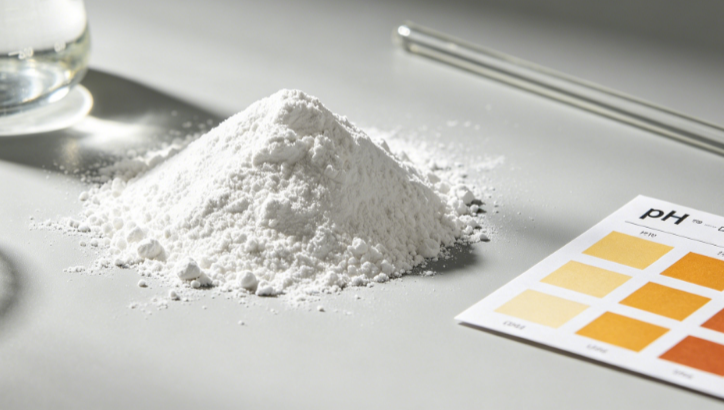
4. pH & Acidic Strength (1% Solution & Titration Curve): The leavening performance of acidic SALP depends on its reactivity with sodium bicarbonate. We measure pH of a 1% aqueous suspension (for sparingly soluble SALP) or solution at 25.0 ± 0.1 °C using a calibrated glass electrode – accuracy ±0.02 pH. For acidic variants (e.g., E541(i)), we also determine the neutralising value (NV) in mg of NaHCO₃ neutralised per g of SALP by titrating a water dispersion with standardised NaOH to pH 8.3, following FCC method for leavening acids. NV accuracy: ±1 mg/g.
5. Heavy Metals & Toxic Trace Elements – Pb, As, Cd, Hg, Ni, F (ICP‑MS & IC): For food‑grade SALP, compliance with FCC, EU 231/2012, and JECFA is mandatory. Our ICP‑MS (inductively coupled plasma mass spectrometry) with collision/reaction cell and cleanroom digestion (HNO₃/H₂O₂ under pressure) achieves detection limits: Pb 0.01 ppm, As 0.02 ppm, Cd 0.005 ppm, Hg 0.002 ppm, Ni 0.05 ppm. For fluoride (a common impurity in aluminium‑based phosphates), we use ion chromatography (IC) with suppressed conductivity or ion‑selective electrode (ISE) – detection limit 1 ppm F⁻. We routinely report Pb < 1 ppm, As < 1 ppm, F < 10 ppm per FCC specifications.
6. Loss on Ignition (LOI) & Moisture Content (Karl Fischer, TGA‑DSC): SALP may contain free moisture and/or bound water of hydration. Following FCC and ISO 2484, we measure loss on ignition at 800 °C to constant weight (precision ±0.02%). To distinguish free water from hydrated water, we perform coulometric Karl Fischer titration at 25 °C (free moisture) and then Thermogravimetric Analysis (TGA) from 30–800 °C with mass spectrometry (MS) for evolved H₂O (m/z 18). This also identifies dehydration endotherms and dehydroxylation steps – characteristic of different SALP crystalline forms.
7. Insoluble Matter (Gravimetric & Residue Analysis): For clear solution applications (e.g., processed cheese), insoluble residues cause defects. We dissolve 25 g in dilute HCl (pH 2) or deionised water (depending on solubility), filter through a 0.45 µm membrane, dry, and weigh – achieving detection limit 0.002% with ±0.0005% repeatability. The residue is further analysed by FTIR and XRD to identify unreacted raw materials (e.g., Al(OH)₃, NaH₂PO₄) or silica contamination.
8. Particle Size Distribution (Laser Diffraction & Sieve Analysis): For consistent blending in dry food mixes or ceramic glazes, particle size control is essential. Our laser diffraction (Malvern Mastersizer 3000) with dry powder feeder (Aero S) measures D10, D50, D90 from 0.1 µm to 2 mm with repeatability < 1% on D50. Complementary rotary sieve analysis (ASTM E11) provides mass fractions on standard mesh sizes (e.g., #40, #60, #100, #200). For very fine powders, dynamic light scattering (DLS) in isopropanol dispersion covers 10 nm – 10 µm.
9. Crystalline Phase & Hydrate Identification (XRD, TGA‑DSC, FTIR): SALP exists in several crystalline forms: acidic (Na₃Al₂H₁₅(PO₄)₈) and basic/neutral (Na₅Al₃(OH)₆(PO₄)₈·4H₂O). Our high‑resolution X‑ray diffraction (HR‑XRD) with Rietveld refinement identifies the exact phase, quantifies any mixed phases (down to 0.5 wt%), and detects amorphous content. Fourier‑transform infrared spectroscopy (FTIR) in ATR mode provides fingerprint bands: P–O stretching (~1100 cm⁻¹), Al–O (~750 cm⁻¹), and O–H (hydration water ~3400 cm⁻¹). Simultaneous TGA‑DSC confirms the dehydration and decomposition profile – characteristic endotherms for bound water and exotherm for pyrophosphate formation.
10. Aluminium Speciation & Bioaccessibility (Simulated Gastric Fluid Extraction): For food‑grade SALP, the European Food Safety Authority (EFSA) requires information on aluminium release under gastrointestinal conditions. We perform in vitro simulated gastric fluid (SGF) extraction (0.07 M HCl, pH 1.2, 37 °C, 2 hours, with and without pepsin). The soluble aluminium fraction is measured by ICP‑MS and reported as % of total Al. This service is critical for regulatory dossiers (e.g., novel food applications, food additive re‑evaluations).
11. Bulk Density & Flowability (ASTM D7481, Angle of Repose): For powder handling in automated packaging or blending lines, we measure loose bulk density (g/cm³), tapped density (500 taps), and calculate Hausner ratio and Carr index (±0.5% precision). Angle of repose (fixed funnel, 1 cm nozzle) with ±0.5° accuracy predicts flowability – critical for dry mix performance.
12. Chloride, Sulfate & Other Anions (IC): Ionic impurities can affect food taste and industrial process chemistry. Using ion chromatography with a Metrosep A Supp 7 column, we quantify Cl⁻, SO₄²⁻, NO₃⁻, and F⁻ down to 0.001% (10 ppm) with ±0.0002% repeatability.
All analyses are performed under ISO/IEC 17025:2017 quality systems, with strict sample traceability and chain‑of‑custody for food‑contact materials.
Why Our Sodium Aluminium Phosphate Testing Service Excels – Unmatched Accuracy, Food Safety Expertise & Functional Insights
We recognise that SALP is a critical functional ingredient where deviations in pH, particle size, or trace metals directly affect leavening performance, cheese texture, or regulatory acceptance. Our advantages are built on deep phosphate chemistry expertise and food‑grade compliance:
▶ Comprehensive Elemental & Stoichiometric Balance: Many labs report only P₂O₅ or Al₂O₃ individually, missing the crucial ratio. We provide a complete mass balance (P, Al, Na, H₂O, LOI) to confirm the exact SALP stoichiometric form – eliminating ambiguity between acidic and neutral grades. Our closed‑vessel microwave digestion with ICP‑OES ensures complete recovery of aluminium (which can form refractory oxides).
▶ Ultra‑Low Heavy Metal Detection for Global Food Compliance: Our SF‑ICP‑MS achieves Pb detection limit 0.01 ppm, As 0.02 ppm – >100× lower than typical food additive limits. We also provide certified reference material validation (e.g., NIST 1570a spinach leaves, spiked matrix) to guarantee accuracy. For fluoride, our IC‑ICP‑MS achieves sub‑ppm detection essential for aluminium‑based additives.
▶ Functional Performance Testing – Neutralising Value & Leavening Reactivity: General‑purpose labs rarely measure neutralising value (NV). We follow the exact FCC method (titration to pH 8.3) and can also perform dough fermentation simulation (gas production vs. time) for baking applications. This directly correlates your SALP lot with end‑use performance in cakes, pancakes, or self‑rising flour.
▶ Aluminium Bioaccessibility for EFSA & FDA Submissions: As aluminium exposure concerns increase, regulators demand bioaccessibility data. Our SGF extraction procedure is validated against international guidelines (EFSA/FAO, RIVM). We provide a detailed report with total Al, soluble Al (%), and speciation (by ion exchange ICP‑MS) of released aluminium species – supporting your food additive re‑evaluation dossiers.
▶ Rapid Turnaround with Regulatory‑Ready Documentation: A standard food‑grade purity panel (P₂O₅, Al₂O₃, Na₂O, pH, NV, heavy metals, LOI, particle size, XRD) is completed in 5–7 business days. For urgent shipment release, we offer 48‑hour express service (results within 48 h, CoA within 72 h). Every report includes raw chromatograms, ICP traces, titration curves, diffractograms, and a clear pass/fail summary against FCC, EU, or your internal spec.
▶ Compliance with Global Food Additive Standards: We follow FCC 12th Edition (Sodium Aluminium Phosphate), EU Regulation 231/2012 (E541), JECFA specifications (INS 541), and GB 1886.2 (China). Our ISO/IEC 17025:2017 accreditation ensures certificates are accepted by FDA, EFSA, CFDA, and major food safety certification bodies (BRC, FSSC 22000).
▶ Global Logistics with Food‑Grade Safety: SALP is non‑hazardous (not classified as dangerous goods). We provide food‑contact‑certified, moisture‑barrier sample bags with anti‑static liners and sealed tamper‑evident pouches. International shipments are fully documented with MSDS, commercial invoice, and customs declaration – no special dangerous goods requirements apply.
▶ Expert Consultation for Formulation Optimisation: Our chemists have over 20 years of experience in phosphate food additives. We help you: correlate particle size and neutralising value with cake volume and crumb structure, diagnose off‑flavours or cheese defects (linked to free phosphate or aluminium release), select the correct SALP variant (acidic vs. neutral) for your processing conditions, and benchmark competitor products. A free 30‑minute technical consultation is included with every project.
▶ Cost‑Effective for R&D & Production QC: We serve industrial bakeries, cheese manufacturers, food ingredient distributors, and phosphate producers. Our automated ICP‑OES, IC, and XRD systems with robotic sample changers allow us to offer volume discounts for recurring QC testing (≥ 20 batches/month). Academic and non‑profit pricing is available.
In summary, we deliver the most comprehensive, accurate, and application‑focused sodium aluminium phosphate analysis available worldwide – from elemental mass balance and heavy metal safety to leavening reactivity and bioaccessibility. Whether you need to certify a shipment for a global bakery, qualify a new SALP source for processed cheese, or compile a regulatory dossier, our data gives you absolute confidence.
Ready to test your sodium aluminium phosphate? Contact our food ingredients team. We will send you a prepaid, food‑grade sample kit and a custom test plan within one business day. A no‑obligation technical discussion is always free. Let us help you ensure every batch of SALP delivers consistent performance – from lab leavening to large‑scale production.