Reasons for choosing our testing services
ZHONGXI Testing has obtained inspection qualification certifications from multiple countries and regions worldwide. We possess a senior testing team and advanced testing methods, providing independent, impartial, and professional third-party verification services for global carbon projects.
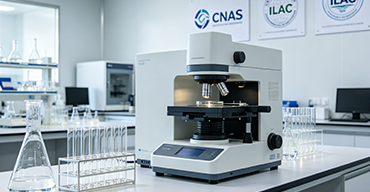
Internationally recognized authority
Certified by multiple international standards such as CNAS, VCS, and GS, with reports universally applicable worldwide.

Global service capability
Covering 140+ countries and regions, it supports on-site detection and remote verification in multiple languages.

Professional experimental methods
Adopt standard experimental methods to ensure accurate and reliable data.
Comprehensive Nano Titanium Dioxide Sol Characterisation – Unmatched Precision for Colloidal Stability, Particle Size & Functional Performance
When you search for nano titanium dioxide sol detection, you are likely preparing to qualify your TiO₂ nanoparticle dispersion – whether for photocatalytic coatings, UV‑blocking formulations, self‑cleaning surfaces, water treatment membranes, or advanced energy materials (dye‑sensitised solar cells, lithium‑ion battery anodes). Nano‑TiO₂ sol (typically anatase, rutile, or mixed phase in aqueous or organic media) derives its functionality from primary particle size, particle size distribution, zeta potential, agglomeration state, crystalline phase, solid content, purity (especially iron and other transition metals), and long‑term colloidal stability. Our testing service delivers the deepest, most actionable characterisation available – enabling you to optimise synthesis, ensure batch consistency, and meet the most demanding industrial and research specifications.
Our Advanced Nano Titanium Dioxide Sol Testing Capabilities – From Atomic‑Scale Imaging to Real‑Time Stability Monitoring
We deploy an integrated, multi‑technique platform specifically optimised for nanoparticle sols, including controlled‑temperature and inert‑atmosphere handling to preserve the native colloidal state:
1. Particle Size & Size Distribution – Dynamic Light Scattering (DLS) & Nanoparticle Tracking Analysis (NTA): The hydrodynamic diameter of TiO₂ nanoparticles directly affects optical transparency, surface activity, and penetration behaviour. Our dynamic light scattering (DLS) system with backscatter detection (173°) and multi‑angle capability measures Z‑average diameter (1–1000 nm) with ±0.1 nm repeatability and polydispersity index (PDI) resolution ±0.002. For number‑weighted distributions and concentration (particles/mL), we use nanoparticle tracking analysis (NTA) covering 10–2000 nm with CV < 5%. We also offer asymmetric flow field‑flow fractionation (AF4) coupled with multi‑angle light scattering (MALS) to separate aggregates from primary particles without assumptions – ideal for polydisperse or fragile sols.
2. Zeta Potential & Electrophoretic Mobility (Phase Analysis Light Scattering, PALS): Colloidal stability is governed by surface charge. Using phase analysis light scattering (PALS) on a Zetasizer Ultra, we measure zeta potential from -200 mV to +200 mV with ±0.5 mV reproducibility. We perform automated pH titrations (2–12) to determine the isoelectric point (IEP) of your TiO₂ sol – critical for predicting flocculation under different environmental conditions (e.g., wastewater pH, coating application). We also measure conductivity and ionic strength simultaneously.
3. Primary Particle Size & Morphology – Transmission Electron Microscopy (TEM) & High‑Resolution TEM (HR‑TEM): DLS measures hydrodynamic diameter including the solvation layer. For true primary particle size and shape, we image your sol after gentle drying onto carbon‑coated grids using transmission electron microscopy (TEM) at 80–300 kV with 0.2 nm point resolution. We analyse minimum Feret diameter, aspect ratio, and circularity via automated image analysis (over 10,000 particles). HR‑TEM with selected area electron diffraction (SAED) identifies anatase (d₁₀₁ = 0.352 nm) vs. rutile (d₁₁₀ = 0.325 nm) phases at atomic scale. For sols in native liquid, cryo‑TEM vitrifies the sample without drying artefacts – revealing true agglomeration state and particle network morphology.
4. Crystalline Phase & Crystallite Size – X‑ray Diffraction (XRD) & Raman Microspectroscopy: The photocatalytic and UV‑blocking activity of TiO₂ depends on the anatase/rutile ratio and crystallite size. Our high‑resolution X‑ray diffractometer (HR‑XRD) with Cu Kα radiation analyses dried sol powder. Using Rietveld refinement, we quantify anatase and rutile mass fractions down to 0.5% and determine crystallite size via the Scherrer equation (accuracy ±0.5 nm for <100 nm). Confocal Raman microspectroscopy (532 nm, 785 nm) directly on the liquid sol identifies anatase (144 cm⁻¹, 396 cm⁻¹, 516 cm⁻¹, 639 cm⁻¹) and rutile (445 cm⁻¹, 612 cm⁻¹) peaks without sample drying – eliminating phase changes due to dehydration.
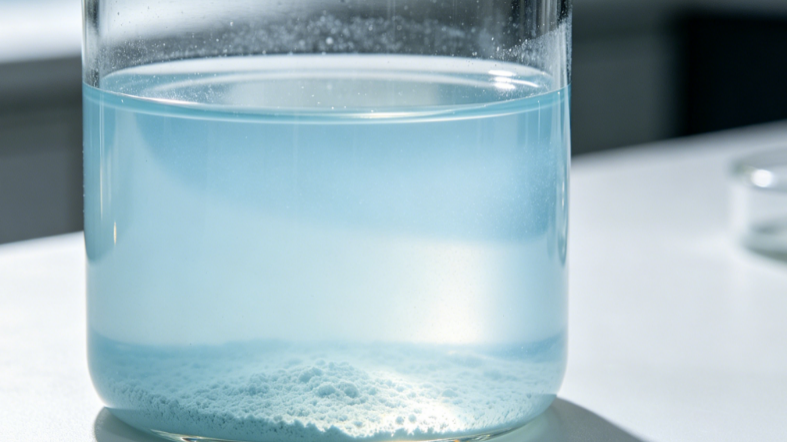
5. Solid Content, Density & Viscosity (Gravimetric, Density Meter, Rheometer): For formulation and coating applications, precise solid loading is essential. We measure total solids by gravimetric analysis (105 °C ± 110 °C, constant mass) to ±0.05% w/w (range 0.1–50%). Density of the sol is measured using an oscillating U‑tube density meter (±0.0001 g/cm³). Viscosity is measured with a cone‑plate or concentric cylinder rheometer at shear rates 0.1–1000 s⁻¹, reporting Newtonian or shear‑thinning behaviour (±1% accuracy) – critical for spray coating, spin coating, or inkjet printing.
6. Concentration of TiO₂ Nanoparticles (ICP‑OES, UV‑Vis Spectrophotometry): For process control, we offer rapid UV‑Vis spectrophotometry (calibration curve at λₘₐₓ ~320 nm for anatase sols) for TiO₂ concentration down to 0.001% w/v with ±2% relative accuracy. For absolute quantification, we digest the sol with HF/H₂SO₄ and measure titanium by ICP‑OES (detection limit 0.1 ppm), converting to TiO₂ mass.
7. Trace Element & Heavy Metal Impurities – ICP‑MS (Fe, Cr, Ni, Cu, V, W, etc.): Transition metal impurities in TiO₂ sol (especially Fe, Cr, V) alter photocatalytic activity and colour. Our ICP‑MS (inductively coupled plasma mass spectrometry) with collision/reaction cell (He or NH₃ mode) and ISO‑5 cleanroom digestion (HF/HNO₃ in closed vessels) achieves detection limits of 0.01–0.1 ppb for >40 elements. We routinely achieve Fe < 0.1 ppm, Cr < 0.05 ppm, Cu < 0.05 ppm, V < 0.02 ppm – far below typical specifications for high‑purity photocalytic grades.
8. Anion Impurities – Chloride, Sulfate, Nitrate, Phosphate (Ion Chromatography): Residual anions from synthesis (e.g., Cl⁻ from TiCl₄ precursor) affect sol stability and pH. Using ion chromatography (IC) with suppressed conductivity, we quantify Cl⁻, SO₄²⁻, NO₃⁻, PO₄³⁻ down to 0.001% (10 ppm) with ±0.0002% repeatability. For ultra‑pure sols, IC‑ICP‑MS achieves sub‑ppb detection.
9. pH, Conductivity & Surface Hydroxyl Density (Potentiometric Titration, XPS): The TiO₂ surface hydroxyl groups (≡Ti–OH) dictate adsorption and photocatalytic behaviour. We measure pH of the undiluted sol with ±0.02 accuracy. Conductivity (from 0.001 µS/cm to 2000 mS/cm, ±0.5%) indicates ionic strength. To quantify surface hydroxyl density (sites/nm²), we perform potentiometric acid‑base titration under inert gas and fit with the surface complexation model (e.g., MUSIC). For direct confirmation, X‑ray photoelectron spectroscopy (XPS) on freeze‑dried sol measures the O 1s peak (lattice oxygen at ~530 eV, hydroxyl at ~532 eV) – we report hydroxyl coverage to ±0.1 OH/nm².
10. Colloidal Stability – Sedimentation, Turbidity & Agglomeration Kinetics: We perform multiple light scattering (Turbiscan) analysis over 24–72 hours at controlled temperatures (4–60 °C), measuring backscattering and transmission profiles to detect early sedimentation, creaming, or flocculation. We also offer automated DLS stability screening (time‑resolved size measurement every 5 minutes for 24 h) and accelerated ageing at 40 °C/50 °C to predict shelf life.
11. Photocatalytic Activity Screening (Optional – Methylene Blue or Rhodamine B Degradation): For quality control of photocatalytic sols, we provide standardised photoreactor testing (UV‑A LED, 365 nm, calibrated irradiance) measuring the degradation rate constant (k, min⁻¹) of methylene blue or other model pollutant. This directly links your sol’s physicochemical properties to functional performance.
12. Specific Surface Area & Porosity (BET on Dried Gel, SAXS on Sol): For sols intended for porous coatings, we measure N₂ physisorption (77 K) on freeze‑dried gel – BET surface area (0.5–1000 m²/g, ±0.5%). For non‑destructive in‑situ surface area, we use small‑angle X‑ray scattering (SAXS) directly on the liquid sol, giving radius of gyration (Rg) and fractal dimension of aggregates.
All analyses are performed under strict temperature control (25.0 ± 0.5 °C) unless otherwise specified. Our lab follows ISO 22412 (DLS), ISO 13099 (zeta potential), ISO 13321 (photon correlation spectroscopy), and OECD guidance for nanomaterials testing.
Why Our Nano Titanium Dioxide Sol Testing Service Is Trusted by Photocatalysis & Coating Leaders
We understand that nano‑TiO₂ sol is a sophisticated functional material where small changes in particle size, phase, or surface charge can dramatically alter performance. Our advantages are built on deep colloid chemistry expertise and ISO/IEC 17025 rigour:
▶ True Primary Particle Size by TEM/HR‑TEM vs. Hydrodynamic Diameter by DLS: Many labs report only DLS data, which is biased towards larger aggregates. We provide correlative DLS + TEM + NTA to distinguish primary particles, reversible soft agglomerates, and irreversible hard agglomerates. Our automated TEM image analysis (≥10,000 particles) gives statistical size distributions that are not possible with DLS alone – essential for regulatory nanomaterial definitions (e.g., EU recommendation on nanomaterials).
▶ Unambiguous Anatase/Rutile Ratio by Raman on Liquid Sol: Drying TiO₂ sol for XRD can cause phase transformation (especially of amorphous or poorly crystalline materials). Our confocal Raman microspectroscopy directly probes the liquid sol, providing phase composition without artefacts. We can also detect brookite (<1 wt%) and amorphous TiO₂.
▶ Ultra‑Low Metal Impurity Quantification for Photoactivity: Iron at ppm levels quenches photocatalytic activity. Our SF‑ICP‑MS achieves Fe detection limit 0.01 ppb in the sol, and we also measure total dissolved metals vs. nanoparticle‑bound metals by ultrafiltration (3 kDa cutoff) followed by analysis – pinpointing whether impurities are in solution or on particle surfaces.
▶ Stability Prediction Under Realistic Conditions: We do not just report initial zeta potential. We perform automated pH‑ramp DLS/zeta potential to identify the coagulation threshold and critical flocculation concentration. For formulators, we offer dilution series in typical media (water, ethanol, isopropanol, phosphate buffer, simulated body fluid) to predict stability in the final product.
▶ Rapid Turnaround with Application‑Focused Reporting: A standard nano‑TiO₂ sol panel (DLS, zeta potential, TEM, solid content, pH, conductivity, ICP‑MS metals) is completed in 5–7 business days. For urgent process optimisation or batch release, we offer 48‑hour express service (DLS, zeta, solid content, TEM images within 48 h). Every report includes raw correlation functions, electropherograms, TEM micrographs, and an interpretative summary linking results to expected performance (e.g., transparency, stability, photocatalytic activity).
▶ Compliance with Global Nanomaterial Regulations: Our methods align with ISO 21363 (TEM for nanoscale objects), ISO 22412 (DLS), ISO 13099 (zeta potential), and OECD TG 318 (dispersion stability). We are ISO/IEC 17025:2017 accredited and provide data packages suitable for REACH registration, EPA nanomaterial reporting, and cosmetic product dossiers (EU Cosmetics Regulation 1223/2009).
▶ Global Logistics with Colloidal Stability Preservation: Nano‑TiO₂ sol can sediment or aggregate during shipping. We provide temperature‑controlled (4 °C or ambient) shipping kits with overflow protection and anti‑static interior. For light‑sensitive sols, we use amber glass vials and opaque overpacks. We also offer on‑site characterisation (portable DLS) for extremely unstable or time‑sensitive samples (additional fee).
▶ Expert Consultation for Process & Formulation Optimisation: Our colloid scientists have over 15 years of experience in TiO₂ sol synthesis (hydrothermal, sol‑gel, flame spray). We help you: correlate particle size and zeta potential with coating transparency and abrasion resistance, identify the cause of batch‑to‑batch variation (pH drift, impurity carryover), select the optimum pH for maximum UV‑blocking efficiency, and benchmark competitor products. A free 30‑minute technical consultation is included with every project.
▶ Cost‑Effective for R&D & Production QC: We serve industrial coaters, pigment manufacturers, and academic research groups. Our high‑throughput DLS/zetasizer with 96‑well plate sampling and automated TEM imaging enable volume discounts for recurring testing (≥ 20 samples/month). Academic and non‑profit pricing is available.
In summary, we deliver the most comprehensive, accurate, and application‑focused nano titanium dioxide sol analysis available worldwide – from primary particle size and phase purity to colloidal stability and photocatalytic activity. Whether you need to certify a new batch for a sunscreen formulation, troubleshoot aggregation in a water treatment membrane, or develop a next‑generation self‑cleaning coating, our data gives you absolute confidence.
Ready to test your nano‑TiO₂ sol? Contact our colloid characterisation team. We will send you a prepaid, temperature‑controlled sample kit and a custom test plan within one business day. A no‑obligation technical discussion is always free. Let us help you unlock the full potential of your titanium dioxide nanosol – from colloid to coating.