Reasons for choosing our testing services
ZHONGXI Testing has obtained inspection qualification certifications from multiple countries and regions worldwide. We possess a senior testing team and advanced testing methods, providing independent, impartial, and professional third-party verification services for global carbon projects.
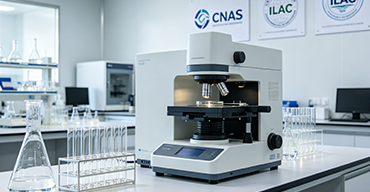
Internationally recognized authority
Certified by multiple international standards such as CNAS, VCS, and GS, with reports universally applicable worldwide.

Global service capability
Covering 140+ countries and regions, it supports on-site detection and remote verification in multiple languages.
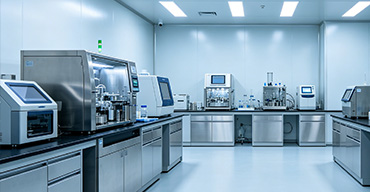
Professional experimental methods
Adopt standard experimental methods to ensure accurate and reliable data.
Comprehensive Testing Services for Lithium Transition Metalate Salts (LiMxOy)
If you are searching for lithium transition metalate testing, you are likely developing or quality‑controlling advanced cathode materials (e.g., LiCoO₂, LiNi₁/₃Mn₁/₃Co₁/₃O₂, Li₂MnO₃, Li₂TiO₃, or lithium‑rich layered oxides), or lithium metalates used in solid‑state electrolytes and ceramic additives. These materials demand rigorous characterization of stoichiometry, phase purity, transition metal valence states, and trace contaminants – because any deviation directly impacts electrochemical capacity, cycling stability, and safety. We understand that your need for testing is mission‑critical for R&D optimization, production QC, supplier validation, or failure analysis. Our laboratory delivers the deepest, most reliable analytical suite for lithium transition metalates, from bulk composition to atomic‑scale electronic structure.
What We Can Do for Your Lithium Transition Metalate Samples
We provide a complete, application‑tailored testing program for all common lithium metalate families (Mn‑, Co‑, Ni‑, Ti‑, Fe‑based, as well as mixed and doped variants). Our core capabilities include:
- Elemental stoichiometry (Li, transition metal(s), oxygen, and dopants) by a combination of inductively coupled plasma optical emission spectrometry (ICP‑OES) for metals, and inert gas fusion for oxygen (or difference calculation).
- Lithium quantification with high accuracy (relative error <0.5%) using flame atomic emission spectrometry (FAES) or ICP‑MS after matrix‑matched calibration – essential because Li is often the most variable and performance‑critical component.
- Trace impurity profiling (Na, Ca, Fe, Cu, Zn, Al, Pb, Cd, etc.) by high‑resolution ICP‑MS, with detection limits down to 0.01 ppm (w/w) for most transition metal matrices.
- Crystalline phase identification & quantification by X‑ray diffraction (XRD) with Rietveld refinement – detect secondary phases (e.g., Li₂CO₃, residual precursors, layered vs. spinel phases) down to <0.5 wt%.
- Transition metal oxidation state analysis (Mn³⁺/Mn⁴⁺, Co³⁺/Co⁴⁺, Ni²⁺/Ni³⁺/Ni⁴⁺) via X‑ray photoelectron spectroscopy (XPS) with peak fitting using reference spectra, and by redox titration (e.g., cerimetric or iodometric methods).
- Surface chemistry & contamination layer analysis by XPS depth profiling (0.5–10 nm) and time‑of‑flight secondary ion mass spectrometry (ToF‑SIMS) – detect residual lithium carbonate, hydroxide, or organic species.
- Moisture & adsorbed species quantification by Karl Fischer oven method (solid samples) and TGA‑MS (100–800 °C, evolved gas analysis).
- Particle morphology & size distribution by high‑resolution SEM (with EDS for elemental mapping) and laser diffraction (wet dispersion, avoiding particle breakage).
- Specific surface area (BET, N₂ adsorption) and tap density – key for electrode slurry preparation.
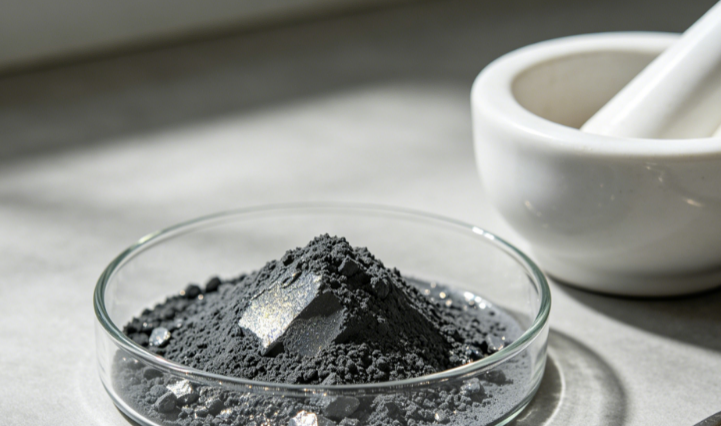
How Deep Our Characterization Goes
We go far beyond routine “elemental and XRD” packages. Our advanced methods are designed to resolve the most challenging issues in lithium transition metalate quality control:
- Simultaneous TGA‑DSC‑FTIR‑MS up to 1300 °C: quantify lattice oxygen release, CO₂ from residual carbonates, and trace H₂O evolution. Identify phase transitions (e.g., layered → spinel) with 0.05% mass change resolution.
- High‑temperature XRD (HT‑XRD) from room temperature to 1000 °C in inert or air – directly observe the formation of secondary phases during calcination or thermal abuse.
- Electrochemical performance screening (optional add‑on): prepare coin cells with your powder, measure first cycle coulombic efficiency, specific capacity (C‑rate test from 0.1C to 5C), and cycling stability (100 cycles). Correlate directly with chemical test results.
- Cross‑sectional analysis of secondary particle fractures via focused ion beam (FIB)‑SEM/TEM – reveal intra‑grain pores, microcracks, and inhomogeneous lithium distribution (using EELS).
- Trace anion impurities (Cl⁻, SO₄²⁻, NO₃⁻, F⁻) by ion chromatography after acid digestion – sub‑ppm sensitivity; critical for avoiding corrosion and gas generation in cells.
- Carbon content (free carbon, carbonates, and total carbon) by combustion infrared detection (LECO) – separate organic/inorganic carbon using temperature ramp methods.
- Residual magnetic metal particles (Fe, Ni, Co in elemental form) by magnetic extraction and ICP‑MS – detection limit as low as 0.1 ppm, essential for battery safety (internal short circuits).
Why Our Laboratory Is the Premier Choice for Lithium Transition Metalate Testing
Many general materials labs are not equipped to handle lithium‑sensitive, hygroscopic, and electrochemically active powders correctly – resulting in altered samples and inaccurate data. Our advantages are built on dedicated battery materials expertise and ISO 17025 accredited methods:
➤ Strict moisture‑ and CO₂‑controlled sample handling – We prepare and transfer all lithium metalate samples inside a high‑purity argon glovebox (H₂O <0.1 ppm, O₂ <0.1 ppm). This prevents atmospheric degradation (LiOH/Li₂CO₃ formation) that would otherwise distort surface chemistry and stoichiometry results.
➤ Matrix‑optimized digestion protocols – Lithium transition metalates are notoriously difficult to fully dissolve (especially lithium manganates). We use sealed microwave digestion with mixed acids (HCl/HNO₃/HF) followed by fuming to ensure complete decomposition, yielding accurate bulk composition even for refractory samples.
➤ Comprehensive “Battery‑Grade Certification” package – In addition to standard parameters, we provide a customized quality score that weighs stoichiometry deviation, impurity levels, phase purity, and magnetic particle count against your specification limits (e.g., EV cell grade, ESS grade).
➤ Rapid turnaround and transparent reporting – Full elemental + XRD + surface area + TGA package completed within 5‑7 business days. You receive a detailed certificate of analysis with raw data, method detection limits, uncertainty budgets, and representative micrographs.
➤ Global logistics for hazardous materials – Many lithium metalates are classified as dangerous goods (UN 3288, toxic solids). We provide compliant packaging, safety data sheets, and coordinate international shipping with customs clearance assistance.
➤ Direct technical support from electrochemists & inorganic chemists – We don’t just hand you numbers. We help you correlate test results with electrochemical performance, identify root causes of batch deviation, and suggest process improvements (calcination temperature, Li/M ratio adjustment, washing procedures).
Ready to Get Your Lithium Transition Metalate Tested?
Whether you are synthesizing a new Li‑rich layered oxide, qualifying incoming NMC powder, troubleshooting capacity fade, or developing a solid‑state electrolyte like Li₃xLa₂/₃‑xTiO₃ (LLTO), our lab delivers the highest‑depth, most actionable characterization available for lithium transition metalates. Contact our battery materials analysis team with your sample composition, target impurities, and intended application – we will return a custom test plan and competitive quote within 24 hours.