Reasons for choosing our testing services
ZHONGXI Testing has obtained inspection qualification certifications from multiple countries and regions worldwide. We possess a senior testing team and advanced testing methods, providing independent, impartial, and professional third-party verification services for global carbon projects.
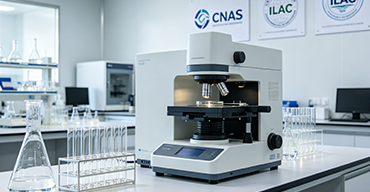
Internationally recognized authority
Certified by multiple international standards such as CNAS, VCS, and GS, with reports universally applicable worldwide.

Global service capability
Covering 140+ countries and regions, it supports on-site detection and remote verification in multiple languages.
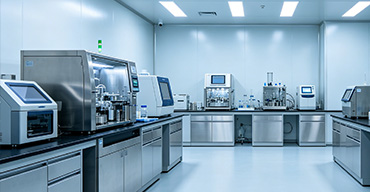
Professional experimental methods
Adopt standard experimental methods to ensure accurate and reliable data.
Comprehensive Characterization Services for Boron Nitride (BN) Nanopowders
If you are searching for boron nitride nanopowder testing, you are likely working with hexagonal BN (h‑BN), cubic BN (c‑BN), or turbostratic BN nanomaterials for applications in thermal interface materials, high‑temperature lubricants, ceramic composites, semiconductor device substrates, or dielectric layers. The performance of BN nanopowders depends critically on parameters such as crystallinity, boron/nitrogen stoichiometry, impurity levels (especially oxygen and metallic contaminants), particle size distribution, specific surface area, and surface chemistry. Even minor deviations can cause reduced thermal conductivity, electrical leakage, or poor dispersion in polymer matrices. We understand that your need for testing is driven by raw material qualification, process optimization, failure analysis, or meeting industry specifications (e.g., electronic grade, cosmetic grade). Our laboratory offers the most advanced, high‑depth analytical suite for boron nitride nanopowders – from bulk purity to atomic‑scale structure and surface functional groups.
What We Can Do for Your Boron Nitride Nanopowder Samples
We provide a complete testing program tailored to all BN nanopowder forms: hexagonal (h‑BN), cubic (c‑BN), multi‑layer BN nanosheets, and functionalized BN. Our core capabilities include:
- Boron and nitrogen content (B/N stoichiometry) by a combination of acid digestion followed by ICP‑OES for boron, and inert gas fusion / combustion for nitrogen – achieving ±0.3% relative accuracy. Boron‑to‑nitrogen ratio is critical for thermal conductivity and electrical insulation properties.
- Trace impurity elements (Al, Ca, Fe, Mg, Si, Cu, Cr, Ni, Zn, Pb, As, etc.) using high‑resolution ICP‑MS (HR‑ICP‑MS) after microwave‑assisted acid digestion (HNO₃/H₂SO₄/HF in sealed vessels). Detection limits as low as 0.01 ppm (10 ppb) for most metals, and <0.1 ppm for toxic elements like Pb and As.
- Oxygen content analysis by inert gas fusion (LECO) – oxygen is the most common and performance‑damaging impurity in BN (forms B₂O₃). Detection limit <0.05 wt% oxygen, accuracy ±0.02% absolute.
- Carbon content (free carbon vs. total carbon) by combustion infrared detection – differentiate between surface organic residues and carbides. Detection limit 0.01 wt%.
- Crystalline phase identification and quantification by X‑ray diffraction (XRD) with Rietveld refinement – distinguish hexagonal (h‑BN, JCPDS 34‑0421) from cubic (c‑BN, JCPDS 25‑1033), turbostratic, or amorphous fractions. Quantify phase purity down to 0.5 wt% detection.
- Crystallite size and lattice strain analysis from XRD peak broadening using Williamson‑Hall or Scherrer methods – essential for understanding defect density and thermal transport.
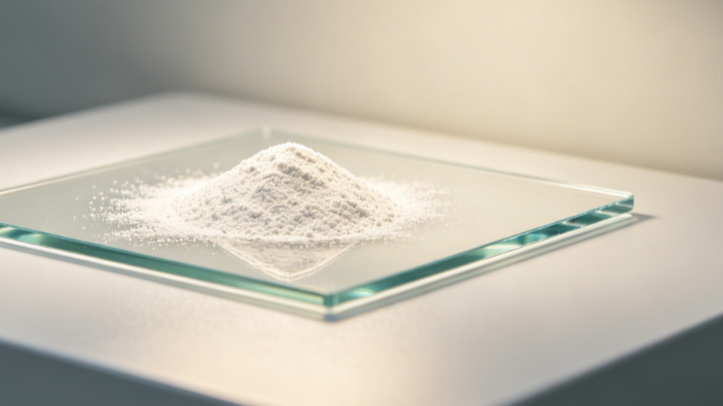
- Particle size distribution (PSD) by laser diffraction (0.01–2000 µm, wet dispersion with optimized surfactants to prevent agglomeration) and by dynamic light scattering (DLS) for sub‑micron fractions. Provide D10, D50, D90, and span values.
- Specific surface area (SSA) by BET (N₂ adsorption) – single‑point or multi‑point method, range from 0.01 m²/g to >1000 m²/g. Critical for predicting dispersion and sintering behavior.
- Morphology and layer structure by high‑resolution scanning electron microscopy (HR‑SEM) and transmission electron microscopy (HR‑TEM) – visualize sheet diameter, thickness (number of layers), edge structure, and agglomerate size.
- Surface chemistry & functional groups by X‑ray photoelectron spectroscopy (XPS) – quantify B 1s, N 1s, C 1s, O 1s, and identify B‑O, B‑N, B‑C, or N‑H species. Depth profiling (0.5–10 nm) available.
- Thermal stability and oxidation resistance by thermogravimetric analysis (TGA) in air (up to 1400 °C) – measure onset oxidation temperature (typically >800 °C for high‑purity h‑BN) and weight gain due to B₂O₃ formation.
How Deep Our Characterization Goes
We go far beyond basic “purity and particle size”. Our advanced methods are specifically designed to resolve the unique challenges of BN nanopowders – including extreme chemical inertness, nanoparticle agglomeration, and the need for ultra‑low oxygen detection. Examples of our technical depth:
- Simultaneous TGA‑DSC‑FTIR‑MS from 30 °C to 1450 °C in air or argon: resolve oxidation onset temperature, B₂O₃ volatilization, and any residual organic decomposition. Evolved gases (H₂O, CO₂, NH₃, B₂O₃ vapor) identified by MS – critical for assessing thermal stability of BN in high‑temperature applications.
- High‑resolution TEM (HR‑TEM) with selected area electron diffraction (SAED) – directly measure lattice spacing (3.33 Å for h‑BN (002) plane) and count number of layers (e.g., 1–10 layers for BN nanosheets). Detect turbostratic disorder and edge defects.
- Atomic force microscopy (AFM) for single‑nanosheet thickness measurement (vertical resolution <0.1 nm) – essential for verifying few‑layer BN.
- Raman spectroscopy (with 532 nm, 633 nm, and 785 nm excitation) – characteristic E₂g peak at ~1366 cm⁻¹ for h‑BN; peak shift, broadening, and intensity ratio indicate strain, defects, and number of layers.
- Trace fluorine and chlorine by combustion ion chromatography (CIC) – detection limits <0.1 ppm. Halides can accelerate corrosion in electronic packaging.
- Microwave digestion with high‑pressure vessels (up to 300 °C, 100 bar) using H₂SO₄/HNO₃/HF mixture – achieves complete decomposition of refractory BN for accurate trace metal analysis by ICP‑MS. Method validated with certified reference materials (e.g., NIST SRM 1486).
- Colloidal stability assessment by zeta potential measurement (pH 2–12) and sedimentation testing – essential for formulating stable BN dispersions in aqueous or organic media.
- Free boron or boric acid quantification by selective leaching and ICP‑MS – free B₂O₃ can act as a binder but also increases moisture sensitivity. Detection limit 0.01 wt% B₂O₃ equivalent.
Why Our Laboratory Is the Right Choice for Boron Nitride Nanopowder Testing
General materials labs often struggle with BN nanopowders due to their chemical inertness, tendency to float and agglomerate, and the difficulty of achieving complete digestion. Our advantages are built on specialized nanomaterials handling, ISO/IEC 17025 accredited methods for ceramics and advanced materials, and deep expertise in boron chemistry:
➤ Dedicated sample preparation for ultra‑fine BN powders – We use anti‑static equipment, glovebox handling for air‑sensitive samples, and optimized wet dispersion protocols (with surfactants like Triton X‑100 or polyelectrolytes) to break soft agglomerates without fracturing primary particles. All BET and particle sizing analyses are verified with BN‑specific reference materials.
➤ High‑sensitivity oxygen analysis by inert gas fusion – Our LECO ONH836 instrument is calibrated with BN‑specific standards (e.g., NIST SRM 1493). Achieve 0.005 wt% oxygen detection limit and ±0.02% absolute accuracy – critical for electronic‑grade BN where O content must stay below 0.5%.
➤ Complete crystalline phase analysis with Rietveld quantification – We provide not only h‑BN vs. c‑BN ratio, but also crystallite size anisotropy (along a‑axis vs. c‑axis) and preferred orientation (texture) – directly correlated with thermal conductivity anisotropy in molded parts.
➤ Surface contamination and functional group depth profiling – XPS with Ar⁺ sputtering (0.5, 2, 5 nm depths) reveals whether oxygen is present as surface B‑OH/B‑O‑B or as bulk oxide inclusions. Angular‑resolved XPS (ARXPS) further distinguishes top‑most surface (1–3 nm) from sub‑surface chemistry.
➤ Rapid turnaround and transparent reporting – Standard full characterization (purity, oxygen, trace metals, XRD, BET, particle size, TGA) completed within 5‑7 business days. Expedited 48‑hour service available. You receive a certificate of analysis with raw data (XRD patterns, TGA thermograms, ICP‑MS counts, particle size histograms, electron micrographs), measurement uncertainties, and a clear pass/fail summary against your specifications.
➤ Global logistics and safe handling – BN nanopowders are generally non‑hazardous but can form aerosols. We provide static‑dissipative, tamper‑evident packaging suitable for international courier, with MSDS and customs declaration assistance.
➤ One‑on‑one technical consultation from ceramics experts – Our scientists help you interpret the data: e.g., why high oxygen content might cause poor thermal interface performance, how to optimize exfoliation to achieve thinner BN sheets, or which trace metal (Fe, Cu) could promote unwanted catalytic effects in composite curing.
Ready to Get Your Boron Nitride Nanopowder Tested?
Whether you are developing few‑layer h‑BN for dielectric films, qualifying a supplier of c‑BN abrasives, or troubleshooting batch‑to‑batch variation in thermal conductivity, our laboratory delivers the most comprehensive, accurate, and actionable characterization of BN nanopowders available. Contact our advanced ceramics analysis team with your BN grade (h‑BN, c‑BN, nanosheets), target purity and oxygen limits, and intended application – we will return a custom test plan and competitive quote within 24 hours.