Reasons for choosing our testing services
ZHONGXI Testing has obtained inspection qualification certifications from multiple countries and regions worldwide. We possess a senior testing team and advanced testing methods, providing independent, impartial, and professional third-party verification services for global carbon projects.

Internationally recognized authority
Certified by multiple international standards such as CNAS, VCS, and GS, with reports universally applicable worldwide.

Global service capability
Covering 140+ countries and regions, it supports on-site detection and remote verification in multiple languages.

Professional experimental methods
Adopt standard experimental methods to ensure accurate and reliable data.
Specialized Analytical Testing Services for Yttrium Trioxide (Y₂O₃)
If you are searching for yttrium trioxide (Y₂O₃) testing, you are likely using this high‑value rare earth oxide in critical applications such as phosphors for LEDs and lighting, transparent ceramics (YAG), laser crystals, high‑temperature superconductors, thermal barrier coatings, or advanced electronic ceramics. The performance of Y₂O₃ depends on exceptionally high purity (typically 99.99% to 99.9999%), precise control of rare earth impurity profiles (especially La, Ce, Pr, Nd, Sm, Eu, Gd, Tb, Dy, Ho, Er, Tm, Yb, Lu), low levels of non‑rare earth metals (Fe, Ca, Si, Al, Cu, Ni, Pb), and consistent particle size and specific surface area. Even trace amounts of certain impurities can quench phosphor luminescence, induce scattering in optical ceramics, or alter dielectric properties. We understand that your need for testing is driven by incoming raw material qualification, certification of high‑purity lots, process optimization, or compliance with customer specifications (e.g., phosphor grade, crystal grade). Our laboratory delivers the most comprehensive, ultra‑trace analytical suite for yttrium trioxide – from bulk purity to parts‑per‑billion impurity profiling, crystallinity, and powder characteristics.
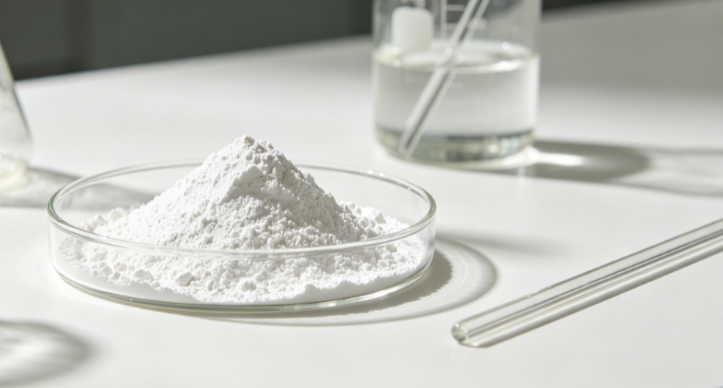
What We Can Do for Your Yttrium Trioxide Samples
We provide complete testing for all grades of Y₂O₃: 99.9%, 99.99%, 99.999%, and 99.9999% (6N). Our core capabilities include:
- Yttrium assay (purity by difference) – determined as 100% minus total impurities (Rare Earth Impurities + Non‑Rare Earth Impurities + Loss on Ignition). Achieved through high‑resolution ICP‑MS and ICP‑OES.
- Individual rare earth element impurities (14 elements: La, Ce, Pr, Nd, Sm, Eu, Gd, Tb, Dy, Ho, Er, Tm, Yb, Lu) using sector‑field ICP‑MS (SF‑ICP‑MS) with matrix matching and internal standardization. Detection limits 0.01 ppm (10 ppb) for each REE, and even lower (0.001 ppm) for mid‑range REEs. Sum of rare earth impurities typically reported as “total REE”.
- Non‑rare earth trace metals (Fe, Ca, Si, Al, Cu, Ni, Cr, Pb, Zn, Mg, Na, K, Ti, Zr, Hf, etc.) by ICP‑MS with collision/reaction cell technology to resolve polyatomic interferences. Detection limits from 0.01 ppm to 0.5 ppm depending on element. Special attention to iron, calcium, silicon, and aluminum – common contaminants affecting ceramic sintering and optical transmission.
- Loss on ignition (LOI) at 1000 °C – quantifies adsorbed moisture, carbonate, and hydroxyl species. Typical LOI for high‑purity Y₂O₃ is <0.5%.
- Crystalline phase identification by X‑ray diffraction (XRD) – confirm cubic Y₂O₃ phase (Ia 3), detect any monoclinic or hexagonal polymorphs, and identify crystalline impurities (e.g., Y(OH)₃, Y₂O₂CO₃).
- Specific surface area (BET, N₂ adsorption) – range 0.5 m²/g to >50 m²/g depending on calcination history. Critical for sintering behavior and reactivity.
- Particle size distribution (laser diffraction, wet dispersion) and primary crystallite size (Scherrer from XRD). Provide D10, D50, D90, and span.
- Morphology and agglomeration state by high‑resolution scanning electron microscopy (HR‑SEM) with EDS for elemental mapping.
- Carbon content (total carbon) by combustion infrared detection – high carbon indicates residual carbonate or organic processing aids.
- pH of 10% aqueous slurry – typical range 8–10; deviations indicate surface acid/base contamination.
How Deep Our Characterization Goes
We go far beyond standard “99.9% purity” verification. Our advanced methods are designed to detect impurities at sub‑ppm and sub‑ppb levels in a challenging yttrium matrix (high ionization potential, numerous polyatomic interferences). Examples of our technical depth:
- High‑resolution ICP‑MS with desolvating nebulizer (APEX or Aridus) – reduces oxide interferences (e.g., YO⁺ on Gd⁺, Dy⁺) by a factor of >10. Achieve 0.001 ppm detection limits for most heavy REEs (Gd, Tb, Dy, Ho, Er, Tm, Yb, Lu) in Y₂O₃ matrix – essential for 6N certification.
- Matrix‑matched calibration using ultra‑pure Y₂O₃ (>6N) as a blank – eliminates baseline errors from yttrium tailing. Our calibration protocols are validated with NIST SRM 343a (Y₂O₃) and in‑house synthesized 6N reference materials.
- Quantification of calcium, sodium, and potassium by ICP‑MS in high‑purity Y₂O₃ after alkaline fusion or direct acid digestion with ammonia complexes – these alkali/alkaline earths are critical for phosphor brightness. Detection limits: Ca <0.2 ppm, Na <0.05 ppm, K <0.05 ppm.
- Trace silicon and aluminum speciation by ICP‑MS with dynamic reaction cell (NH₃ or H₂ gas) – eliminates 28Si⁺ interference from 14N14N⁺ and 27Al⁺ interference from 27Al⁺ is generally clean but matrix effects are corrected by standard addition. Achieve detection limits Si <0.5 ppm, Al <0.1 ppm.
- High‑temperature XRD (up to 1400 °C) in air or inert gas – study the transformation of residual Y(OH)₃ or Y₂O₂CO₃ to Y₂O₃, and monitor any phase changes during calcination. Provides optimal firing temperature recommendations.
- Thermogravimetric analysis (TGA) coupled with FTIR and MS – identify evolved gases (CO₂, H₂O, CO) from decomposition of carbonate/hydroxide. Quantify surface vs. bulk hydroxyls.
- Surface impurity analysis by X‑ray photoelectron spectroscopy (XPS) and time‑of‑flight secondary ion mass spectrometry (ToF‑SIMS) – detect contamination layers (fluorine, chlorine, hydrocarbon) down to 0.1 atomic% on the top 2–5 nm.
- Particle size validation by two independent methods (laser diffraction and image analysis from SEM) – critical for powder lot uniformity, especially for sub‑micron Y₂O₃ used in transparent ceramics.
Why Our Laboratory Is the Premier Choice for Yttrium Trioxide Testing
Routine analytical labs often cannot achieve the detection limits and accuracy required for high‑purity (4N–6N) rare earth oxides. Our advantages are built on dedicated rare earth analysis expertise, ISO/IEC 17025 accredited methods, and state‑of‑the‑art trace element instrumentation:
➤ Sector‑field ICP‑MS (SF‑ICP‑MS) with resolution settings up to 10 000 – We resolve all relevant interferences (e.g., YO⁺, YOH⁺, ArY⁺) on REE isotopes. Our typical oxide ratio (CeO⁺/Ce⁺) is <0.3%, ensuring accurate determination of low‑level REE impurities.
➤ Strict clean room sample preparation (ISO 6, Class 1000) – All digestion and dilution steps for trace analysis are performed in a clean room with laminar flow and acid‑washed PFA vessels. This minimizes background contamination and ensures sub‑ppb detection limits are meaningful.
➤ Comprehensive validation with certified reference materials and in‑house controls – We regularly participate in inter‑laboratory comparisons for rare earth analysis (e.g., with NIST, JNdi-1). Our Y₂O₃ impurity results are traceable to SI units via certified standards.
➤ Custom “Phosphor‑/Crystal‑Grade Certification” package – This includes: Y assay, full REE profile (14 elements), critical non‑REE (Fe, Ca, Si, Al, Cu, Ni, Pb, Na, K), LOI, BET, particle size (D50), and XRD phase purity. A summary pass/fail statement against your specification (e.g., “<10 ppm total REE, <5 ppm Fe”) is provided.
➤ Rapid turnaround and transparent reporting – Standard full characterization (purity, all REEs + 10–15 non‑REEs, LOI, BET, particle size, XRD) completed within 5‑7 business days. Expedited 48‑hour service available. You receive raw ICP‑MS counts, calibration curves, thermograms, diffractograms, particle size histograms, and full uncertainty budgets (expanded uncertainty, k=2).
➤ Global logistics for high‑purity powders – Y₂O₃ is non‑hazardous but can absorb moisture. We provide airtight, anti‑static packaging with desiccant, MSDS, and assist with international shipping declarations.
➤ One‑on‑one technical consultation from rare earth specialists – Our chemists help you interpret subtle impurity patterns: e.g., high Eu content suggests contamination from europium separation processes; elevated Ca or Si may arise from milling media; anomalous LOI may indicate incomplete calcination. We also recommend purification strategies (ion exchange, solvent extraction) if needed.
Ready to Get Your Yttrium Trioxide Tested?
Whether you are certifying a 5N Y₂O₃ batch for YAG transparent ceramics, qualifying a phosphor‑grade material for LED manufacturers, or troubleshooting brightness loss in a production lot, our laboratory delivers the deepest, most accurate characterization of yttrium trioxide available worldwide. Contact our rare earth analysis team with your target purity grade (e.g., 4N, 5N, 6N), critical impurity limits, and intended application – we will return a custom test plan and competitive quote within 24 hours.