Reasons for choosing our testing services
ZHONGXI Testing has obtained inspection qualification certifications from multiple countries and regions worldwide. We possess a senior testing team and advanced testing methods, providing independent, impartial, and professional third-party verification services for global carbon projects.
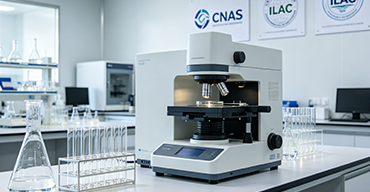
Internationally recognized authority
Certified by multiple international standards such as CNAS, VCS, and GS, with reports universally applicable worldwide.

Global service capability
Covering 140+ countries and regions, it supports on-site detection and remote verification in multiple languages.
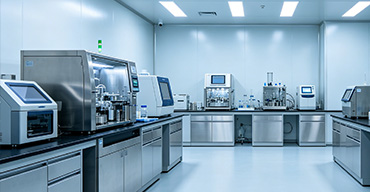
Professional experimental methods
Adopt standard experimental methods to ensure accurate and reliable data.
Comprehensive Analytical Testing Services for Trisodium Hydrogen Dicarbonate (Sodium Sesquicarbonate)
If you are searching for trisodium hydrogen dicarbonate testing (also known as sodium sesquicarbonate, Na₂CO₃·NaHCO₃·2H₂O, CAS 533-96-0), you are likely using this high-purity double salt in critical applications such as pH buffering in swimming pools and spa water, water softening and laundry detergents, industrial and household cleaners, flue gas desulfurization, wastewater treatment, food additives (INS No. 500(iii)), cosmetics, bath salts, and even as a rumen buffer in animal nutrition[reference:0][reference:1][reference:2]. Unlike physical blends of soda ash and sodium bicarbonate, trisodium hydrogen dicarbonate is a distinct crystalline double salt with a fixed stoichiometric ratio of carbonate to bicarbonate (approximately 1:1 on a molar basis plus two waters of hydration)[reference:3]. Its performance depends on precise carbonate/bicarbonate ratio, total alkalinity, heavy metal impurities (lead, arsenic, cadmium, mercury), moisture content (13.8–16.7%), sodium chloride, sulfate, insoluble matter, and particle morphology[reference:4]. Even small deviations can alter buffering capacity, cause undesirable pH shifts, introduce toxic contaminants into food or water systems, or reduce cleaning efficiency. We understand that your need for testing is driven by raw material qualification, supplier verification, regulatory compliance (JECFA, FAO/WHO, ASTM D457, food additive regulations), product certification, or process troubleshooting[reference:5][reference:6]. Our laboratory delivers the most comprehensive, high‑depth analytical suite for trisodium hydrogen dicarbonate – from stoichiometric verification and heavy metal screening to advanced crystallographic analysis, thermal decomposition profiling, and end‑use performance simulation.
What We Can Do for Your Trisodium Hydrogen Dicarbonate Samples
We provide complete testing for all grades of sodium sesquicarbonate: food grade, pharmaceutical grade, industrial/technical grade, detergent grade, and cosmetic grade. Our core capabilities include:
- Stoichiometric verification (Na₂CO₃ / NaHCO₃ ratio and hydration state) by combined acid‑base titration (differential titration using phenolphthalein and methyl orange indicators) and Thermogravimetric Analysis (TGA). The carbonate/bicarbonate ratio is determined with accuracy ±0.2% absolute, and hydration water quantified via mass loss at 100–200 °C[reference:7][reference:8].
- Purity assay (total alkalinity as Na₂CO₃) by acid‑base titration with standardized HCl – accuracy ±0.1% absolute. Typically required purity >99% on a dry basis for industrial and food applications[reference:9][reference:10].
- Trace heavy metal impurities (lead, arsenic, cadmium, mercury, chromium, nickel, copper, zinc) using high‑resolution ICP‑MS (HR‑ICP‑MS) and ICP‑OES after microwave‑assisted acid digestion. Detection limits as low as 0.001 ppm for Pb, As, Cd, Hg – meeting JECFA specifications (Pb ≤2 mg/kg, As ≤3 mg/kg, Cd ≤1 mg/kg)[reference:11].
- Anion impurities (chloride, sulfate, fluoride, nitrate, phosphate) by ion chromatography after sample dissolution – detection limits: Cl⁻ ≤0.1 ppm, SO₄²⁻ ≤0.5 ppm[reference:12].
- Loss on drying / moisture content by Karl Fischer titration (oven method, 150 °C) and by gravimetric loss at 150 °C – JECFA specification range 13.8–16.7% total water (crystalline + surface)[reference:13].
- Insoluble matter content by filtration through 0.45 µm membrane and gravimetric determination – typically ≤0.05% for high‑purity grades[reference:14].
- pH of 1% and 5% aqueous solutions by calibrated pH meter – typical pH range for 0.1 M solution is approximately 10.1, indicating mild alkalinity essential for buffered cleaning systems[reference:15][reference:16].
- Crystalline phase identification by X‑ray diffraction (XRD) – confirm the characteristic monoclinic structure of sodium sesquicarbonate dihydrate (trona phase). Detect crystalline impurities such as residual Na₂CO₃, NaHCO₃, or halite[reference:17].
- Particle size distribution by laser diffraction (0.01–2000 µm range, wet dispersion in isopropanol or with surfactants) – provide D10, D50, D90, and span for free‑flowing crystalline material[reference:18].
- Bulk density (loose and tapped) and flowability per ASTM D6393 – critical for powder handling, blending, and packaging.
- Elemental carbon, hydrogen, and nitrogen (CHN) analysis by combustion – confirm carbon content consistent with the double‑salt formula (theoretical C ≈ 10.6%).
How Deep Our Characterization Goes
We go far beyond basic “alkalinity and chloride” packages. Our advanced methods address the unique challenges of trisodium hydrogen dicarbonate – including distinguishing the true double salt from physical blends, quantifying trace heavy metals at part‑per‑billion levels, and mapping thermal decomposition pathways. Examples of our technical depth:
- Simultaneous TGA‑DSC‑FTIR‑MS from 25 °C to 600 °C under dry nitrogen or air: resolve the dehydration step (release of 2H₂O, ~70–150 °C) and subsequent thermal decomposition (evolution of CO₂ from bicarbonate component, ~150–250 °C). Identify evolved gases (H₂O, CO₂) with mass resolution – essential for distinguishing true sodium sesquicarbonate from blended carbonate/bicarbonate mixtures, which exhibit different decomposition profiles[reference:19][reference:20][reference:21].
- High‑resolution ICP‑MS with reaction/collision cell technology (He or H₂ mode) to eliminate polyatomic interferences (e.g., 40Ar35Cl⁺ on 75As⁺, 40Ar40Ar⁺ on 80Se⁺) – achieving sub‑ppb detection limits for arsenic, selenium, and lead in high‑sodium matrices. This meets stringent JECFA, USP, and food additive specifications[reference:22].
- X‑ray powder diffraction (XRPD) with Rietveld refinement – quantitatively determine the weight fractions of the target sodium sesquicarbonate phase (trona), free Na₂CO₃ (soda ash), free NaHCO₃ (baking soda), and halite (NaCl). Detection limit <0.5 wt% for crystalline impurities. Also calculate crystallite size (Scherrer method) – smaller crystallites correlate with faster dissolution rates.[reference:23]
- Solid‑state 23Na MAS NMR to probe the sodium environment – distinguishes the unique coordination of sodium ions in the sesquicarbonate lattice from that in mixed carbonate/bicarbonate physical blends. Non‑destructive and highly specific.
- Trace mercury speciation (Hg⁰ vs. Hg²⁺) by cold vapor generation‑ICP‑MS – detection limit <0.0005 ppm, essential for ultra‑high‑purity grades destined for pharmaceutical or sensitive food applications.
- Automated colorimetry (CIELAB) and whiteness index measurement – critical for cosmetic and detergent applications where appearance affects consumer acceptance. Detect subtle discoloration due to iron, organic residues, or processing contaminants.
- Microwave‑assisted acid digestion with closed vessels (HNO₃/H₂O₂, 220 °C, 30 bar) – complete decomposition of the crystalline matrix for accurate ICP‑MS analysis, validated by spike recovery of 95–105% for all target analytes.
- Dynamic water vapor sorption (DVS) at 25 °C and 40 °C over 10–95% RH – determines hygroscopicity, deliquescence point, and caking tendency under storage and transport conditions. Sodium sesquicarbonate is known to be less hygroscopic than soda ash but still requires controlled humidity handling[reference:24].
Why Our Laboratory Is the Premier Choice for Trisodium Hydrogen Dicarbonate Testing
General analytical labs often mis‑classify sodium sesquicarbonate as “soda ash” or “baking soda” and use inappropriate methods, missing critical parameters like the true carbonate/bicarbonate ratio, hydration state confirmation, or trace heavy metals at required detection limits. Our advantages are built on specialized experience in inorganic double salts and carbonates, ISO/IEC 17025 accreditation, and a complete suite of complementary analytical techniques:
➤ Double‑salt verification by differential titration and TGA‑MS – Unlike labs that simply measure total alkalinity, we use sequential titration with phenolphthalein and methyl orange indicators to calculate the exact carbonate (CO₃²⁻) and bicarbonate (HCO₃⁻) concentrations. Combined with TGA‑MS, we confirm that the sample is a true double salt, not a physical blend, and report the degree of hydration (typically 2 H₂O) with an accuracy of ±0.1 H₂O.[reference:25][reference:26]
➤ Ultra‑trace heavy metal analysis in high‑sodium matrices – Sodium sesquicarbonate contains high levels of sodium (approximately 30% by weight), which causes spectral interferences and signal suppression in conventional ICP‑MS. We use high‑resolution sector‑field ICP‑MS (R > 10 000) with matrix‑matching and internal standardization (Sc, Y, Rh) to achieve sub‑ppb detection limits for As, Pb, Cd, Hg – fully compliant with JECFA, USP, and EU food additive regulations. Our lead detection limit is <0.001 ppm, well below the required maximum of 2 ppm[reference:27].
➤ Full compliance with international standards – We base our test protocols on recognized standards including:
– JECFA (FAO/WHO) Monograph 1 (Additive-423) for food‑grade sodium sesquicarbonate – water content 13.8–16.7%, NaCl ≤0.5%, Fe ≤20 mg/kg, Pb ≤2 mg/kg[reference:28].
– ASTM D457 (Modified Soda – Sesquicarbonate Type) for industrial detergent grades – >99% purity on a dry basis, specified limits for chloride, sulfate, iron, and insoluble matter[reference:29].
– ASTM D501 (Standard Test Methods for Alkaline Detergents) for sampling and chemical analysis of sesquicarbonate‑type alkalinity sources[reference:30].
– USP/NF and FCC (Food Chemicals Codex) standards for pharmaceutical and food‑contact applications.[reference:31]
➤ Strict sample handling to prevent moisture gain and CO₂ loss – Sodium sesquicarbonate can absorb atmospheric moisture and slowly lose CO₂ upon prolonged exposure. We perform all weighing, grinding (if needed), and preparation for TGA, Karl Fischer, and XRD inside a controlled humidity environment (RH ≤20% at 22 ± 2 °C) or under a dry nitrogen blanket. Moisture and alkalinity results are accurate and batch‑repeatable.[reference:32]
➤ Custom “Food‑/Detergent‑Grade Certification” package – We combine purity assay (alkalinity), carbonate/bicarbonate ratio, moisture, heavy metals (Pb, As, Cd, Hg, Cr, Ni), anion impurities (Cl⁻, SO₄²⁻, F⁻), insoluble matter, pH, particle size (D50, span), bulk density, and XRD phase purity into a single certificate. A clear pass/fail summary against your chosen specification (e.g., JECFA for food additive, ASTM D457 for industrial use) is included.
➤ Rapid turnaround and transparent reporting – Standard full characterization (purity, carbonate/bicarbonate ratio, moisture, heavy metals, insoluble matter, pH, particle size) completed within 3‑5 business days. Expedited 24‑hour service available for urgent QC needs. You receive raw titration curves, TGA thermograms, ICP‑MS spectra, ion chromatograms, diffractograms, particle size histograms, and full uncertainty budgets (expanded uncertainty, k=2).
➤ Global logistics and compliance support – Sodium sesquicarbonate is generally non‑hazardous (not classified under EU CLP Regulation), but we provide airtight, moisture‑proof packaging with desiccant, MSDS, and customs declaration assistance[reference:33]. For shipments requiring regulatory certifications (e.g., Kosher, Halal, FDA‑compliant), we can coordinate with relevant certification bodies.
➤ One‑on‑one technical consultation from inorganic carbonates experts – Our chemists help you interpret anomalies: e.g., why the carbonate/bicarbonate ratio deviates from 1:1 (improper crystallization or partial decarboxylation during storage), why heavy metal levels exceed limits (contamination from process equipment or raw materials), or why solubility or dissolution rate is inconsistent (variations in particle size distribution or crystallinity). We also advise on storage conditions to prevent caking or moisture gain and on re‑crystallization or purification steps if needed.
Ready to Get Your Trisodium Hydrogen Dicarbonate Tested?
Whether you are qualifying a food‑grade sodium sesquicarbonate batch for an acidity regulator application, certifying a detergent‑grade product for export, troubleshooting pH instability in a swimming pool buffer formulation, or verifying supplier compliance with ASTM D457 or JECFA specifications, our laboratory delivers the most thorough, accurate, and actionable characterization of trisodium hydrogen dicarbonate available. Contact our carbonate and double‑salt analysis team with your grade (food, pharmaceutical, industrial, cosmetic), target purity requirements, and critical impurity limits – we will return a custom test plan and competitive quote within 24 hours.