Reasons for choosing our testing services
ZHONGXI Testing has obtained inspection qualification certifications from multiple countries and regions worldwide. We possess a senior testing team and advanced testing methods, providing independent, impartial, and professional third-party verification services for global carbon projects.

Internationally recognized authority
Certified by multiple international standards such as CNAS, VCS, and GS, with reports universally applicable worldwide.

Global service capability
Covering 140+ countries and regions, it supports on-site detection and remote verification in multiple languages.

Professional experimental methods
Adopt standard experimental methods to ensure accurate and reliable data.
Advanced Analytical Testing for Basic Chromates (Alkaline Chromates) – Hexavalent Chromium Speciation, Purity & Regulatory Compliance
If you are searching for basic chromate testing, you are likely working with materials such as basic zinc chromate (ZnCrO₄·2Zn(OH)₂), basic copper chromate, basic lead chromate, or alkaline aqueous chromate solutions used in anti‑corrosion primers (aerospace and automotive), metal finishing conversion coatings, pyrotechnics, catalysts, and wood preservatives. Basic chromates are characterized by the presence of hexavalent chromium (Cr(VI)), which is highly regulated due to its toxicity and carcinogenicity. Accurate testing is critical to determine total chromium, hexavalent vs. trivalent chromium ratio, free alkali content, water solubility, trace impurity levels (Pb, Cd, As, Sb, etc.), crystalline phase, and compliance with environmental regulations (e.g., REACH, RoHS, OSHA, EPA Method 3060A). Even small variations can affect corrosion protection performance, storage stability, or regulatory eligibility. We understand that your need for testing is driven by raw material qualification, production quality control, product certification for export, environmental compliance, or failure analysis of coatings. Our laboratory delivers the most comprehensive, high‑depth analytical suite for basic chromates – from Cr(VI) speciation at sub‑ppm levels to complete mineralogical, thermal, and elemental characterization.
What We Can Do for Your Basic Chromate Samples
We provide complete testing for all forms of basic chromates: powders, pigment pastes, aqueous slurries, and coating extracts. Our core capabilities include:
- Hexavalent chromium (Cr(VI)) quantification by UV‑Vis spectrophotometry (EPA Method 7196A, diphenylcarbazide complexation) after alkaline digestion (EPA 3060A) – detection limit 0.5 mg/kg (ppm), range up to 500 mg/kg. For lower levels, use ion chromatography with post‑column derivatization (IC‑UV/Vis) – detection limit <0.01 ppm in solution.
- Total chromium and trivalent chromium (Cr(III)) – Total Cr by ICP‑OES/ICP‑MS after acid digestion (HNO₃/HF/H₂SO₄). Cr(III) is calculated by difference (Total Cr – Cr(VI)). Accuracy ±2% relative.
- Basic chromate stoichiometry (Cr : Zn/Cu/ Pb : OH ratio) – Combined determination of chromium, zinc/copper/lead (ICP‑OES), hydroxyl content (alkalinity titration or TGA mass loss), and water content (Karl Fischer). Derive empirical formula and degree of basicity.
- Free alkali (NaOH, KOH or Ca(OH)₂) content – Potentiometric titration of aqueous extract with standard HCl, using phenolphthalein and methyl orange endpoints. Detection limit 0.05% w/w.
- Trace metal impurities (Pb, Cd, As, Sb, Hg, Ba, Ni, Co, Fe, Al, etc.) using high‑resolution ICP‑MS (HR‑ICP‑MS) with matrix‑matched calibration – detection limits as low as 0.01 ppm for most elements, 0.001 ppm for Pb, As, Cd. Critical for RoHS, ELV, and REACH compliance.
- Anion impurities (Cl⁻, SO₄²⁻, NO₃⁻, PO₄³⁻, F⁻) by ion chromatography after alkaline or acid dissolution – detection limits sub‑ppm.
- Crystalline phase identification and quantification by X‑ray diffraction (XRD) with Rietveld refinement – identify basic zinc chromate (e.g., ZnCrO₄·2Zn(OH)₂, Zn₃CrO₄(OH)₂, or chromite-like phases), detect unreacted ZnO, Cr₂O₃, or other crystalline impurities down to 0.5 wt%.
- Water solubility and leachable Cr(VI) – Batch leaching test (e.g., TCLP, EN 12457) followed by Cr(VI) analysis on the leachate – essential for hazardous waste classification.
- Loss on ignition (LOI) at 550 °C and 1000 °C – Distinguish constitutional water (from hydroxyl groups), decomposition of organic processing aids, and possible reduction of Cr(VI) to Cr₂O₃.
- Particle size distribution (laser diffraction, dry or wet dispersion) and specific surface area (BET) – critical for pigment performance and coating application.
- pH of 10% aqueous slurry – typical range 7–10 for basic chromates; deviations indicate excessive free alkali or acid impurities.
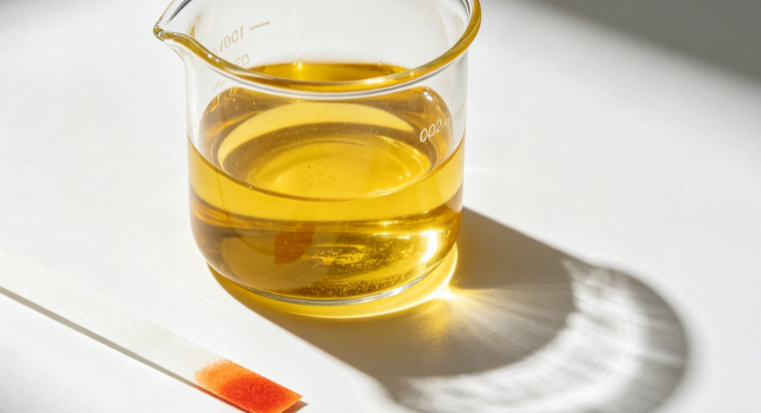
How Deep Our Characterization Goes
We go far beyond simple “total Cr and Cr(VI)” packages. Our advanced methods address the unique challenges of basic chromates – including stable digestion without interconversion of Cr(VI)/Cr(III), discrimination of free hydroxide vs. structural hydroxyl, and ultra‑trace detection of toxic metals in a high‑chromium matrix. Examples of our technical depth:
- Selective alkaline digestion (EPA 3060A) with isotope dilution ICP‑MS for Cr(VI) – We perform the digestion at controlled pH (11.5–12) and temperature (90–95 °C) to prevent reduction of Cr(VI) to Cr(III) in the presence of reducing agents. For precise Cr(VI) quantification, we use ⁵⁰Cr‑enriched isotope dilution ICP‑MS after separation – uncertainty <2% relative, detection limit 0.01 mg/kg.
- Chromium speciation by X‑ray absorption near edge structure (XANES) spectroscopy – Determine the oxidation state of chromium in the solid state (Cr(VI) vs. Cr(III)) without dissolution, and distinguish between different Cr(VI) coordination environments (chromate vs. dichromate). This is especially useful for heterogeneous or aged basic chromate samples.
- High‑resolution ICP‑MS with reaction/collision cell (NH₃ or H₂ mode) to eliminate polyatomic interferences from Cr‑based species (e.g., 52Cr¹⁶O⁺ on 68Zn⁺, 53Cr¹⁶O⁺ on 69Ga⁺) when analyzing trace metals in high‑Cr matrices. Achieve sub‑0.1 ppm detection limits for Fe, Ni, Cu, Zn, Pb, As, Cd even at 1000 ppm Cr.
- Simultaneous TGA‑DSC‑FTIR‑MS from 25 °C to 1000 °C under air or nitrogen: resolve dehydroxylation steps (release of H₂O from structural OH groups) and decomposition of chromate to Cr₂O₃ (exothermic reduction of Cr(VI) to Cr(III) with oxygen evolution). Identify evolved gases (H₂O, O₂, CO₂) with mass spectrometry – critical for understanding thermal stability and potential Cr(VI) release during processing or fire.
- X‑ray photoelectron spectroscopy (XPS) for surface composition – Measure Cr 2p, Zn 2p (or Cu, Pb), O 1s, and C 1s on the top 2–10 nm. Quantify the ratio of Cr(VI) to Cr(III) at the surface, which often differs from bulk due to aging or atmospheric reduction. Detect surface‑enriched free alkali or adventitious carbon.
- Trace mercury, thallium, and antimony by hydride generation ICP‑MS – detection limits <0.001 ppm for Hg and Tl, <0.01 ppm for Sb – meeting strict limits for pigments used in children’s toys (e.g., EN 71‑3).
- Particle morphology and elemental mapping by SEM‑EDS – visualize primary crystallite shape (acicular, plate‑like, granular), detect inhomogeneous distribution of Zn, Cr, O, and trace impurities at micron scale.
- Long‑term stability and leaching simulation in ASTM synthetic acid rain or seawater – Determine the rate of Cr(VI) release under environmental exposure, critical for assessing environmental impact and regulatory classification.
Why Choose Our Laboratory for Basic Chromate Testing
General analytical labs often struggle with basic chromates due to the risk of Cr(VI) reduction during digestion, spectral interferences from Cr in ICP‑MS, and the need to distinguish free alkali from structural hydroxyls. Our advantages are built on specialized experience in hazardous chromium compounds, ISO/IEC 17025 accreditation, and a comprehensive set of regulatory methods:
➤ Cr(VI) speciation without redox artefacts – We follow EPA Method 3060A (alkaline digestion) and ISO 15192 to prevent reduction of Cr(VI) in the presence of reducing agents (e.g., organic matter or Fe²⁺). For each batch, we run matrix spikes and quality control standards (e.g., certified Cr(VI) reference material ERM‑CZ100). Our Cr(VI) recoveries typically range 95–105%.
➤ Complete basic stoichiometry and OH determination – Using a combination of thermogravimetry (TGA) for structural water loss and alkalimetric titration for free hydroxide, we separate the two contributions and calculate the exact chemical formula (e.g., ZnCrO₄·2Zn(OH)₂ vs. ZnCrO₄·Zn(OH)₂). This is essential for batch‑to‑batch consistency of anti‑corrosion performance.
➤ High‑resolution ICP‑MS for trace elements in high‑Cr matrices – Our sector‑field ICP‑MS (Element 2) operates at medium (R = 4000) and high (R = 10 000) resolution to resolve interferences such as 52Cr¹⁶O⁺ on 68Zn⁺ and 53Cr¹⁶O⁺ on 69Ga⁺. We also use collision/reaction cell (NH₃, 98% He/2% H₂) to further reduce polyatomic species. Detection limits for Pb, As, Cd, Ni, Co, Cu are in the 0.01–0.05 mg/kg range for solid samples.
➤ Comprehensive regulatory compliance packages – We provide test reports specifically tailored for:
– RoHS (EU 2011/65/EU, as amended) – total Cr(VI) in homogeneous materials (limit 0.1% by weight).
– REACH Annex XVII (entry 47) – Cr(VI) compounds – concentration, labeling, and authorization requirements.
– OSHA 1910.1026 (Occupational exposure to Cr(VI)) – airborne and surface wipe testing.
– EN 71‑3 (Safety of toys – migration of certain elements) – Cr(VI) and total Cr in toy coating scrapings.
– AFNOR NF T30‑053 (Paints and varnishes – determination of soluble chromates) – extractable Cr(VI) in anticorrosive primers.
➤ Strict sample handling for air‑sensitive and toxic powders – Basic chromates, especially basic lead chromate, are toxic and may be subject to occupational exposure limits. We perform all handling in ventilated chemical fume hoods with HEPA‑filtered exhaust. Personnel wear appropriate PPE (nitrile gloves, Tyvek suits, full‑face respirators with P100 cartridges). All waste containing Cr(VI) is collected as hazardous waste and disposed of via licensed contractors.
➤ Custom “Pigment‑/Corrosion‑Inhibitor‑Grade Certificate” – This combines Cr(VI) assay, total Cr, total Zn/Cu/Pb, free alkali, hydroxyl content (from TGA), XRD phase purity, water insolubles, particle size (D50, D90), BET surface area, and trace heavy metals. A “Basic Index” (ratio of OH to CrO₄) is calculated to correlate with coating performance.
➤ Fast turnaround and transparent reporting – Standard full characterization (Cr(VI), total Cr, Zn/Cu/Pb, free alkali, XRD, particle size, TGA, insolubles) completed within 5‑7 business days. Expedited 48‑hour service available. You receive raw UV‑Vis spectra, ICP‑MS chromatograms, diffractograms, thermograms, particle size histograms, and full uncertainty budgets (expanded uncertainty, k=2).
➤ Global logistics for hazardous materials – Basic chromates are classified as UN 3077 (environmentally hazardous substance, solid, n.o.s.) or UN 3288 (toxic solid, inorganic, n.o.s.). We provide UN‑certified packaging (fibreboard boxes with sealed inner bags), MSDS, dangerous goods declaration forms, and assistance with IATA/IMDG/ADR shipping. For small samples, we use triple‑packed, leak‑proof containers with absorbent material.
➤ One‑on‑one technical consultation from chromium specialists – Our chemists help you interpret why a pigment batch shows higher water‑soluble Cr(VI) than specification (excess free alkali causing leaching?), why XRD shows a second phase (e.g., ZnO or Cr₂O₃), or why corrosion resistance declined (incorrect basicity index or trace chloride contamination). We also advise on synthesis optimization (pH, temperature, aging) to achieve target properties.
Ready to Get Your Basic Chromate Tested?
Whether you are qualifying a basic zinc chromate batch for aerospace primer, certifying a basic copper chromate for wood treatment, analyzing a pigment for RoHS compliance, or troubleshooting Cr(VI) leaching from a coating, our laboratory delivers the most thorough, accurate, and defensible characterization of basic chromates available. Contact our hexavalent chromium analysis team with your material type (basic zinc chromate, basic lead chromate, etc.), target Cr(VI) content, and any regulatory thresholds (e.g., RoHS, REACH, EPA) – we will return a custom test plan and competitive quote within 24 hours.